Dogs that eat too quickly aren't just messy—they're at risk. Rapid eating can lead to choking, bloating, indigestion, and even life-threatening conditions like gastric dilatation-volvulus (GDV), commonly known as bloat. Puzzle feeders offer a simple yet effective solution by transforming mealtime into a mental challenge that naturally slows consumption. These interactive tools encourage dogs to work for their food, stimulating their minds while protecting their health. With dozens of models on the market, choosing the right one depends on your dog’s size, intelligence, chewing habits, and food motivation. This guide explores top-rated puzzle feeders, explains how they help, and provides actionable advice to match the right feeder to your dog’s needs.
Why Fast Eating Is a Serious Concern
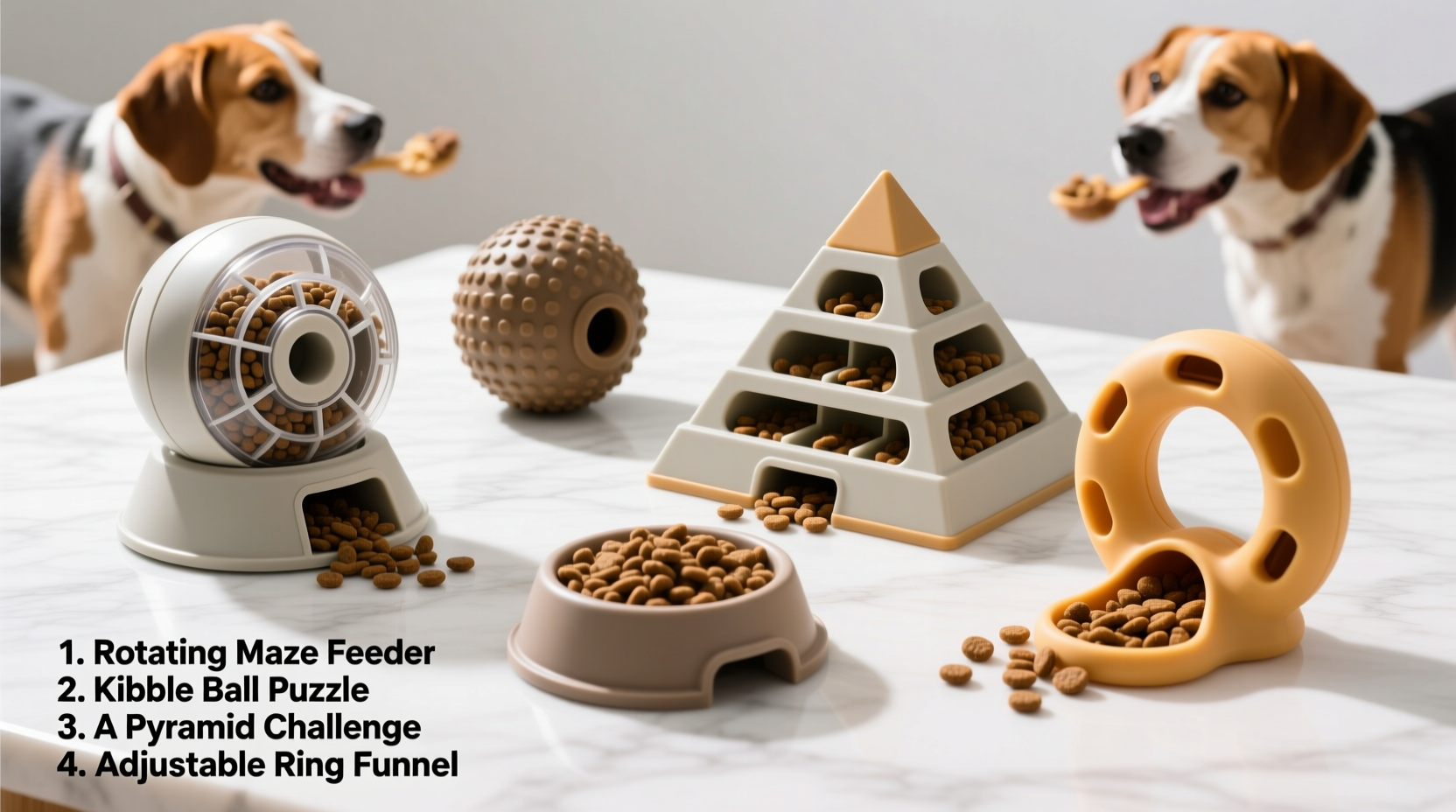
Many owners dismiss rapid eating as a quirky habit, but veterinarians consistently warn against it. When dogs gulp down food, they swallow large amounts of air along with kibble, increasing the risk of gas buildup in the stomach. For deep-chested breeds like Great Danes, German Shepherds, and Boxers, this is especially dangerous. According to the American Kennel Club, GDV affects approximately 5–10% of large and giant breed dogs, with mortality rates reaching 30% even with emergency surgery.
Beyond medical risks, fast eating reduces nutrient absorption. Dogs need time to chew and initiate proper digestive enzyme release. Without it, food passes through the system inefficiently, potentially leading to loose stools or malnutrition over time. Behavioral issues can also arise—dogs that finish meals in seconds may become anxious or obsessive around food, leading to resource guarding or begging.
“Slowing down a dog’s eating pace isn’t just about better digestion—it’s a critical part of preventive healthcare.” — Dr. Lena Reyes, DVM, Veterinary Behavior Specialist
How Puzzle Feeders Work and Why They Help
Puzzle feeders use physical barriers, hidden compartments, sliding parts, or rolling mechanisms to make dogs manipulate the device to access food. Instead of consuming a full bowl in under a minute, dogs spend 10 to 30 minutes—or longer—engaging with the puzzle. This mimics natural foraging behavior, which dogs evolved to perform daily in the wild.
The benefits go beyond slowing down meals:
- Mental stimulation: Reduces boredom and destructive behaviors like chewing furniture or excessive barking.
- Improved focus: Enhances concentration and problem-solving skills, especially in high-energy breeds.
- Weight management: Increases satiety by extending meal duration, helping dogs feel fuller on less food.
- Reduced anxiety: Provides a calming outlet during stressful times, such as thunderstorms or separation.
Unlike traditional slow-feed bowls that only alter surface design, true puzzle feeders require active engagement. The more complex the puzzle, the greater the cognitive demand—making them ideal for intelligent or easily bored dogs.
Tip: Introduce puzzle feeders gradually. Start with easy models and progress to advanced ones to avoid frustration.Top 7 Puzzle Feeders for Slowing Down Fast Eaters
After reviewing veterinary recommendations, customer feedback, durability tests, and behavioral studies, these seven puzzle feeders stand out for effectiveness, safety, and adaptability across dog sizes and skill levels.
| Name | Type | Best For | Difficulty Level | Dishwasher Safe |
|---|---|---|---|---|
| Nina Ottosson by Outward Hound Dog Brick | Sliding block puzzle | Medium to large intelligent breeds | Intermediate | No (top-rack hand wash) |
| Outward Hound Hide-A-Squirrel | Plush toy with removable stuffing | Small to medium dogs, puppies | Beginner | No (spot clean only) |
| StarMark Bob-A-Lot | Rolling weighted toy | All sizes, especially power chewers | Beginner to Intermediate | No |
| Trixi Treat Maze by Trixie | Multi-level sliding tray | Dogs learning intermediate puzzles | Intermediate | Yes (top rack) |
| West Paw Qwizl | Cylindrical treat-stuffing toy | Dogs that enjoy licking and chewing | Beginner | Yes (dishwasher safe) |
| Starmark Treat Dispensing Monkey | Interactive spinning toy | Dogs needing moderate challenge | Intermediate | No |
| Nina Ottosson Dog Tornado | Layered spinning puzzle | Advanced problem solvers | Advanced | No |
Key Features Breakdown
Nina Ottosson Dog Brick: This modular puzzle uses sliding blocks and lift-up flaps. Kibble is hidden beneath pieces that must be nudged aside with the nose or paw. Its compact design suits travel and indoor use. Ideal for Border Collies, Poodles, and other highly trainable breeds.
Hide-A-Squirrel: A plush tree trunk holds squeaky squirrel toys filled with treats. Dogs remove each squirrel to access the reward. While not strictly a food bowl replacement, it's excellent for portion control when used as a partial meal delivery system.
Bob-A-Lot: One of the most durable options, this red-and-yellow toy wobbles unpredictably as dogs push it, dispensing kibble through small openings. Its weight prevents tipping and resists aggressive chewers. Use indoors or on short grass.
Trixi Treat Maze: Features three rotating trays with barriers. Adjust difficulty by locking layers. Made from BPA-free plastic and dishwasher-safe, making cleanup effortless. A favorite among pet owners with senior dogs transitioning to slower eating.
West Paw Qwizl: Designed like a Kong but with a twist—the hollow center is sealed with a plug, requiring dogs to lick, chew, and roll the toy to extract food. Fill with wet food, peanut butter, or kibble mixed with broth. Extremely durable and dishwasher-safe.
Starmark Monkey: As dogs bat at the arms, treats fall through internal chutes. The unpredictable motion keeps dogs engaged longer than static puzzles. Suitable for moderate chewers but not recommended for heavy destroyers.
Dog Tornado: A multi-layered puzzle where dogs spin outer rings to reveal hidden compartments. Considered one of the most challenging commercial models. Best introduced after mastering simpler puzzles.
Choosing the Right Feeder: A Step-by-Step Guide
Selecting the best puzzle feeder involves matching your dog’s traits to the right design. Follow this sequence to ensure success:
- Assess your dog’s eating speed and food drive. Does your dog inhale meals in under 30 seconds? Are they highly motivated by food? High drive dogs adapt faster to puzzles.
- Evaluate your dog’s size and jaw strength. Small breeds need appropriately sized openings; large breeds require durable materials. Avoid soft rubber for power chewers.
- Consider your cleaning routine. If convenience matters, prioritize dishwasher-safe models like the West Paw Qwizl or Trixi Treat Maze.
- Match the difficulty level. Start beginner-friendly (e.g., Bob-A-Lot) if your dog has never used a puzzle. Advance only when they solve it consistently in under a minute.
- Test for safety and stability. Ensure the feeder won’t tip over or trap paws. Supervise initial use, especially with multi-part puzzles.
- Monitor progress. Track meal duration before and after introducing the feeder. Aim for at least a 5x increase in eating time.
“Introducing a puzzle feeder is like teaching a new language. Patience and positive reinforcement are key.” — Sarah Lin, Certified Canine Trainer
Real Example: Transforming Max’s Mealtime Habits
Max, a two-year-old Labrador Retriever, would finish his 2-cup meal in 45 seconds, often vomiting shortly after due to gulping. His owner, Jenna, consulted her vet, who recommended switching to a puzzle feeder. She started with the StarMark Bob-A-Lot, filling it with half his kibble and serving the rest in a regular bowl beside it. Within three days, Max learned to push the toy to release food. By week two, he was using it exclusively. Now, his meals take 18–22 minutes. “He’s calmer after eating,” Jenna reports. “And no more regurgitation.”
Jenna later introduced the Nina Ottosson Dog Brick to keep Max mentally challenged. On weekends, she stuffs the West Paw Qwizl with frozen yogurt and blueberries for a cooling, engaging snack. Max’s transition shows that even enthusiastic eaters can adapt with consistency and the right tools.
Common Mistakes and How to Avoid Them
Even well-intentioned owners make missteps when introducing puzzle feeders. Avoid these pitfalls:
- Starting too hard: Throwing a dog an advanced puzzle leads to frustration and disinterest. Begin simple.
- Skipping supervision: Some dogs try to chew apart plastic components. Always supervise early sessions.
- Using only dry kibble: Adding wet food, broth, or mashed banana increases scent appeal and encourages persistence.
- Leaving puzzles outside unsupervised: Weather damage, pests, or loss can occur. Store indoors when not in use.
- Expecting immediate results: It may take days for a dog to understand the concept. Reward attempts, not just success.
FAQ: Your Puzzle Feeder Questions Answered
Can puzzle feeders replace regular bowls permanently?
Yes, for most dogs. Once your dog masters a feeder, it can become their primary meal delivery method. However, always have a standard bowl available for water and emergency feeding if the puzzle is lost or damaged.
Are puzzle feeders safe for puppies?
Absolutely—but choose age-appropriate designs. Soft plush puzzles like Hide-A-Squirrel or simple rolling toys are ideal for young dogs. Avoid small parts that could be chewed off and swallowed. Supervise closely during play.
My dog ignores the puzzle. What should I do?
Start by placing a few treats in visible spots to build confidence. Hand-feed a couple of pieces from the puzzle to create association. You can also run the feeder through the dishwasher first to remove manufacturing odors that might deter sensitive noses.
Checklist: Getting Started with Puzzle Feeders
Use this checklist to ensure a smooth transition:
- ☐ Choose a beginner-friendly puzzle based on your dog’s size and chewing habits
- ☐ Introduce the empty feeder during playtime to build familiarity
- ☐ Place a few treats in open sections to encourage exploration
- ☐ Fill partially with food, leaving some visible
- ☐ Supervise the first 3–5 uses
- ☐ Gradually increase difficulty as your dog succeeds
- ☐ Clean regularly to prevent bacterial growth
- ☐ Rotate between 2–3 models to prevent boredom
Final Thoughts: Turning Meals Into Mental Fitness
Slowing down your dog’s eating isn’t just about preventing bloat—it’s about enriching their daily experience. Puzzle feeders transform a basic biological function into an opportunity for growth, focus, and joy. The right feeder can reduce stress, improve digestion, and strengthen the bond between you and your dog through shared problem-solving.
Every dog, regardless of breed or age, benefits from mental engagement. Fast eaters are simply the most urgent candidates. By investing in a quality puzzle feeder and introducing it with patience, you’re not just changing how your dog eats—you’re enhancing their overall wellbeing.
💬 Have a success story with a puzzle feeder? Share your experience below and help fellow dog owners find the best solutions for their fast-eating companions!








