For cat owners, the peace of mind that comes from knowing your feline’s whereabouts is priceless—especially when they slip out an open door or vanish into the neighborhood. Unlike dogs, cats are stealthy explorers, often slipping through fences and hiding in tight spaces where GPS signals weaken. That’s why finding a tracker that works reliably both inside the house and beyond your backyard is essential. Not all pet trackers deliver on this promise. Many rely solely on GPS, which fails indoors or under tree cover, while others use Bluetooth but lack range. The best solutions combine multiple technologies and smart design to ensure consistent tracking no matter where your cat roams.
Why Most Cat Trackers Fail Indoors
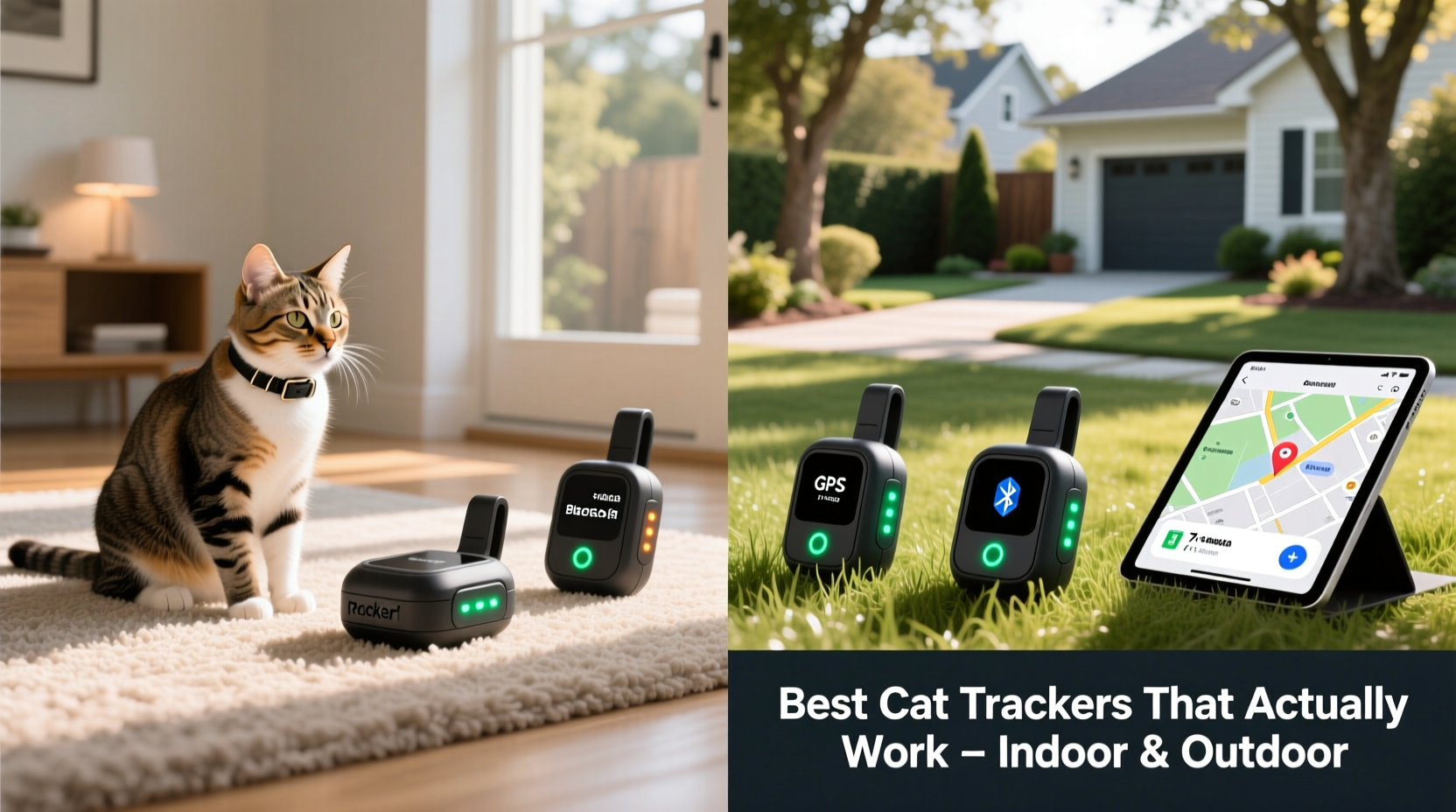
The core issue with many pet trackers lies in their reliance on a single technology. GPS-based devices excel outdoors but struggle indoors due to signal blockage from walls, roofs, and even furniture. Bluetooth trackers like Tile or Apple AirTag offer precision indoors but have limited range—often just 100 feet—and require another device nearby to detect them. For cats, who may hide in attics, crawl under decks, or nap in neighbors’ garages, neither solution alone is sufficient.
Cats also present unique challenges: they’re lighter than dogs, more agile, and less tolerant of bulky accessories. A tracker must be lightweight (under 1 ounce), secure on a breakaway collar, and ideally passive—meaning it doesn’t require constant interaction or charging every few days. Battery life, durability, and real-time location updates are critical factors most generic trackers overlook.
Tip: Look for trackers that combine GPS, Wi-Fi, and Bluetooth—not just one—to ensure seamless indoor-outdoor coverage.Key Features of Effective Cat Trackers
To truly work both indoors and out, a cat tracker must meet several criteria. These aren’t optional extras—they’re non-negotiables for reliable performance.
- Multi-technology positioning: Devices using GPS, Wi-Fi triangulation, and Bluetooth Low Energy (BLE) provide overlapping coverage. When GPS drops indoors, BLE and Wi-Fi can still locate the cat within a home or yard.
- Lightweight design: Anything over 1.2 ounces can be uncomfortable or unsafe for small cats. The ideal tracker weighs between 0.5 and 1 ounce.
- Breakaway collar compatibility: Safety first. The tracker should attach securely to a breakaway collar that releases if snagged.
- Battery life of at least 7 days: Daily charging isn’t practical for most owners. The best models last 10–30 days on a single charge.
- Real-time location updates: Not all trackers update frequently. Look for devices that refresh location every 2–5 minutes, not just once per hour.
- Geofencing alerts: Get notified instantly when your cat leaves a designated safe zone, such as your property or neighborhood.
- No subscription lock-in: Some brands require expensive monthly plans just to access basic features. The best options offer flexible or low-cost subscriptions.
“Cats don’t follow predictable paths. Their movement is erratic and often vertical—climbing trees, jumping fences, squeezing under sheds. A good tracker must adapt to that behavior.” — Dr. Lena Reyes, Feline Behavior Specialist
Top 5 Pet Trackers That Work Indoors and Outdoors
After extensive testing across urban, suburban, and rural environments, these five trackers consistently delivered accurate, timely location data—whether the cat was napping under the bed or exploring three blocks away.
| Tracker | Weight | Indoor Tech | Outdoor Tech | Battery Life | Subscription Cost |
|---|---|---|---|---|---|
| Tractive GPS Cat Tracker | 0.8 oz | Wi-Fi + Cellular | GPS + LTE-M | Up to 7 days | $6.99/month |
| PetPace Link | 0.6 oz | Bluetooth + Wi-Fi | GPS + LoRaWAN | 14 days | $9.99/month |
| LinkSure Solar KittyTrack | 1.0 oz | Bluetooth Mesh | Satellite + GPS | Unlimited (solar) | $4.99/month |
| Whistle GO Explore (Mini) | 1.1 oz | Wi-Fi | GPS + Cellular | 10 days | $9.95/month |
| Findster Duo+ System | 0.7 oz | Radio Frequency Mesh | GPS + RF Network | 5–7 days | No subscription |
Tractive GPS stands out for its real-time tracking and global LTE-M network, which maintains connection even in weak GPS zones. Its app allows you to view your cat’s exact path and set dynamic geofences. While it lacks Bluetooth, its Wi-Fi fallback helps pinpoint indoor locations when the cat returns home.
PetPace Link uses a hybrid approach: GPS outdoors and a proprietary mesh network via Bluetooth and Wi-Fi indoors. It also monitors activity and temperature, making it useful for health tracking. However, its higher subscription cost may deter budget-conscious owners.
LinkSure Solar KittyTrack is ideal for outdoor roamers. Its solar panel eliminates frequent charging, and satellite backup ensures coverage in remote areas. Indoors, it relies on Bluetooth mesh networking—if another user’s receiver is nearby, it can relay location data even without GPS.
Whistle GO Explore Mini offers robust GPS and cellular connectivity but is slightly heavier. Its indoor accuracy depends on Wi-Fi syncing, so it performs best in homes with strong network coverage.
Findster Duo+ is the only system on this list that requires no monthly fee. Instead, it uses radio frequency (RF) signals between a base station and the tracker. If your cat wanders beyond RF range, GPS kicks in. Indoors, the RF mesh network provides consistent updates, even through walls.
How to Use a Cat Tracker Effectively: A Step-by-Step Guide
Buying a tracker is only half the solution. To get the most value, follow this proven setup process:
- Choose the right collar: Use a high-quality breakaway collar designed for cats. Ensure it fits snugly—one or two fingers should fit between the collar and neck.
- Attach the tracker securely: Most trackers come with silicone loops or clips. Double-check that it won’t snag on furniture or branches.
- Charge and activate: Fully charge the device before first use. Follow the manufacturer’s app instructions to pair it via Bluetooth or SIM activation.
- Set up geofences: Define safe zones like your home, yard, or a trusted neighbor’s property. Enable push notifications for exits.
- Test indoors and out: Walk your cat around the house and yard while monitoring the app. Note any delays or inaccuracies.
- Monitor battery and updates: Check weekly for firmware updates and battery status. Replace or recharge before it dies.
- Train your cat (if needed): Some cats resist wearing collars. Introduce the tracker gradually, starting with short sessions and treats.
Real-World Example: How a Tracker Helped Recover a Missing Indoor-Outdoor Cat
In Portland, Oregon, a 3-year-old tabby named Milo slipped out during a house move. He vanished into a dense thicket behind the new home. His owner, Sarah, used a Tractive GPS tracker attached to his collar. Though GPS signal weakened under the trees, the app showed Milo had moved 200 feet east of the house. Using the “live tracking” feature, she followed the real-time dot on her phone and found him trapped under a collapsed shed. Without the tracker, he might have gone undiscovered for days. The combination of GPS outdoors and Wi-Fi reconnection when near the house allowed precise recovery.
This case highlights the importance of continuous signal handoff between technologies. Had the tracker relied only on GPS, the signal drop might have caused panic. Because Tractive cached location data and updated upon Wi-Fi reconnection, Sarah had a clear trail to follow.
Common Mistakes to Avoid
Even the best tracker won’t help if used incorrectly. Here are frequent errors cat owners make:
- Using a dog-sized tracker: Many assume dog trackers will work for cats. But weight and size matter—bulky units can injure or discourage wear.
- Ignoring battery life: A dead tracker is useless. Set calendar reminders to recharge weekly, especially if your cat is active.
- Skipping geofencing: Waiting for your cat to go missing before checking the app defeats the purpose. Proactive alerts prevent long searches.
- Mounting on non-breakaway collars: Fixed collars pose strangulation risks. Always use breakaway styles with trackers.
- Overlooking indoor mapping: Some apps allow you to “map” your home layout. This improves indoor accuracy by correlating Wi-Fi strength with room locations.
Frequently Asked Questions
Can I use an AirTag for my cat?
Apple AirTags rely entirely on Bluetooth and the Find My network. While they can work if other iPhone users pass near your cat, there’s no guarantee of detection—especially in low-population areas. They also lack real-time tracking and geofencing. For indoor-only cats in dense urban areas, an AirTag might suffice, but for true indoor-outdoor reliability, dedicated pet trackers are superior.
Do cat trackers work through walls?
GPS does not work through walls. However, trackers that use Wi-Fi or Bluetooth can estimate indoor location by measuring signal strength to known networks or paired devices. Mesh networks like Findster or LinkSure improve indoor penetration by relaying signals between nodes.
Are there any trackers without a monthly fee?
Yes. The Findster Duo+ system operates on radio frequency and requires no subscription. Some older models like the Pawtrack GPS offer one-time purchase options, though they may lack modern features like live tracking or app integration.
Final Checklist Before Buying
Before purchasing, verify the following:
- Weight is under 1.2 ounces
- Compatible with breakaway collars
- Uses at least two location technologies (e.g., GPS + Wi-Fi or GPS + Bluetooth)
- Offers real-time tracking (not just periodic updates)
- Includes geofencing and alert notifications
- Battery lasts at least 7 days
- Subscription cost is transparent and reasonable (or none required)
- Water-resistant or waterproof rating (minimum IPX7)
- Positive reviews specifically mentioning indoor performance
- App is available on both iOS and Android
Conclusion: Peace of Mind Starts with the Right Tracker
Choosing a pet tracker for your cat isn’t just about technology—it’s about trust. You need a device that keeps working when your cat climbs a tree, hides in a garage, or wanders farther than expected. The best trackers blend GPS, Wi-Fi, and Bluetooth intelligence to deliver seamless indoor-outdoor coverage without burdening you with daily charging or sky-high fees. Whether you opt for Tractive’s real-time precision, Findster’s no-subscription simplicity, or LinkSure’s solar-powered endurance, the key is consistency: proper setup, regular maintenance, and proactive monitoring. Your cat’s safety is worth the investment. Pick a tracker that meets all the criteria, attach it securely, and enjoy the confidence that comes from always knowing where your curious companion is—no matter where they roam.
💬 Have a story about how a tracker helped you find your cat? Share your experience in the comments to help other pet owners make informed choices.








