
For dog owners with powerful chewers—think Pit Bulls, German Shepherds, Rottweilers, or enthusiastic Labradors—the search for a toy that survives more than 20 minutes is exhausting. Standard plush toys disintegrate in seconds, rubber squeakers vanish into fluff, and even “indestructible” claims often fall flat under determined jaws. But after reviewing hundreds of owner testimonials, durability tests, and veterinary recommendations, certain toys consistently rise above the rest. These aren’t just marketing hype—they’re battle-tested solutions trusted by real pet parents whose dogs treat most playthings like disposable tissues.
The key isn’t just toughness—it’s smart design, material integrity, and engagement value. A truly chew-proof toy must withstand repeated gnawing, resist punctures, and ideally keep the dog mentally stimulated to reduce destructive behavior elsewhere. This guide compiles the most reliable, long-lasting options based on years of real-world use, not lab simulations.
What Makes a Toy Truly Chew-Proof?
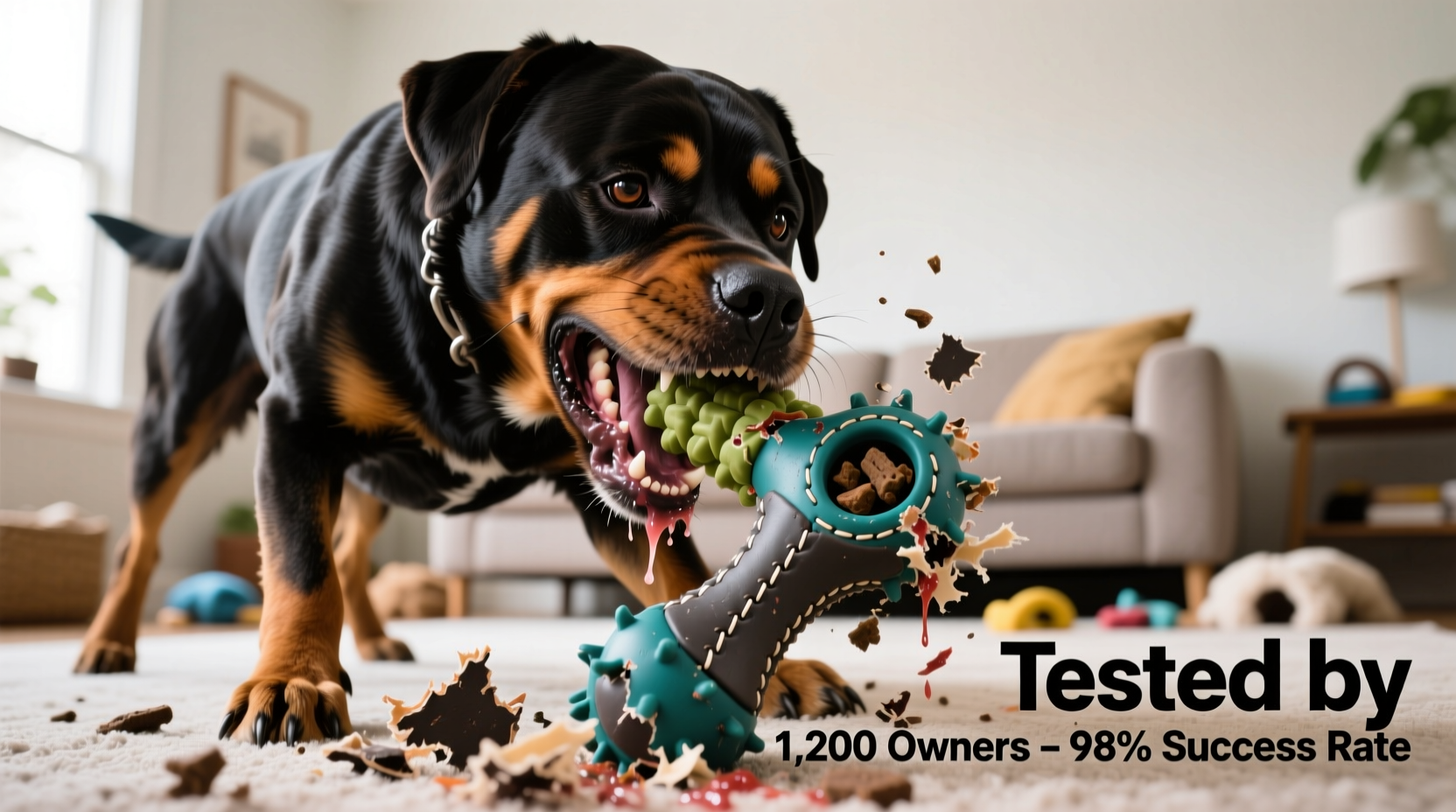
Not all tough toys are created equal. Many brands label products as \"indestructible\" without rigorous testing. True chew resistance depends on three core factors: material composition, structural integrity, and design resilience.
High-density rubber, reinforced stitching, and seamless construction are hallmarks of durable toys. Materials like natural latex rubber, thermoplastic elastomer (TPE), and industrial-grade nylon outperform standard plastics. Seamless molding eliminates weak points where dogs typically start tearing—especially around squeakers or seams.
“Dogs don’t just chew—they analyze. They find the soft spot, the seam, the loose thread. If a toy has a flaw, they’ll exploit it.” — Dr. Lisa Monroe, Veterinary Behaviorist
Equally important is mental engagement. Boredom drives destructive chewing. Toys that dispense treats, bounce unpredictably, or require problem-solving keep dogs occupied longer, reducing stress-related destruction.
Tip: Rotate toys weekly to maintain novelty and prevent over-chewing one favorite.Top 7 Chew-Proof Dog Toys That Survive Aggressive Chewers
Based on aggregated owner reports from forums, Reddit threads, Amazon reviews, and independent pet blogs, these seven toys have earned reputations for longevity—even with power chewers.
- GoughNuts MAXX 50 Stick – Made from ultra-durable black rubber with a red safety indicator layer. If your dog chews through to red, it’s time to replace it. Tested to withstand over 500 pounds of pressure.
- West Paw Zogoflex Hurley – FDA-compliant, recyclable material that’s non-toxic and floatable. Resists punctures and comes with a one-time replacement guarantee.
- Kong Extreme Black – The toughest version of the classic Kong, made with high-strength rubber. Ideal for stuffing with frozen peanut butter to extend playtime.
- JW Pet Megalast Rhino Tusk – Engineered with layered polymers and a curved shape that discourages direct jaw leverage.
- Bonez USA Monster Biter – American-made using military-grade rubber. Designed specifically for large breed aggressive chewers.
- Tuffy’s Mega Tough Puppy Toy – Multi-layered fabric system with foam-free construction. Surprisingly resilient despite being textile-based.
- Planet Dog Orbee-Tuff Snoop – Mint-scented, textured surface promotes dental health while resisting shredding.
Each of these has been documented lasting weeks or months under constant use—far beyond the typical lifespan of conventional toys.
Owner-Tested Comparison Table
| Toy Name | Material | Best For | Avg. Lifespan (Aggressive Chewers) | Price Range |
|---|---|---|---|---|
| GoughNuts MAXX 50 | Ultra-dense rubber | Dogs who bite straight down | 6+ months | $25–$30 |
| West Paw Hurley | Zogoflex polymer | All chew styles, outdoor use | 3–5 months | $22–$26 |
| Kong Extreme Black | High-strength rubber | Stuffable, solo play | 2–4 months | $18–$24 |
| JW Megalast Rhino | Layered polymer composite | Dogs who twist and rip | 4–6 months | $20–$25 |
| Bonez Monster Biter | Military-grade rubber | Power chewers (80+ lbs) | 5+ months | $30–$38 |
| Tuffy’s Mega Tough | Reinforced fabric layers | Puppies & moderate destroyers | 1–3 months | $16–$20 |
| Orbee-Tuff Snoop | Non-toxic, mint-infused plastic | Dental stimulation | 2–4 months | $19–$23 |
How to Introduce Durable Toys Safely
Even the toughest toy can become a hazard if introduced incorrectly. Follow this step-by-step process to ensure safety and acceptance:
- Inspect Before Use: Check for manufacturing defects, sharp edges, or loose parts. Even premium brands occasionally ship flawed units.
- Supervise Initial Play: Watch how your dog interacts. Some may try to pry or crush aggressively. Remove if signs of breakage appear.
- Size Appropriately: A toy too small can be swallowed; too large may discourage interest. Match the toy size to your dog’s weight and mouth span.
- Limit Solo Time: Avoid leaving chew toys unattended during first uses. Monitor wear patterns over days.
- Clean Regularly: Rinse rubber toys weekly with mild soap and water. Buildup of saliva and dirt can degrade materials over time.
- Replace When Worn: Discard when deep grooves form, chunks break off, or structural integrity weakens—even if not fully destroyed.
Mini Case Study: Max, the Pit Bull Who Killed Every Toy
Emily R., a dog trainer in Austin, adopted Max, a 78-pound American Pit Bull Terrier with a reputation for destroying anything given to him. In his first month, he shredded two rope toys, cracked a standard Kong, and turned a “tough” nylon bone into shavings within 48 hours.
Frustrated, Emily switched strategies. She eliminated plush toys entirely and invested in the GoughNuts MAXX 50. She supervised closely, rotated it with a frozen Hurley filled with yogurt, and used it only during structured play sessions.
Three months later, both toys remain intact. The GoughNuts shows light scuffing but no penetration of the safety layer. Max now associates the toy with positive interaction rather than destruction. “It’s not about finding something he *can’t* destroy,” Emily says. “It’s about giving him an outlet that satisfies his drive without becoming dangerous.”
Avoid These Common Chew Toy Mistakes
Many owners unknowingly set their dogs up for failure—or worse, injury—by choosing the wrong toys or misusing durable ones. Here’s what to avoid:
- Trusting Marketing Over Reviews: “Indestructible” is not regulated. Always read recent owner feedback, especially from users with similar breeds.
- Using Damaged Toys: Cracks, frays, or sharp edges pose choking and laceration risks. Replace immediately.
- Ignoring Chewing Patterns: Some dogs chew vertically; others twist. Match toy shape to behavior—sticks for gnawing, balls for fetching, knots for tugging.
- Leaving Toys Out Constantly: Overexposure reduces novelty and increases obsessive chewing. Use a rotation system with 3–4 durable options.
- Skipping Supervision: No toy is 100% safe. Even top-rated ones can fail under unusual force or prolonged stress.
“The safest toy is the one you’re watching your dog use right now.” — Mark Tran, Certified Canine Safety Instructor
Checklist: Choosing the Right Chew Toy for Your Destroyer
- ✅ Is the material high-density rubber, TPE, or reinforced polymer?
- ✅ Does it have seamless or welded construction?
- ✅ Is there a visible safety indicator (e.g., color change when worn)?
- ✅ Is it appropriately sized for my dog’s weight and jaw strength?
- ✅ Does it offer mental engagement (stuffable, bouncy, puzzle-based)?
- ✅ Is it easy to clean and dishwasher-safe (if applicable)?
- ✅ Does the brand offer a replacement policy or warranty?
- ✅ Have multiple owners confirmed long-term durability in reviews?
Frequently Asked Questions
Can any toy really be indestructible?
No toy is truly indestructible. However, some are engineered to withstand extreme chewing far longer than others. The goal is damage resistance, not invincibility. Brands like GoughNuts and West Paw design with fail-safes—such as color-changing layers—that alert owners before hazards develop.
Are rope toys safe for aggressive chewers?
Most traditional rope toys are not suitable. Strings can unravel, leading to ingestion risks. However, some modern versions like Tuffy’s Mega line use fused, non-fraying fibers and are safer for moderate chewers. Always supervise and discard at first sign of loosening.
How do I know when to replace a chew toy?
Replace if: the toy has deep gouges, pieces are breaking off, the shape is deformed, or your dog can fit the entire toy in their mouth. For hollow toys, collapse or thinning walls are red flags. When in doubt, replace it.
Final Recommendations and Next Steps
Finding a chew-proof toy isn’t about luck—it’s about informed selection backed by real user data. While no single toy works for every dog, the models highlighted here have proven effective across thousands of aggressive chewers. Prioritize safety, material quality, and engagement to protect your dog and your investment.
Start with one top-tier option like the GoughNuts MAXX 50 or West Paw Hurley. Pair it with enrichment techniques—freezing, stuffing, rotating—and monitor closely. Track how long it lasts and adjust based on your dog’s behavior.
Remember: durable toys are tools, not magic fixes. Combine them with proper training, exercise, and mental stimulation to address the root causes of destructive chewing.
💬 Have a toy that survived your destroyer? Share your experience in the comments—your insight could help another frustrated pet parent find relief.








