
Betta fish are known for their vibrant colors and flowing fins, but they also carry a reputation for aggression—especially males toward other males. This territorial instinct often leads owners to believe bettas must live alone. While solitary setups can be ideal in some cases, many bettas can thrive alongside carefully chosen tank mates, provided the environment is well-managed and compatibility is prioritized.
The key to successful cohabitation lies not just in selecting peaceful species, but in understanding the behavioral triggers that provoke aggression: visual stimulation from flashy fins, competition for space, and perceived threats during feeding or hiding. With thoughtful planning, however, it’s entirely possible to create a harmonious community aquarium where your betta remains calm and healthy while sharing its space with suitable companions.
Understanding Betta Behavior and Compatibility
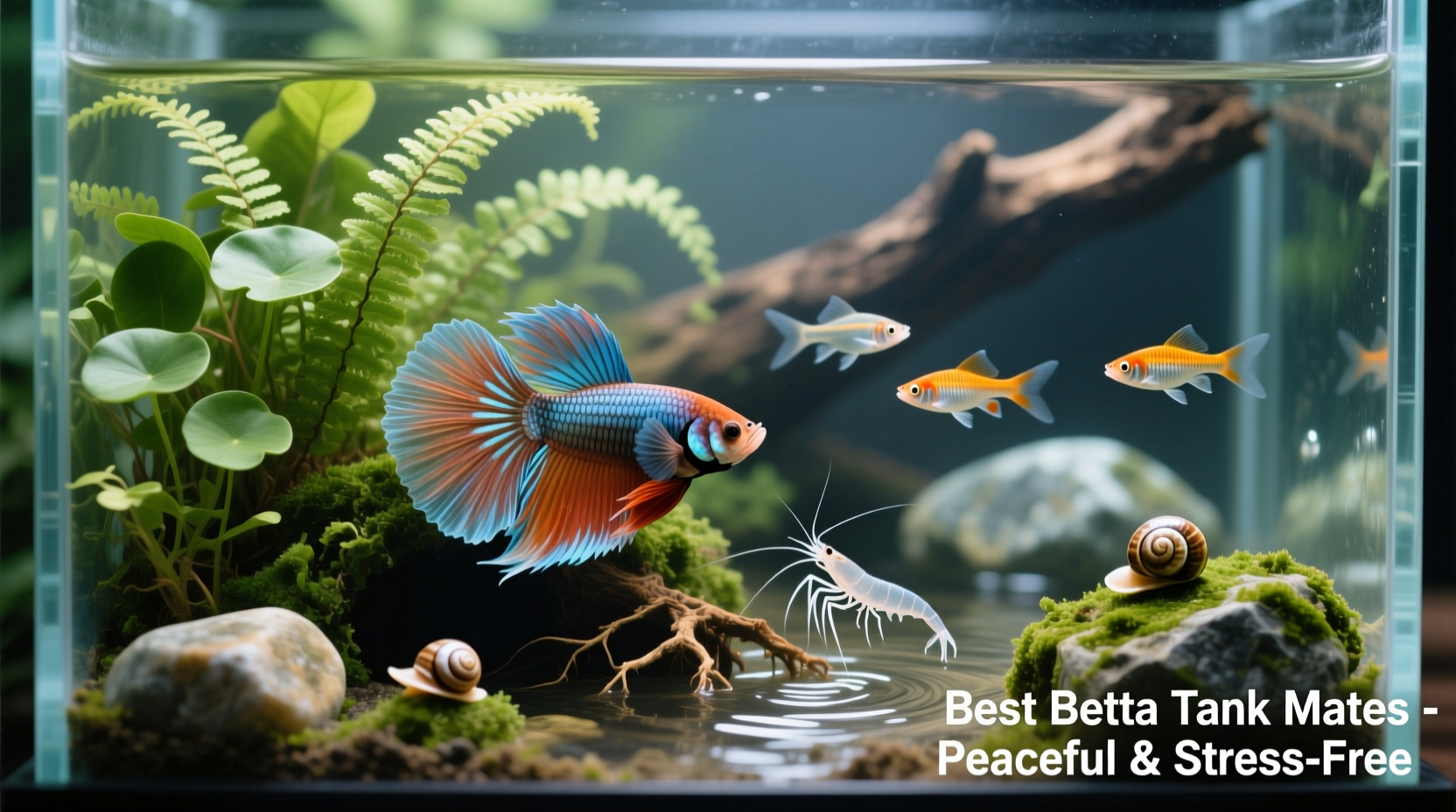
Bettas (Betta splendens) originate from shallow rice paddies, slow-moving streams, and floodplains in Southeast Asia. In these environments, they navigate dense vegetation and temporary water bodies, which shape their natural behaviors: territoriality, short bursts of activity, and reliance on visual cues to identify rivals.
Male bettas, in particular, react aggressively to anything resembling another male—especially those with long fins and bright colors. This response is instinctive, evolved to defend breeding territory. However, this doesn’t mean all interaction with other fish is doomed. The right tank mates avoid triggering these instincts by being small, non-territorial, fast-moving, or occupying different zones of the tank.
Females are generally less aggressive and can sometimes be kept in small groups (called \"sororities\"), though even then careful monitoring is required. For the purpose of this guide, we focus on male bettas in community tanks, as they are more commonly kept and present greater challenges when pairing with others.
“Choosing tank mates isn't just about species—it's about behavior, size, movement, and environmental needs. A peaceful fish in the wrong setup can still stress a betta.” — Dr. Laura Simmons, Aquatic Veterinarian and Ethologist
Top 7 Safe Betta Tank Mates
Not all peaceful fish are suitable for betta tanks. Water parameters, temperament, swimming level, and feeding habits must align. Below are seven of the most reliable companions, backed by aquarist experience and biological compatibility.
- Otto Catfish (Otocinclus affinis) – These tiny algae eaters stay under 2 inches, prefer mid-to-lower levels, and are almost invisible to bettas unless directly competing for food. They thrive in planted tanks with stable water and appreciate biofilm on leaves.
- Corydoras Pygmaeus (Pygmy Corydoras) – Unlike larger cory species, pygmy cories grow to just 1 inch and form tight-knit schools. They stay near the substrate, reducing interaction with the betta, who typically patrols mid-to-upper levels.
- Ember Tetras (Hyphessobrycon amandae) – Bright orange but small (under 1 inch), ember tetras swim quickly in schools of six or more. Their speed helps them avoid nips, and their coloration differs enough from bettas not to provoke aggression.
- Amano Shrimp (Caridina multidentata) – Excellent cleaners that consume algae and detritus. Too large to be seen as food by most bettas, they’re active at night and hide easily in plants. Avoid dwarf shrimp if your betta is predatory.
- Nerite Snails – Known for their algae-eating prowess, nerites have hard shells that deter bettas. They move slowly but spend most time on glass or rocks, rarely entering the betta’s personal space.
- Kuhli Loaches (Pangio kuhlii) – Eel-like bottom dwellers that burrow into soft substrate. Nocturnal and shy, they emerge when the betta is resting. Require groups of 3+ and soft sand to prevent injury.
- Harlequin Rasboras (Trigonostigma heteromorpha) – Peaceful schooling fish around 1.5 inches long. They occupy mid-water, are fast swimmers, and do not resemble bettas in appearance or behavior.
Species to Avoid—and Why
Even seemingly peaceful fish can become problematic due to fin-nipping, territorial behavior, or visual similarity to bettas. The following species are frequently recommended but often lead to conflict:
| Species | Why It’s Risky | Alternative |
|---|---|---|
| Guppies | Long, colorful tails mimic male bettas; may provoke attacks. Males especially are targeted. | Endler’s Livebearer (less flashy strains) |
| Neon Tetras | Can be nipped if kept in small numbers; skittishness stresses bettas. | Ember Tetras (smaller, faster, less contrast) |
| Barbs (e.g., Tiger, Cherry) | Known fin-nippers; high activity increases stress. | Harlequin Rasboras (peaceful, similar look) |
| Dwarf Shrimp (Cherry, Ghost) | May be eaten depending on betta temperament. | Amano Shrimp (larger, less palatable) |
| Other Bettas | Guaranteed aggression between males; females may fight without proper space. | Single male only, or female sorority in 20+ gallon tanks |
The underlying issue isn’t always malice—it’s miscommunication. Fish rely on visual signals, and when a betta sees flowing fins or rapid darting, it interprets it as a challenge or threat. Even non-aggressive fish can inadvertently escalate tension through movement or coloration.
Step-by-Step Guide to Introducing Tank Mates
Introducing new fish incorrectly can undo weeks of stability. Follow this timeline to minimize risk and monitor reactions closely.
- Week 1–2: Quarantine & Observe
Keep new inhabitants in a separate tank. Monitor for illness, confirm eating habits, and assess activity level. - Day 1: Acclimate Slowly
Float the bag for 15 minutes, then drip-acclimate over 60–90 minutes using a tube and air knot to control flow. - Day 1 (After Acclimation): Release Into Community Tank
Turn off lights and release gently. Keep room dim for several hours to reduce initial stress. - Days 2–7: Monitor Closely
Watch for chasing, gill flaring, or hiding. Feed at opposite ends to reduce competition. - Day 8–14: Assess Long-Term Coexistence
If no aggression occurs, gradually resume normal lighting and schedule. Add hiding spots if needed. - Ongoing: Maintain Routine Checks
Observe daily for signs of stress: clamped fins, loss of color, refusal to eat.
Creating the Ideal Environment for Peaceful Coexistence
No amount of careful selection compensates for a poorly designed tank. Stress arises not only from other fish but from inadequate space, poor water quality, and lack of enrichment.
- Tank Size: Minimum 10 gallons for any community setup. Larger volume dilutes aggression, stabilizes water parameters, and allows spatial separation.
- Plants and Hiding Spots: Use live or silk plants (avoid sharp plastic). Java fern, anubias, and moss balls provide cover without trapping fish.
- Water Parameters: Maintain temperature between 78–80°F (25–27°C), pH 6.5–7.5, and near-zero ammonia/nitrite. Bettas are sensitive to fluctuations.
- Filtration: Use a low-flow filter or baffle the intake with a sponge to prevent strong currents that stress bettas.
- Feeding Strategy: Feed betta first in one corner, then add food elsewhere for tank mates. This prevents competition and ensures all are nourished.
A well-planted, spacious tank mimics the betta’s natural habitat, offering security and reducing the need to defend every inch. When fish feel safe, aggression naturally declines.
“In over 15 years of aquarium consulting, I’ve found that 90% of 'aggressive' bettas were simply reacting to poor environmental design—not inherent hostility.” — Mark Tran, Certified Aquarium Specialist (CAS)
Checklist: Preparing Your Betta Tank for Companions
Before adding any tank mate, run through this checklist to ensure safety and compatibility:
- ☐ Tank is at least 10 gallons with stable water parameters
- ☐ Ammonia and nitrite levels are zero; nitrates below 20 ppm
- ☐ Multiple hiding places exist (plants, caves, driftwood)
- ☐ Filtration provides gentle flow (no strong currents)
- ☐ Lighting is moderate; floating plants diffuse brightness
- ☐ Target tank mate is confirmed as non-fin-nipping and appropriately sized
- ☐ New fish has been quarantined for 14 days
- ☐ You have a backup plan (extra tank or divider) in case of incompatibility
Real Example: A Successful Community Transition
Sarah, an intermediate aquarist in Portland, had kept her male veil-tail betta, “Azure,” alone for nine months in a 5-gallon planted tank. After researching compatibility, she upgraded to a 12-gallon long aquarium with a gentle sponge filter, added java moss and anubias, and introduced a school of six ember tetras and two otocinclus.
She acclimated them slowly, feeding Azure first while dropping micro-pellets on the far side for the newcomers. For the first three days, Azure flared once when a tetra darted close, but showed no sustained aggression. By day five, he ignored them completely. Two months later, the tank thrives: algae is under control, water stays clear, and Azure displays natural behaviors—flaring only at his reflection, not tank mates.
The success came down to preparation: upgrading the tank, choosing fast, small fish with different swimming zones, and managing introductions with care.
Frequently Asked Questions
Can I keep female bettas with other fish?
Yes, often more successfully than males. Female bettas are less visually provocative and can coexist with the same peaceful species listed above. However, avoid keeping multiple females with a male unless breeding, as harassment can occur.
Will my betta eat snails or shrimp?
It depends on the individual. Most bettas ignore nerite snails and amano shrimp due to their size and shell. Smaller shrimp like cherry shrimp may be viewed as food, especially if the betta is hungry or particularly predatory. Introduce cautiously and watch closely.
What should I do if my betta attacks a tank mate?
Act immediately. Remove the victim to prevent injury. Consider whether the attack was isolated or ongoing. If persistent, rehome the companion or use a tank divider. Never allow continued aggression—it stresses both fish and can lead to death.
Final Thoughts: Harmony Over Habit
A betta fish doesn’t have to live in isolation. With the right combination of species, tank design, and management, you can create a balanced ecosystem where your betta expresses natural behaviors without fear or fury. The goal isn’t just survival—it’s thriving.
Start small. Choose one compatible species. Monitor diligently. Adjust as needed. Remember that every betta has a unique personality—some are curious and tolerant, others are more defensive. Respect those differences.
By focusing on environmental enrichment, proper acclimation, and informed choices, you give your betta the best chance at a stress-free life—with friends, if appropriate, or in serene solitude if preferred.
💬 Have a betta living peacefully with tank mates? Share your story in the comments—your experience could help another aquarist build a safer, happier aquarium.








