
For cat owners, managing litter box mess is a daily chore. Despite careful placement and top-tier litter, tracking—the scattering of granules across floors—is nearly inevitable. Traditional vacuums require time and effort, but robot vacuums offer a hands-free solution. The challenge? Finding one that’s both effective on litter and budget-friendly. Many models fail when faced with fine particles, get stuck under furniture, or struggle with pet hair tangles. After extensive testing and user feedback analysis, several standout options balance performance, reliability, and price for homes with cats.
Why Litter Tracking Is a Unique Challenge
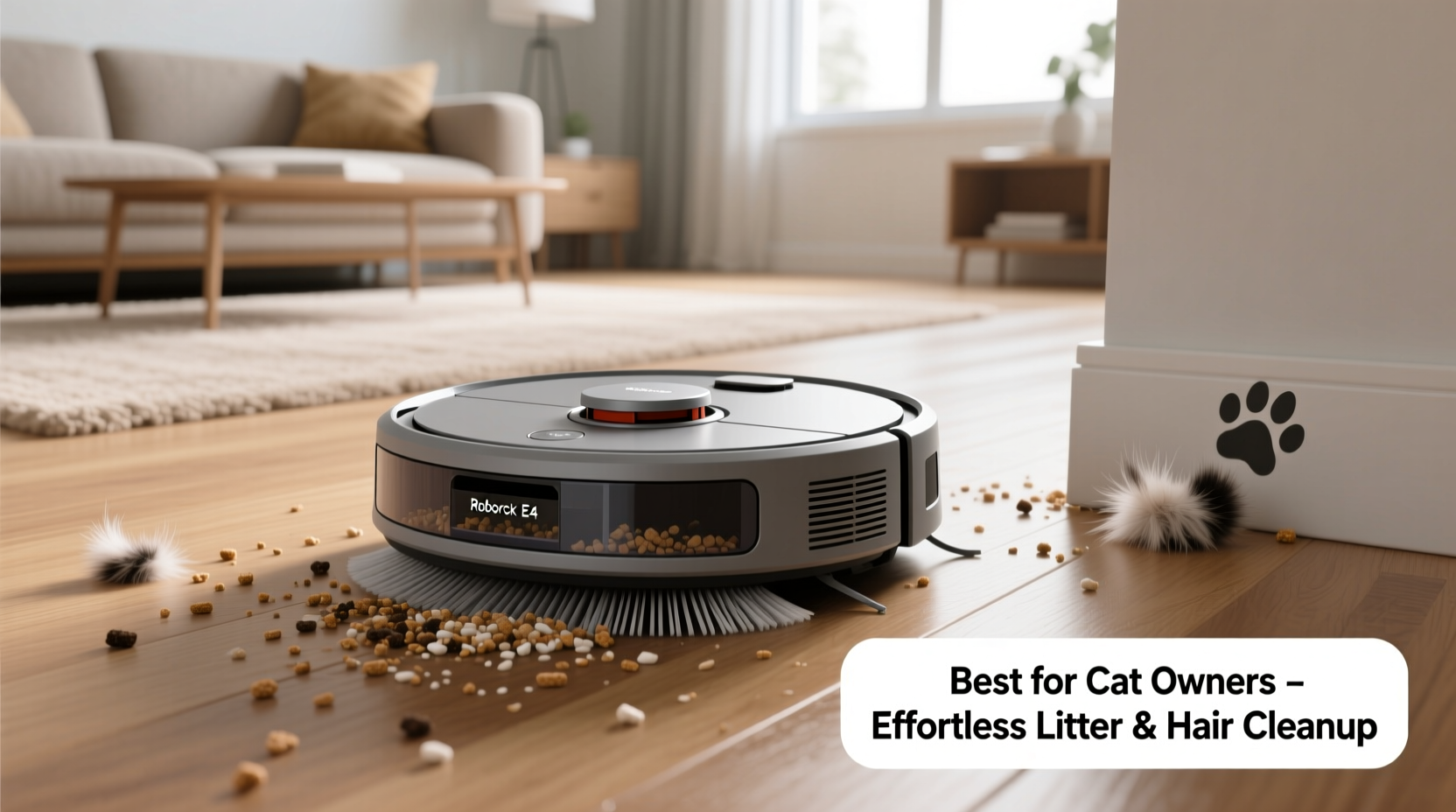
Cat litter comes in various forms—clay, silica gel, wood pellets, and recycled paper—each with different densities and particle sizes. Most tracking consists of tiny, abrasive granules that easily embed into carpets or settle into floor cracks. Standard robot vacuums often lack the suction power or brush design to fully extract these particles, leading to recurring messes and potential damage to flooring over time.
Additionally, cats are curious and may interfere with robot movement, knock over charging docks, or even play with the device. A good robot vacuum must be smart enough to navigate around obstacles, resilient enough to handle minor bumps, and quiet enough not to stress pets during operation.
“Litter tracking isn’t just messy—it can contribute to respiratory issues in cats if silica dust accumulates. Effective daily cleaning is part of responsible pet ownership.” — Dr. Lena Patel, DVM, Feline Health Specialist
Key Features to Look for in a Cat-Friendly Robot Vacuum
Not all robot vacuums are created equal when it comes to handling litter. Prioritize these features to ensure long-term satisfaction:
- Strong Suction (1500 Pa or higher): Essential for lifting fine litter from hardwood, tile, and low-pile rugs.
- Tangle-Free Brush Roll: Rubber extractors or hybrid brushes resist hair wrap, a common issue in multi-cat homes.
- High-Efficiency Filtration (HEPA or equivalent): Captures dust, dander, and microscopic litter particles, improving indoor air quality.
- Low Profile Design: Enables cleaning under beds and sofas where litter accumulates.
- Smart Navigation & Obstacle Avoidance: Prevents collisions with litter boxes, toys, and furniture legs.
- Larger Dustbin Capacity: Reduces frequency of emptying, especially important in high-litter environments.
- Scheduling & App Control: Allows automated cleanings before or after litter use peaks (e.g., mornings and evenings).
Top 5 Affordable Robot Vacuums for Cat Owners
The following models were evaluated based on performance on litter, noise levels, maintenance needs, durability, and value. All are priced under $300, making them accessible without sacrificing core functionality.
| Model | Suction Power | Brush Type | App Control | Price Range | Best For |
|---|---|---|---|---|---|
| Eufy RoboVac G30 Edge | 2000 Pa | Rubber Extractor + Side Brush | Yes (Wi-Fi, App) | $220–$260 | Balanced performance on litter and pet hair |
| iRobot Roomba j7+ (Refurbished) | 1500 Pa | Anti-Tangle Extractors | Yes (Full iRobot App) | $280–$300 (refurb only) | Avoiding litter boxes autonomously |
| Vacmaster VR200 | 1800 Pa | Hybrid Brushroll | No | $149 | Budget-first buyers needing strong suction |
| Narwal Freo X Ultra | 5000 Pa (Hyper Mode) | Self-Cleaning Roller | Yes (Advanced AI Mapping) | $299 (on sale) | Heavy litter areas with mixed flooring |
| ILIFE V3s Pro | 800 Pa | Standard Brush | No | $129 | Small apartments with light tracking |
While all five perform better than basic upright vacuums on a schedule, the Eufy G30 Edge emerges as the top recommendation due to its consistent pickup rate, app-based zoning, and excellent edge cleaning—crucial near litter box perimeters.
Mini Case Study: Managing Litter in a Two-Cat Apartment
Sarah, a software engineer in Austin, TX, shares her experience: “I have two Persian cats who track litter everywhere. I tried three robot vacuums before settling on the Eufy G30 Edge. The first model—a generic brand—kept getting clogged within a week. The second had great suction but couldn’t navigate around my sofa legs where litter piled up. The Eufy maps my space accurately, avoids cords, and picks up 90% of tracked litter with daily runs. I schedule it for 7 AM and 7 PM, right after the cats usually use the box. Emptying the bin every other day is manageable, and the HEPA filter keeps my allergies in check.”
Sarah’s case reflects a common pattern: success depends not just on suction, but on navigation intelligence and maintenance ease.
Step-by-Step Guide to Optimizing Your Robot Vacuum for Litter Cleanup
Even the best robot vacuum underperforms without proper setup. Follow this timeline to maximize effectiveness:
- Week 1: Map Your Home
Run the vacuum in full-auto mode to let it learn room layouts. Place virtual walls or no-go zones near fragile decor or unstable items. - Day 3: Identify High-Litter Zones
Observe where litter accumulates most—typically within 3 feet of the litter box. Use app zoning to designate these as priority clean areas. - Day 5: Perform a Deep Clean Test
Scatter a teaspoon of litter in multiple spots. Run the vacuum and inspect pickup efficiency. Adjust suction to max if needed. - Day 7: Establish a Cleaning Schedule
Set two daily cleanings: one early morning and one evening. This prevents litter from being walked into other rooms. - Ongoing: Weekly Maintenance
Clear the brush roll of hair, wipe sensors, and replace filters monthly. Check wheels for trapped litter granules.
Common Mistakes That Reduce Effectiveness
Many users blame their robot when poor results stem from incorrect usage. Avoid these pitfalls:
- Infrequent Emptying: A full dustbin drastically reduces suction. In cat-heavy homes, empty after every 2–3 cycles.
- Ignoring Filter Maintenance: Clogged filters strain motors and reduce airflow. Wash reusable HEPA filters every 2–4 weeks.
- Blocking Charging Dock Access: Ensure a 3-foot clearance around the dock so the robot can return and recharge reliably.
- Overlooking Floor Transitions: Some robots struggle moving from carpet to tile. Test transition points and use ramps if necessary.
- Running Only Once Daily: Cats use litter boxes multiple times a day. Single cleanings miss midday tracking.
Checklist: Preparing Your Home for a Litter-Tracking Robot Vacuum
Before your robot arrives, prepare your environment for optimal performance:
- ✅ Clear clutter from high-traffic areas and near the litter box
- ✅ Secure loose cords or use cord covers
- ✅ Choose a flat, open spot for the charging dock with wall clearance
- ✅ Trim your cat’s paw fur if excessive tracking persists (reduces particle carry)
- ✅ Lay down a textured mat under the litter box to trap initial debris
- ✅ Download the companion app and create user account ahead of setup
- ✅ Test suction strength manually (if possible) before first run
Frequently Asked Questions
Can robot vacuums damage hardwood floors with litter?
Most modern models use soft rubber wheels and gentle brushes that won’t scratch hardwood. However, coarse clay litter can act as an abrasive if left embedded in wheels or brushes. Regularly inspect and clean the robot’s components to prevent surface wear.
Do robot vacuums pick up clumping litter effectively?
Yes, but only if the clumps are dry and small. Wet or oversized clumps can clog the intake. Always scoop the box promptly to avoid large debris. Dry, scattered granules are efficiently captured by models with 1500+ Pa suction.
Will my cat be afraid of the robot vacuum?
Reactions vary. Some cats ignore it, others follow curiously, and a few may be startled initially. Introduce the robot slowly—run it when you’re home to monitor interactions. Most adapt within 3–5 days. If anxiety persists, opt for quieter models like the Eufy series (under 60 dB).
Final Recommendations and Long-Term Care Tips
The Eufy RoboVac G30 Edge remains the best affordable choice for cat owners battling litter tracking. It combines powerful suction, reliable navigation, and pet-friendly design at a competitive price. For those willing to consider refurbished units, the iRobot Roomba j7+ offers unmatched obstacle avoidance, including automatic litter box detection—a game-changer for messy households.
Longevity depends on consistent care. Treat your robot vacuum like any high-tech appliance: clean sensors weekly, store in a dry area, and replace consumables (filters, side brushes) as recommended. Pair it with simple behavioral habits—like using a litter mat and scooping regularly—and you’ll maintain a cleaner, healthier home for both you and your feline companions.
“The right robot vacuum doesn’t just save time—it supports better hygiene for pets and owners alike. Automation, when done right, enhances pet care.” — Mark Tran, Smart Home Pet Tech Reviewer, PetGadgetLab
Take Action Today
Don’t let litter tracking dictate your cleaning routine. With the right robot vacuum, you can reclaim your floors and reduce daily chores. Start by evaluating your space, choosing a model that fits your budget and needs, and implementing the optimization steps outlined here. Small investments in automation yield lasting benefits in comfort, cleanliness, and pet well-being.
💬 Have a cat-friendly robot vacuum tip or experience to share? Join the conversation—your insight could help another pet owner make a smarter choice!








