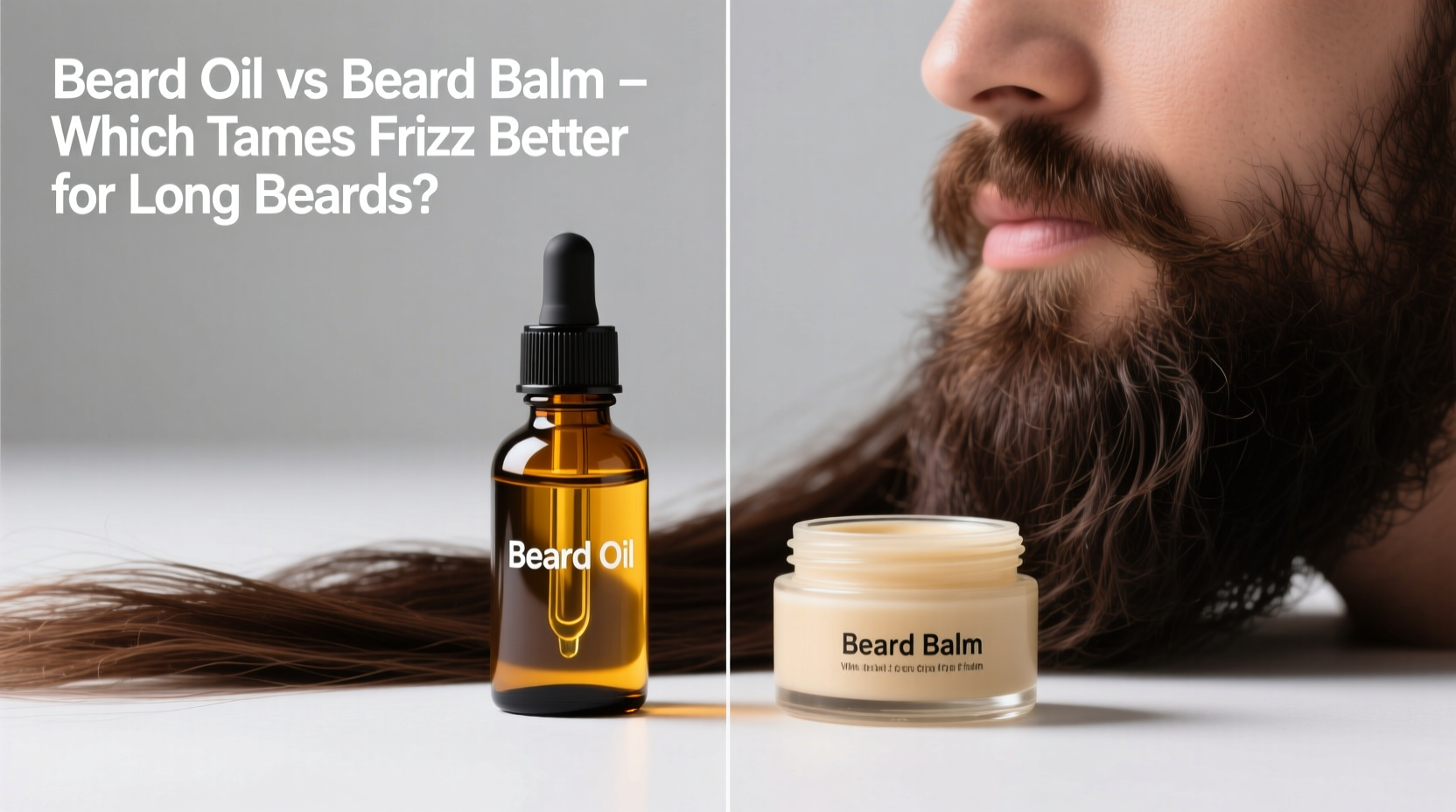
For men with long beards, managing frizz isn’t just about aesthetics—it’s a daily battle against dryness, split ends, and unruly hairs that refuse to stay in place. Two products dominate the grooming scene: beard oil and beard balm. While both claim to nourish and tame, they function differently and serve distinct roles in a beard care routine. Choosing the right one—or knowing when to use both—can mean the difference between a wild mane and a polished, well-groomed statement.
This article breaks down the core differences between beard oil and beard balm, focusing specifically on their effectiveness at controlling frizz in longer facial hair. We’ll explore ingredients, application methods, performance in different climates, and real-world usage scenarios to help you make an informed decision based on your beard type and lifestyle.
Understanding Beard Frizz: Why It Happens
Frizz in long beards occurs primarily due to moisture imbalance. Facial hair, like scalp hair, has a cuticle layer that protects the inner cortex. When this cuticle becomes damaged or raised—due to dryness, environmental exposure, or mechanical stress—individual strands repel each other, creating a fuzzy, unkempt appearance.
The underlying causes include:
- Dry skin beneath the beard: Lack of natural sebum distribution leads to brittle, coarse hairs.
- Humidity fluctuations: High humidity can cause hair to swell and frizz; low humidity strips moisture.
- Poor grooming habits: Infrequent washing, lack of conditioning, or rough towel drying worsen texture.
- Over-washing or harsh soaps: Stripping natural oils increases brittleness and static.
Long beards are especially prone because the hair shafts are older, drier, and farther from the sebaceous glands that produce natural oils. This makes targeted hydration and surface smoothing essential.
Tip: Comb your beard daily with a wide-tooth wooden comb to evenly distribute natural oils and reduce friction-induced frizz.How Beard Oil Works: Deep Conditioning from Within
Beard oil is a lightweight blend of carrier oils (like jojoba, argan, or grapeseed) and essential oils for fragrance. Its primary function is to moisturize both the beard hair and the skin underneath. Because it’s liquid-based and fast-absorbing, it penetrates the hair shaft and replenishes lipids lost to environmental stressors.
Key benefits for long beards:
- Hydrates the skin: Prevents flakiness and “beardruff,” which contributes to coarse texture.
- Softens coarse hair: Oils like sweet almond and avocado are rich in fatty acids that improve elasticity.
- Reduces static: Adds weight and conductivity, minimizing flyaways caused by dry air.
However, beard oil doesn’t provide hold. While it improves overall health and reduces frizz over time, it won’t keep stray hairs in place throughout the day. Think of it as a daily conditioner—essential for maintenance, but not styling.
“Beard oil is the foundation of any long-beard regimen. Without proper hydration, no amount of wax or balm will fix chronic frizz.” — Marcus Reed, Master Barber & Grooming Consultant
How Beard Balm Works: Control Meets Nourishment
Beard balm combines the moisturizing properties of oils with beeswax (or plant-based waxes) and butters like shea or cocoa. The result is a semi-solid product that offers light to medium hold while delivering deep conditioning.
Its structure gives it unique advantages for taming frizz:
- Creates a protective barrier: Wax seals in moisture and shields hair from humidity and wind.
- Smooths the cuticle: Butters coat each strand, reducing friction and static.
- Provides shaping control: Allows you to train longer hairs into place, reducing flyaways.
Because balm sits on the surface more than oil, it acts immediately to smooth and soften. It’s particularly effective in high-friction environments—think collars rubbing against chin hair or windy commutes.
That said, overuse can lead to buildup, especially in thick beards. It’s important to apply sparingly and wash regularly to maintain balance.
Direct Comparison: Oil vs Balm for Frizz Control
To determine which product performs better at frizz control, we need to assess them across key categories relevant to long beards.
| Feature | Beard Oil | Beard Balm |
|---|---|---|
| Moisturizing Power | High – deeply hydrates hair and skin | Moderate to High – conditioners enhance moisture retention |
| Frizz Reduction (Immediate) | Low to Moderate – softens but doesn’t control shape | High – wax seals cuticle and smooths flyaways |
| Hold/Control | None – purely conditioning | Light to Medium – shapes and trains hairs |
| Suitability for Long Beards | Essential base layer | Ideal for finishing and daily management |
| Best Climate | All, especially dry/cold | Variable – works well in wind/humidity |
| Application Speed | Fast – absorbs quickly | Slower – requires warming and even distribution |
The data shows that while beard oil excels at foundational health, beard balm delivers superior immediate frizz control due to its film-forming properties. However, the most effective approach often involves using both.
Tip: Apply beard oil first to damp beard after showering, then follow with a small amount of balm to lock in moisture and style.Real-World Example: Managing a 6-Inch Winter Beard
Consider James, a 34-year-old outdoorsman with a dense, 6-inch beard. During winter, his beard becomes extremely dry due to indoor heating and cold winds. He initially used only beard oil, which helped with itchiness but didn’t stop the top layers from lifting and frizzing around his jawline.
After consulting a barber, he adjusted his routine: applying 4 drops of argan-based oil post-shower, followed by a dime-sized amount of beeswax-heavy balm. He warmed the balm between palms, combed it through from roots to tips, then shaped the edges with a boar bristle brush.
Within three days, frizz dropped significantly. The oil hydrated the inner layers and skin, while the balm smoothed the outer strands and held them in alignment. By combining both, James achieved a healthier, neater appearance without sacrificing natural volume.
This case illustrates that for long beards in challenging conditions, relying on a single product often falls short. Layering provides cumulative benefits.
Step-by-Step Routine for Maximum Frizz Control
Follow this proven sequence to optimize frizz reduction in long beards:
- Wash gently: Use a sulfate-free beard wash 2–3 times per week to avoid stripping oils.
- Pat dry: After washing, towel-dry gently—never rub.
- Apply beard oil: Dispense 3–5 drops (depending on length) into palms, rub together, and massage into beard and skin at the roots.
- Comb through: Use a wide-tooth comb to distribute oil evenly from root to tip.
- Warm the balm: Scoop a pea- to dime-sized amount and rub between palms until melted.
- Apply balm: Work from mid-length to ends first, then back toward roots, ensuring even coating.
- Style and shape: Use a beard brush or fine-tooth comb to train hairs into desired direction.
- Refresh during day: If frizz returns, reapply a tiny amount of balm only to affected areas.
This layered method ensures internal hydration and external smoothing—the two pillars of frizz control.
When to Choose One Over the Other
While combining both is ideal, there are situations where one product may be more appropriate:
- Choose beard oil if:
- Your main issue is dryness or beardruff.
- You have sensitive skin and find wax irritating.
- You prefer a completely natural, non-styling look.
- You live in a consistently dry climate.
- Choose beard balm if:
- Frizz and flyaways are your primary concern.
- You want light hold for shaping sideburns or goatee.
- You’re frequently outdoors in wind or humidity.
- You have coarse, wiry hair that resists lying flat.
Note: Some modern balms use candelilla or carnauba wax instead of beeswax, making them vegan-friendly without sacrificing hold. Similarly, lighter oils like grapeseed or hemp seed offer less greasiness for oily skin types.
Frequently Asked Questions
Can I use beard oil and balm together every day?
Yes, and it’s recommended for long beards. Apply oil first to hydrate, then balm to style and protect. Just ensure you’re not over-applying—start with minimal amounts and adjust based on your beard’s response.
Why does my beard still feel greasy after using oil?
This usually means you’re using too much or not distributing it properly. Try reducing to 2–3 drops and applying to damp (not wet) beard. Also, consider switching to a lighter oil like jojoba, which mimics natural sebum and absorbs faster.
Does beard balm make hair grow faster?
No, balm doesn’t affect growth rate. However, by improving hair health and reducing breakage, it helps you retain length more effectively, giving the appearance of faster growth.
Final Recommendation: Use Both Strategically
So, which tames frizz better for long beards? The answer isn’t either/or—it’s both, used correctly.
Beard oil addresses the root cause of frizz: dehydration. Without it, your beard remains vulnerable to brittleness and split ends. Beard balm, on the other hand, provides the physical smoothing and control needed to manage surface-level chaos. Together, they form a complete defense system against frizz.
Think of oil as your daily vitamin and balm as your armor. One nurtures, the other protects. For optimal results, prioritize quality ingredients—look for non-comedogenic oils, unrefined butters, and natural waxes—and tailor your routine to your environment and beard density.
💬 Ready to conquer frizz for good? Start tonight: apply a few drops of oil, follow with a touch of balm, and feel the difference by morning. Share your experience or ask questions in the comments—let’s build a smarter grooming community together.








