For new parents, especially those often caring for their baby alone, the ability to quickly and securely put on a baby carrier or wrap without assistance can make a significant difference in daily life. Whether you're stepping out for a walk, managing household tasks, or soothing a fussy infant, having your hands free while keeping your baby close is essential. But when it comes to choosing between a structured baby carrier and a stretchy or woven wrap, one critical question arises: which is easier to put on by yourself?
The answer depends on several factors—your experience level, body type, baby’s age and size, and personal preferences. While both options offer benefits, they differ significantly in learning curve, adjustability, and independence of use. Understanding these differences helps parents make an informed decision that supports both comfort and convenience.
Understanding the Basics: Carrier vs Wrap
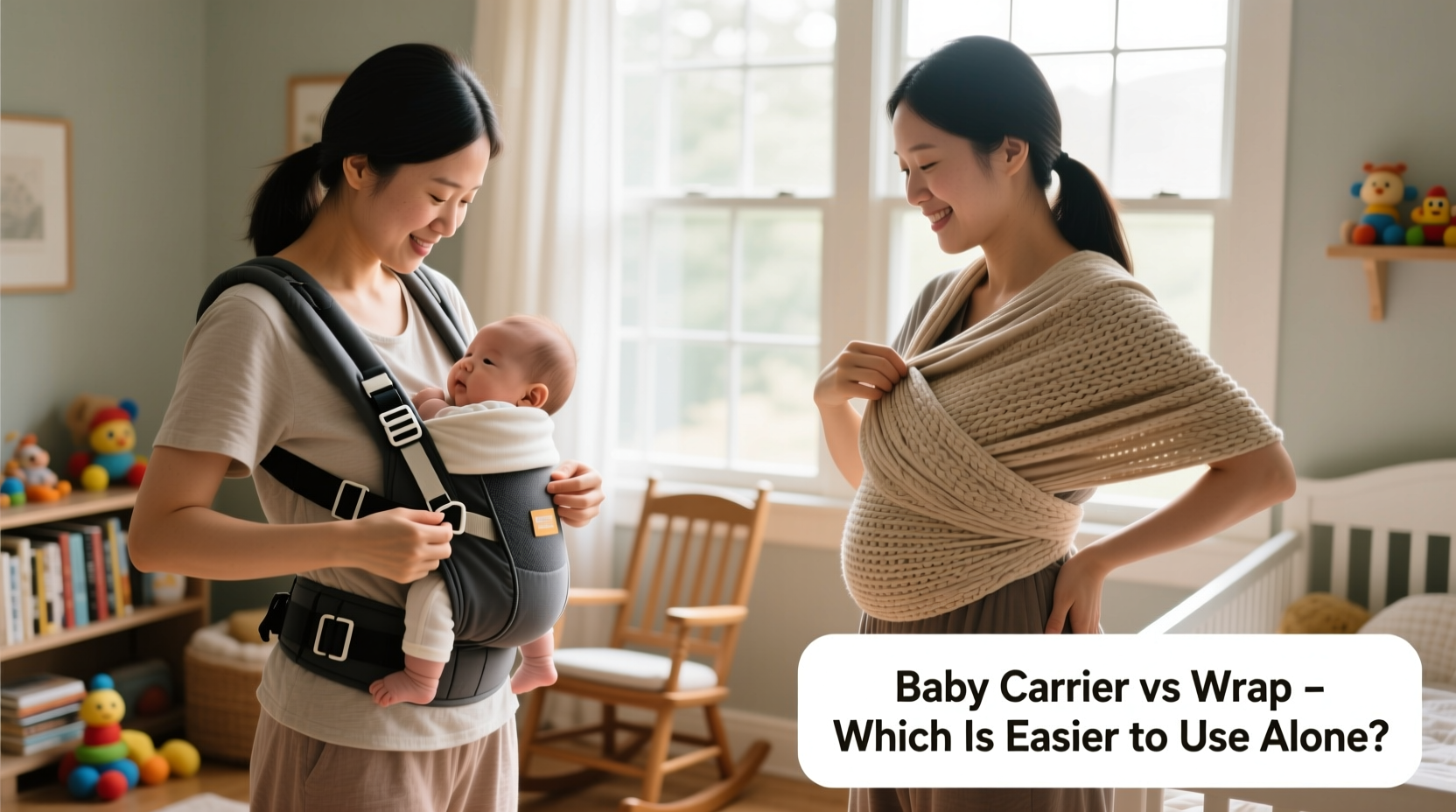
A baby carrier typically refers to a structured, ready-to-wear device made of stiff fabric with buckles, straps, and padding. It resembles a small backpack with chest and waist belts and shoulder straps. Examples include brands like Ergobaby, Tula, and Lillebaby. These carriers are designed for quick deployment once properly adjusted.
In contrast, a baby wrap is a long piece of fabric—usually 4 to 6 meters—that is wrapped around the wearer’s body to create a secure sling for the baby. Wraps come in two main types: stretchy (often made from jersey or similar elastic material) and woven (stiffer, stronger fabric requiring more precise wrapping techniques). Popular wraps include the Boba Wrap, Moby Wrap, and various custom woven brands.
While both aim to keep baby close and supported, their methods of achieving this goal diverge sharply—especially when used solo.
Ease of Use: Solo Application Compared
Putting on a baby carrier or wrap independently requires coordination, flexibility, and practice. However, structured carriers generally have a lower barrier to entry for solo use, particularly after initial adjustments are made.
Tip: Adjust waist and shoulder straps in advance when using a structured carrier—this reduces setup time and makes one-person application much smoother.Structured Baby Carriers: Designed for Independence
Most modern structured carriers are engineered with solo parents in mind. They feature:
- Buckles that allow wearers to secure the waist and chest belts before inserting the baby.
- Padded, pre-shaped shoulder straps that stay open and accessible.
- “Tummy-to-tummy” or “front carry” positions that can be achieved without twisting or complex fabric manipulation.
Once the carrier is sized to your body (a process that may require help the first time), subsequent uses typically involve:
- Fastening the waist belt.
- Securing the shoulder straps.
- Placing the baby into the carrier.
- Adjusting straps and tightening for snugness.
This sequence can usually be completed in under two minutes—even with a wiggly newborn—making structured carriers ideal for caregivers who frequently transition between holding their baby and needing hands-free mobility.
Wraps: Simplicity vs. Skill Requirement
Wraps, particularly stretchy ones, are praised for their softness and adaptability. However, putting on a wrap alone—especially with a baby in hand—is notoriously challenging for beginners. The process demands:
- Managing several meters of fabric without dropping the baby.
- Executing precise wraps and tucks to ensure safety and support.
- Maintaining tension throughout the tying process.
Stretchy wraps are somewhat easier due to their elasticity and forgiving nature, but even then, mastering a front wrap cross carry (the most common method) without assistance takes practice. Woven wraps, while offering superior support for older infants, require even greater precision and strength to tighten properly—all while balancing a baby.
“Parents who use wraps successfully on their own often report spending weeks practicing empty carries before feeling confident enough to do it safely with their baby.” — Dr. Laura Nicholson, Pediatric Occupational Therapist and Infant Positioning Specialist
Comparison Table: Key Factors for Solo Use
| Feature | Structured Carrier | Baby Wrap |
|---|---|---|
| Learning Curve | Low to moderate; intuitive after sizing | Moderate to high; requires practice and technique |
| Solo Application Ease | High; buckle system allows independent use | Low to moderate; difficult to manage fabric and baby simultaneously |
| Setup Time | 1–2 minutes after adjustment | 3–7 minutes, depending on skill level |
| Adjustability Without Help | Easy; micro-adjustments possible mid-use | Limited; major rewrapping often needed |
| Best For | Active caregivers, frequent transitions, solo parenting | Newborns, bonding-focused use, cooler climates (due to coverage) |
| Safety Margin for Error | High; clear indicators (buckles, labels) | Moderate; relies on proper technique and tension |
Real-Life Example: A Single Parent’s Experience
Maya, a single mother of twins born at 36 weeks, found herself navigating newborn care with no consistent partner support. She initially purchased a popular stretchy wrap based on online reviews praising its comfort for preemies. “I watched the same tutorial five times,” she recalls. “But every time I tried to put it on with one baby in my arms, the fabric slipped, or I couldn’t get the tension right.”
After two weeks of frustration—and one near-drop incident—she invested in a structured carrier with an infant insert. “The first time I used it alone, I cried. I actually got it on, clicked the buckles, and had both hands free in under 90 seconds. It changed everything.”
Maya now uses the wrap only during supervised moments at home, reserving the carrier for outings, grocery runs, and managing her toddlers. Her experience highlights a common reality: emotional investment in a product doesn’t always align with functional practicality, especially when physical and mental bandwidth is limited.
Step-by-Step: How to Put On Each Type Alone
Structured Carrier (Front Carry – Solo Method)
- Pre-adjust: Set waist belt and shoulder straps to your usual fit (do this once when someone can help).
- Position carrier: Hold it behind you and swing the waist belt to the front, fastening it snugly over your hips.
- Shoulder straps: Pull them over each shoulder like a backpack. Fasten chest clip if applicable.
- Pick up baby: Hold baby against your chest with one arm supporting their bottom.
- Insert baby: Lean slightly forward, slide baby into the carrier seat, ensuring legs are in the “M” position.
- Secure and adjust: Tighten shoulder straps and check for proper head and neck support.
Stretchy Wrap (Front Wrap Cross Carry – Solo Attempt)
- Prepare wrap: Drape the wrap over one shoulder so the longer end hangs across your back.
- Create pocket: Bring the long end across your chest, under the opposite arm, and around your back.
- Anchor: Have the tail tucked or held in place temporarily (e.g., under elbow).
- Pick up baby: With free hand, lift baby to your chest.
- Wrap again: Take the long end, bring it across your back, over the shoulder with baby, and down across your chest.
- Tuck and tighten: Pass the end under baby’s bottom and up through the front cross, then tie off securely.
- Check: Ensure baby’s face is visible, chin off chest, and hips are well-supported.
Note: This method is extremely difficult without prior practice and a cooperative baby. Most experts recommend learning with an empty wrap first and using a mirror to monitor positioning.
Tip: Practice wrapping with a doll or stuffed animal until muscle memory develops. Film yourself to check alignment and security.When Wraps Shine: Situations Where They Make Sense
Despite the challenges of solo use, wraps offer unique advantages in specific scenarios:
- Newborn stage: Stretchy wraps provide excellent head and neck support and mimic swaddling.
- Bonding focus: Skin-to-skin contact is easier due to less padding and structure.
- Warm weather: Woven wraps allow airflow and can be tied loosely for breathability.
- Extended wear: Once mastered, some parents find wraps more comfortable for long durations due to distributed weight.
However, these benefits often come with a trade-off in speed and independence. For parents who value efficiency and reliability—especially during sleep-deprived early months—a structured carrier is typically the more practical choice.
Frequently Asked Questions
Can I use a wrap safely by myself?
Yes, but only after extensive practice without the baby present. Safety depends on correct tension, proper knotting, and maintaining visibility of the baby’s face. Many parents report needing 10–15 practice sessions before attempting solo use with their infant.
Are there carriers designed specifically for solo use?
Yes. Some carriers, like the Solly Baby Wrap (a hybrid wrap-carrier) or the Baby K’tan (which uses a double-loop design), are engineered for easier self-application. These combine the snugness of a wrap with the structure of a carrier, reducing fabric management challenges.
What’s the safest way to switch from a wrap to a carrier alone?
If transitioning while wearing the baby, ensure the new carrier is pre-positioned and secured at the waist. Support the baby with one arm while removing the wrap layer by layer, then transfer into the carrier. Never leave the baby unsecured during transfer. Alternatively, lay the baby down safely, change carriers, then reposition them.
Checklist: Choosing the Right Option for Solo Use
- ✅ Assess how often you’ll be carrying baby alone.
- ✅ Consider your physical strength and mobility—can you lean forward easily?
- ✅ Think about frequency of use—do you need something fast and repeatable?
- ✅ Evaluate baby’s age and size—newborns may benefit more from wrap-like support.
- ✅ Try before you buy—if possible, rent or demo both types.
- ✅ Prioritize safety certifications (look for hip-healthy design and ASTM compliance).
- ✅ Watch real-user videos, not just brand tutorials, to gauge actual difficulty.
Final Recommendation
For most parents who need to put on a baby carrier by themselves regularly, a structured carrier is the more practical, safer, and time-efficient option. Its design prioritizes ease of use, consistency, and accessibility—critical qualities when managing a baby with no extra hands available.
Wraps remain a valuable tool, particularly in the early newborn phase or for caregivers who prioritize closeness over convenience. However, their steep learning curve and difficulty in solo application make them less ideal as a primary, go-to solution for independent carrying.
The best approach may be hybrid: start with a structured carrier for daily functionality, then add a wrap later for special bonding moments when time and support are available. This dual-system strategy offers both safety and versatility without sacrificing peace of mind.
💬 Have you mastered solo wrap use or rely on a carrier? Share your story or tips in the comments—your experience could help another parent find confidence and comfort.








