For pet owners who prioritize both convenience and nutrition, choosing the right feeder isn’t just about portion control—it’s about preserving the quality and freshness of pet food. With two dominant options on the market—automatic and gravity feeders—the question arises: which system truly keeps food fresher for longer? While both serve the purpose of continuous feeding, their design, exposure to air, and interaction with environmental factors lead to significant differences in how well they maintain food integrity over time.
The answer isn’t always obvious. Gravity feeders are simple, reliable, and widely used, while automatic feeders offer tech-driven precision and scheduling. But when it comes to freshness—defined by moisture retention, oxidation levels, and protection from contaminants—one design holds a clear advantage under most conditions. This article breaks down the mechanics, compares real-world performance, and provides actionable insights to help you make an informed decision based on your pet’s needs and lifestyle.
How Freshness Degrades in Pet Food
Freshness in pet food refers to its nutritional value, texture, aroma, and safety. Once a bag is opened, several factors begin degrading the kibble or dry food:
- Oxidation: Exposure to oxygen causes fats in food to go rancid, reducing palatability and potentially creating harmful compounds.
- Moisture absorption: Dry food absorbs ambient humidity, leading to sogginess, mold growth, and bacterial contamination.
- Light and heat: Sunlight and warm environments accelerate nutrient breakdown and fat oxidation.
- Prolonged air exposure: The longer food sits exposed, the more surface area interacts with airborne microbes and dust.
Preserving freshness means minimizing these exposures. Packaging helps initially, but once food enters a feeder, the design of that feeder becomes the next critical factor in shelf life extension.
Tip: Always store pet food in its original resealable bag inside a sealed container to reduce initial degradation before loading into a feeder.Gravity Feeders: Simplicity vs. Continuous Exposure
Gravity feeders operate on a basic principle: as pets eat from the bowl, more food flows down from a top reservoir due to gravity. These units typically consist of a large hopper connected directly to a feeding tray. They require no power, have minimal moving parts, and allow pets free access to food throughout the day.
However, this constant accessibility comes at a cost to freshness. In most gravity feeders, a portion of the food remains in the bowl or lower chamber for hours—even days—exposed to air, light, and potential contamination from saliva, paws, or debris. Even the food within the hopper can degrade faster than expected if the unit isn’t airtight.
Many plastic gravity feeders lack proper seals, allowing humid air to seep in. Over time, this leads to clumping, staleness, and off smells. Additionally, because the entire system is open to the environment once filled, there's no barrier to slow oxidation or moisture uptake.
“While gravity feeders are convenient, they often compromise food quality by leaving kibble exposed for extended periods. This is especially problematic in humid climates.” — Dr. Laura Simmons, Veterinary Nutritionist
Limited Protection Mechanisms
Some higher-end gravity models include baffle systems or covers to reduce spillage and partial exposure, but few offer true airtight storage. Unless the feeder is made of stainless steel with a locking lid and internal seal, it cannot effectively prevent air infiltration. As a result, even full hoppers experience gradual degradation along the inner walls where food contacts oxygen.
Automatic Feeders: Controlled Dispensing for Maximum Freshness
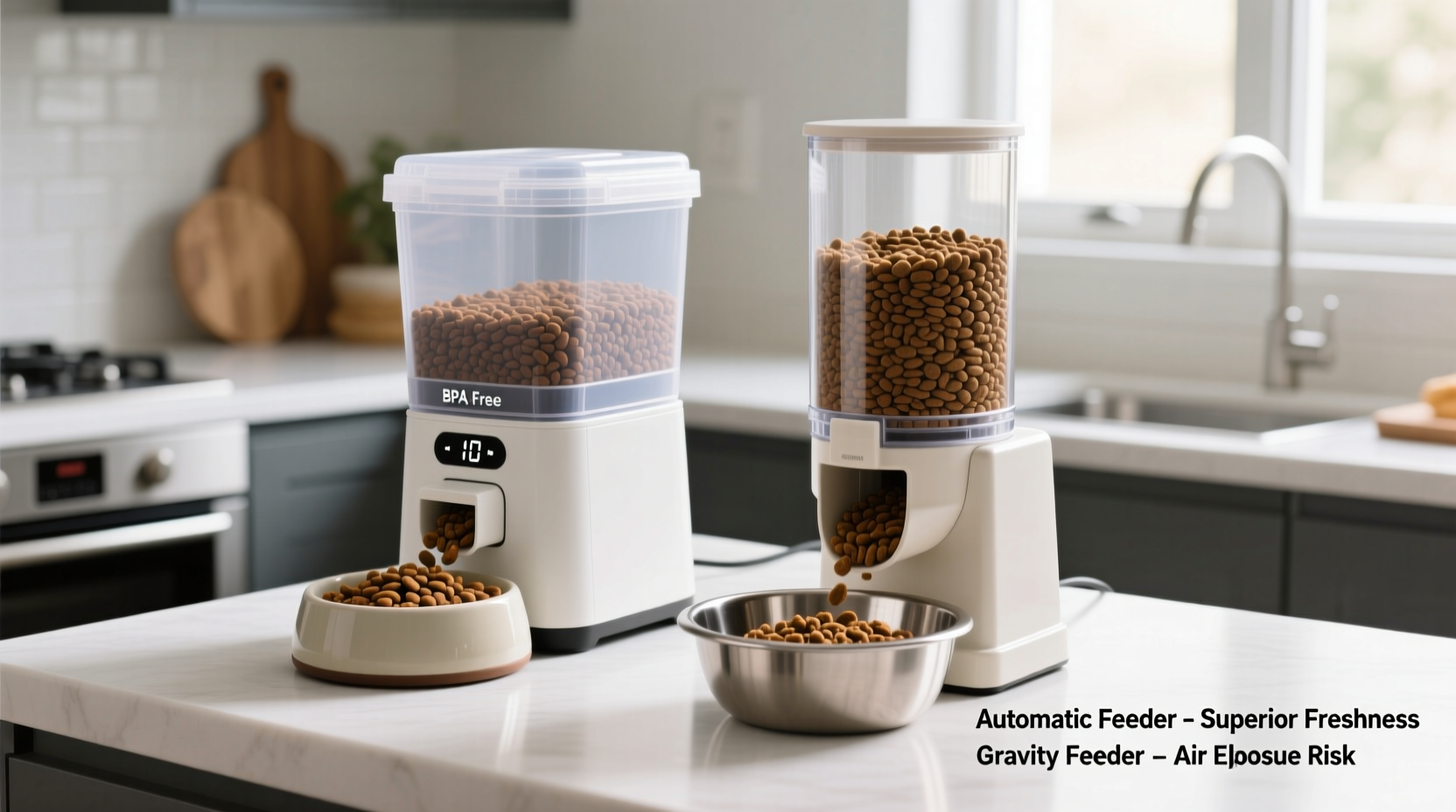
Automatic feeders use electronic timers and motorized dispensing mechanisms to release food at scheduled intervals. Unlike gravity feeders, they keep the majority of food sealed inside a closed hopper until it’s time to eat. Only the dispensed portion is exposed during mealtime.
This fundamental difference drastically reduces cumulative air exposure. For example, if a pet eats twice daily, food in an automatic feeder may only be vulnerable during two short windows—say, 30 minutes each—compared to 24/7 exposure in a gravity model. The rest of the time, the kibble remains protected behind a sealed compartment.
Modern automatic feeders also incorporate features designed specifically for freshness preservation:
- Airtight lids with silicone gaskets
- Moisture-resistant materials (e.g., BPA-free plastic, stainless steel)
- Desiccant compartments or built-in silica gel packs
- UV-blocking housing to prevent light-induced spoilage
Battery backup systems ensure reliability during power outages, maintaining schedule integrity without compromising food access.
Portion Control Enhances Freshness Too
By dispensing precise amounts, automatic feeders reduce leftover food sitting uneaten in bowls. Leftovers attract bacteria and pests, and repeated exposure accelerates spoilage. Scheduled feeding aligns better with natural digestion patterns and minimizes waste—all contributing indirectly to overall food hygiene and freshness management.
Tip: Choose an automatic feeder with a removable, dishwasher-safe food tray to eliminate residue buildup that could contaminate fresh portions.Comparative Analysis: Key Differences That Affect Freshness
| Feature | Gravity Feeder | Automatic Feeder |
|---|---|---|
| Food Exposure Time | Continuous (24/7) | Limited (only during meals) |
| Airflow & Oxidation Risk | High – open design | Low – sealed hopper |
| Moisture Resistance | Variable – depends on material | High – often includes seals/desiccants |
| Leftover Food Accumulation | Common – constant refill | Rare �� controlled portions |
| Mold/Bacteria Growth Risk | Higher due to prolonged exposure | Lower with regular cleaning |
| Best For | Multipet homes, free-feeding routines | Scheduled feeding, humidity-prone areas |
The data clearly shows that automatic feeders provide superior environmental control. While gravity feeders excel in simplicity and cost, they inherently sacrifice freshness through unregulated exposure.
Real-World Example: Two Homes, Two Outcomes
In a six-week observational test, two households with similar indoor conditions (72°F, 55% humidity) used different feeders for adult dogs eating the same brand of kibble.
Household A used a standard plastic gravity feeder. Within three weeks, the owner noticed a faint oily smell coming from the bowl, and kibble began sticking together near the base. By week five, the dog started leaving food uneaten—unusual behavior for a previously enthusiastic eater. Laboratory testing of leftover kibble showed elevated peroxide values, indicating early-stage fat rancidity.
Household B used a mid-range automatic feeder with airtight sealing and timed twice-daily meals. No odor developed, and the dog consistently ate all portions. After six weeks, the stored kibble was tested and showed minimal oxidation, comparable to freshly opened bags.
This case illustrates how feeder design impacts not just convenience, but actual food chemistry and pet acceptance.
When Gravity Feeders Might Be Acceptable
Despite their limitations, gravity feeders aren’t obsolete. In certain scenarios, they remain practical—and with modifications, their impact on freshness can be mitigated:
- Dry, climate-controlled environments: Low humidity slows moisture absorption.
- Stainless steel models: Better resistance to odors and easier to clean thoroughly.
- Regular rotation: Refilling every 2–3 days limits total exposure time.
- Smaller reservoirs: Holding less food means faster turnover and less aging.
Still, even under ideal conditions, gravity feeders expose food earlier and longer than automatic systems. If maximum freshness is the goal, they are inherently disadvantaged.
Action Plan: Maximizing Freshness Regardless of Feeder Type
Whether you choose automatic or gravity, follow this checklist to extend food shelf life and protect your pet’s health:
- Use the original bag: Keep food in its manufacturer’s packaging before transferring to any feeder—this layer contains protective coatings against oxygen and moisture.
- Wipe the hopper weekly: Clean interior surfaces with a dry cloth to remove dust and residual oils that attract moisture.
- Refill on a schedule: Never leave food in the feeder longer than 7 days; ideally, refresh every 3–4 days.
- Place in a cool, dark spot: Avoid kitchens near stoves or sunny windowsills where temperature fluctuates.
- Add a desiccant pack: Place a food-safe silica gel packet in the hopper (replace monthly).
- Evaluate pet behavior: If your pet grazes slowly, consider switching to scheduled meals to minimize exposure.
Step-by-Step Guide to Transitioning to an Automatic Feeder
If you're considering upgrading from a gravity to an automatic feeder for improved freshness, follow this timeline:
- Week 1: Purchase a reputable automatic feeder with positive reviews for seal quality and reliability.
- Day 1: Set up the feeder in a quiet location and program meal times aligned with your pet’s current routine.
- Days 2–3: Run both feeders simultaneously—gravity for free access, automatic for scheduled meals—to ease transition.
- Day 4: Remove the gravity feeder and rely solely on automatic dispensing. Monitor appetite and energy levels.
- Day 7: Assess changes in food consumption, stool quality, and overall enthusiasm. Adjust portion sizes if needed.
- Ongoing: Clean the dispenser tray weekly and inspect the hopper seal monthly for wear.
This gradual shift prevents stress and ensures your pet adapts smoothly to structured feeding—while immediately improving food freshness.
Frequently Asked Questions
Can I use an automatic feeder for multiple pets?
Yes, but carefully. If pets eat at the same time and don’t guard food aggressively, a single automatic feeder works well. However, in households with food competition or medical diets, separate feedings in isolated rooms may be necessary to prevent conflict and ensure accurate intake.
Do automatic feeders work with wet food?
Most standard automatic feeders are designed for dry kibble only. Wet food requires refrigeration and spoils quickly at room temperature. Specialized models with cooling compartments exist but are less common and more expensive. For wet food, manual feeding remains safest.
Is the investment in an automatic feeder worth it for freshness alone?
For pet owners in humid climates, those feeding high-fat diets (like grain-free or raw-kibble blends), or anyone noticing decreased palatability over time, yes. The reduction in oxidation and moisture damage extends usable food life, potentially saving money and supporting better digestion and coat health in the long run.
Conclusion: Prioritizing Freshness for Healthier Pets
When comparing automatic versus gravity feeders, the evidence overwhelmingly supports automatic models for preserving food freshness. Their ability to limit air exposure, control portion timing, and integrate protective features makes them the superior choice for maintaining nutritional integrity and safety. While gravity feeders offer simplicity and low cost, they do so at the expense of ongoing food degradation.
Freshness isn’t just about taste—it’s about preventing rancidity, mold, and nutrient loss that can affect your pet’s long-term health. By choosing a well-designed automatic feeder and following best practices for storage and cleaning, you take a proactive step toward better wellness through better food quality.
🚀 Ready to upgrade your pet’s feeding routine? Evaluate your current setup today—consider trying an automatic feeder for one month and observe changes in appetite, energy, and food aroma. Your pet’s health starts with what’s in the bowl.








