
In today’s fast-paced world, pet owners are increasingly turning to automated solutions to manage feeding schedules. Among the most popular options are automatic feeders and gravity feeders—both designed to reduce daily effort. But as convenience rises, so do concerns: Does removing the ritual of scheduled feeding dull a pet’s instincts? Could these devices contribute to laziness, weight gain, or behavioral issues? The answer isn’t straightforward, but understanding how each system works—and how pets respond to them—is key to making an informed choice.
How Automatic and Gravity Feeders Work
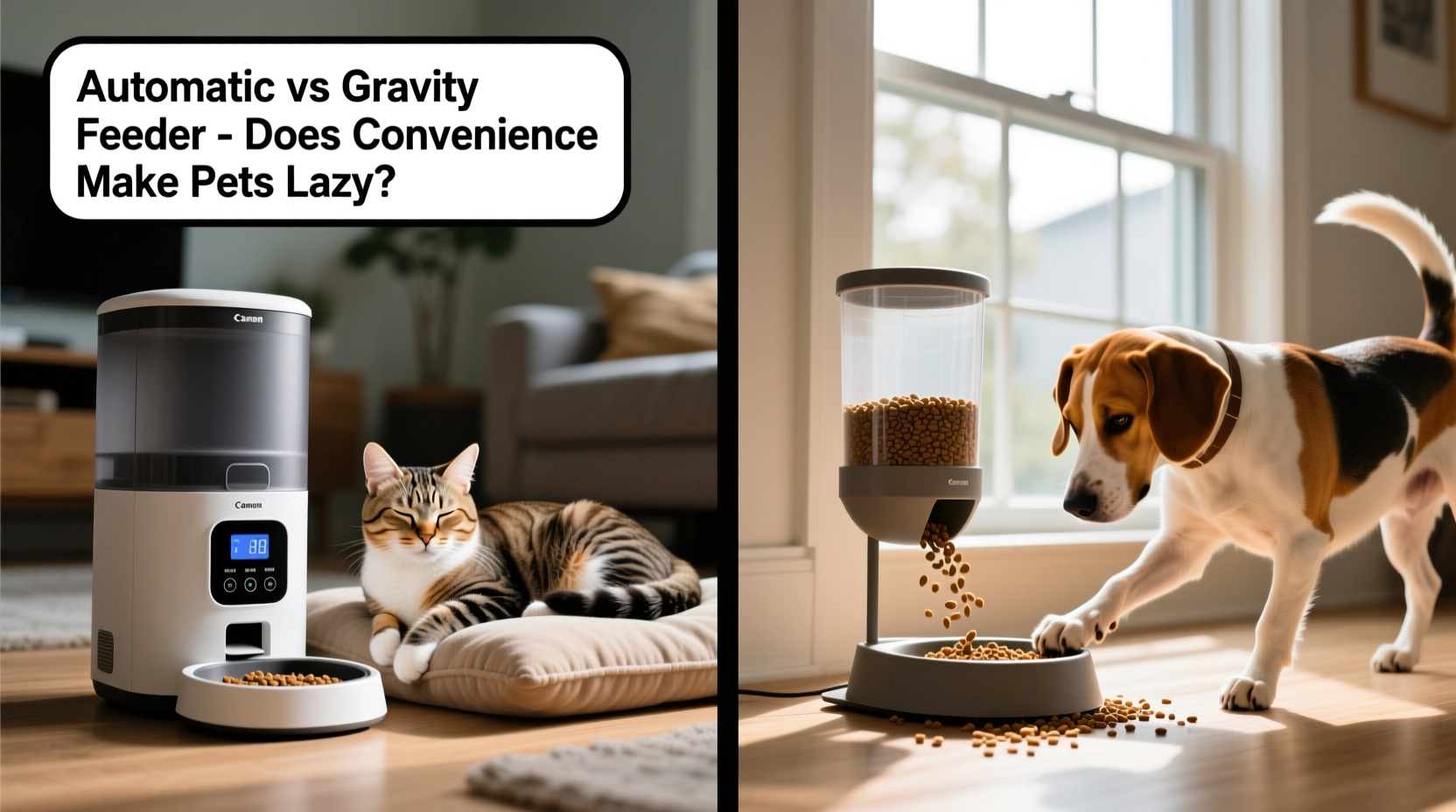
Before evaluating their long-term effects, it's important to distinguish between the two systems.
Automatic feeders are electronically powered devices that dispense food at preset times. Many models include features like portion control, mobile app integration, voice recording, and even camera monitoring. These feeders operate on timers and are ideal for owners with irregular schedules or those who travel frequently.
Gravity feeders, on the other hand, rely on a simple mechanical principle: as food is eaten from a bowl, more flows down from an overhead reservoir. There’s no timer or programming involved. As long as the container is full, food remains available—a setup often described as “free-choice” feeding.
The core difference lies in control. Automatic feeders offer precision; gravity feeders prioritize accessibility. This distinction shapes everything from portion management to pet behavior over time.
Comparing Key Features
| Feature | Automatic Feeder | Gravity Feeder |
|---|---|---|
| Portion Control | Yes – precise, programmable servings | No – continuous access |
| Meal Timing | Scheduled (e.g., 7 AM & 6 PM) | Unrestricted (available 24/7) |
| Battery/Power Dependent | Yes (requires electricity or batteries) | No (mechanical operation) |
| Ideal For | Pets needing strict diets or routine | Multipet households or free-feeders |
| Risk of Overeating | Low (if properly programmed) | High (especially in less active pets) |
| Cost | Moderate to high ($50–$150+) | Low ($15–$40) |
Behavioral Impact: Do Feeders Reduce Natural Instincts?
Cats and dogs evolved as hunters and foragers. In the wild, they expend energy to locate, chase, and consume food—a process that engages both body and mind. Modern domestication has already reduced many of these challenges, and automated feeding may further diminish natural behaviors.
With a gravity feeder, food is always present. There’s no anticipation, no effort required. Over time, this can condition pets to graze passively, often while lounging. Similarly, automatic feeders, while structured, remove the human interaction traditionally associated with feeding—no handouts, no eye contact, no verbal cues.
Dr. Lena Torres, a veterinary ethologist at the National Companion Animal Study Group, explains:
“Feeding isn’t just about nutrition—it’s a social and cognitive event for pets. When we automate the entire process without compensating enrichment, we risk creating animals that are physically and mentally under-stimulated.” — Dr. Lena Torres, DVM, PhD in Animal Behavior
This doesn’t mean automation is inherently harmful. But when used in isolation—without play, training, or environmental engagement—it can contribute to what some experts call “behavioral atrophy.” Pets may become less responsive, less curious, and more prone to sedentary habits.
Weight Gain and Metabolic Health
One of the most tangible risks tied to certain feeding methods is obesity. According to the Association for Pet Obesity Prevention, over 60% of cats and 56% of dogs in the U.S. are overweight or obese. Free-feeding via gravity bowls is consistently linked to higher caloric intake, especially in breeds predisposed to overeating, such as Labrador Retrievers or Domestic Shorthair cats.
A 2022 study published in the *Journal of Veterinary Behavior* observed two groups of indoor cats over six months. One group used gravity feeders; the other was fed twice daily via automatic dispensers with measured portions. By the end of the trial, the gravity-fed group showed a 23% higher average weight gain and significantly lower activity levels during daylight hours.
While correlation doesn’t equal causation, the pattern suggests that constant food availability reduces motivation to move. When meals require no effort, pets don’t burn calories seeking nourishment—even in small ways, like walking to a feeding station or waiting with mild anticipation.
Tip: If using a gravity feeder, limit refills to specific times of day and remove the bowl overnight to create natural fasting periods.Enrichment Strategies to Prevent Laziness
The real issue isn’t the feeder itself—it’s the lack of balance in the pet’s overall lifestyle. Automation becomes problematic only when it replaces all forms of engagement. The solution lies in intentional enrichment.
Consider this scenario: Sarah, a remote worker, uses an automatic feeder for her 3-year-old tabby, Milo. At first, Milo adjusted well. But after three months, Sarah noticed he slept 18 hours a day, ignored his toys, and meowed excessively at night. Concerned, she consulted a feline behaviorist, who recommended restructuring Milo’s environment—not eliminating the feeder, but enhancing mental stimulation around it.
Within weeks, Sarah introduced timed puzzle feeders, window perches with bird feeders outside, and short training sessions using kibble rewards. She also reprogrammed the automatic feeder to dispense smaller portions at irregular intervals, mimicking unpredictability in prey availability. Milo’s activity increased by nearly 40%, and his nighttime vocalizations ceased.
This case illustrates a crucial point: technology doesn’t make pets lazy—poorly balanced routines do.
Action Checklist: Combating Sedentary Habits
- Use puzzle feeders or treat-dispensing toys alongside automated systems
- Schedule 2–3 interactive play sessions daily (even 10 minutes helps)
- Rotate toys weekly to maintain novelty
- Introduce “hunting” simulations (e.g., hiding kibble in paper bags)
- Limit free-feeding duration if using gravity bowls
- Monitor weight monthly and adjust portions accordingly
- Engage in positive reinforcement training using food rewards
When Each Feeder Type Makes Sense
Neither automatic nor gravity feeders are universally better—they serve different needs.
Automatic feeders excel when:
- You have a strict feeding schedule due to work or travel
- Your pet requires portion-controlled meals for health reasons
- You want to maintain consistent timing to support digestion or medication routines
- You’re training your pet with timed rewards or behavioral conditioning
Gravity feeders may be appropriate when:
- You have multiple pets with similar dietary needs
- Your pet is highly active and self-regulates intake (common in working dogs or outdoor-access cats)
- You’re using high-quality, low-calorie food and closely monitoring consumption
- You supplement with enrichment activities that offset passive eating
However, veterinarians generally caution against gravity feeding for indoor-only pets, especially those neutered/spayed, as their metabolic rate tends to be lower.
Step-by-Step: Transitioning to a Balanced Feeding Routine
- Evaluate current habits: Track your pet’s daily food intake, activity level, and weight for one week.
- Choose the right feeder: Select automatic for control, gravity for accessibility—but never assume “set it and forget it.”
- Set feeding windows: Even with gravity feeders, limit availability to 12 hours/day (e.g., 7 AM–7 PM).
- Add food puzzles: Replace 25–50% of bowl meals with interactive feeding games.
- Integrate movement: Place the feeder in a slightly inconvenient spot (e.g., upstairs) to encourage walking.
- Monitor and adjust: Reassess every month. Is your pet maintaining ideal weight? Are they engaged?
Frequently Asked Questions
Can automatic feeders cause anxiety in pets?
Some sensitive animals may initially react to the noise or sudden movement of an automatic feeder. To prevent stress, introduce the device gradually—run it empty for a few days, then add small treats during activation. Pair the sound with positive experiences (petting, praise) to build a favorable association.
Is free-feeding ever safe?
Yes, but only under specific conditions. Free-feeding can work for very active pets, those recovering from illness, or kittens/puppies needing frequent meals. However, it should always be paired with calorie monitoring, high-fiber/low-fat food, and ample physical activity. For most adult pets, scheduled feeding is safer and more sustainable.
Do pets lose their bond with owners when feeders take over?
Not necessarily—but the owner must compensate. If feeding was the primary interaction, replacing it entirely with automation can weaken the relationship. Instead, shift bonding moments to playtime, grooming, or training. Use food rewards during these sessions to maintain positive associations with you, not just the machine.
Conclusion: Convenience Without Compromise
Automatic and gravity feeders offer undeniable convenience, but convenience should never come at the cost of a pet’s mental and physical vitality. The goal isn’t to eliminate automation, but to integrate it wisely within a stimulating, balanced lifestyle. Whether you choose timed dispensing or continuous access, the outcome depends on what happens outside feeding time.
Pets thrive on routine, interaction, and challenge. A feeder—no matter how advanced—should support those needs, not replace them. By combining smart technology with intentional enrichment, you can enjoy the ease of modern pet care while keeping your companion sharp, active, and truly fulfilled.
🚀 Ready to optimize your pet’s feeding routine? Audit your current setup today—ask: Is my pet eating easily, or eating meaningfully? Small changes now can lead to years of healthier, more vibrant companionship.








