For cat owners juggling work schedules, travel, or unpredictable routines, maintaining a consistent feeding schedule can be a challenge. Cats thrive on routine—especially when it comes to meal times. Irregular feeding can lead to digestive issues, overeating, or behavioral changes like excessive meowing or food aggression. Two popular solutions have emerged to address this: automatic pet feeders and timed portion-controlled bowls. While both aim to deliver meals at set times, they differ significantly in design, functionality, and long-term impact on feline health.
Choosing between an automatic pet feeder and timed bowls isn’t just about convenience—it’s about ensuring your cat receives the right amount of nutrition at the right time, every day. This article breaks down how each system works, compares their strengths and limitations, and helps you decide which option best supports your cat’s dietary consistency and overall well-being.
How Automatic Pet Feeders Work
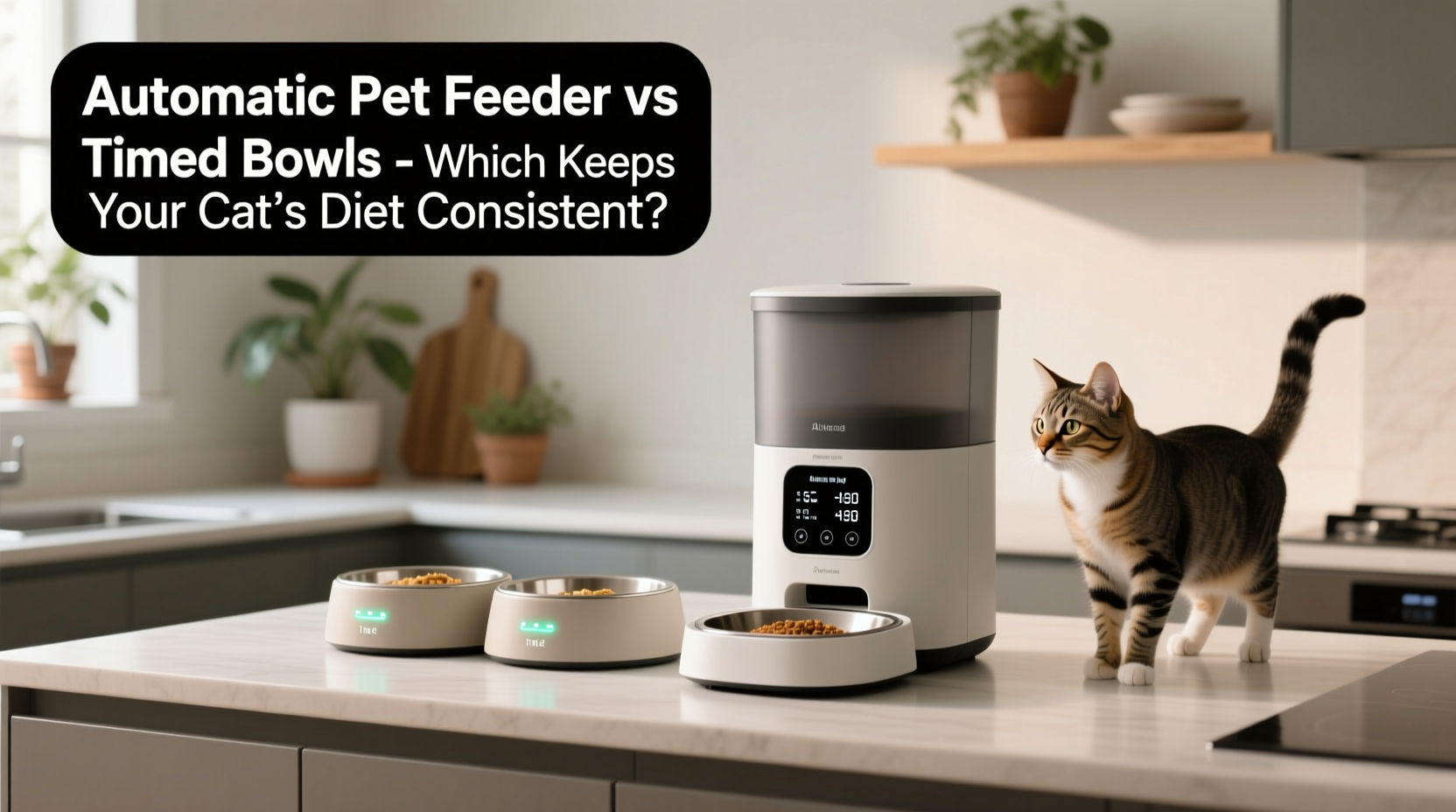
Automatic pet feeders are electronic devices that dispense dry or wet food at pre-programmed intervals. Most models feature a hopper that holds several days’ worth of kibble, a motorized dispensing mechanism, and a digital timer or app-based control system. Advanced versions include voice recording functions, portion size customization, Wi-Fi connectivity, and even camera integration for remote monitoring.
These feeders operate on batteries or AC power and allow owners to set multiple feeding times per day. For example, you might program the device to release half a cup of food at 7:00 AM and another half at 6:30 PM—mimicking a human-led feeding schedule even when no one is home.
The primary advantage lies in automation. Once configured, the feeder handles meal delivery without daily intervention. This is particularly useful for households with irregular schedules, frequent travelers, or multi-cat homes where separation during feeding is necessary.
Tip: Always test your automatic feeder with a small amount of food before leaving your cat unattended for extended periods. Ensure the mechanism clears properly and doesn't jam.Understanding Timed Portion-Controlled Bowls
Timed bowls, sometimes called portion-control feeding stations or timed food containers, function differently from full automatic feeders. These systems typically consist of multiple sealed compartments, each loaded with a pre-measured portion of food. A built-in timer unlocks one compartment at a scheduled time, allowing the cat access to that meal.
Unlike automatic feeders, timed bowls do not dispense food mechanically. Instead, they rely on gravity or manual release once the lid opens. Some models use spring-loaded lids or rotating trays that expose one portion per cycle. They often run on battery power and offer programmable schedules similar to automated feeders.
Because the owner must manually fill each chamber with precise portions, these devices place more responsibility on the human caregiver. However, they eliminate concerns about mechanical jams or motor failures since there's no active dispensing component.
Timed bowls are ideal for cats who graze throughout the day but need structure. By limiting access to one portion at a time, they prevent free-feeding while still offering scheduled access.
Comparing Key Features: Functionality and Reliability
| Feature | Automatic Pet Feeder | Timed Bowls |
|---|---|---|
| Food Dispensing | Mechanical release via motor | Manual access after timer unlock |
| Portion Control | Adjustable settings (some models) | Precisely measured by user |
| Capacity | Large hopper (up to 30+ cups) | Limited (typically 4–6 meals) |
| Power Source | Battery or AC adapter | Battery only |
| Jam Risk | Moderate to high (kibble shape-dependent) | Low (no moving parts) |
| Wi-Fi/App Control | Available in premium models | Rare |
| Multi-Cat Support | Some models have locking lids or RFID | Limited; requires separate units |
The table highlights a fundamental trade-off: automatic feeders offer greater capacity and smart features but come with higher mechanical complexity. Timed bowls sacrifice automation for simplicity and reliability. If your priority is minimizing breakdowns and maximizing predictability, timed bowls may be preferable. But if you value remote control, larger storage, and integration with other smart home devices, an automatic feeder could be the better fit.
“Consistency in feeding time and portion size is critical for cats with sensitive digestion or weight management needs. The wrong tool can disrupt progress.” — Dr. Lena Patel, Feline Nutrition Specialist
Real-World Example: Managing a Multi-Cat Household
Sarah, a veterinary technician in Portland, adopted two rescue cats with vastly different eating behaviors. Luna, a shy 8-year-old tabby, eats slowly and gets pushed away by her younger roommate, Milo, a food-motivated Siamese mix. When Sarah started working night shifts, she noticed Luna was losing weight while Milo gained it.
She first tried a basic timed bowl, loading separate portions for each cat. But because both had access once the lid opened, Milo consumed both meals within minutes. Next, she invested in a dual-compartment automatic feeder with RFID-enabled collars. Each cat wears a microchip tag, and only the designated cat can trigger their compartment to open.
The change was immediate. Luna began gaining healthy weight, and Milo stopped begging at odd hours. Sarah now programs four small meals per day, aligning with natural feline grazing patterns. She controls the schedule through her phone—even adjusting portions remotely when she works overtime.
This case illustrates that while timed bowls provide structure, they lack safeguards against competitive eaters. In contrast, advanced automatic feeders can enforce individualized feeding plans, making them superior for complex household dynamics.
Step-by-Step Guide to Choosing the Right System
Selecting between an automatic pet feeder and timed bowls should follow a deliberate process based on your cat’s needs and your lifestyle. Follow this sequence to make an informed decision:
- Evaluate Your Cat’s Eating Behavior: Does your cat eat quickly or graze? Are there multiple pets competing for food? Observe feeding habits for at least a week before deciding.
- Determine Feeding Frequency Needs: Cats benefit from small, frequent meals (3–5 times daily). Choose a device capable of supporting this rhythm.
- Assess Your Schedule: If you’re gone for long stretches or travel often, automation becomes more valuable than manual loading.
- Measure Kibble Size and Shape: Large or oddly shaped kibble can jam automatic dispensers. Test compatibility or read reviews specific to your brand.
- Decide on Tech Integration Level: Do you want app alerts, voice messages, or live video? Or would a simple timer suffice?
- Set a Budget: Basic timed bowls cost $30–$50. Smart automatic feeders range from $70 to over $200. Consider long-term value versus upfront cost.
- Try Before Committing (If Possible): Borrow or rent a unit temporarily to gauge your cat’s response before purchasing.
Common Pitfalls and How to Avoid Them
Even the most advanced feeding technology fails when misused. Here are common mistakes owners make—and how to sidestep them:
- Overfilling the Hopper: Stale food accumulates at the bottom if not rotated regularly. Only load enough for 7–10 days unless the model has airtight sealing.
- Ignoring Battery Warnings: A dead battery means missed meals. Use rechargeable backups or plug-in models when possible.
- Using Wet Food in Dry-Only Feeders: Many automatic feeders are designed exclusively for dry kibble. Attempting to dispense wet food leads to clogs and spoilage.
- Failing to Clean Regularly: Mold and bacteria build up in dispensing chutes and bowls. Disassemble and clean weekly with warm, soapy water.
- Not Supervising Initial Use: Watch your cat interact with the device the first few times. Some cats are startled by noises or confused by moving parts.
FAQ: Common Questions About Consistent Cat Feeding
Can I use either system for wet food?
Most automatic feeders are designed for dry kibble only. However, some premium models (like the PetKit Fresh Element) support refrigerated wet food with disposable trays. Timed bowls can hold wet food, but only if ambient temperatures stay cool—and meals should not sit out longer than 30 minutes to prevent spoilage.
Which is better for weight loss diets?
Timed bowls give owners complete control over portion size, reducing the risk of miscalibration. However, automatic feeders with precise measurement settings and tracking apps (e.g., portion logs sent to your phone) offer superior long-term monitoring for weight management goals.
Do cats adapt easily to automated feeders?
Most cats adjust within a few days, especially if introduced slowly. Using treats during initial runs helps create positive associations. Older or anxious cats may need more time, so supervision is recommended during the transition.
Final Recommendation: Matching Tool to Lifestyle
The choice between an automatic pet feeder and timed portion-controlled bowls ultimately depends on your priorities. If you seek maximum convenience, remote access, and integration with a busy lifestyle, an automatic feeder—particularly one with smart features—is likely the better investment. It excels in single-cat homes, travel scenarios, and cases requiring strict timing and portion accuracy.
On the other hand, if reliability, simplicity, and hands-on portion control matter most, timed bowls offer a low-tech solution with fewer points of failure. They’re excellent for short absences, predictable routines, or owners who prefer preparing meals in advance.
No device replaces attentive caregiving. Both tools serve as extensions of responsible ownership—not substitutes. Whichever you choose, consistency stems not just from technology, but from thoughtful planning, regular maintenance, and ongoing observation of your cat’s health and behavior.
💬 Have experience with automatic feeders or timed bowls? Share what worked (or didn’t) for your cat. Your insights could help fellow pet owners make smarter choices!








