For many pet owners, especially those with demanding work schedules or unpredictable routines, feeding time can become a source of stress. The question isn’t just about convenience—it’s about responsibility. Can an automatic pet feeder truly replace the hands-on care of manual feeding, particularly when life gets hectic? The answer depends on your pet’s needs, your lifestyle, and how well you understand the trade-offs between technology and tradition.
While automatic feeders promise consistency and freedom from rigid schedules, they aren’t foolproof. Manual feeding offers personal connection and immediate oversight but demands time and presence. For busy professionals, parents juggling multiple responsibilities, or frequent travelers, this decision carries weight. Let’s break down both options in depth to help you determine what works best—without compromising your pet’s health or happiness.
The Reality of Busy Pet Ownership
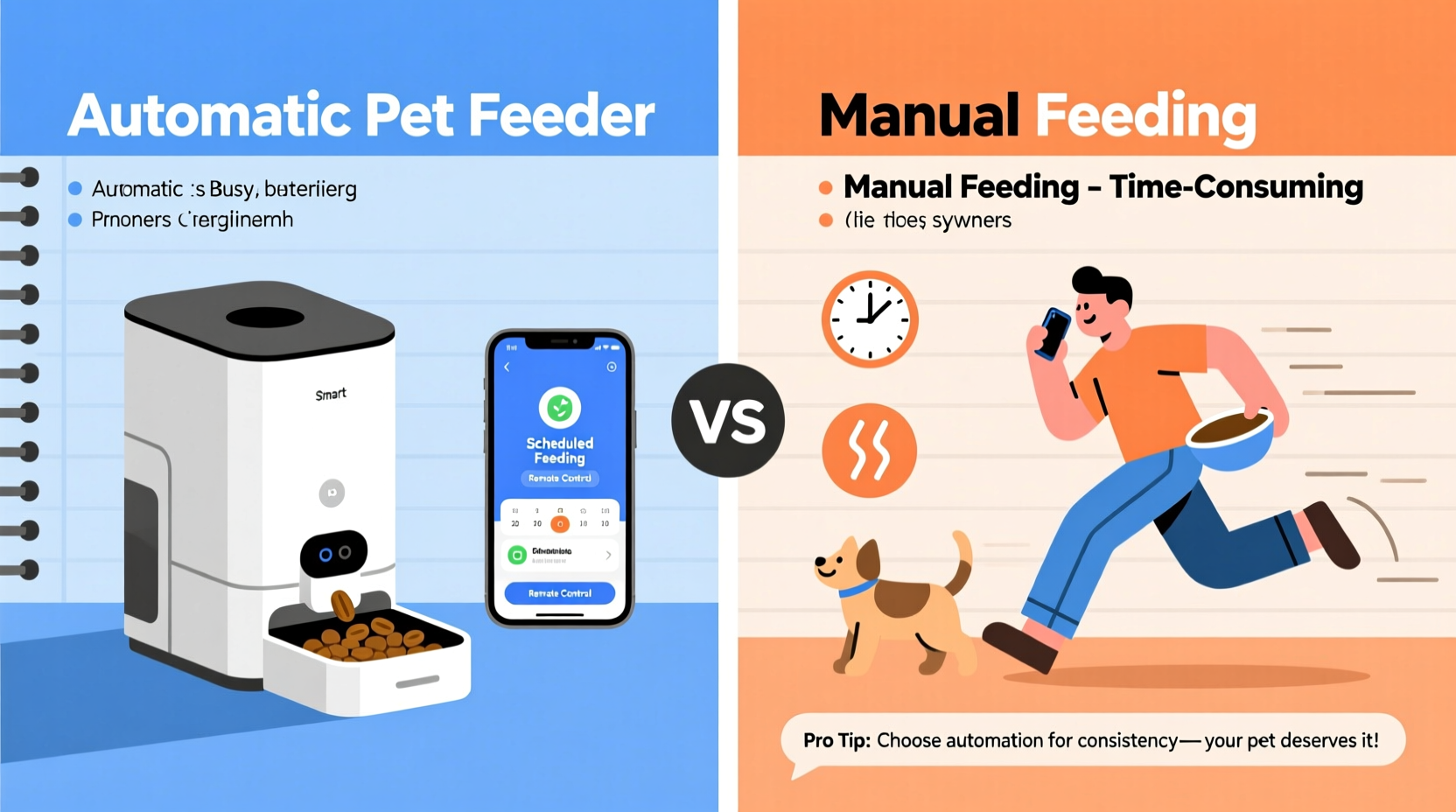
Modern life rarely follows a perfect schedule. Meetings run late, commutes change, and family obligations shift without notice. Yet pets thrive on routine. Dogs and cats are creatures of habit, and their digestive systems respond best to consistent meal times. Irregular feeding can lead to anxiety, overeating, or even gastrointestinal issues.
Busy owners often face three core challenges:
- Inconsistent availability: Not being home at predictable times to serve meals.
- Travel demands: Needing to leave town for work or family reasons.
- Multitasking fatigue: Struggling to balance pet care with other daily responsibilities.
These pressures have fueled the rise of smart pet devices, especially automatic feeders. But while technology offers solutions, it also introduces new considerations—from mechanical failures to behavioral impacts on pets.
Tip: If you're frequently away during mealtimes, consider combining an automatic feeder with occasional manual interaction to maintain bonding.How Automatic Feeders Work—and Where They Fall Short
Automatic pet feeders range from basic timer-based models to Wi-Fi-enabled smart units that allow remote control via smartphone apps. Most dispense dry food at scheduled intervals, though some advanced versions handle wet food or offer voice recording features to call pets to eat.
Key features include:
- Scheduled dispensing (daily or multiple times per day)
- Portion control settings
- Mobile alerts and camera integration (in premium models)
- Backup power options (battery or USB)
Despite these advantages, automatic feeders come with limitations:
- Malfunctions happen: Jams, misfeeds, or software glitches can result in missed meals.
- No adaptability: They can't adjust portion size based on activity level or appetite changes.
- Limited diet support: Most don’t accommodate raw, fresh, or wet foods reliably.
- Reduced human interaction: Feeding is a bonding moment; removing it may affect emotional well-being.
“Technology should assist pet care, not replace the owner’s role. An automatic feeder is a tool—not a substitute for attention.” — Dr. Lena Patel, Veterinary Behavior Specialist
Manual Feeding: The Human Touch in Pet Care
Hand-feeding or personally serving meals allows owners to monitor every aspect of their pet’s eating habits. You notice subtle cues: Is your dog slower today? Did your cat leave half the bowl untouched? These observations can signal illness, dental pain, or stress long before symptoms escalate.
Benefits of manual feeding include:
- Immediate detection of appetite changes
- Opportunities for training and reinforcement (e.g., using meals as rewards)
- Strengthened owner-pet bond through daily ritual
- Flexibility in adjusting portions based on energy output or vet advice
However, manual feeding requires commitment. It demands punctuality and presence. A delayed dinner due to traffic might mean a hungry, anxious pet pacing by the kitchen. Over time, inconsistency can disrupt metabolic rhythms, especially in diabetic or senior animals.
For families with two working adults or rotating shifts, relying solely on manual feeding may not be sustainable. In such cases, hybrid approaches often prove most effective.
Comparative Analysis: Automatic vs Manual Feeding
| Factor | Automatic Feeder | Manual Feeding |
|---|---|---|
| Consistency | High – meals delivered on schedule regardless of owner’s presence | Variable – depends on owner’s availability and discipline |
| Health Monitoring | Limited – no real-time observation unless paired with camera | Strong – direct visual and behavioral assessment during meals |
| Bonding Opportunity | Low – removes physical interaction around feeding | High – reinforces relationship through routine engagement |
| Diet Flexibility | Poor – mostly limited to dry kibble; struggles with varied textures | Excellent – easy to mix supplements, rotate proteins, or hand-feed treats |
| Reliability | Risk of technical failure; requires maintenance and testing | Depends on human reliability; prone to delays or forgetfulness |
| Cost | $50–$200+ upfront; minimal ongoing cost | No device cost; relies on time investment |
This comparison shows that neither method is universally superior. Instead, effectiveness depends on context—your pet’s age, health, temperament, and your own lifestyle constraints.
Real-Life Scenario: Sarah’s Dilemma with Her Senior Cat
Sarah, a project manager in Chicago, adopted Milo, a 12-year-old diabetic cat, two years ago. Managing his insulin injections and strict feeding schedule became critical. Initially, she fed him manually at 7 AM and 7 PM. But after transitioning to hybrid remote work with early-morning client calls, she began missing breakfast feedings.
Milo started losing weight. His blood glucose levels fluctuated. Concerned, Sarah consulted her vet, who suggested a timed automatic feeder for breakfast, while keeping evening meals manual to preserve bonding and monitoring.
She chose a reliable dual-compartment feeder with portion control and backup battery. Within weeks, Milo regained stability. Sarah still serves dinner herself, watches his intake, and uses the time for gentle grooming and play.
Her solution wasn’t all-tech or all-tradition—it was balanced. By identifying which part of feeding could be automated safely and which required human presence, she optimized care without burnout.
Choosing the Right Approach: A Step-by-Step Guide
If you're unsure whether an automatic feeder fits your life, follow this practical timeline to evaluate your options:
- Assess Your Schedule (Week 1): Track your arrival and departure times for seven days. Note any recurring gaps during typical feeding hours (e.g., 8–9 AM or 6–7 PM).
- Observe Your Pet’s Eating Habits: Record how much they eat, how fast, and whether they show anxiety around mealtimes. Sudden disinterest or aggression near food warrants caution with automation.
- Consult Your Veterinarian: Discuss your pet’s health, especially if they have conditions like diabetes, obesity, or kidney disease. Some require precise timing and supervision.
- Test a Feeder Temporarily: Borrow or rent a model for one week. Use it alongside manual feeding—start by automating only one meal while you’re present to monitor performance.
- Evaluate Performance: Did it dispense correctly? Did your pet adapt? Was there waste or confusion? Check logs if the model has app tracking.
- Decide on Integration Level: Choose full automation, partial use (e.g., weekday mornings only), or none at all based on results.
This structured approach minimizes risk and ensures decisions are data-driven rather than impulsive.
Essential Checklist Before Buying an Automatic Feeder
Before investing in a device, verify these key points:
- ✅ Compatible with your pet’s food type (kibble size, moisture content)
- ✅ Has adjustable portion sizes (critical for weight management)
- ✅ Includes power backup (battery or UPS compatibility)
- ✅ Offers jam detection or blockage alerts
- ✅ Easy to clean (removable trays, dishwasher-safe parts)
- ✅ App interface is user-friendly and stable
- ✅ Suitable for multi-pet households (if applicable, look for access controls)
Frequently Asked Questions
Can automatic feeders cause my pet to gain weight?
Yes—if not calibrated correctly. Overfeeding is a common issue when portion settings are inaccurate or when owners forget the machine is already dispensing. Always measure recommended servings and avoid supplementing meals without adjusting the feeder’s output.
Are automatic feeders safe for multiple pets?
They can be risky in multi-pet homes unless designed for it. Some pets may monopolize the feeder, leaving others underfed. Look for models with motion sensors, access timers, or physical barriers. Alternatively, use the feeder in a closed room accessible only to one pet via microchip or RFID collar.
What happens if the feeder breaks down?
Always have a contingency plan. Keep a manual backup schedule among household members. Choose models with low-food indicators and error alerts. Consider pairing the feeder with a pet sitter service for extended absences.
Final Recommendation: Balance Technology With Presence
For busy owners, the ideal feeding strategy isn’t about choosing between automatic and manual—it’s about integrating both wisely. Automation excels at delivering consistency when you can’t be there. Manual feeding preserves the emotional and health-monitoring benefits of direct involvement.
The most successful pet owners treat technology as a support system, not a replacement. Use automatic feeders to cover unavoidable absences, but protect moments of connection. Serve at least one meal per day by hand. Watch your pet eat. Learn their rhythms. Respond to changes quickly.
Ultimately, responsible pet ownership isn’t measured by how often you press a button or set a timer—it’s reflected in sustained attention, informed choices, and unwavering commitment, even when life gets overwhelming.
🚀 Ready to optimize your pet’s feeding routine? Start by auditing your weekly schedule and discussing options with your vet. Whether you choose tech-assisted feeding or stick to hands-on care, make your decision intentional, informed, and centered on your pet’s well-being.








