
For pet owners striving to maintain their animal’s health, one of the most consequential daily decisions is how food is delivered. The rise of automatic pet feeders has introduced a new layer of convenience into pet care, promising portion control, scheduled meals, and peace of mind during travel. Yet, despite technological advances, many veterinarians and animal behaviorists emphasize that manual feeding remains a cornerstone of attentive pet ownership. So, when it comes to regulating a pet’s diet—whether for weight management, medical conditions, or behavioral balance—which method truly delivers better results?
The answer isn’t binary. Both automatic feeders and manual feeding have strengths and limitations. What matters most is how each approach aligns with a pet’s specific needs, lifestyle, and health status. This article explores both methods in depth, compares their impact on dietary regulation, and provides actionable guidance for choosing the right strategy.
Diet Regulation: Why It Matters for Pets
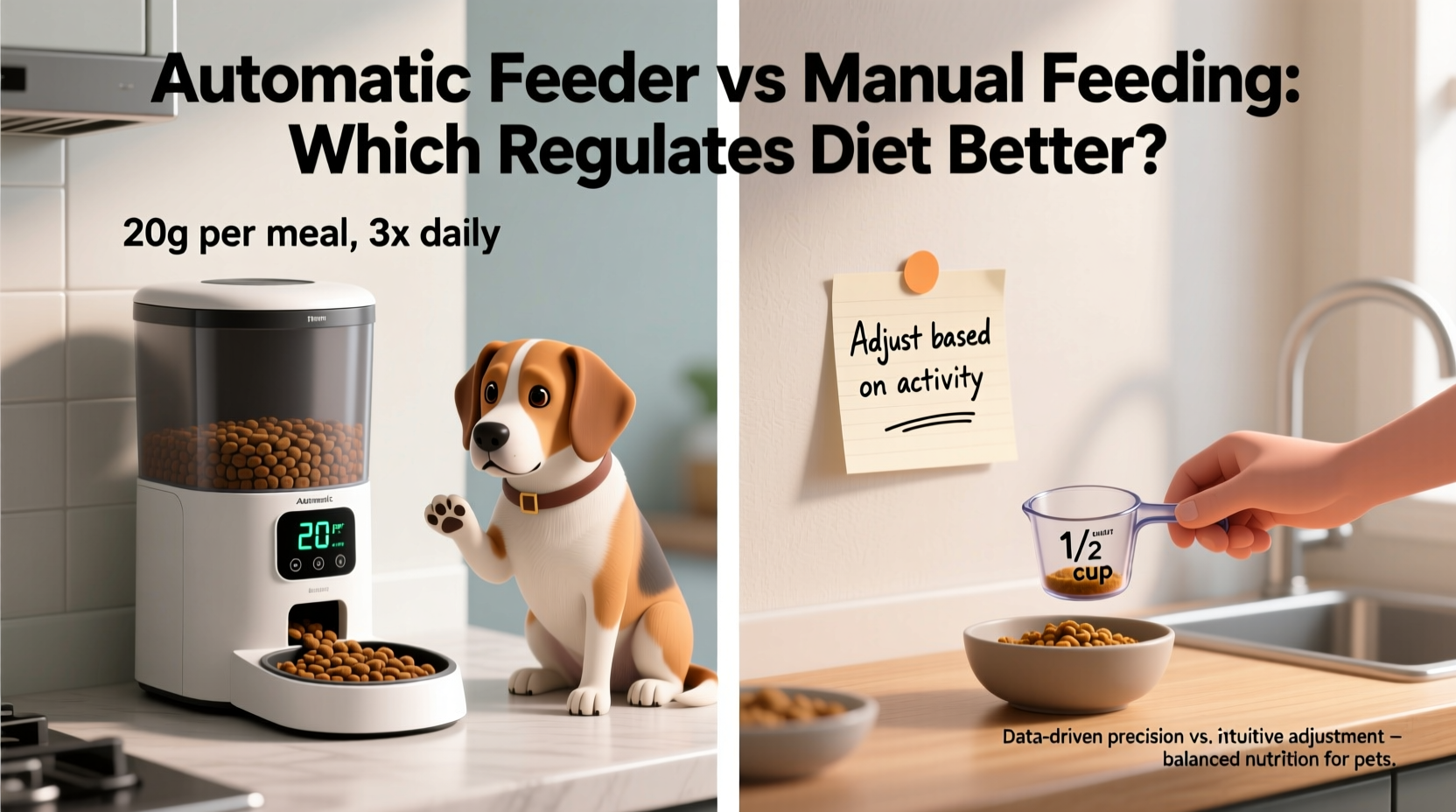
Proper diet regulation is critical for maintaining a pet’s long-term health. Overfeeding contributes to obesity, which affects nearly 60% of cats and dogs in the U.S., according to the Association for Pet Obesity Prevention. Underfeeding, on the other hand, can lead to malnutrition, weakened immunity, and behavioral issues such as excessive begging or food aggression.
Regulating a pet’s diet involves more than just measuring kibble. It includes:
- Consistent meal timing
- Precise portion control
- Monitoring appetite changes
- Adjusting intake based on activity, age, or health conditions
- Preventing access to extra food sources (e.g., counters, other pets’ bowls)
Both automatic feeders and manual feeding can support these goals—but only when used correctly and thoughtfully.
How Automatic Feeders Work and Their Role in Diet Control
Modern automatic pet feeders are programmable devices that dispense pre-measured amounts of dry or semi-moist food at set times. Some models include Wi-Fi connectivity, cameras, voice recording, and mobile app integration, allowing owners to monitor and adjust feeding remotely.
These devices aim to eliminate human inconsistency. For example, if an owner works late or travels frequently, the feeder ensures meals are delivered on schedule. High-end models even lock after dispensing to prevent overeating.
Advantages of automatic feeders for diet regulation include:
- Portion precision: Many feeders allow exact cup measurements, reducing guesswork.
- Scheduled consistency: Meals occur at the same time daily, supporting metabolic rhythm.
- Reduced human error: Eliminates skipped meals or accidental double-feedings due to forgetfulness.
- Multi-pet management: Some units dispense only for tagged pets via RFID collars, preventing food theft.
However, automatic feeders also present notable drawbacks. They cannot assess a pet’s current condition. A pet that is ill, stressed, or recovering from surgery may eat less—or not at all—and the machine will continue dispensing food without alerting the owner. Moreover, mechanical failures, power outages, or jammed mechanisms can result in missed meals.
Limitations of Automation in Real-Time Monitoring
One of the greatest shortcomings of automatic systems is the lack of real-time behavioral feedback. When feeding manually, owners observe how eagerly their pet eats, whether they leave food behind, or if they show signs of discomfort. These subtle cues are early indicators of health issues like dental pain, gastrointestinal upset, or anxiety.
As Dr. Rebecca Nguyen, DVM, explains:
“Pets often stop eating before showing other symptoms. Daily interaction during feeding gives us a vital window into their well-being. Removing that moment reduces our ability to catch problems early.” — Dr. Rebecca Nguyen, Veterinary Internal Medicine Specialist
Manual Feeding: The Human Touch in Dietary Management
Manual feeding refers to the practice of personally serving meals to a pet at designated times. While it demands more time and consistency from the owner, it fosters a deeper connection and enables immediate response to changes in appetite or behavior.
This method allows for dynamic adjustments. For instance, if a dog returns from a long walk and seems hungrier than usual, a responsible owner might add a small supplement. Conversely, if a cat skips breakfast and appears lethargic, the owner can withhold food and consult a vet promptly.
Key benefits of manual feeding include:
- Behavioral observation: Direct interaction reveals changes in eating habits, energy levels, or mood.
- Flexibility: Adjust portions based on weather, activity level, or seasonal changes.
- Training integration: Mealtimes become opportunities for reinforcing commands or managing food aggression.
- Emotional bonding: Hand-feeding or scheduled interactions strengthen trust between pet and owner.
Manual feeding is especially recommended for pets with chronic conditions such as diabetes, kidney disease, or pancreatitis, where precise monitoring and rapid intervention are essential.
When Manual Feeding Falls Short
The primary challenge with manual feeding is human inconsistency. Busy schedules, vacations, or shift work can make it difficult to maintain regular mealtimes. In multi-person households, miscommunication may lead to overfeeding if multiple members offer treats or meals without coordination.
In such cases, automation can serve as a valuable supplement—though not necessarily a full replacement.
Comparative Analysis: Automatic vs Manual Feeding
| Factor | Automatic Feeder | Manual Feeding |
|---|---|---|
| Portion Accuracy | High (if calibrated correctly) | Moderate (depends on owner consistency) |
| Meal Timing Consistency | Excellent | Variable (depends on routine) |
| Health Monitoring Capability | Low (no behavioral feedback) | High (direct observation) |
| Convenience & Flexibility | High (ideal for travel/work) | Low (requires presence) |
| Adaptability to Health Changes | None (unless manually reprogrammed) | Immediate |
| Risk of Mechanical Failure | Moderate to High | None |
| Emotional Bonding During Meals | Low | High |
This comparison shows that while automatic feeders excel in scheduling and portion delivery, they lack the responsiveness and observational advantages of human-led feeding. Manual feeding supports holistic care but depends heavily on owner discipline and availability.
Real-World Scenario: Managing a Diabetic Cat
Consider the case of Luna, a 10-year-old diabetic cat requiring two insulin injections daily, timed with meals. Her owner, Sarah, initially tried an automatic feeder to ensure meals were given exactly 12 hours apart while she worked night shifts. However, within a week, Luna began losing weight and showing signs of lethargy.
Upon review, the veterinarian discovered that Luna had stopped eating one of her meals—likely due to nausea from fluctuating blood sugar—but the feeder continued dispensing food. Without anyone present to notice the uneaten portion, insulin was still administered, leading to dangerous hypoglycemia.
Sarah switched back to manual feeding, syncing meals and injections herself. She also started recording Luna’s appetite and energy levels daily. Within three weeks, Luna’s glucose curves stabilized, and her condition improved significantly.
This example illustrates a critical limitation of automation: it cannot interpret biological signals. For medically sensitive pets, human oversight is non-negotiable.
Best Practices: Combining the Strengths of Both Methods
Rather than treating automatic feeders and manual feeding as mutually exclusive, many experts recommend a hybrid approach that leverages the best of both worlds.
- Use automatic feeders for consistency, not autonomy: Program the device to dispense meals, but remain present to serve the food by hand. This maintains schedule reliability while preserving interaction.
- Reserve automation for stable, healthy pets: Pets without medical issues, consistent appetites, and predictable routines are better candidates for full automation.
- Monitor remotely with smart features: Choose feeders with cameras and alerts to check if food is consumed, especially when away.
- Conduct daily manual checks: Even if using a feeder, spend time observing your pet during mealtimes at least once per day.
- Maintain a feeding log: Record portion sizes, appetite, stool quality, and any behavioral changes to detect trends early.
Checklist: Is an Automatic Feeder Right for Your Pet?
- ✅ Pet has no chronic health conditions requiring close monitoring
- ✅ Household schedule makes consistent manual feeding difficult
- ✅ You can perform daily visual checks on your pet around mealtimes
- ✅ The feeder is placed in a safe, clean area free from humidity or pests
- ✅ You’ve tested the device thoroughly and have a backup plan for power failure
- ❌ Avoid if your pet is prone to anxiety, vomiting, or irregular eating patterns
Frequently Asked Questions
Can automatic feeders help with pet obesity?
Yes, but only when properly programmed and monitored. Automatic feeders can enforce portion control and prevent overfeeding by family members. However, they won’t stop a pet from scavenging elsewhere or account for treats given outside mealtimes. Success depends on overall household discipline and regular weight checks.
Are there risks of mold or spoilage with automatic feeders?
Absolutely. Most automatic feeders are designed for dry food only. Moisture, humidity, or warm environments can cause kibble to degrade, especially in feeders that hold food for days. Clean the dispenser weekly, avoid placing it in kitchens or bathrooms, and never load perishable foods unless explicitly supported by the model.
Should I completely replace manual feeding with automation?
Not recommended. Even with a reliable feeder, daily human interaction during meals strengthens the bond and supports health surveillance. Think of automation as a tool—not a substitute—for attentive pet parenting.
Conclusion: Prioritizing Regulation Through Awareness
When evaluating automatic pet feeders versus manual feeding for diet regulation, the evidence points to a clear conclusion: manual feeding offers superior control, responsiveness, and emotional engagement. It enables real-time assessment of health and behavior, making it the gold standard for pets with medical needs or unpredictable appetites.
That said, automatic feeders are valuable tools for enhancing consistency, especially in busy households. Used wisely—as part of a broader care strategy—they can support regulated feeding without replacing human involvement.
The goal isn’t perfection through technology, but sustainability through awareness. Whether you hand-feed every meal or use a Wi-Fi-enabled dispenser, what matters most is staying connected to your pet’s needs, adjusting as necessary, and prioritizing their long-term well-being over convenience.
🚀 Take action today: Evaluate your pet’s current feeding routine. Are meals consistent? Are portions accurate? Are you noticing changes in appetite? Whether you keep using an automatic feeder or return to manual feeding, commit to being present—at least in spirit—at every meal.








