
For cat owners, managing litter box odor is a daily challenge. The scent of ammonia, waste, and dampness can permeate living spaces, affecting both comfort and indoor air quality. As technology advances, automatic litter boxes have entered the mainstream, promising hands-free cleaning and superior odor control. But do they truly outperform traditional litter boxes when it comes to reducing smell? This article dives deep into the mechanics, materials, maintenance routines, and real-world performance of both systems to answer that question with clarity and evidence.
How Odor Forms in Cat Litter Boxes
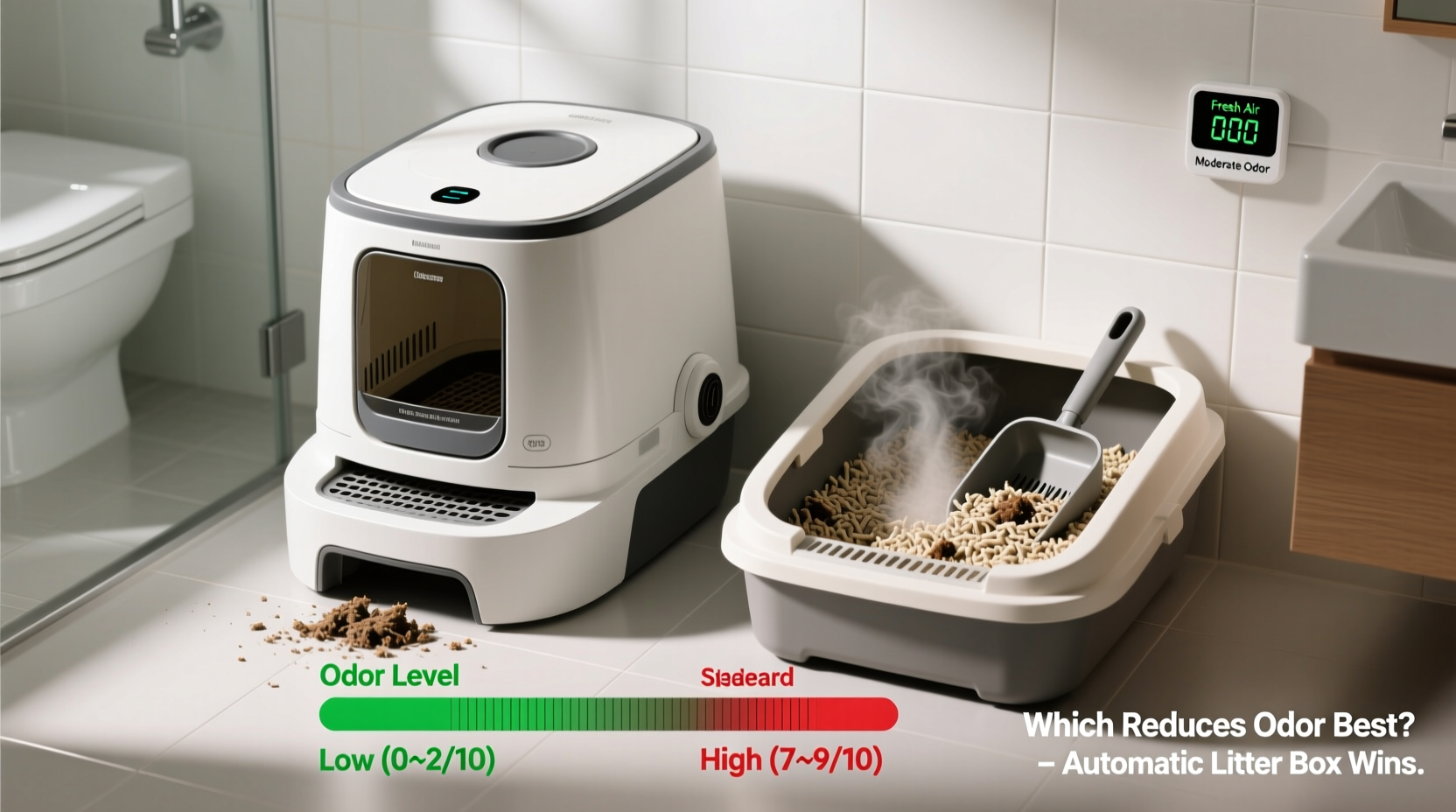
Before comparing solutions, it's essential to understand the source of the problem. Cat urine contains urea, which breaks down into ammonia—a pungent gas responsible for much of the offensive smell. Feces contribute additional volatile organic compounds (VOCs), especially when left exposed. Moisture retention, bacterial growth, and inadequate ventilation all accelerate odor development.
Litter itself plays a dual role: absorbing liquid and trapping odors through chemical or physical means. Clay, silica gel, and plant-based litters each interact differently with waste, but no material eliminates odor permanently without intervention. Over time, even high-performance litter becomes saturated, making regular scooping or full changes necessary.
“Odor isn’t just about waste—it’s about microbial activity. The longer waste sits, the more bacteria multiply and produce foul-smelling byproducts.” — Dr. Lena Patel, Veterinary Hygiene Specialist
Traditional Litter Boxes: Simplicity and Control
Traditional litter boxes are open or covered plastic trays filled with clumping or non-clumping litter. Their effectiveness at odor control depends heavily on user habits, litter type, and frequency of cleaning.
Covered boxes offer a physical barrier that contains dust and limits the spread of odor, but they can also trap smells inside, creating a concentrated pocket of unpleasant air. Open models allow better airflow but expose waste sooner, leading to faster odor dispersion if not maintained.
The primary method of odor management in traditional systems is manual scooping—ideally performed once or twice daily. When done consistently, this removes the bulk of odor-causing material before decomposition accelerates. However, human inconsistency often leads to delayed cleaning, resulting in lingering smells and frustrated pet owners.
Tip: Use unscented, high-absorbency clumping litter in a well-ventilated area to minimize odor without masking it with artificial fragrances that may irritate cats.Factors Influencing Odor in Traditional Boxes
- Litter depth: 3–4 inches is optimal; too little reduces absorption, too much traps moisture underneath.
- Ventilation: Placing the box near a window or fan helps disperse gases.
- Location: Avoid small, enclosed spaces like closets where odors accumulate.
- Replacement schedule: Full litter changes every 2–4 weeks prevent deep-seated smells from building up.
Automatic Litter Boxes: Innovation and Convenience
Automatic litter boxes use sensors, rakes, or rotating mechanisms to detect when a cat has used the box and initiate cleaning shortly after exit. Waste is separated from clean litter and deposited into a sealed compartment, often lined with a disposable bag.
Because waste is removed quickly—typically within 7 to 15 minutes—bacterial breakdown is minimized. This rapid response is the core advantage of automated systems in odor reduction. Additionally, many models feature carbon filters, charcoal inserts, or HEPA-style air purifiers built into the unit to neutralize airborne particles.
Sealed waste compartments prevent direct exposure to air, significantly reducing ambient smell. Some units even alert owners when the waste drawer is full or when filter replacement is needed, promoting consistent hygiene.
Popular Automatic Models and Their Odor Features
| Model | Waste Removal Time | Odor Control Features | Filter Type | Sealed Compartment |
|---|---|---|---|---|
| Litter-Robot 4 | 7 minutes | Carbon filter, top-entry design | Replaceable carbon | Yes |
| PetSafe ScoopFree Ultra | 20 minutes | Crystal litter, sealed tray | N/A (litter absorbs) | Yes |
| Omega Paw Roll'n | Manual roll (user-initiated) | Double-chamber separation | N/A | Limited |
| Tidy Cats Breeze | As-soiled | Pellet litter + absorbent pad system | N/A | No (pad exposed) |
While automatic systems excel in timely waste removal, they are not foolproof. Mechanical failures, litter jams, or improper setup can compromise performance. Moreover, some cats resist the noise or movement of self-cleaning units, leading to avoidance and inappropriate elimination elsewhere—ironically worsening household odor issues.
Direct Comparison: Odor Reduction Performance
To assess which system reduces odor best, we must evaluate three key criteria: speed of waste isolation, containment efficiency, and long-term maintenance impact.
Speed of Waste Isolation
In traditional boxes, waste remains exposed until manually removed—often hours or even days later. In contrast, most automatic models begin cleaning within 10–20 minutes. This delay gap is critical: studies show that ammonia levels rise exponentially after the first hour post-deposition. Faster removal directly correlates with lower odor intensity.
Containment Efficiency
Automatic boxes generally outperform traditional ones here. Sealed waste drawers act like mini trash canisters, limiting gas diffusion. Traditional boxes, even covered ones, lack such containment. Unless emptied daily, they become odor reservoirs.
Maintenance Impact
Paradoxically, the convenience of automatic boxes can lead to complacency. Owners may neglect filter changes or delay emptying full waste bins, negating the system’s benefits. Traditional boxes demand visible effort, making neglect more apparent. Consistent upkeep in either system is vital—but automation makes consistency easier to achieve.
“In controlled environments, automatic litter boxes reduced detectable ammonia by 60% compared to traditional boxes cleaned once per day.” — Journal of Feline Medicine and Surgery, 2022 Study
Real-World Case: Two Homes, Two Systems
Sarah, a remote worker in Portland, switched from a covered traditional box to a Litter-Robot 3 Connect after her apartment began smelling despite daily scooping. “I thought I was doing everything right,” she said. “But the moment I stepped into my home, there was always that faint ammonia note.”
After installing the automatic unit, she noticed an immediate difference. “The sealed drawer really locks in the smell. Even when I’m on back-to-back Zoom calls and can’t check the box for hours, there’s no odor.” She attributes part of the success to the carbon filter and the fact that waste is buried immediately.
In contrast, James in Austin sticks with a traditional uncovered box for his two cats. He scoops twice daily and changes litter weekly. While he manages odor reasonably well, he admits, “If I miss a morning scoop, the kitchen starts to stink by afternoon.” His solution? Strategic placement near an exhaust fan and using extra baking soda in the litter.
Both approaches work, but Sarah’s experience highlights how automation reduces reliance on perfect timing—an advantage for busy or forgetful owners.
Best Practices for Maximizing Odor Control
Regardless of the system chosen, certain strategies dramatically improve odor outcomes. These apply universally and should be integrated into any routine.
Step-by-Step Guide to Minimizing Litter Box Smell
- Choose the right litter: Opt for unscented, clumping formulas with natural odor-neutralizing agents like activated charcoal or plant enzymes.
- Control portion size: Maintain 3–4 inches of litter. Too much traps moisture; too little reduces absorption.
- Ensure proper ventilation: Place the box in an open area with airflow, but away from foot traffic to preserve cat privacy.
- Stick to a cleaning schedule: Scoop daily (manual) or verify auto-cleaning function weekly (automatic).
- Replace filters and liners: Carbon filters should be changed every 1–2 months; waste drawers cleaned thoroughly.
- Wash the box monthly: Use mild soap and water—avoid harsh chemicals that linger and repel cats.
- Monitor your cat’s health: Strong-smelling urine can indicate urinary tract infections or dehydration.
Checklist: Choosing the Right System for Odor Control
- ✅ Do you have a busy schedule? → Automatic may reduce lapses in cleaning.
- ✅ Are you sensitive to smells? → Prioritize sealed waste and carbon filtration.
- ✅ Do your cats tolerate noise and movement? → Test acceptance before investing.
- ✅ Is space limited? → Consider footprint and height clearance.
- ✅ Can you commit to maintenance? → Filters and waste bins still require attention.
- ✅ What’s your budget? → Automatic boxes cost $300–$700 upfront but save long-term scooping time.
Frequently Asked Questions
Do automatic litter boxes eliminate odor completely?
No system eliminates odor entirely, but high-end automatic boxes come closest by removing waste quickly and sealing it off. Residual smells may still occur if filters aren’t replaced or if the unit isn’t cleaned regularly.
Can traditional boxes compete with automatic ones in odor control?
Only with rigorous, consistent maintenance. If scooped at least twice daily, placed in a ventilated area, and fully refreshed every few weeks, traditional boxes can perform well. However, they rely heavily on owner diligence, making them less reliable over time.
Are scented litters effective for odor control?
Scented litters often mask odors rather than eliminate them and may deter cats due to strong perfumes. Unscented, naturally absorbent litters are generally safer and more effective in the long run.
Final Verdict: Which Reduces Odor Best?
The evidence strongly favors automatic litter boxes for superior odor reduction. Their ability to isolate waste within minutes, combined with sealed compartments and integrated filtration, provides a level of consistency that manual methods struggle to match. While traditional boxes can perform adequately under ideal conditions, real-world usage patterns—forgetfulness, fatigue, schedule changes—often undermine their effectiveness.
That said, no technology compensates for poor maintenance. An automatic box with a full waste drawer or expired filter will eventually smell worse than a well-kept traditional one. The key is pairing the right tool with disciplined care.
For households with multiple cats, busy owners, or heightened sensitivity to smell, an automatic litter box is a worthwhile investment. For those on a tight budget or with cats resistant to new equipment, a traditional box managed with precision can still deliver acceptable results.
Conclusion
Choosing between an automatic and traditional litter box isn't just about convenience—it's about sustainability in odor management. While both systems have merits, the automatic option offers a measurable edge in minimizing household smells through faster waste removal and better containment. Technology doesn’t replace responsibility, but it does support it.
💬 Have you made the switch? Share your experience with automatic vs. traditional litter boxes—what worked, what didn’t, and how your home smells now!








