For pet owners of anxious dogs, finding ways to provide comfort and stability is a daily priority. Anxiety in dogs can stem from separation, loud noises, changes in routine, or past trauma. While behavioral training and veterinary guidance are essential, tools like automatic feeders and timed treat dispensers have gained popularity as supplemental aids. But when it comes to helping an anxious dog feel more secure, which device offers greater benefit? Understanding the differences, strengths, and limitations of each can help you choose the right solution for your dog’s emotional well-being.
Understanding Canine Anxiety and Its Triggers
Dog anxiety manifests in many forms—pacing, excessive barking, destructive chewing, trembling, or withdrawal. Common triggers include being left alone (separation anxiety), thunderstorms, fireworks, unfamiliar environments, or sudden schedule changes. Dogs thrive on predictability, and disruptions to their routine can heighten stress levels.
One effective way to reduce anxiety is by reinforcing a sense of security through consistent feeding schedules and positive reinforcement. This is where automated devices come into play. Both automatic feeders and timed treat dispensers offer scheduled interactions, but they serve different purposes and produce distinct psychological effects.
“Routine and predictability are cornerstones of managing canine anxiety. Devices that reinforce consistency can be valuable tools—but only if used appropriately.” — Dr. Lena Peterson, Veterinary Behaviorist
What Is an Automatic Feeder?
An automatic feeder is a device designed to dispense full meals at pre-programmed times. Most models allow users to set multiple feeding schedules per day, control portion sizes, and some even offer voice recording features to call the dog to eat. These feeders are typically used for main meals—breakfast, dinner, or scheduled snacks—and often hold enough food for several days.
Key features of automatic feeders include:
- Large food storage capacity (3–6 liters)
- Programmable timers (daily or custom schedules)
- Portion control settings
- Battery backup in case of power outage
- Voice recording for familiar cues
For anxious dogs, the predictability of mealtime provided by an automatic feeder can create a reliable anchor in their day. Knowing that food arrives at the same time every morning, for example, reduces uncertainty—a major contributor to stress.
Tip: Use the voice feature on your automatic feeder to record a calming phrase like “Good morning, buddy” to reinforce a positive association with feeding time.What Is a Timed Treat Dispenser?
A timed treat dispenser, sometimes called a puzzle feeder or reward machine, releases small treats at set intervals. Unlike automatic feeders, these devices are not meant for full meals. Instead, they deliver bite-sized rewards throughout the day, often paired with interactive elements such as motion sensors, app controls, or random dispensing patterns.
Popular models allow owners to:
- Set specific times for treat release
- Dispense treats remotely via smartphone
- Use randomized timing to keep dogs engaged
- Integrate with cameras to monitor reactions
These dispensers function more like enrichment tools than sustenance providers. For anxious dogs, especially those suffering from separation anxiety, the surprise of an unexpected treat can redirect focus, reduce boredom, and provide emotional comfort during stressful periods.
Comparing Functions: Automatic Feeder vs Timed Treat Dispenser
The core difference lies in purpose: one supports nutritional needs and routine, the other promotes mental stimulation and emotional reassurance. The table below outlines key distinctions.
| Feature | Automatic Feeder | Timed Treat Dispenser |
|---|---|---|
| Primary Purpose | Deliver full meals on schedule | Provide intermittent rewards and engagement |
| Food Type | Dry kibble, wet food (in select models) | Small treats, soft chews, biscuits |
| Capacity | High (up to 6+ meals) | Low to medium (10–50 treats) |
| Scheduling Flexibility | Routine-based (e.g., 7 AM, 6 PM) | Flexible (fixed, random, remote-triggered) |
| Impact on Anxiety | Provides structure and predictability | Offers distraction and positive reinforcement |
| Best For | Dogs needing routine, seniors, picky eaters | Dogs with separation anxiety, high-energy breeds |
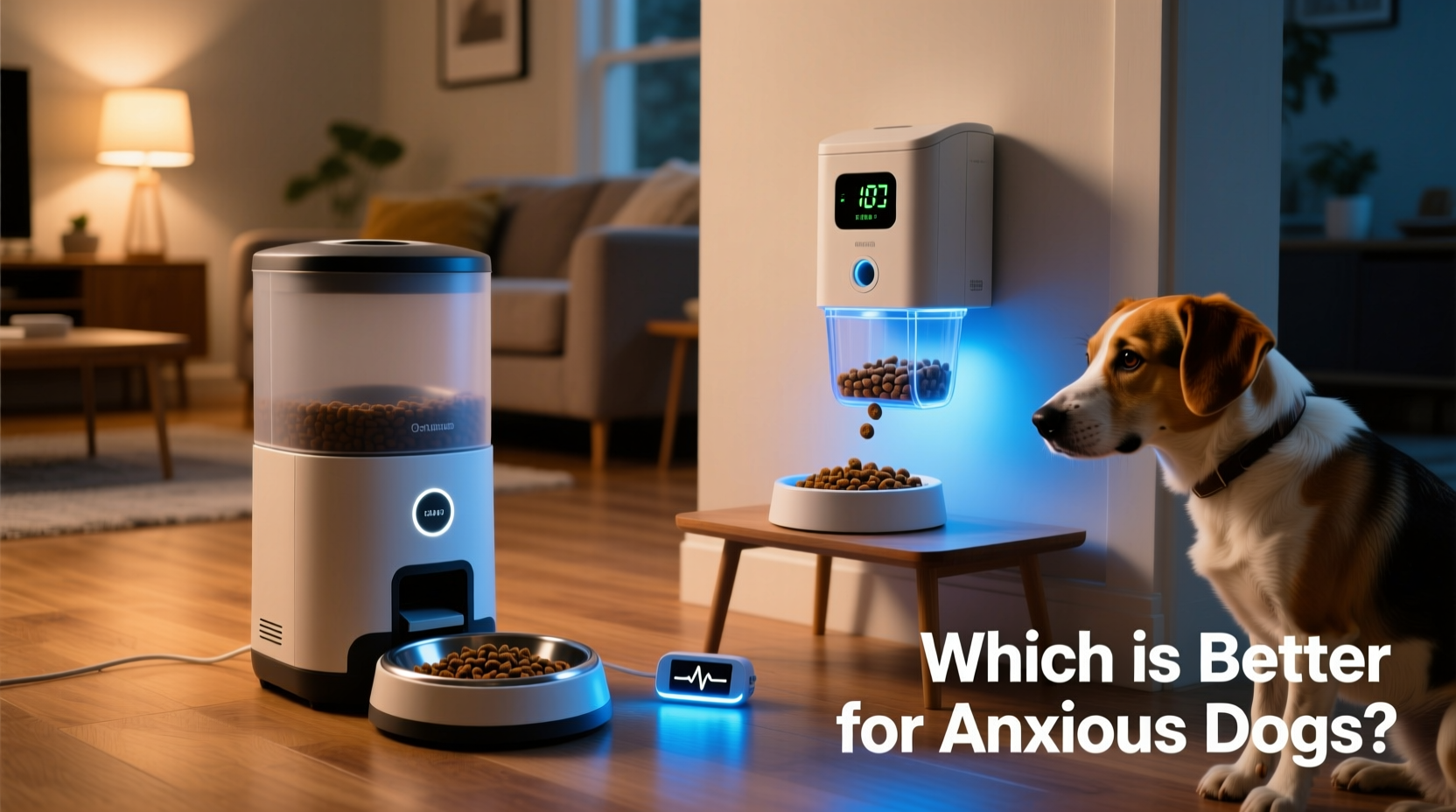
Which Is Better for Anxious Dogs?
The answer depends on the nature of the dog’s anxiety and the owner’s goals.
If the dog struggles with unpredictability—such as not knowing when food will arrive or feeling abandoned during long workdays—an automatic feeder provides essential structure. A consistent feeding schedule mimics the presence of a caregiver, reducing uncertainty. For older dogs or those with health conditions requiring strict meal timing, this device is invaluable.
However, if the anxiety is triggered by loneliness or boredom—especially when left alone—a timed treat dispenser may be more effective. The intermittent delivery of treats acts as positive reinforcement, keeping the dog mentally occupied. The element of surprise (especially with randomized dispensing) can stimulate dopamine release, improving mood and reducing stress behaviors.
In practice, many experts recommend combining both devices for maximum benefit.
“We’ve seen remarkable improvements in dogs with separation anxiety when owners use an automatic feeder for breakfast and a treat dispenser that releases rewards randomly between 10 AM and 3 PM. It creates both rhythm and surprise—two powerful tools in behavior management.” — Dr. Rajiv Mehta, Certified Animal Behavior Consultant
Real-Life Example: Helping Max Through Separation Anxiety
Max, a 3-year-old Border Collie, began exhibiting severe separation anxiety after his owner returned to office work post-pandemic. He would bark incessantly, chew furniture, and scratch at doors within minutes of being left alone.
His owner initially tried an automatic feeder programmed for breakfast at 8 AM. While Max ate reliably, his distress continued afterward. Then, a timed treat dispenser was introduced, set to release a treat every 45–90 minutes between 9:30 AM and 2:30 PM. The dispenser included a camera, allowing the owner to watch Max’s response.
Within a week, Max’s destructive behavior decreased by over 70%. He began waiting near the dispenser, engaging with it playfully rather than panicking. Over time, with added training, Max learned to associate being alone with positive outcomes. The combination of predictable meals and unexpected rewards created a balanced emotional environment.
Step-by-Step Guide to Choosing and Using the Right Device
Follow this timeline to effectively integrate either or both devices into your dog’s routine:
- Week 1: Assess Your Dog’s Anxiety Pattern
Observe when your dog becomes stressed. Is it immediately after you leave? During storms? At mealtimes? Note patterns in behavior and timing. - Week 2: Choose the Appropriate Device
Select an automatic feeder if mealtime irregularity is a concern. Choose a treat dispenser if boredom or loneliness drives the anxiety. Consider getting both if budget allows. - Week 3: Introduce the Device Gradually
Let your dog explore the device while you’re home. Use manual release (if available) to dispense treats and build a positive association. - Week 4: Program and Monitor
Set the schedule based on your dog’s routine. Use camera-equipped models to observe reactions. Adjust timing or treat type as needed. - Ongoing: Combine with Training
Pair device use with desensitization techniques. For example, practice leaving for short periods and returning before the treat dispenses, so your dog links your departure with good things.
Checklist: Selecting the Right Device for Your Anxious Dog
- ✅ Identify the primary trigger of your dog’s anxiety
- ✅ Determine whether structure (feeder) or distraction (treat dispenser) is more needed
- ✅ Check food compatibility—will it handle kibble size or treat shape?
- ✅ Look for battery backup in case of power failure
- ✅ Consider models with voice or camera features for added reassurance
- ✅ Read reviews focused on reliability and durability
- ✅ Test the device at home before relying on it during absences
Frequently Asked Questions
Can I use human food as treats in a timed dispenser?
It’s best to avoid human food unless approved by your vet. Many common foods (like chocolate, grapes, onions) are toxic to dogs. Stick to dog-safe, dry treats that won’t spoil or clog the mechanism.
Will my dog become dependent on the dispenser?
Not in a harmful way. Just as dogs rely on routines, these devices support healthy habits. However, they should complement—not replace—training and interaction. Use them as tools, not crutches.
Are automatic feeders safe for long-term use?
Yes, if properly maintained. Clean the feeder weekly to prevent mold or bacterial growth, especially in humid climates. Check seals and moving parts regularly to ensure smooth operation.
Final Recommendation: It’s Not Either/Or—It’s Both/And
When evaluating automatic feeder vs timed treat dispenser for anxious dogs, the most effective approach is often integration. An automatic feeder establishes a dependable rhythm, giving the dog a sense of safety through predictability. A timed treat dispenser adds emotional enrichment, turning solitude into an opportunity for positive experiences.
No single device can cure anxiety, but both can significantly reduce its impact when used thoughtfully. Pair technology with patience, consistency, and professional guidance for the best results.
🚀 Take action today: Evaluate your dog’s anxiety triggers, research compatible devices, and start building a calmer, more predictable environment. Share your experience in the comments—your journey could help another pet parent find peace for their anxious companion.








