Leaving your cat at home while you travel brings up one of the most pressing concerns: feeding. Will they eat on time? Will they overeat? Can you rely on a machine to keep them nourished and healthy in your absence? With options like automatic feeders and gravity feeders widely available, pet owners face a critical decision—not just about convenience, but about safety, consistency, and peace of mind.
While both types promise to deliver food, their mechanisms, benefits, and risks differ significantly. Understanding these differences is essential before trusting either system with your cat’s daily nutrition—especially during extended trips.
How Automatic Feeders Work
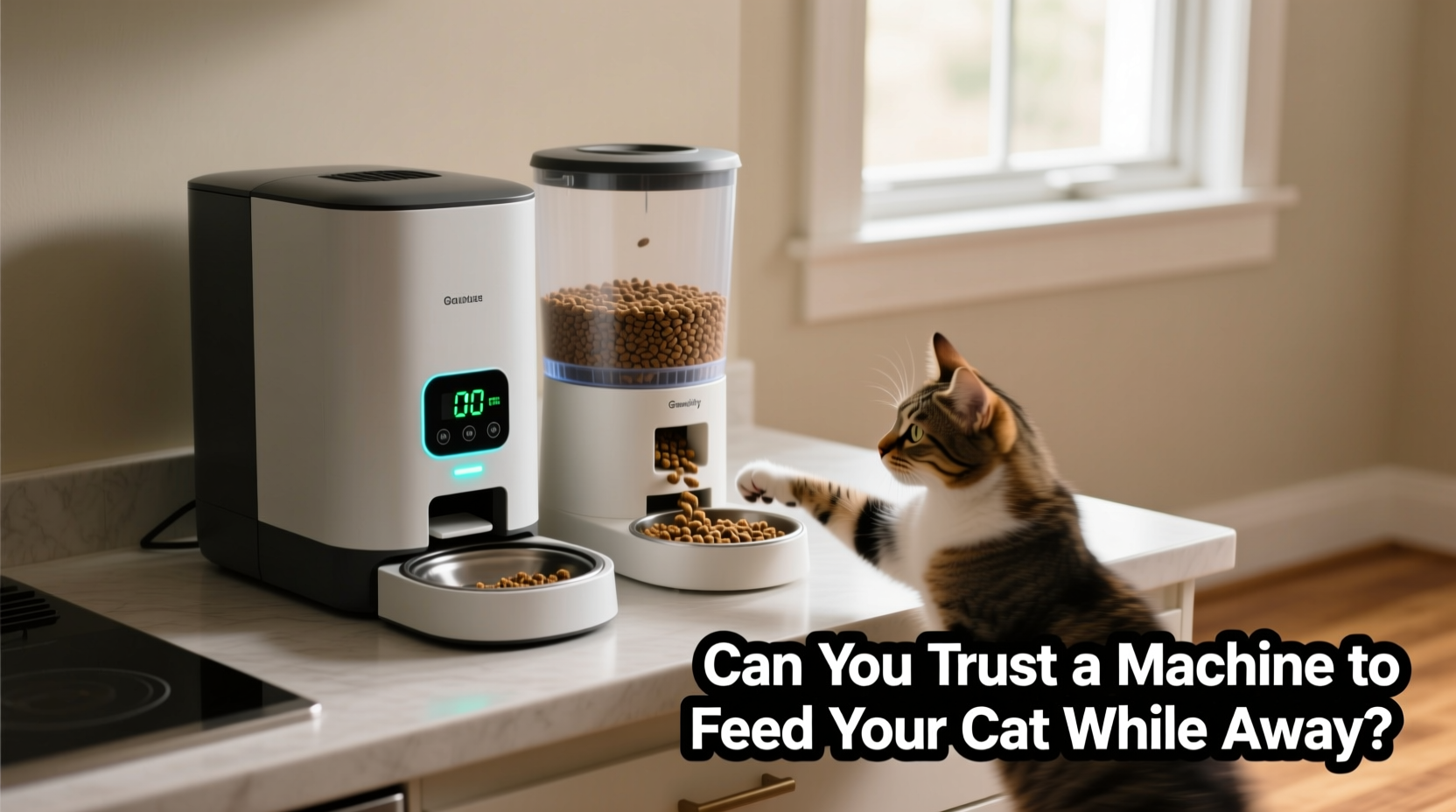
Automatic feeders are electronic devices programmed to dispense a set amount of dry or wet food at scheduled times. Most models run on batteries or AC power and include features like portion control, voice recording (to call your cat), Wi-Fi connectivity, and mobile app integration. Some high-end units even have cameras and two-way audio so you can monitor and interact with your cat remotely.
These feeders operate using rotating trays, auger systems, or gravity-assisted chutes that release food when triggered by a timer or app command. Because they’re programmable, they offer precise meal timing—ideal for cats with strict dietary needs or medical conditions requiring consistent feeding schedules.
Tip: Always test your automatic feeder at home for several days before leaving to ensure it operates reliably and your cat adapts to it.However, reliance on electronics introduces potential failure points: power outages, battery drain, jammed mechanisms, or software glitches. A malfunction could mean missed meals—or worse, continuous dispensing leading to overfeeding.
The Simplicity of Gravity Feeders
Gravity feeders are mechanical bowls connected to a large hopper or reservoir. As your cat eats, gravity pulls more food down to refill the bowl. There are no batteries, timers, or moving parts. They’re simple, affordable, and often used as standalone solutions for free-feeding households.
Because they continuously replenish, gravity feeders eliminate the risk of running out of food. This makes them appealing for owners who want a “set it and forget it” approach. However, this same feature poses serious drawbacks. Without portion control, cats may overeat, leading to obesity—a common health issue in indoor felines.
Additionally, once opened, dry kibble degrades in quality. Exposure to air, humidity, and contaminants reduces freshness and increases the risk of mold or bacterial growth, especially in warm or humid climates. Over time, stale food may deter even enthusiastic eaters.
“Free-feeding via gravity feeders works only if your cat has strong self-regulation. Most don’t.” — Dr. Lena Torres, DVM, Feline Nutrition Specialist
Comparing Reliability and Safety
When choosing between an automatic and gravity feeder for use during travel, reliability becomes the top priority. Let’s break down key factors that determine which option you can truly trust.
| Feature | Automatic Feeder | Gravity Feeder |
|---|---|---|
| Portion Control | Yes – programmable servings | No – constant refill |
| Scheduled Feeding | Yes – multiple meals per day | No – always available |
| Power Dependency | Yes – battery or plug-in | No – mechanical only |
| Risk of Malfunction | Moderate to High (jams, errors) | Low (no electronics) |
| Food Freshness | High (sealed portions) | Low (exposed over time) |
| Overeating Risk | Low (controlled portions) | High (unlimited access) |
| Ideal For | Cats needing routine, portioned meals | Healthy cats with good eating habits |
The data shows a clear trade-off: automatic feeders offer control and precision but depend on technology; gravity feeders are mechanically reliable but lack dietary safeguards.
Real-World Test: Two Weeks Alone
Sarah, a remote worker from Portland, planned a two-week trip to visit family. Her 4-year-old tabby, Milo, had a tendency to nibble throughout the day but was prone to weight gain when left to his own devices. She decided to test both feeders.
First, she tried a gravity feeder. Within three days, Milo gained noticeable weight. The food sat exposed, attracting ants by day five. By day seven, he began ignoring the stale kibble altogether.
For her next trip, Sarah invested in a Wi-Fi-enabled automatic feeder. She programmed four small meals per day, recorded her voice calling him to eat, and monitored the camera feed remotely. The unit dispensed fresh portions each time, and Milo maintained a stable weight. One night, the app alerted her to a low battery—she called a neighbor who replaced the batteries the next morning, preventing a missed meal.
Sarah’s experience highlights a crucial insight: automatic feeders require backup plans, but they offer far greater control and monitoring capabilities than gravity models.
Tip: Pair your automatic feeder with a smart camera and share access with a trusted friend who can intervene if needed.Choosing the Right Option for Your Cat
There’s no universal answer. The best choice depends on your cat’s temperament, health, and eating behavior. Consider the following checklist before making a decision:
Automatic Feeder Checklist
- ✅ Does your cat need scheduled meals due to health issues?
- ✅ Are you gone for long periods (24+ hours)?
- ✅ Do you want to monitor feeding remotely?
- ✅ Can you provide backup power or manual override?
- ✅ Have you tested the device at home first?
Gravity Feeder Checklist
- ✅ Is your cat disciplined about self-feeding?
- ✅ Is the environment clean, dry, and pest-free?
- ✅ Will someone check in regularly to refill and clean?
- ✅ Is your cat at low risk for obesity or diabetes?
- ✅ Is this a short-term solution (under 3 days)?
If most answers under automatic feeder apply, that’s likely your safest bet. If you're leaning toward gravity, limit its use to brief absences and ensure regular human oversight.
Step-by-Step: Setting Up an Automatic Feeder for Travel
If you decide to go the automated route, follow this sequence to maximize reliability:
- Choose a reputable model with positive reviews, app alerts, and backup battery support.
- Introduce it gradually while you’re home. Run it alongside hand-feeding for 5–7 days.
- Program feeding times that match your cat’s current routine. Start with two meals, then adjust.
- Use fresh, dry kibble and avoid moist or sticky foods that can clog the mechanism.
- Secure the feeder to prevent tipping—some cats paw or push them aggressively.
- Connect to Wi-Fi and download the app. Test notifications and camera functions.
- Arrange a backup plan: Share app access with a neighbor or pet sitter who can refill or troubleshoot.
- Perform a trial run of 48 hours before your actual trip.
This process minimizes surprises and ensures your cat adapts smoothly to the new feeding system.
Common Pitfalls and How to Avoid Them
Even experienced pet owners make mistakes when relying on feeding technology. Here are frequent issues and how to prevent them:
- Food jams: Caused by oddly shaped kibble or moisture clumping. Use uniform, dry food and clean the dispenser weekly.
- Battery failure: Always use high-quality batteries and consider a model with AC adapter support.
- Wi-Fi dropouts: Ensure your router covers the feeder area. Use apps with offline scheduling so meals still dispense.
- Over-reliance: Never assume the machine will work perfectly. Always have a human check-in plan.
- Stale food in gravity feeders: Refill daily and clean the bowl every 48 hours to maintain hygiene.
Frequently Asked Questions
Can I leave my cat alone for 5 days with an automatic feeder?
Only if you’ve tested the feeder thoroughly, it has backup power, and someone checks in at least every 3 days to refill water, clean the bowl, and ensure everything is working. Cats can survive without direct supervision for short periods, but emergencies like power failure or illness require intervention.
Are gravity feeders bad for cats?
Not inherently, but they’re unsuitable for cats that overeat or live in environments where food can spoil or attract pests. They work best as part of a monitored feeding strategy, not as a standalone solution for extended absences.
What’s the most reliable automatic feeder brand?
Based on consumer reports and veterinary recommendations, brands like PetSafe, Vantrue, and Cat Mate consistently rank high for durability and customer support. Look for models with mechanical simplicity and strong app integration.
Final Verdict: Can You Trust a Machine?
You can trust an automatic feeder—but not blindly. When paired with preparation, testing, and a backup plan, it becomes a powerful tool for maintaining your cat’s health while you’re away. It offers something gravity feeders cannot: control over timing, portion, and freshness.
Gravity feeders, while mechanically sound, fail to address modern feline health challenges like obesity and inconsistent eating patterns. Their simplicity is both their strength and their downfall. They’re best reserved for short gaps in supervision, not multi-day independence.
In the end, the machine isn’t the sole solution—it’s part of a larger care strategy. Technology supports responsible pet ownership; it doesn’t replace it. Whether you choose automation or mechanics, your cat’s well-being hinges on thoughtful planning, observation, and a network of support.
🚀 Ready to make the switch? Test an automatic feeder this week. Monitor your cat’s response, involve a friend in the trial, and build confidence before your next trip. Your peace of mind—and your cat’s health—depend on it.








