Cats are creatures of habit, and their eating patterns often reflect the routines established by their owners. In multi-cat households or busy homes, it’s easy for feeding times to become inconsistent—leading to irregular portion sizes, skipped meals, or, more commonly, overeating. As pet obesity rates rise, with studies suggesting that up to 60% of domestic cats in the U.S. are overweight or obese, solutions like automatic feeders with timed portion control have gained popularity. But do they truly help prevent overeating? The answer is not just a simple yes—it's about understanding how these devices work, when they're most effective, and what factors influence their success.
How Automatic Feeders Work: Timed Portions Explained
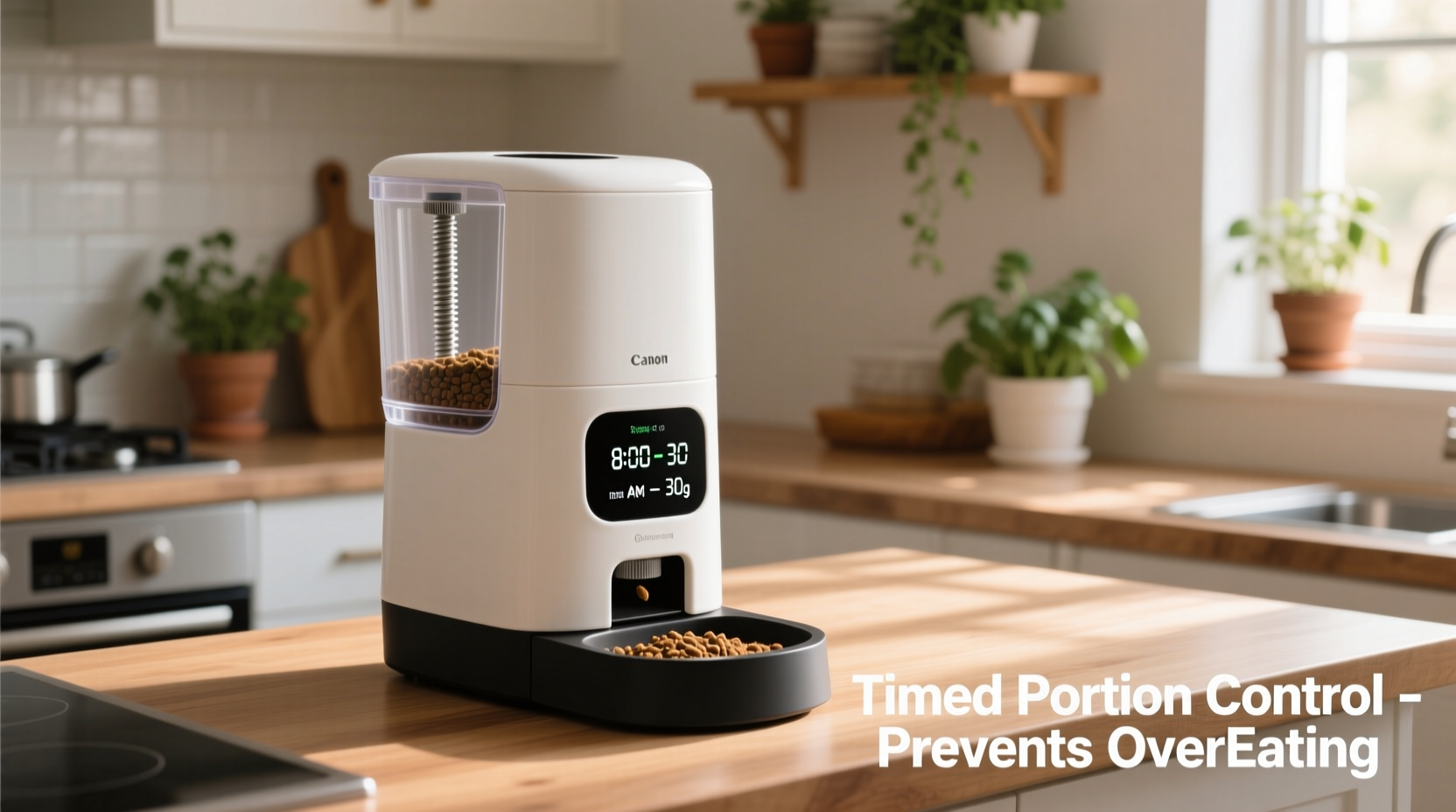
An automatic cat feeder is an electronic device designed to dispense food at scheduled intervals. Most models allow users to set specific times and portion sizes, ensuring that cats receive measured amounts of dry or semi-moist food throughout the day. Advanced units may include features such as voice recording, mobile app integration, portion customization, and even dual compartments for multiple pets.
The core mechanism revolves around a rotating tray or gravity-fed chamber that releases a preset amount of kibble when triggered by a timer. Some high-end models use sensors to detect if a cat has approached, though true RFID-enabled feeders (which open only for a designated pet) are best for multi-cat homes where food guarding or competitive eating occurs.
Timed portions mean the feeder won’t release more than what’s programmed—even if the cat meows persistently or lingers nearby. This enforced structure replaces free-feeding, a common practice where food is left out all day, which significantly increases the risk of overconsumption.
Tip: Always start with smaller-than-recommended portions when setting up your automatic feeder. You can gradually increase based on your cat’s energy levels and body condition.The Link Between Portion Control and Feline Obesity Prevention
Feline obesity is linked to serious health conditions including diabetes, arthritis, hepatic lipidosis, and lower urinary tract disease. Unlike dogs, cats don’t naturally regulate intake based on caloric needs—they often eat out of habit, boredom, or social cues. Free-feeding amplifies this tendency, especially with palatable, calorie-dense foods.
Controlled portioning through automatic feeders introduces predictability. By aligning meal frequency and volume with a cat’s metabolic rate and activity level, owners can maintain a healthy weight trajectory. A study published in the *Journal of Feline Medicine and Surgery* found that structured feeding schedules reduced daily caloric intake by 15–20% compared to ad libitum feeding, without increasing begging behaviors over time.
Moreover, timed meals mimic natural hunting rhythms. In the wild, cats consume multiple small meals throughout the day—typically 8 to 12 mini-meals. An automatic feeder programmed for four to six small portions better reflects this biological pattern than two large meals or constant access to food.
“Cats thrive on routine. When we disrupt their feeding schedule with unpredictable access to food, we interfere with both digestion and satiety signaling.” — Dr. Lena Patel, Veterinary Nutritionist, University of California, Davis
Choosing the Right Feeder: Features That Matter
Not all automatic feeders are created equal. To effectively prevent overeating, certain features should be prioritized:
- Adjustable portion size: Allows precise control, typically from 1/8 to 1 cup per serving.
- Multiple daily settings: Enables 4–6 meals per day, supporting metabolically appropriate feeding patterns.
- Battery backup: Ensures reliability during power outages.
- Lockable lid or RFID technology: Prevents one cat from accessing another’s meal in multi-pet homes.
- Easy-to-clean components: Reduces bacterial buildup and keeps food fresh.
While Wi-Fi-connected feeders offer remote monitoring and scheduling adjustments via smartphone apps, they aren’t essential for basic portion control. However, they provide valuable data tracking—such as meal logs and missed feeds—that can help identify changes in appetite early, which might signal underlying illness.
| Feature | Why It Helps Prevent Overeating | Recommended For |
|---|---|---|
| Customizable portion size | Prevents accidental over-dispensing; allows gradual adjustment | All cats, especially those prone to weight gain|
| Timer-based dispensing | Eliminates free-feeding; enforces consistent schedule | Households with irregular routines|
| RFID or microchip activation | Ensures only intended cat eats the food | Multi-cat homes with dominant eaters|
| Voice recorder | Reduces stress-induced overeating by signaling mealtime calmly | Anxious or noise-sensitive cats|
| App connectivity | Tracks consumption trends; alerts owner to sudden changes | Owners managing medical diets or weight loss plans
Real-World Success: A Case Study in Portion Management
Sophie, a 7-year-old domestic shorthair living in Portland, Oregon, had gained nearly 3 pounds over 18 months despite being fed “just a bowl in the morning and evening.” Her owner, Mark, noticed she was less active, avoided jumping onto counters, and often seemed lethargic. A vet visit confirmed mild obesity and borderline insulin resistance.
After switching from free-feeding to a programmable automatic feeder, Mark set five small meals per day using portion-controlled kibble aligned with Sophie’s ideal caloric intake (about 180 kcal/day). He chose a model with a lockable lid to prevent his other cat, Milo, from stealing food.
Within ten weeks, Sophie lost 1.2 pounds and regained her agility. Her begging decreased after the first two weeks, and blood glucose levels normalized. Mark noted that the consistency of timing helped regulate her behavior—he no longer had to deal with 4 a.m. meowing for food.
This case illustrates that while the feeder itself isn’t a magic solution, its ability to enforce discipline in feeding habits makes a measurable difference—especially when combined with veterinary guidance and proper diet selection.
Step-by-Step Guide to Implementing Timed Feeding
Transitioning to an automatic feeder requires planning to avoid stress or digestive upset. Follow this timeline for best results:
- Week 1: Assess current intake. Measure how much your cat currently eats daily. Use a kitchen scale or measuring cup to log portions.
- Consult your veterinarian. Determine your cat’s ideal weight and daily caloric needs based on age, breed, and health status.
- Select the right feeder. Choose one with adjustable portions, reliable timing, and ease of cleaning.
- Introduce gradually. Run the feeder alongside manual feeding for 3–4 days so your cat associates the sound with food.
- Set initial schedule. Begin with 2–3 meals per day, then increase to 4–5 if tolerated well.
- Monitor closely. Watch for signs of hunger, weight change, or refusal to eat. Adjust portions incrementally.
- Evaluate after 6 weeks. Weigh your cat and assess body condition score. Fine-tune timing and volume as needed.
Common Pitfalls and How to Avoid Them
Even with the best tools, mistakes happen. Here are frequent issues and how to address them:
- Overprogramming portions: Many owners assume their cat needs more food than recommended. Stick to vet-guided amounts, not bag guidelines, which often overestimate needs.
- Neglecting treats: Treats can add hundreds of extra calories weekly. Account for them in total daily intake or eliminate them during weight management phases.
- Ignoring mechanical failures: Jams, misaligned trays, or battery drain can lead to missed meals. Clean the device weekly and check operation daily.
- Using poor-quality food: Highly processed, carb-heavy kibble may increase hunger signals. Opt for high-protein, grain-free options that promote satiety.
- Skipping transitions: Sudden dietary or scheduling changes can cause gastrointestinal distress. Phase in new routines slowly.
FAQ: Common Questions About Automatic Feeders and Cat Eating Habits
Can automatic feeders cause anxiety in cats?
Some cats may initially show stress due to changes in feeding routine. However, most adapt within a week. Using a feeder with a voice message or placing it near familiar spaces can ease the transition. Cats generally prefer predictability, so once accustomed, they often feel more secure knowing when meals arrive.
Are automatic feeders suitable for kittens or senior cats?
Yes, but with modifications. Kittens need more frequent, nutrient-rich meals—up to 4–6 times daily—so ensure the feeder supports that schedule. Senior cats may benefit from softer food textures, so dry-food-only feeders may not suffice. Consider hybrid approaches, like combining wet food hand-feedings with dry portion control.
Do timed feeders work for cats on special diets?
Absolutely. For cats with diabetes, kidney disease, or allergies, precise meal timing and controlled portions are critical. Automatic feeders help maintain consistency, which is essential for medication coordination and metabolic stability. Just ensure the food type matches the dietary prescription.
Conclusion: Building Healthier Habits One Meal at a Time
Automatic feeders with timed portion control are more than convenience gadgets—they’re tools for proactive feline healthcare. When used correctly, they help eliminate the guesswork in feeding, reduce overeating, and support long-term wellness. The key lies not in the device alone, but in how it’s integrated into a holistic approach to nutrition, routine, and observation.
Every cat is different. What works for one may not suit another. But for countless owners navigating hectic schedules or managing complex household dynamics, automated portioning offers a reliable way to deliver consistent care—even when they’re not home. By taking the time to choose the right model, program it thoughtfully, and monitor outcomes, you give your cat a better chance at a longer, healthier life.
💬 Have experience with automatic feeders? Share your story or tips in the comments below—your insight could help another cat owner make a smarter choice today.








