In multi-cat households, managing mealtime can quickly turn chaotic. One cat may dominate the food bowl while others are pushed away, or all cats may eat continuously throughout the day due to unrestricted access. Overeating is a growing concern among feline owners—linked to obesity, diabetes, and joint issues—and choosing the right feeding system plays a crucial role in prevention. Two common options stand out: automatic cat feeders and gravity bowls. While both offer convenience, they differ significantly in how they control portion size, regulate access, and support individual dietary needs. Understanding these differences is essential for maintaining harmony and health in homes with multiple cats.
How Overeating Develops in Multi-Cat Homes
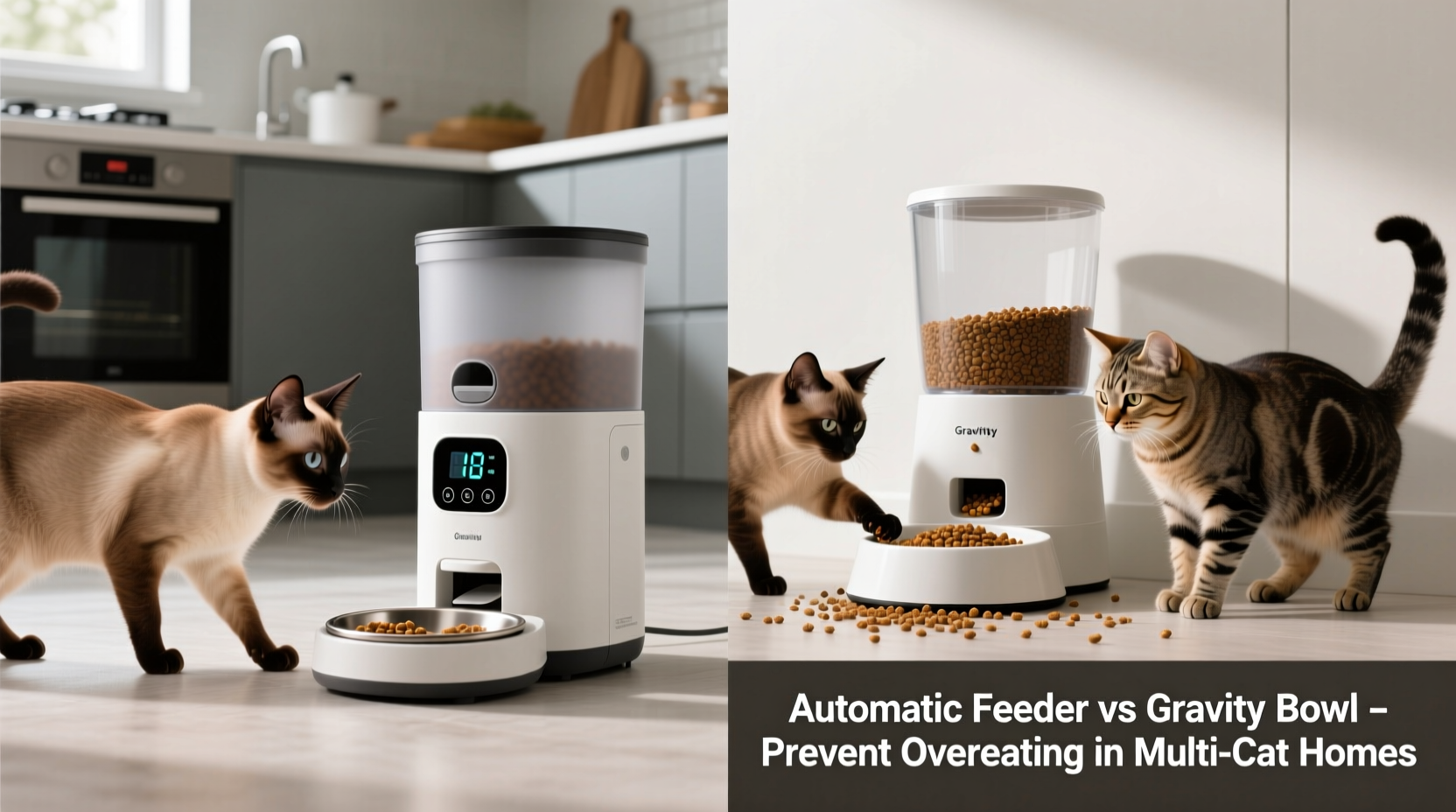
Cats are naturally territorial, especially around resources like food. In multi-cat environments, dominant cats often consume more than their fair share, while shy or subordinate cats may under-eat—or, conversely, binge when they get a chance. Free-feeding with open bowls or gravity feeders encourages grazing behavior, which many cats don’t self-regulate effectively. Without portion control, this constant access leads to excessive calorie intake.
A study published in the *Journal of Feline Medicine and Surgery* found that over 50% of domestic cats in the U.S. are overweight or obese, with free-feeding practices being a major contributing factor. In multi-cat homes, the risk increases due to competition, stress-induced eating, and lack of monitoring. This makes it critical to implement a feeding strategy that ensures each cat receives the right amount of food at the right time.
Tip: Monitor your cats’ body condition monthly using a standardized chart—visible ribs aren’t ideal, but you should be able to feel them easily beneath a thin layer of fat.Understanding Gravity Bowls: Convenience vs. Control
Gravity bowls operate on a simple principle: as the cat eats from the base chamber, more dry food flows down from a reservoir above due to gravity. These systems are popular because they require minimal maintenance and keep food available at all times. For single-cat homes where portion control isn’t urgent, they may suffice. But in multi-cat settings, they present significant drawbacks.
The primary issue is unregulated access. There’s no mechanism to limit how much any one cat consumes. A dominant cat can guard the bowl and eat repeatedly, while anxious cats might overeat during brief windows of opportunity. Additionally, once the food hits the tray, it’s exposed to air, dust, and potential contamination from paws or litter. Over time, kibble can stale or absorb moisture, reducing palatability and nutritional value.
Worse, gravity bowls make it impossible to track individual intake. If one cat starts gaining weight or another loses appetite, there’s no way to pinpoint who is eating what. This lack of accountability undermines preventive healthcare and early detection of illness.
Automatic Feeders: Precision and Personalization
Automatic cat feeders represent a technological leap in pet nutrition management. These devices dispense pre-measured portions at scheduled times, often featuring programmable timers, portion controls, and even microchip or RFID collar recognition. This last feature is particularly valuable in multi-cat homes, as it allows only the designated cat to access the food compartment.
For example, an RFID-enabled feeder opens only when the correct cat approaches, preventing others from stealing meals. This ensures that each cat eats its prescribed amount, reducing both overeating and food aggression. Some models also allow remote control via smartphone apps, enabling owners to adjust schedules, release extra portions, or monitor activity—even when away from home.
Timed dispensing aligns better with natural feline feeding patterns. Cats in the wild eat multiple small meals per day, typically after hunting. Scheduled feedings mimic this rhythm, helping regulate metabolism and prevent insulin spikes associated with constant snacking.
“Portion-controlled feeding through automated systems gives us far greater insight into a cat’s health and helps prevent diet-related diseases.” — Dr. Lena Reyes, DVM, Feline Nutrition Specialist
Comparative Analysis: Key Features Side by Side
| Feature | Gravity Bowl | Automatic Feeder |
|---|---|---|
| Portion Control | No – continuous flow | Yes – precise measurements |
| Scheduled Feeding | No | Yes – customizable times |
| Individual Access Control | No – open access | Yes – RFID/microchip options |
| Food Freshness | Poor – prolonged exposure | Better – sealed compartments |
| Monitoring Capabilities | None | Some models include cameras and logs |
| Best For | Single cats, low-activity homes | Multi-cat homes, weight management |
Real-World Example: The Thompson Household
The Thompsons adopted two cats—Milo, a confident 3-year-old tabby, and Luna, a timid rescue about the same age. Initially, they used a large gravity bowl placed in the kitchen. Within weeks, Milo gained noticeable weight, while Luna appeared skinnier despite seemingly having equal access.
After a vet visit revealed Milo was overweight and Luna was underweight, the family switched to a dual-compartment automatic feeder with RFID technology. Each cat wore a collar tag recognized by the device. Meals were set for morning, midday, and evening, with portion sizes tailored to each cat’s metabolic needs.
Within six weeks, Milo lost half a pound, and Luna gained muscle mass. The household reported fewer food-related squabbles and improved energy levels across both cats. The ability to schedule meals also helped align feeding with the family’s routine, reducing begging behavior.
Tip: When introducing an automatic feeder, place it in a quiet area and supervise initial uses to reduce anxiety. Offer treats near the unit to create positive associations.Step-by-Step Guide to Transitioning Your Cats
Moving from free-feeding or gravity bowls to a controlled system requires patience. Follow this timeline to ensure a smooth transition:
- Week 1: Establish a Feeding Schedule
Begin offering meals at fixed times (e.g., 7 AM, 1 PM, 7 PM), removing uneaten food after 30 minutes. This teaches cats that food is not always available. - Week 2: Introduce the Automatic Feeder
Set up the feeder without activating timed dispensing. Let cats explore it while placing their regular meals inside manually. - Week 3: Activate Scheduled Dispensing
Start using programmed meal releases. Begin with one automated meal per day, gradually increasing to full automation. - Week 4: Enable Access Controls (if applicable)
Turn on RFID or microchip recognition. Ensure each cat successfully accesses the feeder without interference. - Ongoing: Monitor and Adjust
Weigh cats monthly, observe behavior, and tweak portion sizes based on activity level and vet recommendations.
Common Pitfalls to Avoid
- Using a single automatic feeder for multiple cats without access control – defeats the purpose if dominant cats still monopolize food.
- Overfilling the hopper – dry food stored long-term can lose freshness or attract pests; refill every 3–5 days.
- Ignoring battery backup – power outages can halt feeding; choose models with battery options.
- Not cleaning the feeder regularly – residual kibble can mold or jam mechanisms; clean weekly with mild soap and water.
Checklist: Choosing the Right System for Your Home
Use this checklist to evaluate whether an automatic feeder or gravity bowl suits your multi-cat household:
- ☐ Do you have more than one cat?
- ☐ Has any cat shown signs of overeating or food guarding?
- ☐ Are individual dietary needs (e.g., weight loss, medical diets) a concern?
- ☐ Can you commit to refilling and cleaning an automatic feeder regularly?
- ☐ Is your budget flexible enough for a $60–$150 investment in a quality feeder?
- ☐ Do cats respond well to routine and structure?
- ☐ Are you frequently away from home during mealtimes?
If you answered “yes” to three or more of the first four questions, an automatic feeder is likely the better choice. Gravity bowls are best suited only for harmonious, single-cat homes with no health concerns.
Frequently Asked Questions
Can gravity bowls cause obesity in cats?
Yes. Continuous access to dry food via gravity bowls often leads to passive overconsumption, especially in less active indoor cats. Studies show that free-fed cats consume up to 30% more calories daily than those on scheduled diets.
Are automatic feeders safe for kittens and seniors?
Most modern feeders are safe, but adjustments may be needed. Kittens require more frequent meals, so programming flexibility is key. Senior cats may need larger openings or slower dispensing mechanisms. Always supervise early use to ensure comfort and accessibility.
What if my cats are stressed by scheduled feeding?
Initial anxiety is normal. Gradual introduction, environmental enrichment (like puzzle feeders between meals), and consistent routines help ease the transition. If stress persists, consult your veterinarian—behavioral medication or alternative strategies may be necessary.
Final Recommendation: Prioritize Health Over Convenience
While gravity bowls demand less effort upfront, they sacrifice long-term health benefits. In contrast, automatic feeders—especially those with individual access controls—offer precision, accountability, and peace of mind. They empower owners to manage weight, detect appetite changes early, and reduce inter-cat conflict.
For multi-cat homes, the data is clear: portion-controlled feeding significantly reduces the risk of obesity and related illnesses. Investing in an automatic feeder isn’t just about convenience—it’s a proactive step toward responsible pet ownership.
💬 Ready to take control of your cats’ diet? Evaluate your current feeding setup today. Consider trialing an automatic feeder with RFID technology to see how it transforms mealtime in your home. Share your experience or questions in the comments below—your insights could help another cat owner make a healthier choice.








