Vintage cocktail tins—especially those from the 1920s through the 1960s—carry undeniable charm: brushed nickel finishes, Art Deco engravings, monogrammed brass, and the quiet patina of decades behind the bar. They’re coveted by collectors, featured in design magazines, and often passed down as family heirlooms. But beneath that nostalgic sheen lies a practical question few ask aloud: Is it safe to shake a daiquiri—or worse, a citrus-heavy margarita—in a tin that hasn’t been inspected since Prohibition? The answer isn’t romantic. It’s chemical, historical, and deeply consequential for your health.
This isn’t about aesthetics or authenticity alone. It’s about food-grade integrity—the invisible standard that separates functional barware from museum pieces. Modern tins are engineered with precise alloy tolerances, certified non-toxic coatings, and rigorous leaching tests. Vintage tins were not. Their manufacturing context—pre-regulation, pre-safety testing, and often pre-understanding of heavy metal toxicity—means every dent, discoloration, or flake demands scrutiny. What follows is a no-compromise assessment grounded in materials science, FDA guidance, and hands-on experience restoring hundreds of vintage bar tools.
Why Vintage Tins Pose Real Health Risks
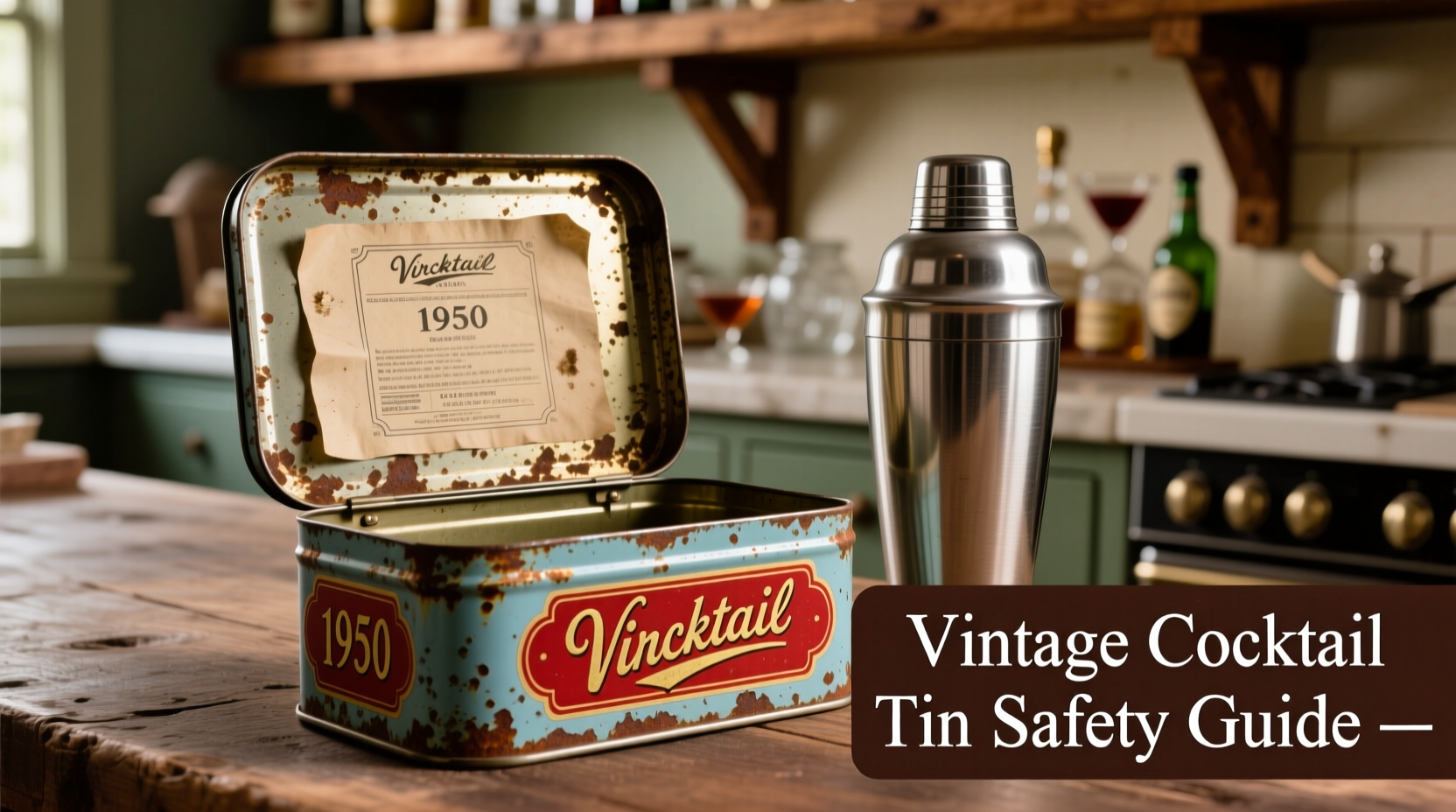
The primary hazards fall into three categories: heavy metal contamination, corrosion-induced leaching, and undocumented surface treatments.
Lead was routinely used in solder joints on early tins (especially pre-1950), particularly where the lid met the body or along seam welds. Even trace amounts—measured in micrograms—can migrate into acidic liquids like lime juice, vinegar-based shrubs, or even diluted citrus syrups. According to the U.S. Food and Drug Administration, there is no safe level of lead exposure, and chronic low-dose ingestion is linked to neurological decline, hypertension, and reproductive harm.
Cadmium and arsenic appear less frequently but are documented in some mid-century chrome plating processes and brass alloys. These metals bioaccumulate and disrupt cellular function over time. Meanwhile, rust (iron oxide) isn’t just unsightly—it’s porous and reactive. When exposed to citric or acetic acid, rust accelerates ion exchange, releasing iron particles directly into your drink. While iron itself is essential, unregulated intake from corroded metal can cause gastric distress and interfere with nutrient absorption.
Finally, many vintage tins were coated with lacquers, shellacs, or proprietary “anti-tarnish” sealants—none of which were evaluated for food contact. Some contain formaldehyde resins or nitrocellulose, both known irritants and potential carcinogens when degraded by alcohol or acid.
Tip: Never assume “it’s been fine for 70 years.” Time doesn’t neutralize toxins—it concentrates them in surface layers. A tin that held dry sugar once isn’t equivalent to one used daily with fresh lime juice.How to Assess a Vintage Tin: A Step-by-Step Safety Audit
Before cleaning, polishing, or pouring, conduct this five-step field assessment. No special tools required—just light, a magnifier, and patience.
- Examine seams and joints under bright light. Look for dull gray or silvery solder lines—especially where the lid attaches or at base welds. Lead solder appears softer, more matte, and may have tiny crystalline fractures. If present, assume lead unless verified otherwise by XRF (X-ray fluorescence) testing.
- Check for pitting or flaking on interior surfaces. Use a wooden toothpick—not metal—to gently probe discolored patches. If material lifts easily or reveals reddish-brown rust underneath, the tin is compromised. Acidic drinks will accelerate metal dissolution here.
- Smell the interior after rinsing with warm water and drying. A persistent metallic, bitter, or “wet pennies” odor suggests active oxidation or residual coating breakdown.
- Test acidity reaction: Soak a cotton swab in fresh lime juice, rub gently on an inconspicuous interior spot for 30 seconds, then wipe onto white paper. Any yellow, green, or bluish tint indicates copper or nickel leaching—a red flag for prolonged use.
- Review provenance: Was it stored in a damp basement? Used in a commercial bar with frequent dishwasher cycles? Exposure history matters more than age. A well-maintained 1940s tin may be safer than a neglected 1980s model with chipped chrome.
Vintage vs. Modern: A Side-by-Side Comparison
| Feature | Vintage Tins (Pre-1975) | Modern Certified Tins |
|---|---|---|
| Primary Alloy | Unspecified brass, nickel silver, or low-grade stainless; often high in lead/cadmium impurities | 18/8 or 18/10 food-grade stainless steel (min. 16% Cr, 8–10% Ni); ASTM F837 compliant |
| Interior Finish | Untreated metal, lacquer, or unknown polymer coating; no leaching data available | Electropolished or passivated surface; tested per NSF/ANSI 2 for food equipment |
| Solder/Joints | Lead-based solder common; no safety certification | Laser-welded or seamless construction; lead-free brazing only |
| Acid Resistance | None tested; documented failure with citrus, vinegar, wine | Validated for 24-hour immersion in 3% acetic acid (FDA CFR 177.1350) |
| Regulatory Oversight | No federal food-contact standards applied during manufacture | Complies with FDA 21 CFR Part 177, NSF/ANSI 2, and EU Regulation (EC) No 1935/2004 |
This isn’t nostalgia versus progress—it’s documented risk versus engineered safety. Modern tins aren’t “less authentic”; they’re simply designed for the reality of modern mixology, where acidity, temperature fluctuation, and frequency of use demand reliability.
Real-World Consequence: A Case Study from Brooklyn
In early 2022, a respected craft cocktail bar in Williamsburg began rotating vintage tins—acquired from estate sales—as part of its “Heritage Series.” Patrons loved the tactile weight and retro aesthetic. Within six weeks, three staff members reported recurring nausea and metallic aftertastes after preparing batches of grapefruit-forward cocktails. An environmental health consultant was brought in. Using portable XRF analysis, he found lead levels exceeding 1,200 ppm at solder seams—well above the FDA’s 100 ppm action level for food-contact surfaces. Further testing revealed cadmium leaching at 0.8 ppm in shaken lime juice samples (the FDA limit is 0.05 ppm). The bar immediately retired all vintage tins from service, retrained staff on material safety, and introduced a policy requiring third-party certification for any reclaimed barware. As owner Lena Ruiz told Imbibe Magazine: “We thought we were honoring history. Instead, we were risking people’s health—and violating our own ethics as hospitality professionals.”
Expert Insight: What Materials Scientists Say
“The idea that ‘old metal is stable’ is dangerously misleading. Stainless steel passivates—that is, forms a protective chromium oxide layer—only when properly manufactured and maintained. Vintage alloys lack that consistency. Worse, repeated acid exposure degrades even robust metals over time. If you wouldn’t serve food off it, don’t shake drink ingredients in it.” — Dr. Aris Thorne, Metallurgist & Food Contact Materials Specialist, Cornell University Food Science Department
Practical Pathways Forward: Your Options Ranked
You don’t need to discard every vintage tin—or abandon character entirely. Here’s how to navigate responsibly:
- Display-only preservation: Clean gently with pH-neutral soap and microfiber, then coat interior and exterior with Renaissance Wax (a conservation-grade microcrystalline wax). Store in climate-controlled, low-humidity conditions. Ideal for rare or sentimental pieces.
- Restoration for limited use: Only if XRF-verified lead/cadmium free AND no interior pitting. Requires professional electropolishing followed by FDA-compliant ceramic coating (e.g., Starflon®). Cost: $120–$280 per tin. Not DIY-safe.
- Hybrid service approach: Use vintage tins solely for dry shaking (no ice, no citrus)—e.g., egg-white sours before final dilution. Reserve modern tins for all wet shakes, citrus builds, and spirit-forward preparation.
- Modern alternatives with vintage soul: Brands like Cocktail Kingdom (their “Hawthorne” line), Japanese-made Yukiwa, and Berlin’s BarCraft offer hand-finished stainless tins with brushed, hammered, or matte textures that echo mid-century aesthetics—without compromising safety.
What NOT to Do (The Dangerous Myths)
- Don’t “boil it clean.” Heat accelerates metal leaching and degrades any residual coating.
- Don’t scrub with steel wool or abrasive pads. This removes protective oxide layers and embeds metal particles.
- Don’t rely on vinegar or lemon juice “cleaning.” These acids worsen corrosion and increase leaching risk—even in short exposures.
- Don’t assume “brass = safe.” Most vintage brass contains 2–8% lead for machinability. Uncoated, it’s unsafe for acidic contact.
Frequently Asked Questions
Can I test my vintage tin at home for lead?
Consumer-grade lead test kits (swab-based) are unreliable for metal surfaces—they detect surface dust, not embedded lead in solder or alloy. False negatives are common. For definitive results, use a certified lab or rent/borrow an XRF analyzer (starting at ~$2,500). Libraries and makerspaces in major cities sometimes offer access.
Are tins made after 1975 automatically safe?
No. While the U.S. Consumer Product Safety Commission banned lead in solder for food containers in 1985, enforcement was inconsistent. Many budget imports from the 1980s–90s still used leaded solder. Always verify compliance with NSF/ANSI 2 or FDA 21 CFR 177.1350—not just “stainless steel” labeling.
What’s the safest way to clean a vintage tin I’ve decided to keep as decor?
Mix 1 tsp baking soda + 1 cup distilled water. Gently wipe interior/exterior with soft cotton cloth. Rinse with distilled water (to avoid mineral deposits), air-dry completely, then apply a thin layer of food-grade mineral oil or Renaissance Wax. Never soak or submerge.
Conclusion: Respect History—But Prioritize Health
Vintage cocktail tins are cultural artifacts—windows into eras of innovation, elegance, and social transformation. Honoring them doesn’t require using them as functional tools. True respect means understanding their limits, preserving them with scientific rigor, and choosing safety without sacrificing sophistication. Today’s best bars—from Tokyo speakeasies to Portland craft lounges—blend heritage storytelling with uncompromising material standards. They serve drinks in flawless stainless while displaying original 1930s tins in glass cases, complete with archival labels explaining their origin and limitations. That balance is where authenticity and responsibility meet.
If you own vintage tins, take ten minutes today to inspect them using the audit steps above. If you collect, prioritize pieces with verifiable lead-free solder or invest in professional testing before display. And if you’re building a home bar: choose modern, certified tins—not as a compromise, but as a commitment to care, consistency, and the people who’ll sip what you shake.
💬 Your bar tells a story—make sure it’s one of intention, not ignorance. Share your restoration journey, safety questions, or favorite modern-vintage hybrid tins in the comments below.








