In the evolving world of beauty, the quest for effortless elegance has led to a quiet revolution in lip products. Once dominated by matte finishes and bold pigments, today’s makeup routines increasingly favor hybrid formulas that balance aesthetics with skincare benefits. At the heart of this shift is the rise of tinted lip oils—a category that promises color, shine, and nourishment in one swipe. But how do they truly compare to traditional lipsticks, especially when it comes to everyday use? For those who prioritize both appearance and comfort, the answer may redefine their daily routine.
The Rise of Hybrid Beauty: From Pigment to Skincare Fusion
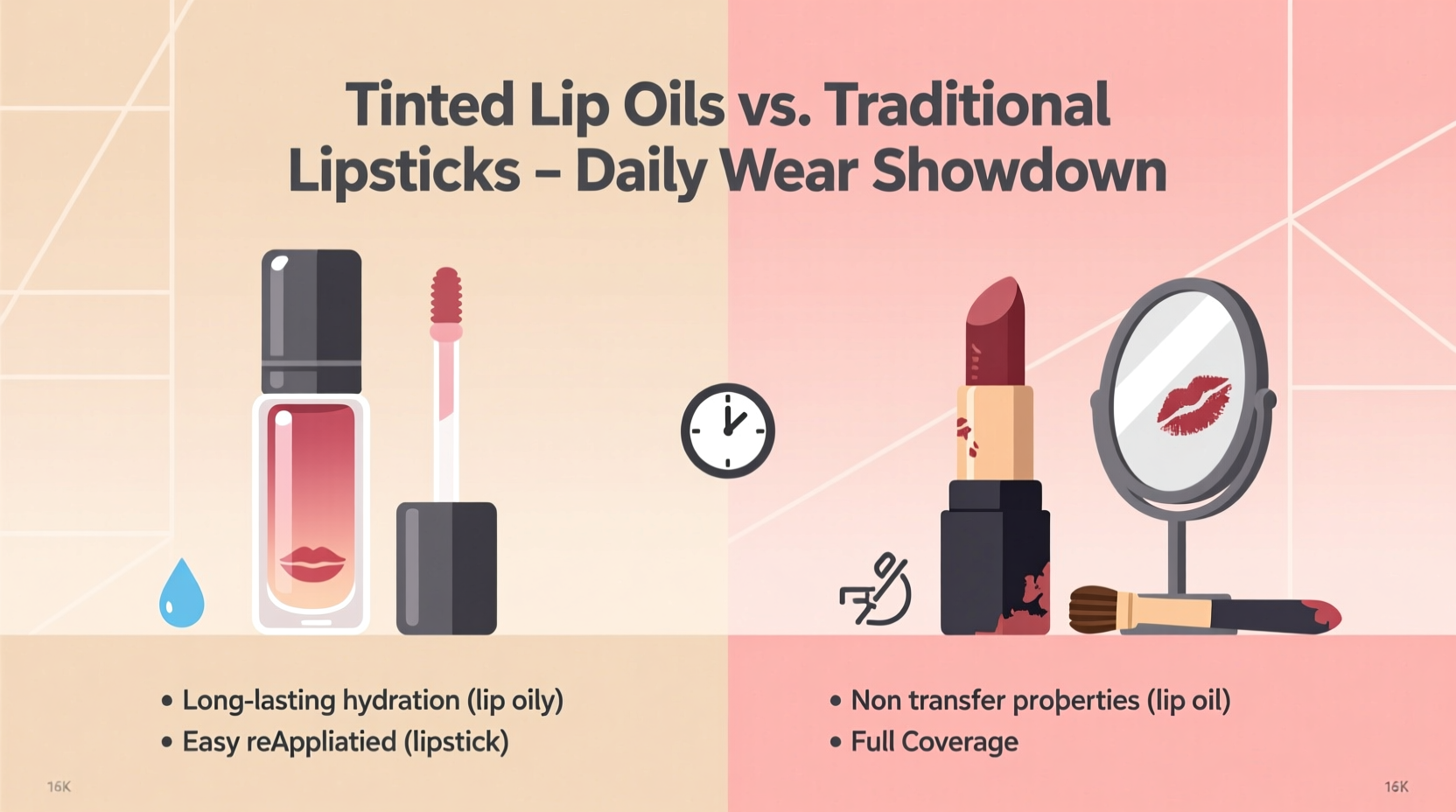
Gone are the days when lipstick was chosen solely for its shade or finish. Modern consumers demand multifunctionality. Tinted lip oils emerged as part of the broader “skinification of makeup” trend—where cosmetics double as skincare. These products typically combine emollient oils (like jojoba, argan, or castor), humectants (such as hyaluronic acid), and sheer-to-moderate pigments to deliver a glossy, flushed look while actively conditioning lips.
Traditional lipsticks, on the other hand, remain rooted in pigment delivery. While some contain moisturizing agents, many still rely on waxes and synthetic polymers that can dry out lips over time—especially matte formulations. This fundamental difference in formulation philosophy sets the stage for a deeper comparison.
Tip: Apply tinted lip oil on slightly damp lips to lock in moisture and enhance the plumping effect.Comfort and Wearability: The All-Day Test
Daily wear demands endurance without discomfort. Traditional lipsticks often require touch-ups due to transfer, drying, or feathering. Matte versions, in particular, may feel tight or crack after a few hours. In contrast, tinted lip oils are formulated for continuous hydration. Their liquid-oil base glides smoothly, rarely tugging or settling into fine lines.
Many users report that tinted lip oils feel more like a treatment than a cosmetic. They don’t cake or flake, making them ideal for extended wear—through workdays, commutes, or casual outings. However, they do have trade-offs: less staying power and higher likelihood of transferring onto cups or masks.
A 2023 consumer survey by *BeautyTech Insights* found that 68% of respondents preferred tinted lip oils for weekday use, citing \"comfort\" and \"low maintenance\" as top reasons. Only 24% chose traditional lipsticks for daily wear, reserving them for evening events or formal settings.
“Lip oils represent a shift toward wellness-driven beauty. People don’t want to compromise lip health for color.” — Dr. Lena Patel, Cosmetic Dermatologist and Formulation Advisor
Color Payoff and Versatility Compared
This is where traditional lipsticks still hold strong ground. If you’re seeking full coverage or precise definition, a classic bullet lipstick offers unmatched control and opacity. Tinted lip oils, by design, provide a more natural, diffused flush—ideal for a “your-lips-but-better” effect but less suited for dramatic transformations.
That said, advancements in pigment dispersion have narrowed the gap. Some high-end tinted oils now offer buildable color, allowing users to layer for intensity. Still, achieving a vibrant red or deep berry requires multiple applications, and even then, the finish remains glossy rather than satin or matte.
For versatility, tinted lip oils win in adaptability. A single shade can function as a cheek tint, eyelid wash, or subtle highlighter. Their lightweight texture integrates seamlessly into minimalist routines—think “no-makeup” makeup or skincare-first regimens.
Comparison Table: Tinted Lip Oils vs. Traditional Lipsticks
| Feature | Tinted Lip Oil | Traditional Lipstick |
|---|---|---|
| Hydration Level | High – contains nourishing oils and moisturizers | Variable – often low in matte formulas |
| Color Intensity | Sheer to medium (buildable) | Medium to full coverage |
| Finish | Glossy, wet-look | Matt, satin, creamy, metallic |
| Longevity | 2–4 hours (requires reapplication) | 4–8 hours (longer in transfer-resistant formulas) |
| Lip Health Impact | Potentially beneficial with consistent use | Can be drying, especially with frequent use |
| Ease of Application | Simple, often doe-foot wand | Requires precision or liner for clean edges |
| Versatility | Multi-use (cheeks, eyes) | Primarily lip-focused |
Skin Health and Long-Term Benefits
One of the most compelling arguments for tinted lip oils lies in their impact on lip condition over time. Chronic lipstick use—particularly matte or long-wear types—can lead to dehydration, flaking, and increased visibility of vertical lip lines. Repeated application without proper exfoliation or moisturization exacerbates these issues.
Tinted lip oils, rich in fatty acids and antioxidants, help reinforce the lipid barrier of the lips. Ingredients like shea butter, vitamin E, and squalane not only soothe but also protect against environmental stressors such as wind, UV exposure, and indoor heating. Over weeks of regular use, many users notice softer, smoother lips with reduced chapping.
Dr. Lena Patel notes, “We’re seeing fewer patients coming in with ‘lipstick dermatitis’ since the rise of oil-based tints. When people switch from drying formulas to hydrating hybrids, their baseline lip health improves significantly.”
However, caution is warranted. Not all lip oils are created equal. Some contain fragrance or essential oils that may irritate sensitive skin. Always patch-test new products and opt for fragrance-free versions if you have reactive skin.
Tip: Exfoliate lips gently once a week with a sugar scrub before applying tinted oil to ensure even color distribution and maximum absorption.Real-World Use Case: The Office Worker’s Dilemma
Consider Maria, a 32-year-old project manager in Chicago. Her day starts at 7 a.m. with a commute, followed by back-to-back meetings, client calls, and lunch at her desk. She used to wear a classic red lipstick daily, believing it projected confidence. But by noon, the color had faded unevenly, her lips felt tight, and she was constantly reaching for balm.
After switching to a rosewood-toned tinted lip oil, her experience changed. “I don’t have to think about my lips anymore,” she says. “It stays comfortable all day, and I look put together even after drinking coffee. I reapply once after lunch, but it’s quick—just a swipe.”
What mattered most wasn’t the intensity of color, but consistency of appearance and comfort. The lip oil complemented her skin tone naturally and required less maintenance than her previous routine of lipstick + gloss + balm rotation.
When Traditional Lipstick Still Wins
Despite the advantages of tinted lip oils, there are scenarios where traditional lipstick remains superior:
- Formal Events: Full-coverage color and precise application make lipsticks ideal for weddings, presentations, or photo shoots.
- Long-Haul Wear: Transfer-proof and smudge-resistant formulas last through meals and travel without constant touch-ups.
- Statement Looks: Bold colors like plum, coral, or black are easier to achieve and maintain with pigmented lipsticks.
- Cool Climates: In dry winter air, thicker wax-based sticks may offer better protection than fluid oils that evaporate faster.
The key is context. Daily wear implies repetition, convenience, and sustainability—both for your routine and your lip health. For most people, this favors the ease and nurturing qualities of tinted oils.
Action Checklist: Choosing the Right Product for You
Not sure which option fits your lifestyle? Use this checklist to decide:
- ✅ Do you prioritize comfort over bold color?
- ✅ Do you wear lip product for 6+ hours daily?
- ✅ Do you struggle with dry or chapped lips?
- ✅ Are you looking for a low-maintenance, multi-use product?
- ✅ Do you prefer a natural, fresh-faced aesthetic?
If you answered “yes” to three or more, tinted lip oil is likely the better choice for daily use. Reserve traditional lipstick for occasions where impact and longevity outweigh comfort.
Frequently Asked Questions
Can tinted lip oils replace lip balm?
In many cases, yes. Most tinted lip oils contain emollients and occlusives that hydrate and protect. However, if your lips are severely dry or cracked, apply a dedicated balm first, let it absorb, then layer the tinted oil on top for color.
Do tinted lip oils stain like traditional tints?
Some do. Certain formulas include dye-based pigments that create a lasting stain, while others rely on suspended color that wipes off easily. Check labels for terms like “long-lasting tint” or “stain technology” if you want color that lingers after the oil wears off.
Are tinted lip oils suitable for all skin tones?
Absolutely. Brands now offer inclusive ranges, from translucent glosses to deeply pigmented oils. Look for undertones that complement your complexion—cool pinks for fair skin, berries for medium, and warm corals or browns for deeper tones.
Final Verdict: Function Meets Aesthetic in Modern Beauty
The question isn’t whether tinted lip oils are universally “better” than traditional lipsticks—it’s whether they serve the needs of daily life more effectively. For most people, the answer leans strongly toward yes. They offer a harmonious blend of beauty and care, reducing friction in routines while supporting long-term lip health.
That doesn’t mean abandoning lipstick altogether. Instead, think of tinted lip oils as the foundation of your lip wardrobe—the go-to for weekdays, errands, and low-key moments. Save the bold lipsticks for moments that call for drama, precision, and staying power.
As beauty continues to evolve, the line between makeup and skincare will blur further. Products that enhance without compromising will dominate. In this new era, tinted lip oils aren’t just a trend—they’re a reflection of smarter, more sustainable beauty choices.
💬 Have you made the switch to tinted lip oils? Share your favorite product or routine tip in the comments—your insight could help someone find their perfect everyday lip solution!








