For many dog owners, discovering their pet’s ancestry feels like unwrapping a mystery gift. Is that floppy-eared mutt part Border Collie? Could those intense herding instincts mean Australian Shepherd blood? With a simple cheek swab and a few weeks’ wait, companies promise to reveal your dog’s genetic blueprint. But behind the marketing claims and colorful breed breakdowns lies a critical question: are pet DNA tests actually accurate, or are they little more than entertainment for curious pet parents?
The truth is nuanced. While canine DNA testing has made significant scientific strides, its accuracy varies depending on the brand, methodology, reference database, and what exactly you're asking—breed identification, health risks, or trait analysis. Understanding the strengths and limitations can help owners decide whether these kits offer actionable insights or simply satisfy curiosity.
How Dog DNA Tests Work: The Science Behind the Swab
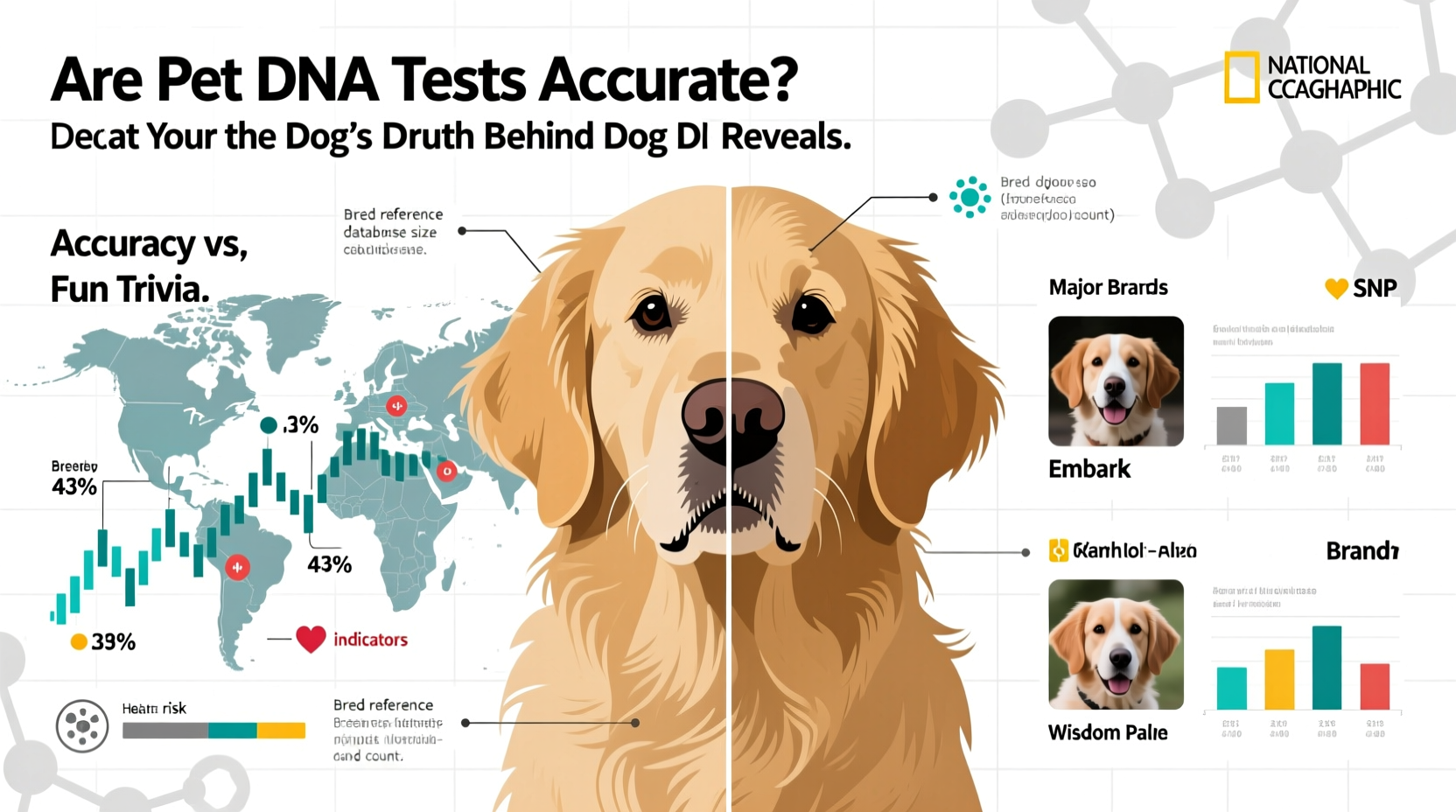
Dog DNA tests analyze specific regions of your pet’s genome using a cheek swab collected at home. Once submitted, labs compare the sample to a reference database of known purebred and mixed-breed dogs. These comparisons rely on single nucleotide polymorphisms (SNPs)—small variations in DNA sequences that serve as genetic markers linked to certain breeds or traits.
The process typically involves three steps:
- Sample Collection: Using a buccal swab, owners collect cells from inside their dog’s cheek. No blood draw or vet visit is required.
- Laboratory Analysis: The lab extracts DNA and runs it through genotyping arrays designed to detect thousands of SNPs associated with known breeds.
- Data Comparison: Algorithms match the dog’s genetic profile against proprietary databases to estimate breed composition, health markers, or physical traits.
The quality of results hinges heavily on the size and diversity of the company’s reference database. A larger, well-curated database increases the likelihood of accurately identifying rare or region-specific breeds.
Tip: For best results, avoid feeding or giving treats to your dog 30–60 minutes before collecting the swab to reduce food contamination.Breed Identification: How Accurate Are the Results?
Most pet owners turn to DNA tests to answer one burning question: “What kind of dog do I have?” Companies often present results as colorful pie charts showing percentages of various breeds. But how reliable are these estimates?
In general, major brands like Embark, Wisdom Panel, and DNA My Dog perform reasonably well when identifying dominant breeds—especially if the dog has a strong lineage from common purebreds such as Labrador Retriever, German Shepherd, or Poodle. Studies suggest accuracy rates between 90% and 95% for primary breed detection in straightforward cases.
However, complications arise with:
- Multigenerational mixes: Dogs descended from multiple mixed breeds over several generations may receive speculative or inconsistent results.
- Regional or rare breeds: Smaller databases may lack sufficient samples from less common breeds like the Thai Ridgeback or Norwegian Lundehund, leading to misidentification or broad categorizations like “ancient breed” or “herding type.”
- Low-percentage contributions: Claims of 2% Chihuahua or 1% Akita should be viewed skeptically. Most experts agree that below 5%, genetic signals become statistically unreliable due to background noise and algorithmic assumptions.
A 2020 study published in *Frontiers in Veterinary Science* compared results from two leading DNA test providers using the same set of mixed-breed dogs. While both agreed on primary breeds in most cases, secondary and tertiary breed predictions varied significantly—highlighting inconsistency in low-contribution reporting.
“DNA tests are excellent tools for identifying major breed components, but minor percentages should be interpreted as possibilities, not certainties.” — Dr. Elaine Nguyen, Veterinary Geneticist, UC Davis School of Veterinary Medicine
Health Screening and Genetic Disease Detection
Beyond ancestry, some DNA kits offer health screening for inherited conditions such as degenerative myelopathy, progressive rod-cone degeneration (PRA), or dilated cardiomyopathy. This aspect of testing carries far greater clinical relevance—and higher accuracy—than breed prediction.
These panels target specific mutations with well-documented links to disease. Because they look for exact gene variants rather than probabilistic patterns, results are highly reliable when the mutation is known and tested for. For example, a negative result for the MDR1 gene mutation (common in herding breeds) can confidently rule out sensitivity to certain medications.
Still, important caveats apply:
- Not all diseases are included in every test. Comprehensive panels screen for 150+ conditions; basic kits may cover only 10–20.
- A “clear” result doesn’t guarantee lifelong health. Many illnesses are influenced by environment, diet, and non-tested genes.
- Positive findings require veterinary follow-up. A flagged risk isn’t a diagnosis—it’s a signal for proactive monitoring.
For breeders and owners of high-risk breeds, this level of insight can be invaluable. Early detection allows for preventive care, informed breeding decisions, and tailored wellness plans.
| Test Feature | Typical Accuracy | Best Use Case |
|---|---|---|
| Primary Breed Detection | 90–95% | Identifying dominant ancestry (e.g., Golden Retriever mix) |
| Minor Breed Traces (<5%) | Low to Moderate | Speculative interest only |
| Known Mutation Screening | 99%+ | Health risk assessment and prevention |
| Trait Prediction (Coat, Size) | Moderate | General guidance, not precise forecasting |
Real-World Example: Bella the “Rescue Mystery”
When Sarah adopted Bella from a rural shelter, staff guessed she was mostly Australian Cattle Dog with some terrier. Intrigued, Sarah ordered a premium DNA test. Three weeks later, the results showed 40% Australian Shepherd, 30% Border Collie, 20% Beagle, and 10% Siberian Husky.
At first glance, it explained Bella’s striking blue eyes, high energy, and love of barking at squirrels. But Sarah noticed inconsistencies: Bella didn’t shed like a Husky, had no scent drive like a Beagle, and was calmer than typical herding breeds.
She consulted a veterinary behaviorist, who noted that while the herding component aligned with Bella’s focus and trainability, the Beagle and Husky markers might reflect shared ancestral lines rather than direct descent. The takeaway? The core behavioral traits matched the dominant herding breeds—but the smaller percentages were likely statistical approximations.
Still, the test revealed Bella carried a mutation for exercise-induced collapse (EIC), prompting Sarah to adjust off-leash activities and inform her vet. In this case, the health insight proved far more valuable than the breed pie chart.
Choosing the Right Test: A Practical Checklist
Not all dog DNA kits are created equal. To get meaningful results, consider the following factors before purchasing:
- Database Size: Larger databases improve breed identification accuracy. Look for companies with 250+ breeds represented.
- Health Panel Depth: Opt for tests that screen for at least 100 genetic conditions, especially if your dog is from a high-risk lineage.
- Veterinary Integration: Some services provide reports formatted for veterinarians and offer access to genetic counselors.
- Updates Over Time: Premium providers like Embark reanalyze data as science advances—adding new markers or health alerts years after the initial test.
- Third-Party Validation: Check if the company publishes peer-reviewed research or collaborates with academic institutions.
Frequently Asked Questions
Can a dog DNA test replace a vet visit?
No. While DNA tests can flag potential health risks, they are not diagnostic tools. Always consult your veterinarian for medical concerns, even if your dog’s test shows a genetic predisposition.
Will two different tests give me the same results?
Not necessarily. Different companies use varying algorithms and reference populations. You may see similar primary breeds but differing minor components. For consistency, stick with one reputable brand—preferably one offering free reanalysis as science evolves.
Are mixed-breed dogs harder to test than purebreds?
Mixed-breeds pose a greater challenge for breed identification due to complex ancestry, but modern tests handle them reasonably well—especially when one or two breeds dominate. Purebreds are easier to confirm, particularly if registered with a kennel club.
Conclusion: More Than Just Fun—But Know What You’re Getting
Pet DNA tests sit at the intersection of science and sentiment. For owners seeking deeper understanding of their dog’s behavior, health risks, and origins, these kits can deliver meaningful insights—particularly when used wisely. The breed percentages make for fun conversation, but the real value lies in health screening, preventive care, and informed decision-making.
Accuracy depends on the provider, the scope of the test, and what questions you’re asking. Don’t treat a 3% Basenji claim as gospel, but do pay attention if your seemingly healthy pup carries a gene for a serious condition. Used critically and in partnership with veterinary professionals, DNA testing enhances—not replaces—responsible pet ownership.
💬 Have you tried a dog DNA test? Did the results surprise you or change how you care for your pet? Share your experience in the comments and help other owners navigate the world of pet genetics.








