
Smartphones have become extensions of our daily lives—used for work, navigation, entertainment, and communication. With that reliance comes the need for protection and convenience. Enter magnetic phone cases: sleek, modern accessories promising seamless integration with car mounts, wallets, and wireless chargers. But are they truly better than traditional cases? Or is the convenience overshadowed by trade-offs in durability, cost, and long-term usability?
This article examines magnetic phone cases from every angle—functionality, design, compatibility, and real-world value—to help you make an informed decision without falling for marketing hype.
The Rise of Magnetic Phone Cases
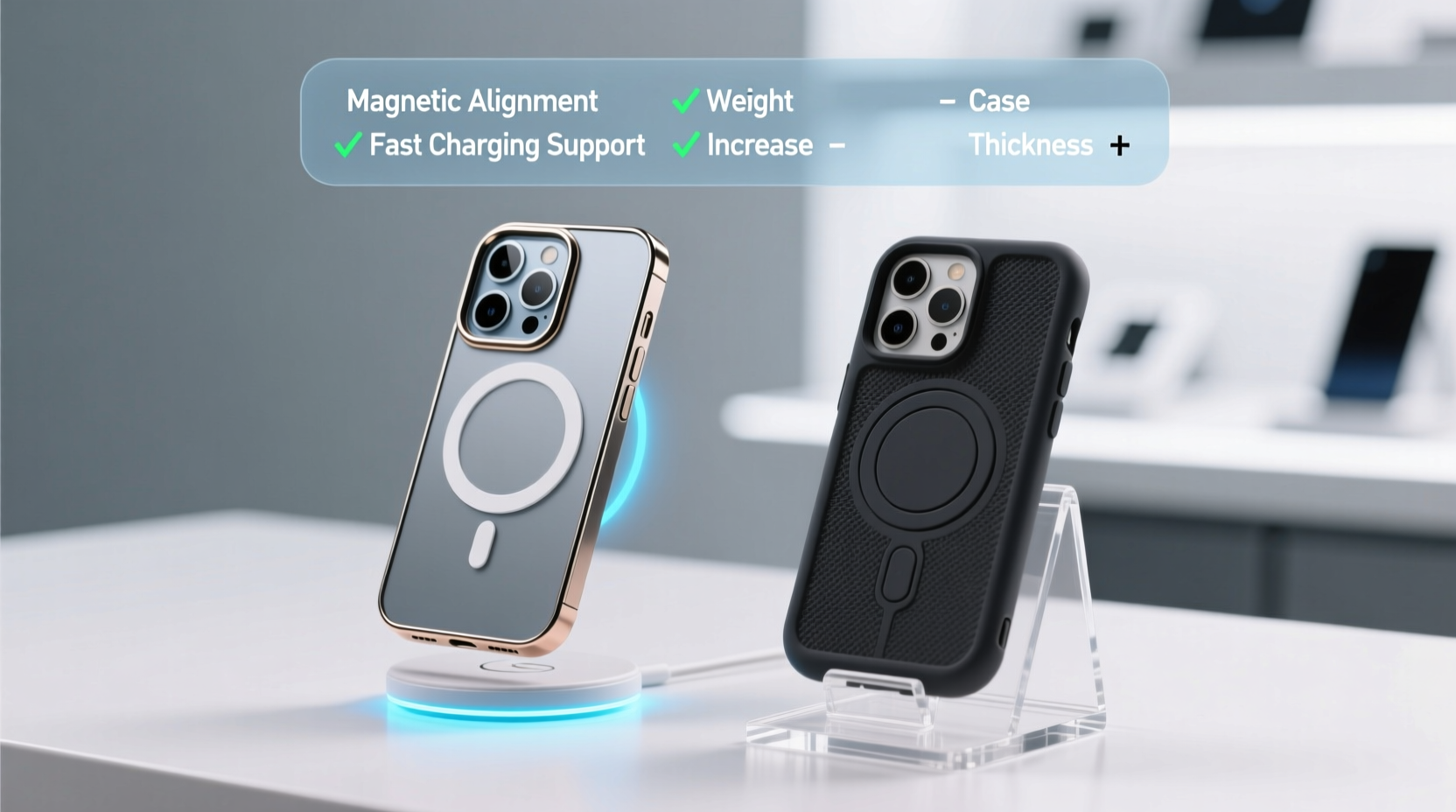
Magnetic cases gained popularity alongside the launch of Apple’s MagSafe technology in 2020. Designed specifically for iPhone 12 and later models, MagSafe uses an array of magnets embedded in the phone’s back to enable secure attachment of accessories like chargers, mounts, and wallets. Third-party manufacturers quickly followed suit, producing compatible magnetic cases for both iPhones and select Android devices.
These cases integrate small but powerful magnets—usually arranged in a ring—allowing them to snap effortlessly onto magnetic accessories. The appeal lies in convenience: no fumbling with clips, no misalignment during charging, and instant mounting while driving.
But convenience isn’t free. Magnetic cases often come at a premium price and may compromise on drop protection or bulkiness compared to standard silicone or rugged cases.
Pros and Cons: Magnetic vs. Regular Cases
To determine whether magnetic cases live up to their reputation, it's essential to compare them directly with traditional alternatives across key categories.
| Feature | Magnetic Case | Regular Case |
|---|---|---|
| Mounting Convenience | Instant snap-on with strong alignment; ideal for car or bike mounts | Requires adhesive or clip-based mount; prone to slipping |
| Wireless Charging | Optimized for MagSafe-style chargers; faster and more reliable | Works with most Qi chargers, but alignment can be finicky |
| Drop Protection | Varies widely; some prioritize magnet strength over shock absorption | Often superior, especially in rugged or military-grade designs |
| Cost | Average $35–$60; high-end models exceed $70 | $10–$40 for most quality options |
| Bulk & Weight | Slightly thicker due to internal magnets; adds ~1–2mm | Generally slimmer, especially minimalist models |
| Accessory Ecosystem | Supports wallets, battery packs, stands via magnetic attachment | Limited to third-party add-ons (e.g., clip-on wallets) |
Real-World Use: A Commuter’s Experience
Consider Sarah, a freelance designer who commutes 45 minutes each way and relies on her phone for GPS, calls, and music. She used a basic TPU case for two years but struggled with her phone slipping off her dashboard mount during turns. After switching to a MagSafe-compatible magnetic case, she noticed immediate improvements.
“I can now attach my phone one-handed while stopped at a light,” she says. “It clicks into place perfectly every time. I also started using a magnetic wallet that holds my ID and credit card—great for quick errands.”
However, after dropping her phone from chest height onto concrete, the screen cracked despite the case. “I assumed the case offered good protection because it was expensive,” she admits. “Turns out, not all magnetic cases are built for impact.”
Sarah’s experience highlights a crucial point: magnetic functionality doesn’t guarantee structural resilience. Users must evaluate both aspects independently.
Expert Insight: What Engineers Say About Magnet Integration
“Integrating magnets into phone cases requires careful engineering. Poorly placed magnets can interfere with internal components, reduce signal strength, or degrade over time. High-quality magnetic cases align precisely with the phone’s own magnetic array to avoid these issues.” — Dr. Alan Zhou, Electronics Design Consultant
Dr. Zhou emphasizes that reputable brands conduct electromagnetic compatibility testing to ensure magnets don’t affect NFC, compass accuracy, or wireless signals. However, budget magnetic cases—especially generic ones from online marketplaces—often skip these steps, potentially causing performance hiccups.
He also warns against stacking multiple magnetic accessories: “Using a magnetic case with a magnetic car mount and a magnetic power bank can create unpredictable field interactions, leading to inefficient charging or overheating.”
When a Magnetic Case Makes Sense (And When It Doesn’t)
Not every user benefits equally from magnetic cases. Your lifestyle and usage patterns should guide your choice.
Choose a Magnetic Case If You:
- Drive regularly and use GPS navigation
- Use wireless charging daily
- Want a clean, modular accessory setup (wallet, stand, battery pack)
- Own a MagSafe-compatible iPhone or supported Android model
- Prioritize convenience over minimalism
Stick With a Regular Case If You:
- Need maximum drop protection (e.g., construction sites, outdoor work)
- Use your phone in extreme environments (dust, moisture, temperature swings)
- Don’t use car mounts or external accessories often
- Prefer ultra-slim, lightweight designs
- Are on a tight budget
Your Decision Checklist
Before buying, ask yourself the following questions:
- Do I use my phone for navigation while driving?
- How often do I charge wirelessly?
- Would I benefit from a magnetic wallet or stand?
- Is my phone model optimized for magnetic accessories (e.g., iPhone 12+ or Samsung Galaxy with official support)?
- Am I willing to pay 2–3x more than a standard case for added convenience?
- Do I frequently drop my phone? If so, does this magnetic case have MIL-STD drop certification?
If you answered “yes” to the first three, a magnetic case could enhance your daily routine. If the last three raise concerns, a durable regular case might serve you better.
Frequently Asked Questions
Can magnetic cases damage my phone?
No, properly designed magnetic cases do not harm modern smartphones. The magnets used are low-strength neodymium types calibrated to work safely with internal sensors. However, avoid cheap, untested models that may disrupt compass or NFC functions.
Do magnetic cases work with all wireless chargers?
They work best with MagSafe or MagSafe-like chargers that align with the magnetic ring. Standard Qi chargers will still charge the phone but may be slower or less stable due to potential misalignment.
Are magnetic cases worth the extra cost?
For users who leverage the ecosystem—car mounts, fast charging, snap-on accessories—they offer tangible value. For others, the premium may not justify the limited benefits. Evaluate your actual usage, not just the novelty.
Final Verdict: Hype or Help?
Magnetic phone cases aren’t universally better—but for the right user, they’re genuinely helpful. The technology shines when integrated into a mobile-first lifestyle where efficiency, safety, and seamless transitions matter. Mounting your phone while driving becomes effortless, charging feels intuitive, and carrying fewer items (thanks to magnetic wallets) simplifies your day.
Yet, they aren’t a one-size-fits-all upgrade. They cost more, vary in protective quality, and only deliver full value within a supported ecosystem. If you rarely leave home, don’t drive, or rely on rugged protection, a well-made regular case remains the smarter, more economical choice.
The key is intentionality. Don’t buy a magnetic case because it’s trendy. Buy it because it solves a real problem in your routine.
🚀 Ready to upgrade—or stay simple? Assess your daily habits, test compatibility, and choose based on function, not flash. Share your experience in the comments and help others navigate the magnetic maze.








