In recent years, a quiet but noticeable shift has taken place in children’s toy preferences. Once dominated by lifelike animal figures and detailed equestrian sets, the market for horse-themed toys now faces stiff competition from colorful, stylized plushies—particularly those inspired by franchises like My Little Pony. These whimsical characters, with their rainbow manes and fantastical traits, are increasingly found in toy bins, birthday wish lists, and preschool classrooms. But what does this trend mean for how children play, imagine, and connect with animals? Are little pony plushies truly taking over, and if so, why?
The Rise of Stylized Play: Why Plushies Appeal to Modern Kids
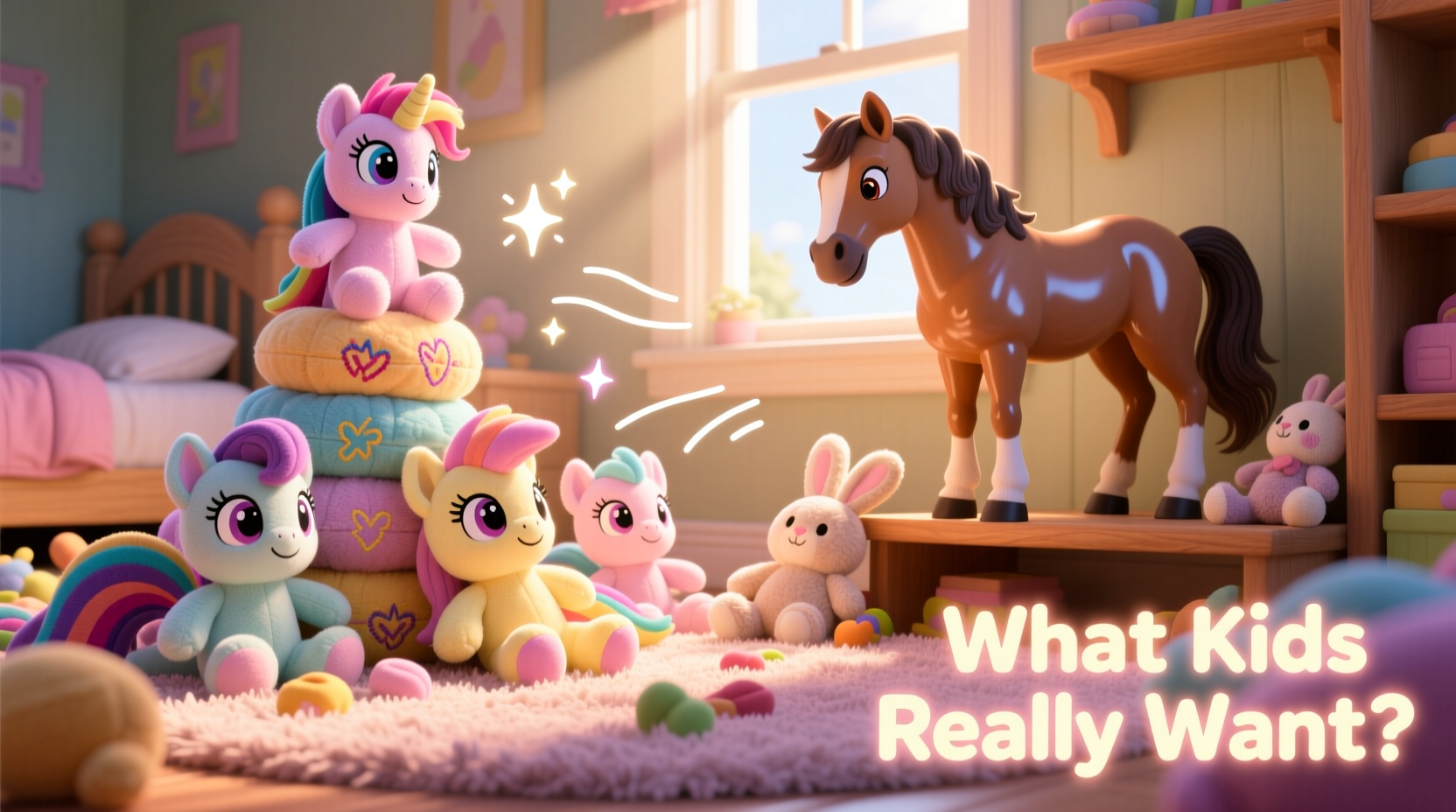
Children today grow up immersed in digital media, animated series, and branded universes that prioritize storytelling and emotional connection over realism. My Little Pony, especially since its 2010 reboot with *My Little Pony: Friendship is Magic*, has become more than just a toy line—it’s a cultural phenomenon. The franchise blends vibrant animation, character-driven narratives, and themes of empathy and cooperation, making its plush counterparts instantly recognizable and emotionally resonant.
Unlike realistic horse toys, which often focus on anatomical accuracy and accessories like grooming kits or saddles, little pony plushies emphasize personality, color, and fantasy. A child isn’t just playing with a “horse”—they’re engaging with Twilight Sparkle, Rainbow Dash, or Fluttershy, each with distinct traits and storylines. This narrative depth fosters imaginative role-play that extends beyond barn chores or riding lessons into friendship scenarios, magical adventures, and problem-solving.
Tip: When choosing toys, consider how well they support storytelling and emotional expression—not just physical accuracy.Realistic Horse Toys: Niche Appeal or Educational Value?
Despite the popularity of plushies, realistic horse toys still hold value—especially for children deeply interested in animals, nature, or equestrian activities. Brands like Schleich, Breyer, and CollectA produce highly detailed figurines and playsets that reflect real-world breeds, tack, and stable environments. These toys appeal to kids who enjoy learning about animal behavior, anatomy, and care routines.
Parents and educators often favor realistic models for their educational potential. They can serve as tools for teaching biology, responsibility, and even geography (through breed-specific origins). For example, a child playing with a Shetland pony model might learn about Scottish highlands, while one caring for a Friesian figure could explore Dutch heritage.
However, these toys tend to be less accessible to younger children. Their smaller parts, delicate features, and lack of softness make them less ideal for toddlers or sensory-seeking play. They also require a certain level of interest in realism—something not all children naturally gravitate toward.
Market Trends and Consumer Behavior
Sales data reflects the growing dominance of branded plush lines. According to NPD Group reports, character-based toy sales have outpaced traditional animal figurines in the 3–7 age group since 2015. Hasbro, owner of the My Little Pony brand, reported a 23% increase in franchise-related merchandise revenue in 2022 alone, driven largely by plush and apparel.
Retailers have responded accordingly. Major chains like Target and Walmart now dedicate more shelf space to licensed plush collections than to generic animal models. Online marketplaces show similar patterns—searches for “rainbow pony plush” outnumber “realistic horse toy” by nearly 3:1 on platforms like Amazon and Etsy.
“Kids don’t just want to mimic reality—they want to create new worlds. Fantasy-based toys give them permission to do that freely.” — Dr. Lena Torres, Child Development Psychologist at Stanford University
Comparing Play Patterns: Imagination vs. Imitation
The key difference between little pony plushies and realistic horse toys lies in the type of play they encourage.
| Play Type | Little Pony Plushies | Realistic Horse Toys |
|---|---|---|
| Primary Focus | Fantasy, friendship, magic | Anatomy, care, realism |
| Imaginative Scope | Broad (flying, spellcasting, talking animals) | Narrow (riding, grooming, feeding) |
| Social Interaction | High (group play, dialogue-heavy) | Moderate (often solo or instructional) |
| Durability & Safety | Soft, washable, toddler-safe | Fragile parts, choking hazards |
| Educational Angle | Social-emotional learning | Science and animal care |
This contrast isn’t about superiority, but suitability. A child using a My Little Pony plush to resolve a conflict between characters is practicing empathy and communication. Another child arranging a Schleich foal with its mother is exploring biological relationships and caregiving. Both are valid forms of cognitive development—just expressed through different lenses.
Mini Case Study: Two Siblings, Two Preferences
Consider the Miller household: 6-year-old Mia and her 8-year-old brother, Ethan. Mia owns six My Little Pony plushies, each with a name and backstory she’s invented. She arranges them in elaborate scenes involving rescue missions and royal banquets, often narrating entire episodes aloud. Her favorite activity is creating “friendship maps” showing how each pony supports the others.
Ethan, meanwhile, collects Breyer horses. He researches real breeds, paints custom designs, and builds dioramas of ranch life. He recently wrote a school report on mustang conservation, citing his toy collection as inspiration.
Their parents noticed that Mia rarely engages with Ethan’s models, finding them “too serious,” while Ethan sees the ponies as “silly.” Yet both children demonstrate deep engagement with their toys—one through emotional storytelling, the other through factual exploration. Their differing preferences highlight how toy design shapes the trajectory of play.
Checklist: Choosing the Right Horse-Themed Toy for Your Child
- ✅ Assess your child’s current interests: Do they love cartoons, animals, or stories?
- ✅ Consider age and developmental stage: Younger kids benefit from soft, durable materials.
- ✅ Look for opportunities for social play: Does the toy encourage sharing or conversation?
- ✅ Evaluate educational value: Can it teach empathy, science, or responsibility?
- ✅ Balance fantasy and realism: It’s okay to have both types in rotation.
- ✅ Involve your child in the decision: Let them express what excites them.
FAQ
Are My Little Pony toys bad for children who want to learn about real horses?
No. While stylized, these toys can spark initial interest in equine themes. Many children transition from fantasy ponies to real horse education naturally as curiosity grows. The key is providing access to accurate information when questions arise.
Can realistic horse toys be too advanced for young kids?
Yes. Small parts, fragile limbs, and intricate details make some realistic models unsuitable for children under 5. Always check age recommendations and supervise play to prevent damage or ingestion risks.
Is it harmful if my child only plays with fantasy-based toys?
Not at all. Fantasy play is a healthy part of development. It helps children process emotions, practice language, and explore complex social dynamics in a safe context. Balance comes from variety over time, not immediate correction.
Conclusion: Embracing Both Worlds
The idea that little pony plushies are “taking over” may sound dramatic, but it reflects a broader evolution in childhood play. Children aren’t rejecting realism—they’re expanding their imaginative toolkit. Plushies offer emotional safety, accessibility, and narrative freedom, while realistic toys provide grounding in facts and natural systems. Rather than viewing them as competitors, parents and educators should see them as complementary resources.
The future of toy design likely won’t be about choosing between fantasy and realism, but integrating both. We’re already seeing hybrid products—ponies with anatomical hints of real horses, or storybooks that blend magic with animal facts. These innovations honor children’s capacity for wonder while nurturing their understanding of the world.
🚀 What kind of horse toys did you or your child prefer? Share your experience and help others understand the evolving landscape of play. Your insight matters!








