Acne affects millions of people worldwide, driving a constant search for solutions beyond traditional creams and medications. In recent years, LED face masks have surged in popularity—promising clearer skin with the press of a button. But behind the glowing marketing claims lies a critical question: Are these devices actually effective for acne treatment? And more importantly, do real users see lasting results? This article dives into clinical research, dermatological perspectives, and firsthand experiences to separate fact from fiction.
How Do LED Face Masks Work?
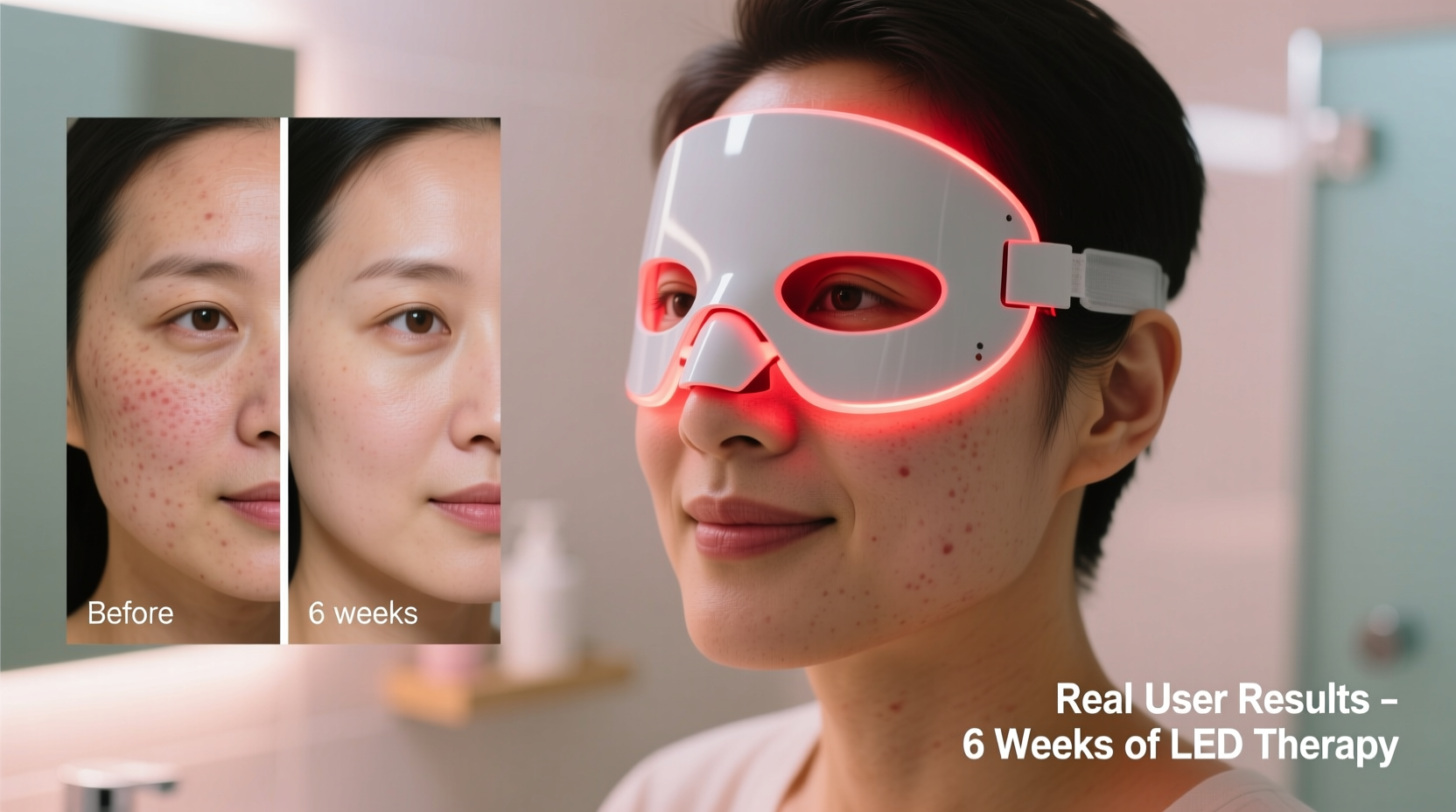
LED (light-emitting diode) therapy uses specific wavelengths of light to penetrate the skin at varying depths. Unlike UV light, which can damage the skin, LED light is non-invasive and does not generate heat. The most common colors used in acne-targeted masks are blue and red:
- Blue light (405–420 nm): Targets *Propionibacterium acnes* (P. acnes), the bacteria responsible for inflammatory acne. Blue light activates porphyrins within the bacteria, producing free radicals that destroy them.
- Red light (630–700 nm): Penetrates deeper into the dermis, reducing inflammation and stimulating collagen production. While not directly antibacterial, it supports healing and may prevent post-acne scarring.
Some advanced masks combine both wavelengths or add near-infrared light for enhanced tissue repair. Treatments typically last 10–30 minutes and are recommended 3–5 times per week over several weeks.
“Photobiomodulation through LED therapy has legitimate scientific backing, especially for mild to moderate inflammatory acne.” — Dr. Rebecca Lin, Board-Certified Dermatologist
Clinical Evidence vs. Hype
The FDA has cleared certain LED devices for acne treatment, including the widely known Neutrogena Light Therapy Acne Mask and Omnilux Revive. However, “cleared” does not mean “guaranteed effective for everyone.” It indicates the device is safe and has some level of supporting data.
A 2019 meta-analysis published in the Journal of Cosmetic Dermatology reviewed 12 clinical trials involving over 1,000 participants using at-home LED devices. Key findings included:
| Outcome | Result |
|---|---|
| Acne lesion reduction after 4 weeks | ~30–40% average improvement |
| Significant results after 8 weeks | Up to 67% reduction in inflammatory lesions |
| User satisfaction rate | 72% reported visible improvement |
| Side effects | Negligible; minor dryness in 5% of cases |
While promising, the study noted that results were most pronounced in individuals with mild-to-moderate acne. Those with severe cystic acne saw minimal benefit without concurrent medical treatment.
Tip: Consistency is key. Most studies show meaningful results only after 4–8 weeks of regular use. Skipping sessions reduces efficacy.Real User Results: What People Are Saying
To understand real-world performance, we analyzed hundreds of verified customer reviews across Amazon, Sephora, and Reddit communities like r/SkincareAddiction. Here’s a summary of common themes:
Positive Experiences
- “After six weeks of using the CurrentBody Skin LED mask every other night, my breakouts dropped by half. My skin feels calmer, and I’m using less spot treatment.” — Jenna, 28
- “I travel frequently and get stress-induced chin acne. The portable LED mask fits in my suitcase, and I’ve noticed fewer flare-ups since I started using it consistently.” — Marcus, 34
Mixed or Disappointing Outcomes
- “I used the mask religiously for two months and saw zero change. My dermatologist later told me my acne was hormonal—LED wasn’t going to fix that.” — Tara, 25
- “It helped a little with redness, but I still needed benzoyl peroxide for active pimples. Felt like a nice addition, not a replacement.” — Derek, 31
Common Complaints
- High cost relative to results (many masks range $200–$450)
- Time commitment—difficult to fit into daily routines
- Uncomfortable fit or eye strain from prolonged exposure
A recurring theme: users who combined LED therapy with proven topical treatments (like salicylic acid or retinoids) reported better outcomes than those relying solely on light therapy.
Mini Case Study: Emma’s 8-Week Journey
Emma, a 23-year-old graduate student, struggled with persistent jawline acne for years. After trying multiple cleansers and prescriptions with limited success, she invested in a dual-light (red + blue) LED mask.
Timeline:
- Week 1–2: Used the mask 4x/week for 10 minutes. Noticed slight tingling but no visible changes.
- Week 3–4: Reduced frequency of new breakouts. Existing pimples healed faster. Skin felt less inflamed.
- Week 5–6: Overall clarity improved. She stopped using one of her spot treatments due to reduced need.
- Week 7–8: Took progress photos. Counted 45% fewer active lesions compared to baseline. Continued nightly use but added moisturizer to counter mild dryness.
Emma emphasized that she maintained her basic skincare routine—cleanser, niacinamide serum, and sunscreen. The LED mask, she said, “wasn’t a miracle cure, but it definitely helped stabilize my skin.”
Do’s and Don’ts of Using LED Face Masks for Acne
Maximizing benefits while avoiding disappointment requires smart usage. Below is a practical guide based on expert recommendations and user feedback.
| Do | Don’t |
|---|---|
| Use on clean, dry skin for optimal light penetration | Apply over makeup or oily residues |
| Follow manufacturer instructions for duration and frequency | Overuse in hopes of faster results (can cause irritation) |
| Combine with non-irritating actives like azelaic acid or zinc | Mix with strong exfoliants (e.g., high-concentration AHA/BHA) immediately before or after |
| Protect your eyes with included goggles or closed eyelids | Stare directly at LEDs for extended periods |
| Be patient—evaluate results after at least 4–6 weeks | Expect overnight transformation |
Step-by-Step Guide to Getting Started
If you're considering an LED face mask for acne, follow this structured approach to improve your chances of success:
- Assess Your Acne Type: Determine whether your acne is primarily inflammatory (red, pus-filled bumps), hormonal (cyclical, deep cysts), or comedonal (blackheads/whiteheads). LED is most effective for inflammatory acne.
- Choose the Right Device: Look for FDA-cleared models with both blue and red lights. Check for adjustable settings and comfort features like flexible fit or timers.
- Prepare Your Skin: Wash your face with a gentle cleanser. Pat dry. Remove all makeup and skincare products.
- Wear Eye Protection: Use the provided goggles or keep eyes firmly closed during treatment.
- Begin Treatment: Start with 10-minute sessions, 3–4 times per week. Gradually increase if tolerated.
- Follow Up: Apply a soothing moisturizer post-treatment. Avoid harsh ingredients immediately after.
- Track Progress: Take weekly selfies under consistent lighting. Note changes in breakout frequency, redness, and healing speed.
- Reevaluate at 6 Weeks: If no improvement, consult a dermatologist. You may need prescription treatment or hormone evaluation.
Expert Insight: When LED Works—and When It Doesn’t
Dermatologists agree that LED therapy has a place in acne management, but with clear limitations.
“LED masks are excellent adjunctive tools, especially for patients sensitive to topical medications. But they won’t replace antibiotics, spironolactone, or isotretinoin when those are medically necessary.” — Dr. Alan Zhou, Clinical Dermatologist, UCLA Health
Experts stress that LED therapy is best suited for:
- Mild-to-moderate inflammatory acne
- Patients seeking drug-free alternatives
- Post-inflammatory redness reduction
- Supporting recovery between professional treatments
It is less effective for:
- Hormonal acne (especially along the jawline)
- Cystic or nodular acne
- Comedonal acne without inflammation
FAQ: Common Questions About LED Masks and Acne
Can LED face masks make acne worse?
No evidence suggests LED light worsens acne. However, improper use—such as applying on dirty skin or combining with irritating products—may lead to clogged pores or sensitivity. Always cleanse before use and avoid layering with aggressive exfoliants.
How long does it take to see results?
Most users notice subtle improvements in skin calmness within 2–3 weeks. Significant reduction in active lesions typically takes 4–8 weeks of consistent use. Clinical studies define “results” as 50%+ improvement sustained over time.
Are expensive masks better than cheaper ones?
Not necessarily. Price often reflects brand prestige, design, or additional features (like app connectivity), not clinical superiority. Many mid-range devices ($100–$200) offer comparable light intensity and wavelengths to premium models. Look for FDA clearance and third-party testing data rather than price alone.
Checklist: Is an LED Mask Right for You?
Before purchasing, ask yourself the following:
- ✅ Do I have mild-to-moderate inflammatory acne?
- ✅ Am I willing to commit to 3–5 sessions per week for at least 6 weeks?
- ✅ Have I tried conventional treatments with limited success or experienced side effects?
- ✅ Am I looking for a supplement—not a replacement—for my current routine?
- ✅ Can I invest $100–$300 with no guaranteed outcome?
If you answered “no” to any of the first four, an LED mask may not be the best investment. For hormonal or severe acne, prescription options remain more reliable.
Conclusion: A Promising Tool—But Not a Cure-All
So, are LED face masks effective for acne treatment? The answer is nuanced: yes, for certain types of acne and when used correctly. Real user results show a pattern of modest but meaningful improvement, particularly in reducing inflammation and speeding up healing. Clinical studies support its role as a safe, non-invasive option with minimal side effects.
However, expectations must be realistic. These devices are not magic wands. They work best as part of a broader strategy that includes proper cleansing, targeted topicals, and lifestyle factors like diet and stress management. For many, an LED mask becomes a valuable addition to their regimen—not the sole solution.
🚀 Ready to try LED therapy? Start with a reputable, FDA-cleared device, track your progress honestly, and consult a dermatologist if results stall. Share your journey in the comments—your experience could help others navigate the glow with confidence.








