At first glance, a Hello Kitty plushie might seem like just another soft, adorable toy—perfect for cuddling but not much else. Yet an increasing number of parents, educators, and child development specialists are observing that these seemingly simple companions may offer more than meets the eye. Behind the pastel colors and signature red bow lies potential for emotional growth, language development, and imaginative play. So, are Hello Kitty plushies actually educational tools in disguise? Real-world experiences from parents and insights from experts suggest the answer might be yes—under the right conditions.
The Role of Emotional Security in Learning
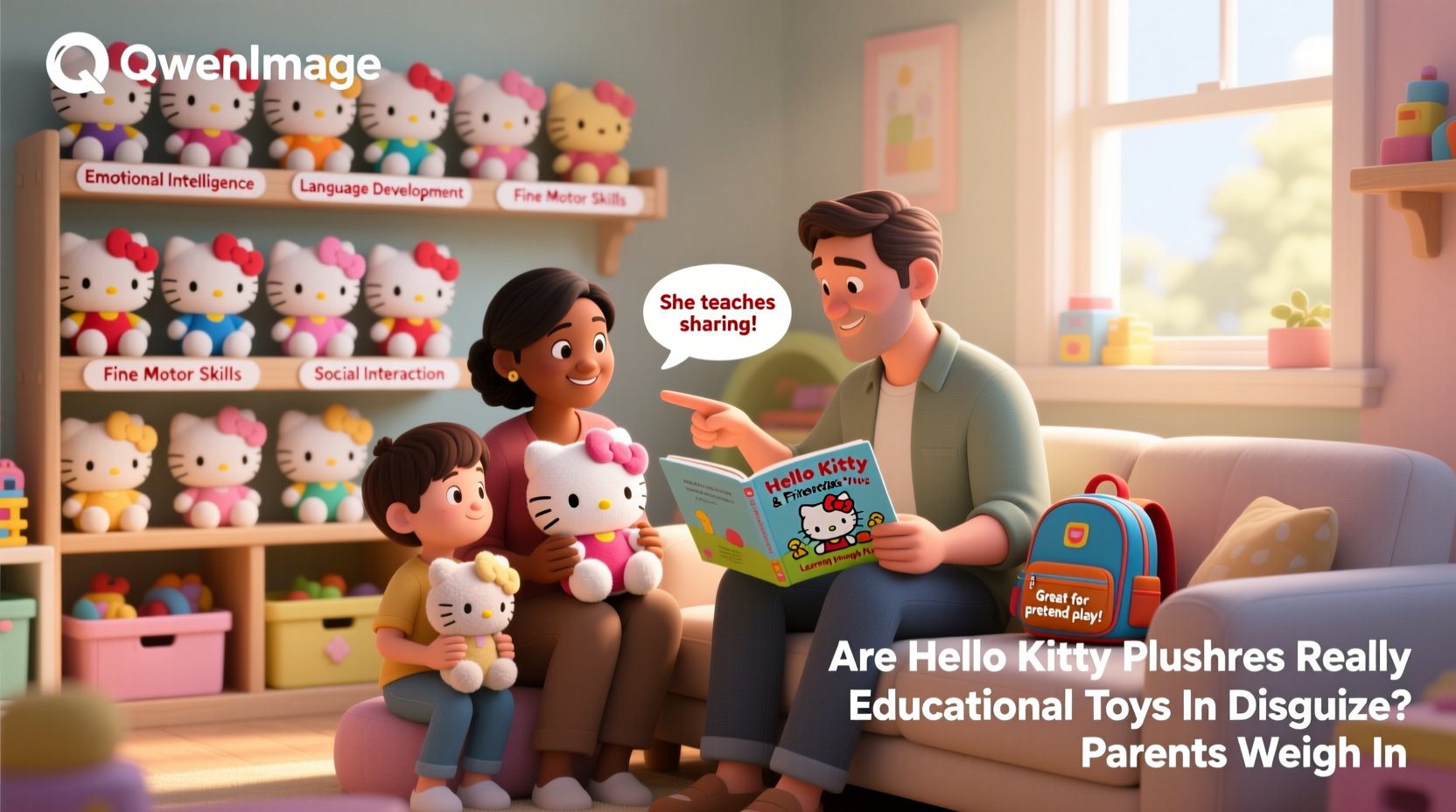
Children thrive in environments where they feel safe and emotionally supported. A familiar plush toy can serve as a transitional object—a source of comfort during times of stress or change. For many young children, Hello Kitty becomes more than a character; she becomes a confidante. This emotional bond can create a foundation for learning.
When a child feels secure, their brain is better equipped to absorb new information. Studies in early childhood development consistently show that emotional regulation supports cognitive function. A child who uses their Hello Kitty plushie to calm down after a tantrum or to fall asleep at night is practicing self-soothing—a critical life skill.
“Attachment objects like stuffed animals help children navigate complex emotions. That sense of safety directly supports their ability to focus, explore, and learn.” — Dr. Lena Peterson, Child PsychologistTip: Encourage your child to name their plushie and talk about its feelings—it fosters empathy and emotional vocabulary.
Imaginative Play and Cognitive Development
One of the most powerful ways children learn is through pretend play. A Hello Kitty plushie often becomes a central figure in elaborate storylines involving tea parties, school days, or adventures in fantastical lands. These scenarios are not random—they’re structured narratives that require planning, sequencing, and problem-solving.
During role-play, children assign roles, negotiate rules, and manage conflicts—all while using language creatively. A 2022 study published in the Journal of Early Childhood Research found that children who engaged in regular pretend play with dolls or plush toys demonstrated stronger narrative skills and higher levels of verbal fluency by age five.
Parents report that Hello Kitty plushies often act as catalysts for storytelling. “My daughter sets up entire classrooms with her plushies,” says Maria Tran, mother of two from Portland. “She teaches Hello Kitty math and reads her bedtime stories. I didn’t realize how much language practice that was until her preschool teacher mentioned her advanced sentence structure.”
How Pretend Play Builds Key Skills
- Language development: Children use expanded vocabulary when narrating stories.
- Social understanding: They practice turn-taking, sharing, and perspective-taking.
- Executive function: Planning scenes strengthens working memory and self-control.
- Creativity: Inventing plots encourages flexible thinking.
Educational Extensions: Turning Cuddles into Curriculum
The educational value of a Hello Kitty plushie doesn’t have to be passive. With a little parental guidance, these toys can become active tools in early learning. Many caregivers incorporate plushies into daily routines to teach concepts like counting, sorting, and even basic reading.
For example, a parent might ask, “Can you give three cookies to Hello Kitty?” during snack time, introducing basic math. Or they might use the plushie as a “student” during at-home reading sessions, encouraging the child to sound out words aloud. This method leverages the child’s emotional connection to deepen engagement.
“When a child teaches a toy, they reinforce their own knowledge. It’s called the ‘protégé effect’—explaining something to someone else improves retention and confidence.” — Dr. Alan Reyes, Educational Psychologist
Step-by-Step Guide: Using Plushies to Teach Daily Concepts
- Choose a routine activity: Snack time, bath time, or bedtime.
- Introduce the plushie as a participant: “Hello Kitty wants to learn how to brush her teeth too!”
- Incorporate a learning goal: Count toothbrush strokes, identify colors, or read a short book together.
- Encourage role reversal: Let the child guide the plushie through the task.
- Praise effort and creativity: Reinforce both the lesson and the imaginative process.
What Parents Are Saying: Real-Life Insights
A growing online community of parents has begun sharing anecdotes about how Hello Kitty plushies have unexpectedly supported their children’s development. From speech delays to social anxiety, some families credit these toys with making milestones more accessible.
Mini Case Study: Emma and Her Silent Companion
Emma, age 4, was slow to speak and often withdrew in group settings. Her mother introduced a Hello Kitty plushie named “Lily” as a way to open communication. At first, Emma would only whisper to Lily. Over weeks, she began speaking louder, then started having full conversations—first with Lily, then with peers. Her speech therapist noted that the plushie acted as a “safe intermediary,” reducing performance pressure. Within six months, Emma’s vocabulary had doubled, and she began initiating playdates.
Another parent, James Liu from Chicago, shared: “I thought it was just cute when my son made a ‘Hello Kitty store’ in the living room. But then I realized he was practicing money skills, customer service language, and inventory management. He even made price tags with real numbers.”
Do’s and Don’ts: Maximizing Educational Value
| Do | Don't |
|---|---|
| Use the plushie to model kindness and empathy (“How do you think Hello Kitty feels?”) | Force the child to play in a specific way—follow their lead |
| Incorporate the toy into learning games (sorting, matching, storytelling) | Dismiss their imaginary world as “just playing” |
| Ask open-ended questions about the plushie’s adventures | Overload playtime with academic goals—keep it fun |
| Rotate plushies occasionally to maintain interest | Take away the plushie as punishment—it undermines emotional security |
Frequently Asked Questions
Can a plushie really help with speech development?
Yes. Children often feel less pressure talking to a toy than to an adult. This low-stakes environment encourages vocalization, repetition, and experimentation with language. Speech therapists frequently use dolls and plush animals in therapy sessions for this reason.
Is it okay if my child treats the plushie like a real being?
Absolutely. Anthropomorphizing toys is a normal and healthy part of cognitive development. It reflects a child’s growing understanding of emotions, relationships, and social dynamics. Discouraging it may stifle creativity and emotional expression.
How many plushies are too many?
There’s no set number, but if a child becomes overly dependent or anxious about losing a plushie, it may be worth gently encouraging other coping strategies. Balance is key—plushies should support, not replace, human interaction.
Checklist: Is Your Hello Kitty Plushie Supporting Learning?
- ✅ Your child assigns the plushie emotions or thoughts
- ✅ You’ve used the plushie to practice daily routines (bedtime, hygiene)
- ✅ The plushie appears in drawings or stories
- ✅ Your child “teaches” the plushie something they’ve learned
- ✅ You engage with the plushie during play (e.g., “What does Hello Kitty want to eat?”)
Conclusion: More Than Meets the Eye
Hello Kitty plushies may wear bows and lack facial expressions, but their impact on childhood development is far from superficial. When embraced as partners in play rather than passive decorations, these toys can nurture emotional intelligence, language skills, and creative thinking. Parents who observe closely often discover that their child’s favorite plushie is not just a comfort object—but a silent tutor in the classroom of imagination.
💬 Have a story about how a plushie helped your child grow? Share your experience in the comments—your insight could inspire another parent to see their child’s toy in a whole new light.








