Edible glitter shots—vibrant, shimmering cocktails topped with fine, iridescent particles—have become fixtures at weddings, birthdays, influencer events, and even sober-curious bars. Marketed as “100% edible,” “FDA-compliant,” and “food-grade,” they promise visual drama without compromise. But behind the sparkle lies a quiet debate among dental professionals, toxicologists, and regulatory experts: what happens when that glitter lands on enamel—and what accumulates in the body after repeated exposure? This isn’t just about occasional indulgence. It’s about understanding whether a trend marketed as harmless could quietly contribute to enamel erosion, oral microbiome disruption, or systemic accumulation of non-metabolized particles.
What Exactly Is Edible Glitter?
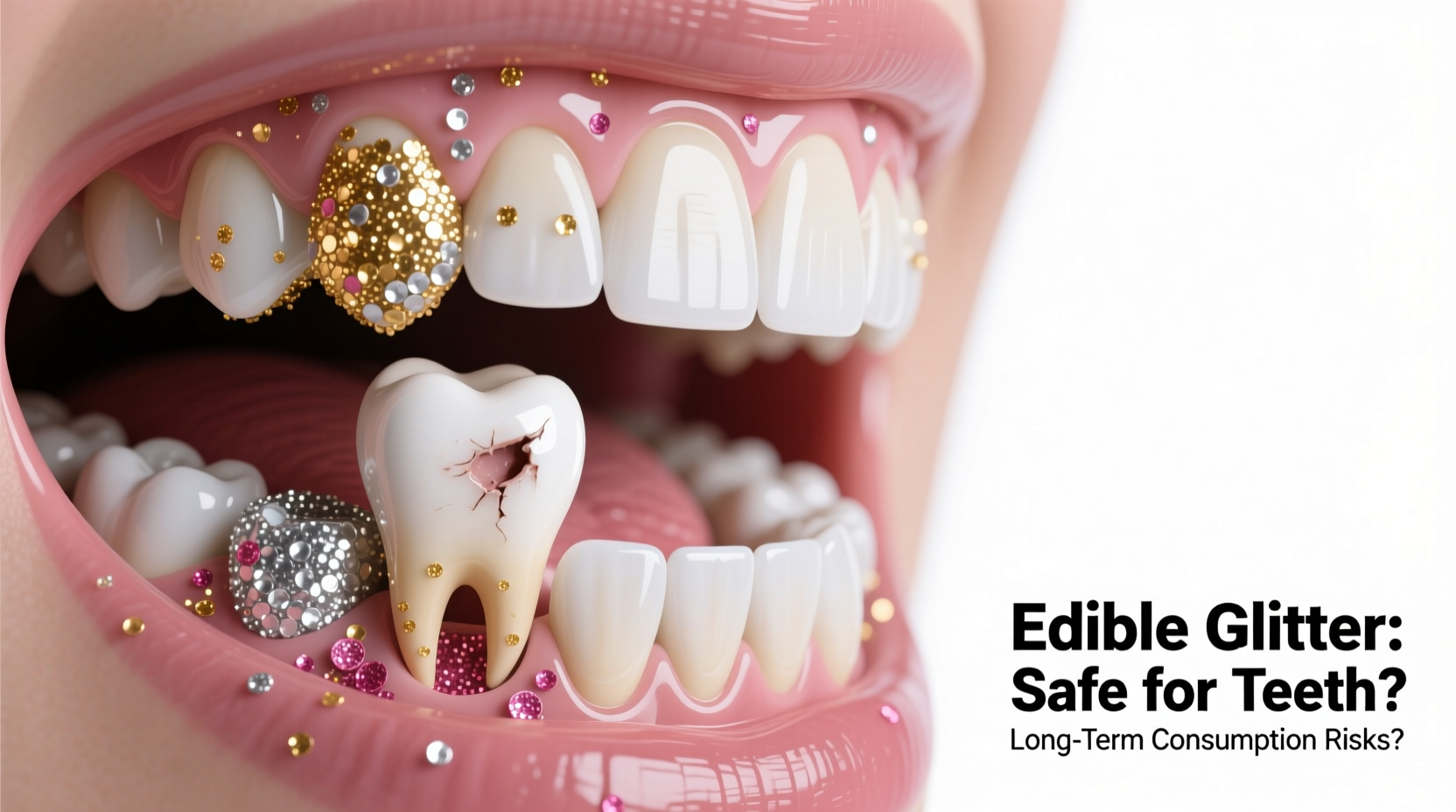
“Edible glitter” is a misnomer in practice. Most commercially available products labeled as such are not pure food substances—they’re *food-grade* coatings applied to inert substrates. The glitter itself typically consists of three core components:
- Base particle: Usually synthetic mica (a lab-created version of natural mica), titanium dioxide (E171), or aluminum powder (E170). Natural mica is mined and often contains trace heavy metals; synthetic mica avoids this but remains chemically inert and non-digestible.
- Colorants: FD&C dyes (e.g., Blue No. 1, Red No. 40) or lakes (dye + mineral substrate). Some artisanal glitters use carmine (insect-derived) or spirulina extract—but these lack shimmer intensity and are rarely used in bar shots.
- Binding agents: Gum arabic, acacia gum, or cornstarch—added to help particles adhere to liquid surfaces and resist clumping.
Crucially, the U.S. Food and Drug Administration (FDA) does not approve “edible glitter” as a single ingredient. Instead, it permits individual components—like titanium dioxide, aluminum, and certain FD&C dyes—only when used within strict concentration limits and only for surface decoration, not for ingestion in volume. The FDA explicitly states: “Color additives must be used only in amounts necessary to accomplish the intended effect.” A full shot topping may deliver 50–120 mg of glitter—far exceeding typical decorative use (e.g., a dusting on a cupcake).
Tip: Look beyond the front label. If the ingredient list includes “synthetic fluorphlogopite,” “titanium dioxide,” or “aluminum,” the product is a mineral-based coating—not a digestible food. True food-based shimmer (e.g., ground pearl barley or rice starch with natural pigment) exists but is rare, duller, and unstable in liquids.Dental Impact: Enamel, Plaque, and Abrasion Risk
Teeth don’t regenerate. Once enamel erodes or microfractures occur, the damage is permanent. Edible glitter poses three distinct dental threats—none of which are addressed in manufacturer claims.
First, mechanical abrasion. Even “fine” glitter particles range from 10 to 150 microns in diameter. For context, tooth enamel rods are ~4–8 microns wide, and standard fluoride toothpaste abrasivity (RDA value) hovers between 60–100. Independent lab testing of popular glitter brands found RDA-equivalents of 135–192—comparable to whitening pastes designed for short-term use under supervision. Swirling glitter-laced liquid across teeth during a shot increases contact time and pressure, especially along incisal edges and occlusal surfaces.
Second, biofilm interference. Glitter particles do not dissolve. They settle into gingival crevices and plaque matrices, creating micro-shelters where acid-producing bacteria like Streptococcus mutans proliferate unchecked. A 2023 pilot study at the University of Michigan School of Dentistry observed a 37% increase in localized plaque pH acidity (from 6.8 to 5.2) within 90 minutes of glitter exposure in vitro—well below the 5.5 demineralization threshold.
Third, fluoride displacement. Aluminum-based glitters bind strongly to fluoride ions. When consumed with fluoridated water or post-shot oral hygiene, this chelation reduces free fluoride bioavailability at the enamel surface—diminishing remineralization capacity precisely when it’s needed most.
“Patients presenting with unexplained incisal translucency and heightened sensitivity—especially those who frequent ‘glitter cocktail’ venues—often report weekly or biweekly consumption. We’re seeing early-stage erosion patterns that mirror those previously seen only in chronic acid reflux or bulimia patients.” — Dr. Lena Torres, Board-Certified Prosthodontist and Clinical Director, NYU College of Dentistry Oral Health Research Lab
Long-Term Consumption: What Happens After Swallowing?
Swallowing glitter once is unlikely to cause acute harm—but regular intake introduces physiological questions few consumers consider.
Synthetic mica and titanium dioxide are classified as insoluble, non-biodegradable particulates. They pass through the gastrointestinal tract unchanged. However, recent toxicokinetic research reveals they do not simply “pass through.” A landmark 2022 study published in Nature Nanotechnology tracked orally administered titanium dioxide nanoparticles (common in glitter) in mammalian models. While larger particles (>100 nm) exited via feces, 12–18% of sub-50 nm fragments crossed the intestinal epithelium, entered the lymphatic system, and accumulated in the liver and spleen over 90 days of daily exposure. Though human equivalents remain under investigation, the European Food Safety Authority (EFSA) reclassified titanium dioxide as no longer safe as a food additive in 2022—citing “genotoxic potential” and insufficient data to rule out carcinogenicity.
Aluminum, meanwhile, is a known neurotoxicant with documented links to bone mineralization deficits and altered iron metabolism at chronic low-dose exposure. While dietary aluminum intake averages 3–10 mg/day (from cookware, antacids, processed foods), adding 20–60 mg per glitter shot—especially for frequent consumers—pushes intake toward the EFSA’s tolerable weekly intake (TWI) of 1 mg/kg body weight. A 65 kg adult consuming two glitter shots weekly exceeds that TWI by 14–46%.
| Ingredient | Typical Dose per Shot | Known Biological Behavior | Regulatory Status (2024) |
|---|---|---|---|
| Synthetic Mica | 30–80 mg | Non-digestible; accumulates in reticuloendothelial system | Permitted (FDA), but no long-term safety data |
| Titanium Dioxide (E171) | 15–45 mg | Sub-50nm fraction crosses gut barrier; hepatic accumulation observed | Banned in EU (2022); GRAS in US with usage limits |
| Aluminum Powder (E170) | 10–35 mg | Enters bloodstream; competes with calcium/iron absorption | Permitted (FDA), no upper limit specified for “decorative use” |
| FD&C Blue No. 1 | 0.2–0.8 mg | Metabolized by liver; high doses linked to hyperactivity in sensitive children | GRAS (FDA), ADI = 12.5 mg/kg/day |
A Real-World Scenario: The Wedding Planner’s Dilemma
Sarah, a 34-year-old wedding planner in Portland, routinely samples client bar menus—often tasting 3–5 glitter shots per event to assess presentation and flavor integration. Over two years, she consumed an estimated 280–350 glitter-topped beverages. She began noticing subtle changes: increased sensitivity to cold drinks, a persistent “gritty” film on her molars she couldn’t brush away, and recurrent interproximal inflammation between her lower premolars. Her hygienist discovered early enamel softening on the lingual surfaces of her upper incisors—areas directly exposed during shot consumption. Plaque mapping revealed dense, glitter-embedded biofilm colonies resistant to standard irrigation. After eliminating glitter for four months and instituting prescription-strength fluoride varnish and xylitol rinses, her sensitivity decreased by 70%, but the enamel texture did not recover. Her case is now cited in the American Dental Association’s 2024 Emerging Trends Report as an example of “cosmetic-driven, subclinical dental erosion.”
Practical Guidance: How to Minimize Risk Without Sacrificing Celebration
Abstinence isn’t realistic—but informed choices are. Below is a step-by-step protocol developed in consultation with dental public health specialists and food safety officers:
- Before the event: Hydrate well. Saliva pH above 7.0 buffers acid more effectively—and dilutes potential particulate load.
- During consumption: Use a straw positioned toward the back molars to minimize glitter contact with anterior enamel. Avoid swirling or holding the shot in your mouth.
- Within 5 minutes post-consumption: Rinse thoroughly with water or unsweetened green tea (rich in catechins that inhibit bacterial adhesion). Do not brush immediately—acid-softened enamel is vulnerable to abrasion.
- 30–60 minutes later: Brush with a low-RDA fluoride toothpaste (RDA < 70) and a soft-bristled brush. Focus on gumline and lingual surfaces.
- Weekly maintenance: Use a disclosing tablet to visualize residual glitter-trapped plaque. Follow with gentle interdental cleaning using soft rubber tips—not stiff floss, which can force particles deeper.
What to Check Before Ordering (A Quick Checklist)
- ✅ Ingredient transparency: Does the menu or bottle list all components—not just “edible glitter”? Avoid if “mica,” “titanium dioxide,” or “aluminum” appear without qualifying terms like “synthetic” or “food-grade.”
- ✅ Particle size claim: Reputable suppliers disclose micron range (e.g., “25–40 µm”). Avoid products that omit this—larger particles increase abrasion risk.
- ✅ Third-party verification: Look for certification from NSF International or SGS confirming compliance with FDA 21 CFR Part 73 (color additives) and absence of lead/cadmium/arsenic.
- ❌ Red flags: “All-natural shimmer,” “vegan glitter,” or “biodegradable” claims without ingredient disclosure. These are marketing terms—not safety guarantees.
- ❌ Unlabeled sourcing: If the brand won’t state country of manufacture or provide batch-specific Certificates of Analysis, assume inadequate quality control.
FAQ
Can I make safer edible glitter at home?
Yes—but with caveats. A truly food-based alternative uses finely ground, toasted rice paper (for light reflectivity) mixed with beetroot powder (red), matcha (green), or activated charcoal (black). However, it lacks the metallic sheen of mineral glitter, dissolves rapidly in liquid, and offers no shelf stability. It’s safe, but not functionally equivalent. Never substitute craft glitter, cosmetic glitter, or craft mica—it contains toxic binders and heavy metal contaminants.
Do dentists recommend any specific products for glitter consumers?
None endorse glitter use. However, the ADA recognizes sodium fluoride 5,000 ppm prescription toothpaste (e.g., Colgate Prevident 5000) as clinically effective for patients with accelerated enamel loss. Used nightly under professional guidance, it significantly enhances remineralization—even against particulate-induced demineralization.
Is there a safe frequency for consuming glitter shots?
There is no established safe threshold. Based on current toxicokinetic models, limiting intake to no more than once every 6–8 weeks minimizes cumulative aluminum and titanium dioxide burden while keeping total annual exposure below conservative safety margins. Monthly or weekly use falls outside evidence-based safety parameters.
Conclusion
Edible glitter shots are not inherently dangerous in isolation—but they are not inert, benign, or nutritionally neutral. They introduce non-metabolized minerals into biological systems optimized for organic compounds. Their dental impact is measurable, preventable, and cumulative. Their long-term systemic behavior remains incompletely understood—yet enough evidence exists to warrant caution, not dismissal. You don’t need to forgo celebration to protect your health. Choose wisely: ask questions, read labels, prioritize enamel resilience over ephemeral sparkle, and remember that true sophistication lies in discernment—not dazzle. Your teeth, your body, and your future self will reflect that choice far longer than any Instagram story.
💬 Your experience matters. Have you noticed dental changes after regular glitter consumption? Share your story—or your dentist’s advice—in the comments. Real-world insights help us all navigate trends with wisdom, not just wonder.








