Parents today face a constant stream of messaging about what’s “best” for their children’s development. On one side, there’s a booming market of STEM kits, Montessori-approved puzzles, and alphabet robots promising cognitive leaps. On the other, beloved characters from Disney, Pixar, and Marvel dominate playrooms with colorful figures, plush dolls, and themed playsets. But does choosing one over the other actually matter? Are Disney toys really detrimental to a child’s growth, or have we collectively overestimated the value of so-called \"educational\" toys?
The truth lies not in extremes but in understanding how different types of play contribute to development. Both imaginative franchises and structured learning tools have roles to play—when used thoughtfully.
The Myth of the “Perfect” Toy
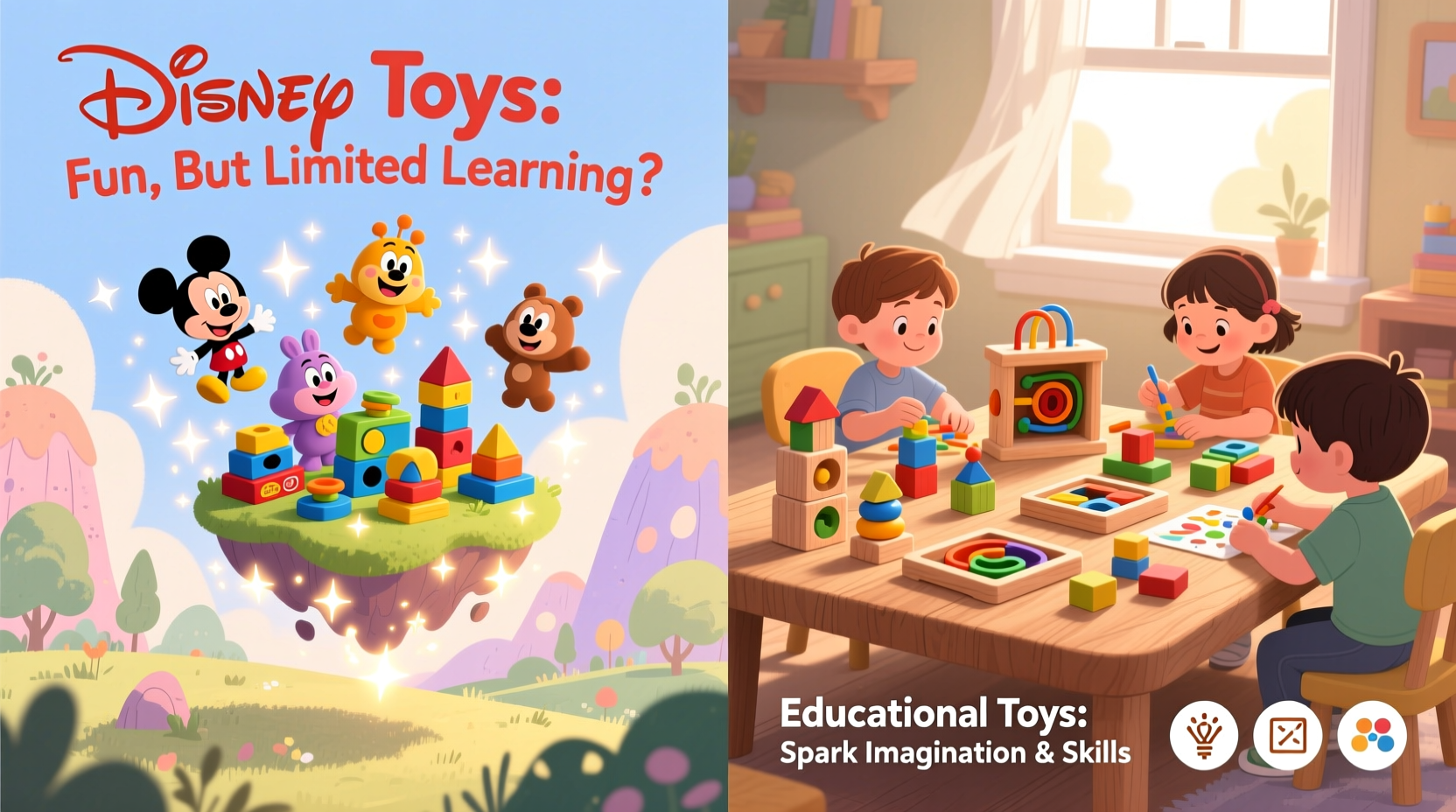
Marketing has turned parenting into a high-stakes game of optimization. Ads suggest that unless you’re buying problem-solving robots or language-learning tablets, your child might fall behind. Meanwhile, critics argue that branded toys stifle creativity with pre-defined narratives and commercialism.
But developmental psychology tells a more nuanced story. According to Dr. Alison Gopnik, professor of psychology and affiliate professor of philosophy at UC Berkeley, “Children learn through play, not just instruction. Pretend play, even with branded characters, activates deep cognitive processes like empathy, narrative reasoning, and theory of mind.”
“Play is not trivial. It’s the work of childhood.” — Dr. David Elkind, Child Development Expert
In other words, a child pretending that Elsa is rescuing Anna from an imaginary snowstorm isn’t just copying a movie—they’re constructing plots, managing emotions, and practicing social dynamics. These are foundational skills, not distractions from “real” learning.
What Educational Toys Actually Teach
Educational toys—blocks, shape sorters, coding games, science kits—are often praised for fostering logic, fine motor skills, and early math or literacy concepts. And many do. Research shows that open-ended materials like building blocks support spatial reasoning, which correlates with later success in math and engineering.
However, not all “educational” labels are backed by evidence. A 2015 study published in *JAMA Pediatrics* found that many marketed “brain-boosting” infant products showed no significant cognitive advantage over traditional play. The key differentiator wasn’t the toy itself, but whether it was used interactively—with adult engagement.
Tip: A simple cardboard box with a marker can spark more creative thinking than an expensive electronic learning tablet—if adults participate meaningfully.Do’s and Don’ts of Educational Toy Use
| Do | Don’t |
|---|---|
| Choose toys that encourage exploration (e.g., magnetic tiles, art supplies) | Rely solely on digital toys for learning |
| Use educational toys as conversation starters (“What shape is this?”) | Assume more expensive = more effective |
| Rotate toys to maintain novelty and focus | Overload shelves—too many options reduce sustained attention |
| Pair toys with real-world experiences (e.g., measuring cups during baking) | Expect toys to teach independently without interaction |
The Hidden Value of Disney and Character-Based Play
Critics point out that character toys often come with predefined scripts—kids may reenact scenes rather than invent new ones. But this overlooks a crucial developmental stage: imitation precedes innovation. Children need models before they can modify them.
When a child plays out the same *Toy Story* scene repeatedly, they’re mastering sequence, dialogue, and emotional expression. Eventually, they’ll twist the plot: “What if Buzz didn’t go to space? What if he opened a pizza shop?” That’s where creativity begins.
Moreover, familiar characters provide emotional safety. A toddler clutching a Mickey Mouse doll during naptime isn’t being manipulated by corporate branding—they’re using a symbol of comfort to regulate their emotions, a vital part of social-emotional development.
Real Example: The Power of Narrative Play
Six-year-old Maya received a Cinderella castle set for her birthday. For weeks, she replayed the movie scene-for-scene. Her parents worried she wasn’t being “creative.” Then, one afternoon, they heard her narrating a new version: Cinderella had become a mechanic who fixed carriages, and the stepsisters ran a bakery. The prince was late because he was helping at a food bank.
This shift—from repetition to reinvention—is classic developmental progression. The branded toy served as a scaffold, not a limitation.
Are We Overvaluing “Educational” and Underestimating Imagination?
The term “educational toy” implies a hierarchy—that learning only counts when it’s measurable, visible, or aligned with academic goals. But unstructured, imaginative play builds skills that standardized tests don’t capture: resilience, negotiation, perspective-taking, and abstract thinking.
A 2020 study from the University of Colorado found that preschoolers who engaged in frequent pretend play scored higher on measures of executive function—the ability to plan, focus attention, remember instructions, and juggle tasks. These are stronger predictors of long-term academic success than early reading or math skills.
Meanwhile, some high-tech educational toys fail to sustain engagement. A programmable robot might dazzle for a weekend, but a child’s own invented game with action figures can evolve for months.
Tip: Observe your child’s play patterns. If they’re deeply engaged—even with a “franchise” toy—they’re learning.Checklist: Choosing Toys That Support Balanced Development
- ✔ Prioritize toys that allow multiple uses (e.g., dolls, vehicles, dress-up clothes)
- ✔ Include both open-ended items (blocks, clay) and narrative toys (characters, playsets)
- ✔ Limit single-function electronics unless they encourage interaction
- ✔ Rotate toys every few weeks to renew interest
- ✔ Co-play when possible—your questions deepen their thinking
- ✔ Avoid banning branded toys; instead, expand the stories together
FAQ
Can too much screen-based or branded play harm my child?
Not inherently. The concern arises when imaginative play is replaced entirely by passive consumption (e.g., watching endless YouTube videos of toy unboxings). Active play with branded toys is still play. Balance is key—encourage off-screen storytelling and physical movement.
Should I avoid buying any Disney toys?
No. There’s no evidence that owning character toys harms development. In fact, they can be entry points for discussing emotions, relationships, and moral choices. Use them as springboards: “Why do you think Moana decided to leave the island?”
Are educational toys worth the price?
Sometimes—but not always. A $80 “smart” globe won’t outperform a $10 puzzle map if the parent isn’t engaging with the child. Look for durability, versatility, and opportunities for conversation, not flashy features.
Conclusion: It’s Not the Toy—It’s How You Play
The debate between Disney toys and educational ones misses the bigger picture. No single toy determines a child’s intelligence or future success. What matters most is the quality of interaction, the freedom to explore, and the opportunity to create.
Branded toys aren’t enemies of development—they’re cultural touchpoints children use to make sense of the world. Likewise, educational toys are tools, not magic solutions. Their value multiplies when parents join the play, ask open-ended questions, and follow the child’s lead.
Instead of asking, “Is this toy educational?” try asking, “Does this toy invite curiosity, connection, or creativity?” The answer will guide you better than any label.
💬 What toys sparked the most imaginative play in your home? Share your experiences and help other parents find balance beyond the hype.








