Cats are natural climbers, scratchers, and perch-seekers. Providing them with vertical space isn’t just about entertainment—it supports their physical health, mental stimulation, and territorial instincts. Cat trees are marketed as the ultimate solution, but they come with a wide range of prices, some reaching over $200. This raises a fair question: Are commercially available cat trees actually worth the investment, or can a well-crafted DIY alternative deliver the same benefits at a fraction of the cost?
The answer isn’t straightforward. While many pre-built cat trees offer durability, aesthetic appeal, and tested stability, they often come with premium branding rather than superior functionality. On the other hand, DIY options allow customization and significant savings—but only if built with care, proper materials, and an understanding of feline behavior.
Understanding What Cats Actually Need
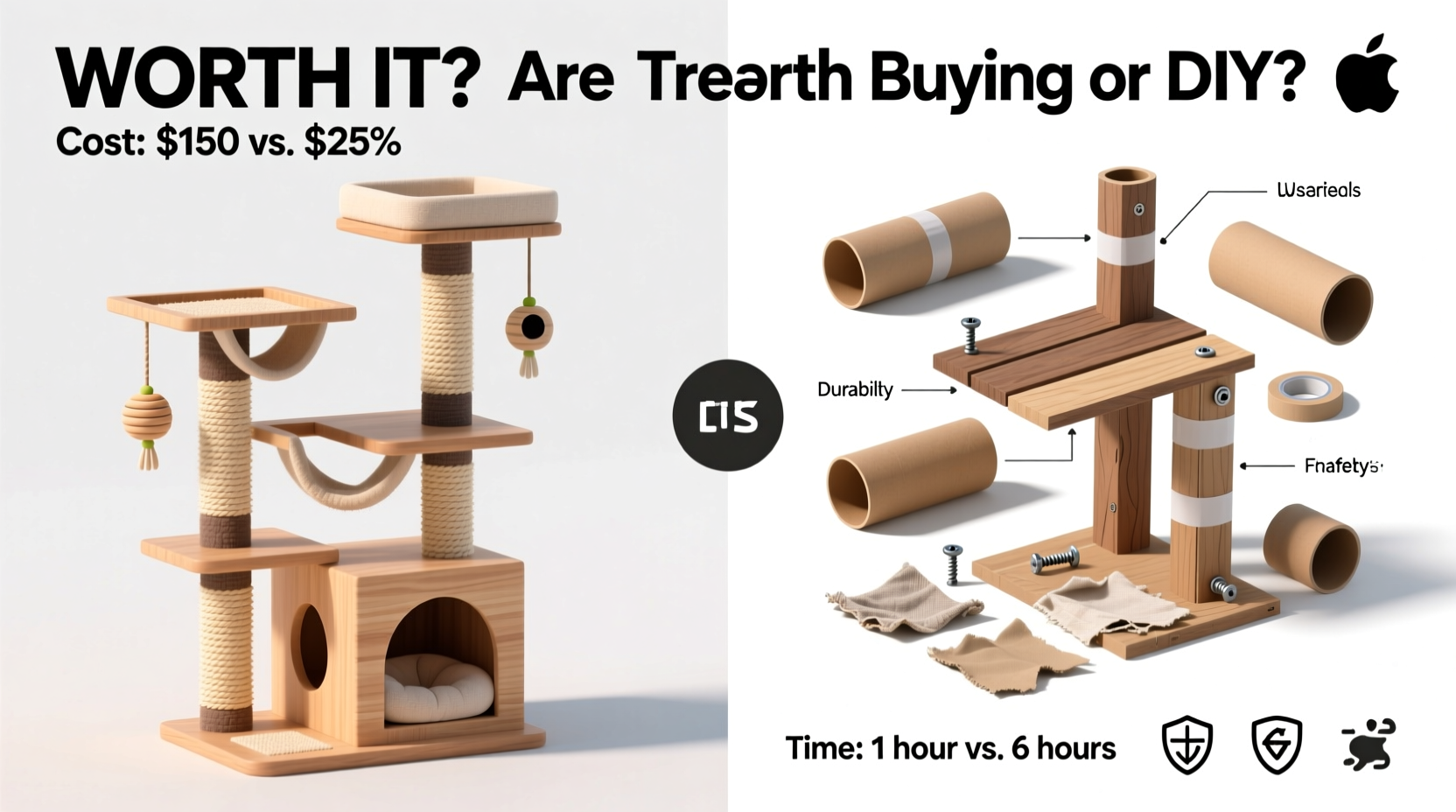
Before deciding between buying or building, it’s essential to understand what makes a cat tree functional. Cats don’t just climb for fun; they seek elevated vantage points to observe their environment safely. They also need rough surfaces to scratch, which maintains claw health and marks territory. A good cat tree should include:
- Stable platforms at varying heights
- Durable scratching posts (preferably wrapped in sisal)
- Cozy hideaways or perches for napping
- Sufficient height to allow full stretching
- Secure anchoring to prevent tipping
A poorly designed structure—whether store-bought or homemade—that wobbles, collapses, or uses unsafe materials defeats its purpose and may even scare or injure your cat.
“Cats thrive in environments where they can express natural behaviors like climbing, scratching, and hiding. The value of a cat tree isn’t in its price tag, but in how well it supports these needs.” — Dr. Rebecca Alvarez, Feline Behavior Specialist
Store-Bought Cat Trees: Pros and Cons
Purchasing a cat tree is convenient and often backed by warranties, customer reviews, and standardized safety testing. However, not all commercial models are created equal. Here's a balanced look at what you gain—and sacrifice—when buying off the shelf.
Advantages of Commercial Cat Trees
- Predictable quality: Reputable brands use tested construction methods and non-toxic materials.
- Design variety: Available in modern, minimalist styles that blend with home decor.
- Ready to assemble: Most come with clear instructions and all necessary hardware.
- Safety certifications: Some meet ASTM or CPSC standards for pet product stability.
Drawbacks of Store-Bought Models
- High markup: Branding and shipping significantly increase prices without improving function.
- Generic sizing: May not fit in smaller spaces or accommodate larger, more active cats.
- Poor durability: Lower-end models use compressed cardboard cores or thin particleboard that degrades quickly.
- Limited customization: You can’t adjust platform height or add specific features like wall-mounted shelves.
DIY Cat Trees: Cost, Control, and Risks
Building your own cat tree offers unparalleled control over design, size, materials, and budget. With basic tools and a bit of carpentry know-how, you can create a custom structure tailored to your cat’s habits and your living space.
For example, a multi-level tower using repurposed wood, sisal rope, and carpet remnants can cost under $60 in materials—less than half the price of many mid-range commercial units. Plus, you can integrate it into existing furniture or mount parts directly to walls for added stability.
Materials That Work (and Those That Don’t)
| Material | Recommended Use | Why It Works / Doesn’t Work |
|---|---|---|
| Untreated pine or plywood | Bases, platforms | Strong, affordable, and safe when sanded smooth |
| Sisal rope (⅜” or ½”) | Scratching posts | Durable, mimics natural bark texture cats prefer |
| Carpet remnants (low-pile) | Platforms, beds | Provides grip but avoid long fibers that can snag claws |
| Cardboard tubes (large diameter) | Temporary posts | Inexpensive but compresses quickly under weight |
| Particleboard/MDF | Avoid entirely | Weak under stress, emits formaldehyde when cut or worn |
One common mistake in DIY builds is underestimating base weight. A narrow or lightweight base—even with tall perches—can tip when a cat jumps or turns suddenly. Always ensure the footprint is wide enough and consider anchoring to a wall stud for towers over 4 feet high.
Mini Case Study: Sarah’s Corner Tower Project
Sarah, a pet owner in Portland, wanted a cat tree that fit into her apartment’s tight corner without dominating the room. She measured her Maine Coon’s stretch height (nearly 3 feet) and sketched a triangular design using leftover decking boards and a 12-inch-diameter hardwood post.
She wrapped the post in ½-inch sisal rope using exterior-grade adhesive, then attached three staggered platforms anchored into wall studs. Total cost: $52. Her cat used it within hours and now sleeps on the top ledge nightly. Unlike previous store-bought models, this one hasn’t wobbled once—even during vigorous play.
“I saved money, used eco-friendly materials, and built something sturdier than anything I found online,” she said. “The key was researching load distribution and not cutting corners on fasteners.”
Step-by-Step Guide to Building a Basic DIY Cat Tree
If you're considering a DIY project, follow this proven sequence to ensure safety and usability.
- Assess your space and cat’s habits: Note frequently used areas, jumping patterns, and preferred resting spots.
- Sketch a design: Include base dimensions, post height, platform sizes, and mounting method. Aim for at least one platform per 18 inches of height.
- Gather materials: Purchase untreated lumber, ½-inch sisal rope, wood screws (2.5” and 3”), wood glue, and sandpaper.
- Build the base: Use a minimum 24” x 24” plywood sheet. Reinforce edges with 1x4 lumber for added mass.
- Install the post: Center a solid wood post (4x4 or round hardwood) and secure it through the base with lag bolts.
- Wrap with sisal: Apply wood glue in sections and tightly wrap rope from bottom to top, overlapping slightly. Let dry fully.
- Add platforms: Attach shelves at different heights using angle brackets and screws. Sand all edges smooth.
- Anchoring: For trees over 36”, use L-brackets to attach the base or upper structure to wall studs.
- Finishing touches: Cover platforms with low-pile fabric or carpet secured with staples and non-toxic adhesive.
- Test stability: Shake the unit firmly. If it moves, reinforce the base or anchoring before allowing cat access.
Cost Comparison: DIY vs. Retail
To illustrate potential savings, here’s a realistic side-by-side comparison of a mid-sized cat tree.
| Component | DIY Cost | Store-Bought Equivalent |
|---|---|---|
| Wood base (24\"x24\") | $15 | Included |
| Hardwood post (4x4, 4ft) | $12 | Included |
| Sisal rope (50 ft) | $10 | Included |
| Platforms & brackets | $8 | Included |
| Carpet/fabric remnant | $5 | Included |
| Screws, glue, fasteners | $7 | Included |
| Total Material Cost | $57 | |
| Average retail price (similar size/quality) | $130–$180 |
The DIY version saves 60–70% while allowing upgrades like additional perches or wall integration. However, time investment (typically 6–8 hours) and tool requirements (drill, saw, measuring tape) must be factored in.
Frequently Asked Questions
Can kittens use the same cat tree as adult cats?
Yes, but ensure lower platforms are accessible and steps are spaced no more than 10–12 inches apart. Kittens need easier climbing routes and safer landings. Avoid very tall structures until they’re at least six months old.
How long do DIY cat trees last?
A well-built DIY tree using solid wood and sisal can last 5–7 years with regular maintenance. Replace frayed sisal or loose platforms promptly. In contrast, many commercial trees begin wobbling after 2–3 years due to failing joints or compressed bases.
Is it safe to use reclaimed wood?
Only if you’re certain it’s untreated and free from mold, pests, or chemical residues. Avoid painted or pressure-treated wood, which can contain toxins. Sand thoroughly and inspect for splinters before use.
Checklist: Before You Buy or Build
- ✅ Measure your available floor space and ceiling height
- ✅ Observe where your cat likes to climb or nap
- ✅ Decide on key features: scratching posts, hideouts, hammocks
- ✅ Choose between freestanding or wall-anchored design
- ✅ Select safe, durable materials (sisal, solid wood, non-toxic adhesives)
- ✅ Plan for stability—wide base or wall attachment
- ✅ Budget time and tools for DIY, or compare retail models for value
- ✅ Test final structure for wobble before introducing to your cat
Conclusion: Value Over Price
Whether you buy or build, the real measure of worth isn’t the sticker price—it’s durability, safety, and how well the cat tree integrates into your cat’s daily life. Many commercial models charge more for aesthetics than engineering, while thoughtful DIY projects can outperform them in both function and longevity.
If you enjoy hands-on projects and have basic tools, DIY is likely the smarter financial and practical choice. But if time is limited or carpentry isn’t your strength, investing in a high-quality, well-reviewed brand with solid construction and sisal scratching surfaces is justified.
🚀 Ready to give your cat the perfect perch? Start by sketching a simple design today—your feline might just thank you with purrs from their new favorite spot.








