
For many cat owners, life moves fast. Work deadlines, travel schedules, and family responsibilities often pull focus away from home routines. One of the most pressing concerns in such situations is ensuring a cat gets fed on time—every time. Enter the automatic cat feeder: a device designed to deliver meals without human intervention. But with prices ranging from $30 to over $200, the question arises—do these gadgets truly deliver value, or are they just another gadget collecting dust?
The answer isn’t one-size-fits-all. For some, an automatic feeder is a game-changer; for others, it may complicate more than simplify. The key lies in understanding your lifestyle, your cat’s needs, and the capabilities of modern feeding technology.
How Automatic Cat Feeders Work
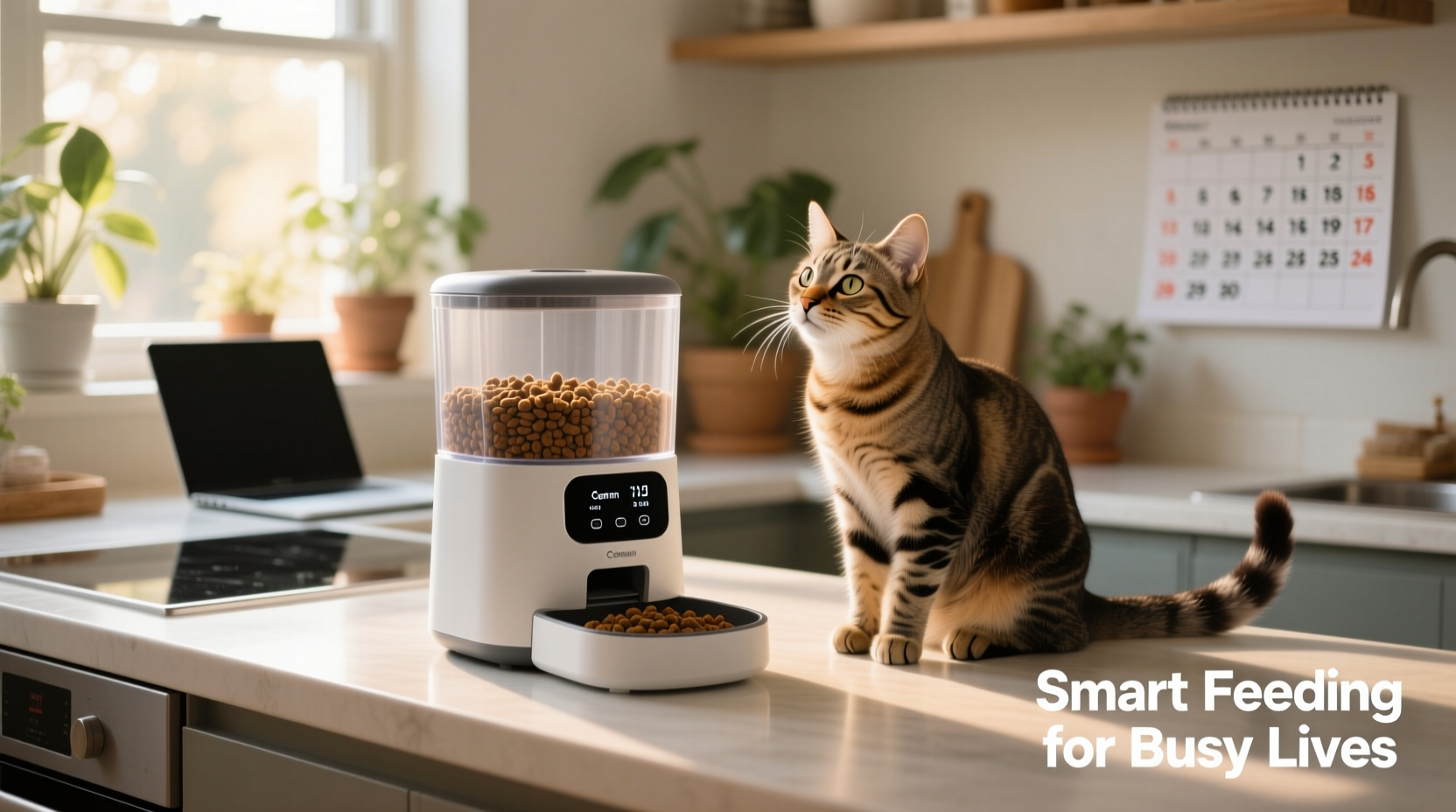
At their core, automatic cat feeders dispense pre-measured portions of dry or wet food at scheduled times. Most models use a motorized tray or rotating compartment system controlled by a digital timer. Some advanced units integrate Wi-Fi connectivity, allowing remote control via smartphone apps, voice commands through Alexa or Google Assistant, or even camera monitoring to verify that your cat actually eats.
Basic models operate on simple timers. You set the feeding schedule once, load the food into sealed compartments, and the device releases a portion when the clock hits the designated time. These are typically battery-powered and ideal for short-term use or backup during occasional absences.
Smart feeders offer more sophistication. They allow customization down to the gram, send notifications when food is dispensed, log eating patterns, and prevent double-feeding if your cat triggers the sensor multiple times. Some include locking mechanisms to keep food fresh and deter curious paws.
Tip: Always test your feeder with your cat’s actual food before relying on it—some kibble shapes can jam dispensing mechanisms.Pros and Cons: A Balanced View
Before investing, it's essential to weigh the benefits against potential drawbacks. Here's a detailed breakdown:
| Advantages | Disadvantages |
|---|---|
| Consistent feeding schedule: Cats thrive on routine. An automatic feeder ensures meals happen at the same time daily, reducing anxiety and digestive issues. | Limited to dry or specific wet food types: Most feeders handle dry kibble best. Wet food requires refrigeration and special dispensers, which are less common and more expensive. |
| Supports weight management: Precise portion control helps prevent overfeeding, a major contributor to feline obesity. | Mechanical failures occur: Jams, power outages, or software glitches can disrupt feeding. Backup plans are essential. |
| Peace of mind during travel: Ideal for overnight trips or unexpected delays. No need to rely on neighbors or last-minute pet sitters. | Cats may reject the device: Some cats are wary of noise or moving parts and refuse to eat near the feeder. |
| Remote monitoring and control: Smart models let you adjust schedules, view live feeds, and receive alerts—all from your phone. | Higher cost and maintenance: Premium models require app updates, cloud subscriptions, or regular cleaning to prevent mold and clogs. |
Real-Life Example: Sarah’s Experience
Sarah, a nurse working rotating shifts in Chicago, struggled to maintain a consistent feeding routine for her two cats, Luna and Milo. Her late-night shifts meant she often returned home after midnight, long past their usual dinner time. The cats became anxious, vocalizing loudly and sometimes refusing food altogether.
After researching options, Sarah invested in a mid-range smart feeder with four meal slots and app integration. She programmed it to release half-cup portions at 7 a.m., noon, 5 p.m., and 9 p.m. Within days, both cats adjusted. Luna, the pickier eater, initially avoided the machine but began approaching after Sarah placed familiar bowls nearby and gradually transitioned them.
“It wasn’t perfect at first,” Sarah admits. “The first week, Milo somehow triggered the sensor twice and got an extra meal. I had to enable the lockout timer in the app. But now, it’s seamless. Even when I’m stuck at work, I know they’re fed.”
Sarah estimates she’s saved over $300 in pet-sitting fees in six months alone—more than covering the cost of the feeder.
“Consistency in feeding is as critical as nutrition itself. Disrupted mealtimes can lead to stress-related behaviors like overgrooming or inappropriate elimination.” — Dr. Alan Reed, DVM, Feline Behavior Specialist
Choosing the Right Feeder: A Buyer’s Checklist
Not all automatic feeders are created equal. To avoid buyer’s remorse, consider the following criteria before purchasing:
- Number of meals per day: Does your cat eat two, three, or four times daily? Choose a model with enough compartments.
- Portion control precision: Look for adjustable dispensers that measure in grams or fractions of a cup.
- Power source: Battery-operated units are portable but vulnerable to outages. Models with AC adapters offer reliability.
- Wi-Fi and app features: Do you want remote access, feeding logs, or camera integration?
- Food compatibility: Will it handle your cat’s kibble size? Can it manage wet food if needed?
- Security features: Is there a locking lid to prevent other pets from accessing food?
- Size and capacity: Ensure it fits in your space and holds enough food for your typical usage cycle.
- Ease of cleaning: Removable trays and dishwasher-safe components reduce maintenance effort.
Setting Up Your Feeder: A Step-by-Step Guide
Success depends not just on the device, but on how you introduce it. Follow this timeline to ensure a smooth transition:
- Day 1–2: Unbox and test – Set up the feeder without your cat present. Load it with food and run a test cycle. Listen for unusual noises and check for jams.
- Day 3: Introduce by association – Place the feeder near your cat’s usual eating spot. Let them investigate it while it’s off. Offer treats nearby to create positive associations.
- Day 4: Activate without dispensing – Turn on the device and let it sit idle. This helps your cat get used to its presence and any indicator lights or sounds.
- Day 5: First automated meal – Program one feeding time while you’re home. Watch how your cat reacts. If they hesitate, hand-feed beside the unit to encourage trust.
- Day 6–7: Expand schedule – Add additional meals. Monitor appetite and behavior. Adjust portion sizes if needed.
- Week 2+: Full integration – Once your cat eats reliably from the feeder, rely on it fully. Maintain weekly cleaning and battery checks.
Patience is crucial. Some cats adapt in hours; others take weeks. Never force interaction—let curiosity guide them.
Common Pitfalls and How to Avoid Them
Even experienced users encounter issues. Awareness helps prevent problems before they escalate.
- Over-reliance without backup: Power failures or mechanical issues can leave your cat unfed. Always have a neighbor or friend who can step in during extended absences.
- Neglecting maintenance: Food residue attracts pests and promotes mold. Clean the hopper and tray at least once a week.
- Incorrect portion settings: Too much leads to waste and obesity; too little causes hunger and frustration. Refer to your vet’s dietary recommendations.
- Ignoring behavioral cues: If your cat stops eating from the feeder, don’t assume it’s working fine. Investigate possible causes like noise sensitivity or food staleness.
Frequently Asked Questions
Can automatic feeders work for kittens?
Yes, but with caution. Kittens require frequent, small meals and precise nutrition. Use a feeder with fine portion control and monitor intake closely. Avoid leaving a young kitten reliant solely on automation for more than 12 hours.
Do automatic feeders reduce begging behavior?
Often, yes. When cats learn meals come predictably, they stop pestering at odd hours. However, if begging persists, it may signal boredom or attention-seeking, not hunger.
Are smart feeders worth the extra cost?
For frequent travelers or those with unpredictable schedules, yes. The ability to adjust meals remotely, receive alerts, and monitor eating habits adds tangible value. For homebodies with consistent routines, a basic model may suffice.
Final Verdict: Are They Worth It?
The value of an automatic cat feeder hinges on alignment between your lifestyle and your cat’s needs. For busy professionals, shift workers, or frequent travelers, the investment often pays for itself in peace of mind, reduced reliance on pet sitters, and improved consistency in care.
However, no device replaces attentive ownership. An automatic feeder should complement—not replace—your role as a caregiver. It’s a tool, not a substitute for love, observation, and veterinary oversight.
If your schedule regularly interferes with feeding times, if you’ve paid for pet care primarily for meals, or if your cat suffers from anxiety due to irregular feeding, then an automatic feeder is likely a smart, worthwhile investment. Start with a reliable mid-tier model, ease your cat into the system, and maintain vigilance over its function and your pet’s well-being.
💬 Have you tried an automatic cat feeder? Share your experience, tips, or lessons learned in the comments—your insight could help another pet owner make a confident decision.








