Choosing between an aquarium and a terrarium often comes down to personal preference, available space, and how much time you're willing to invest in upkeep. Both offer captivating miniature ecosystems that bring nature indoors, but they differ significantly in structure, inhabitants, and maintenance demands. For those seeking a low-effort yet rewarding pet setup, understanding these differences is crucial. While neither is truly \"no maintenance,\" one may align better with your lifestyle depending on your tolerance for routine tasks, budget, and interest in aquatic versus terrestrial life.
Understanding the Basics: What’s the Difference?
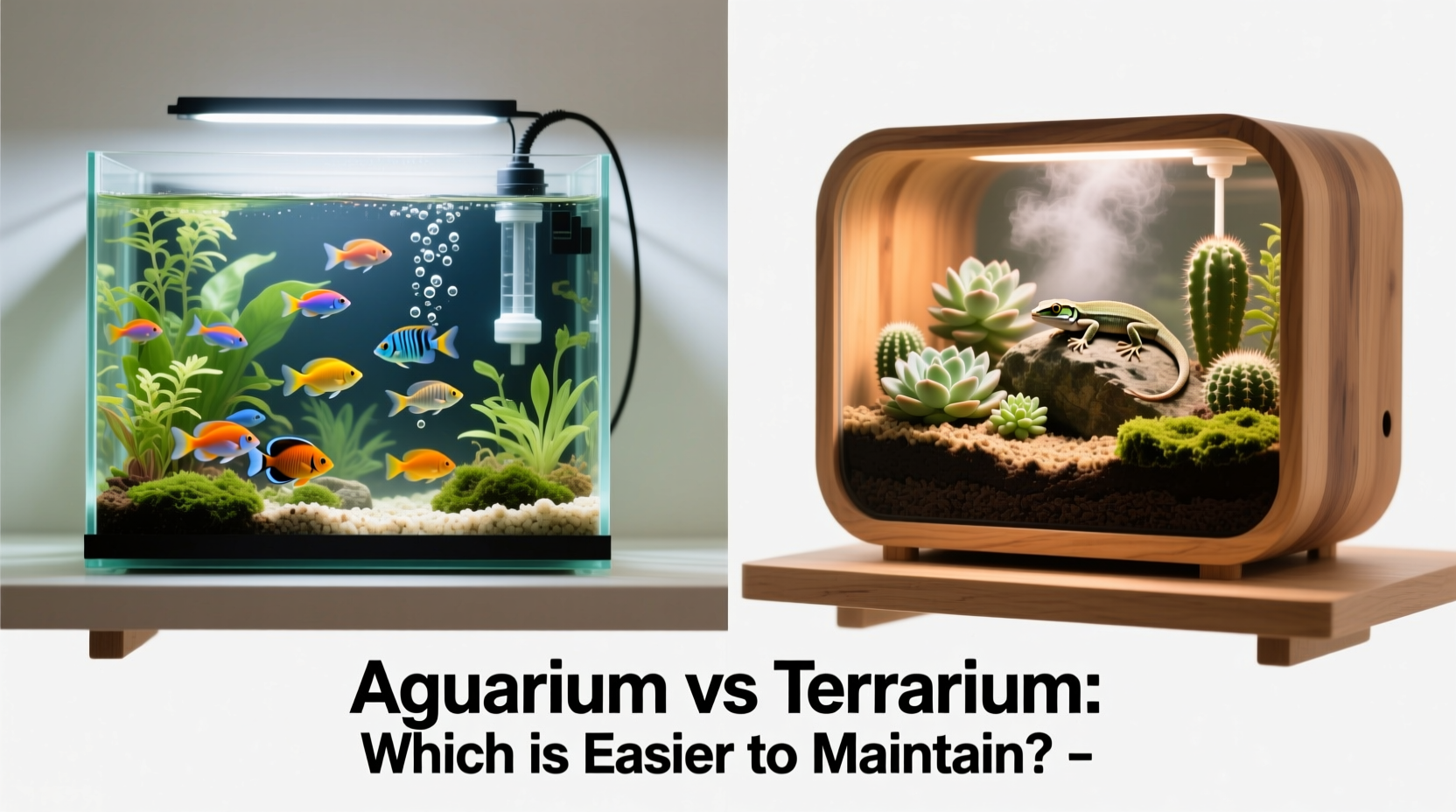
An aquarium is a sealed or open container designed to house aquatic life—typically fish, shrimp, snails, or aquatic plants—in a water-based environment. It requires filtration, water conditioning, temperature control (in most cases), and regular monitoring of chemical parameters like pH, ammonia, nitrite, and nitrate.
A terrarium, by contrast, is a closed or open glass enclosure that mimics a land-based ecosystem. It usually contains soil, moss, small plants, and sometimes invertebrates or reptiles like isopods, springtails, or dwarf geckos. Humidity, ventilation, and light are key factors, but water chemistry isn’t a concern unless you’re building a paludarium—a hybrid system combining both land and water elements.
The core distinction lies in the medium: water versus air. This fundamental difference shapes every aspect of care, from equipment needs to cleaning routines.
Maintenance Comparison: Time, Effort, and Frequency
Maintenance is where aquariums and terrariums diverge most noticeably. Each has its own rhythm of care, and what feels easy for one person might feel overwhelming for another.
Aquarium Maintenance
Fish tanks demand consistent attention. Even a simple 5-gallon freshwater aquarium requires:
- Weekly partial water changes (20–30%)
- Filter media rinsing every 2–4 weeks
- Algae scraping or magnetic cleaner use as needed
- Water testing at least once a week (especially for new setups)
- Feeding schedules and removal of uneaten food
- Monitoring heater and filter function daily
Overfeeding or skipping water changes can lead to toxic ammonia spikes, algae blooms, or fish fatalities within days. The biological balance in an aquarium is delicate and unforgiving of neglect.
Terrarium Maintenance
Well-designed terrariums, especially closed systems with self-sustaining plant communities, can go weeks between interventions. Routine tasks include:
- Light watering every 1–2 weeks (depending on humidity)
- Pruning overgrown plants monthly
- Spot-cleaning debris or dead leaves
- Occasional misting for tropical species
- Replacing dead plants or adjusting lighting
If you include animals—like a pair of dart frogs or a small lizard—the workload increases. These pets require feeding, waste management, and health monitoring similar to other exotic pets. But a plant-only terrarium? That’s about as low-maintenance as a living decoration gets.
Tip: A closed terrarium with moisture-loving plants like ferns and moss can recycle water through condensation, reducing the need for frequent watering.Equipment and Setup Costs Compared
Initial investment plays a major role in deciding which system suits your budget and patience. Here's a breakdown of typical startup costs for a basic 10-gallon equivalent setup:
| Item | Aquarium (Freshwater) | Terrarium (Planted, Closed) |
|---|---|---|
| Container | $30–$60 (glass tank) | $20–$50 (glass jar or vivarium) |
| Filtration | $25–$50 (hang-on-back or sponge filter) | $0 (no filter needed) |
| Heater | $20–$40 (for tropical fish) | $0–$30 (optional heat mat for reptiles) |
| Lighting | $20–$40 (LED aquarium hood) | $25–$60 (grow light or natural light) |
| Substrate | $10–$20 (gravel or sand) | $15–$30 (drainage layer, soil mix) |
| Water Conditioner & Test Kit | $20–$30 | $0 |
| Plants & Decor | $20–$50 | $20–$60 |
| Total Estimate | $145–$250 | $100–$220 |
While initial costs are comparable, ongoing expenses favor terrariums. No need to buy water conditioners, replacement filter cartridges, or test strips monthly. Replenishing bottled water or distilled spray is far cheaper than maintaining stable water chemistry in a fish tank.
“Terrariums are ideal for urban dwellers who want greenery without the hassle of pets. Once balanced, they thrive on minimal input.” — Dr. Lena Torres, Botanical Ecologist and Educator
Which Is Easier for Beginners?
For absolute beginners, a **closed, plant-only terrarium** is generally the easier choice. Why?
- No water cycling required: Unlike aquariums, there’s no nitrogen cycle to establish before adding life.
- Forgiving of minor mistakes: Overwatering can be corrected by leaving the lid off; underwatering is fixed with a quick spray.
- Less technical knowledge needed: You don’t need to understand ppm levels or redox potential—just observe plant health and adjust light or moisture.
- Lower risk of sudden failure: Aquariums can crash in 48 hours due to unseen toxins. Terrariums degrade slowly, giving you time to respond.
That said, some aquarium setups are beginner-friendly. A small planted tank with hardy fish like white cloud mountain minnows or endlers, combined with low-light plants such as java fern or anubias, can be surprisingly stable. However, it still requires more vigilance than even the most complex terrarium.
Mini Case Study: Sarah’s First Year with Both Setups
Sarah, a graphic designer in Portland, wanted to add life to her home office. She started with a 5-gallon aquarium housing two zebra danios and some live plants. Within three weeks, she experienced her first algae bloom and ammonia spike after overfeeding. She spent evenings researching water parameters and performing emergency water changes.
Later, she added a 6-gallon closed terrarium with fittonia, moss, and a small piece of driftwood. She watered it lightly every three weeks and opened the lid monthly to prevent mold. After six months, it required only pruning and occasional misting. “The terrarium practically takes care of itself,” she said. “My fish tank taught me responsibility—but my terrarium gives me peace.”
Step-by-Step Guide to Starting Your Low-Maintenance System
Whether you choose an aquarium or terrarium, follow this timeline to set up a sustainable, low-effort ecosystem.
- Week 1: Research and Planning
Select your preferred system. For low maintenance: choose a closed terrarium with slow-growing plants or a nano planted aquarium with peaceful micro-fish. - Week 2: Acquire Materials
Purchase all necessary components. Prioritize quality substrate, proper lighting, and a secure lid. Avoid cheap filters or plastic tanks that yellow over time. - Week 3: Build the Base Layer
Aquarium: Rinse gravel, add 1–2 inches, install filter and heater.
Terrarium: Add drainage layer (leca or pebbles), then activated charcoal, then soil mix suitable for tropical plants. - Week 4: Add Plants and Cycle (Aquarium Only)
Plant live vegetation. For aquariums, begin fishless cycling using ammonia or pure ammonium chloride. This takes 3–6 weeks. For terrariums, place plants, mist lightly, and close the lid. - Week 7: Introduce Life (If Applicable)
Aquarium: Add 1–2 hardy fish only after ammonia and nitrite read zero.
Terrarium: Add springtails or isopods if managing detritus; otherwise, enjoy the greenery. - Ongoing: Observe and Adjust
Check weekly for signs of imbalance. In aquariums, test water every 7–10 days initially. In terrariums, watch for condensation patterns—too much means poor airflow; too little means it needs water.
Checklist: Choosing the Right Setup for You
Answer these questions to determine which system fits your lifestyle:
- ✅ Do I prefer watching swimming creatures or growing plants?
- ✅ Can I commit to weekly water changes and testing?
- ✅ Do I travel frequently and need a system that lasts unattended?
- ✅ Am I comfortable handling electrical equipment near water?
- ✅ Do I want pets that require feeding, or am I happy with decorative greenery?
- ✅ Is my space humid or dry? (Closed terrariums struggle in very dry air.)
- ✅ Do I have children or pets that might knock over a tank?
If most of your answers lean toward plants, infrequent care, and simplicity—go terrarium. If you’re drawn to aquatic life and don’t mind routine chores, an aquarium could be fulfilling despite higher effort.
Frequently Asked Questions
Can I leave an aquarium or terrarium alone for two weeks?
A well-established terrarium can typically survive 2–3 weeks without intervention, especially if sealed. Most aquariums require automatic feeders and stable conditions to last that long—evaporation, temperature swings, and algae can become issues. Never leave a new aquarium unattended for more than a few days.
Do terrariums attract bugs?
Occasionally. Fungus gnats may appear if the soil stays too wet. Prevent them by avoiding overwatering and allowing the top layer to dry slightly. Springtails, often added intentionally, are beneficial and harmless.
Which has a longer lifespan?
A properly maintained terrarium can last for years with minimal plant turnover. Aquariums also last indefinitely, but fish lifespans vary (e.g., bettas live 2–5 years). The ecosystem endurance is similar, but terrariums tend to outlive their creators when cared for casually.
Final Verdict: Which Is Truly Easier?
For the average person seeking a beautiful, low-effort living display, the **plant-only terrarium wins**. It requires less technical knowledge, fewer supplies, and offers greater forgiveness. You won’t face midnight emergencies due to pump failure or pH crashes. There’s no risk of losing pets to invisible toxins. And aesthetically, a lush, self-contained glass garden brings tranquility without demands.
However, if you’re fascinated by aquatic life and enjoy the ritual of care, a simple planted aquarium with hardy species can be deeply rewarding. Just recognize it’s not “low maintenance” in the same way. It’s more akin to having a pet bird or hamster—one that lives underwater.
In the end, the easiest setup is the one you’ll actually maintain. Passion trumps convenience. But if ease is your top priority, start with a terrarium. Grow your confidence. Then, if you crave movement and life, consider adding a small, manageable aquarium later.
🚀 Ready to begin? Start small: pick a glass container, add some moss and a fern, and see how it feels to nurture a tiny world. Share your journey—or ask questions—in the comments below.








