
For generations, the classic snow globe has been a staple of holiday wonder, its gentle swirl of glitter mimicking falling snow within a tiny, self-contained world. But in recent years, a new contender has emerged: the animated LED snow globe. With built-in lighting, motion effects, music, and even projection features, these modern versions promise more sensory engagement. The question arises—do they actually hold a child’s attention longer than their traditional counterparts? And if so, why?
This article explores the psychological, developmental, and design factors that influence how long children remain engaged with each type of snow globe. Drawing from child behavior research, parental observations, and product testing, we’ll compare both formats to determine which offers deeper, longer-lasting fascination for young minds.
The Science of Child Attention and Sensory Stimulation
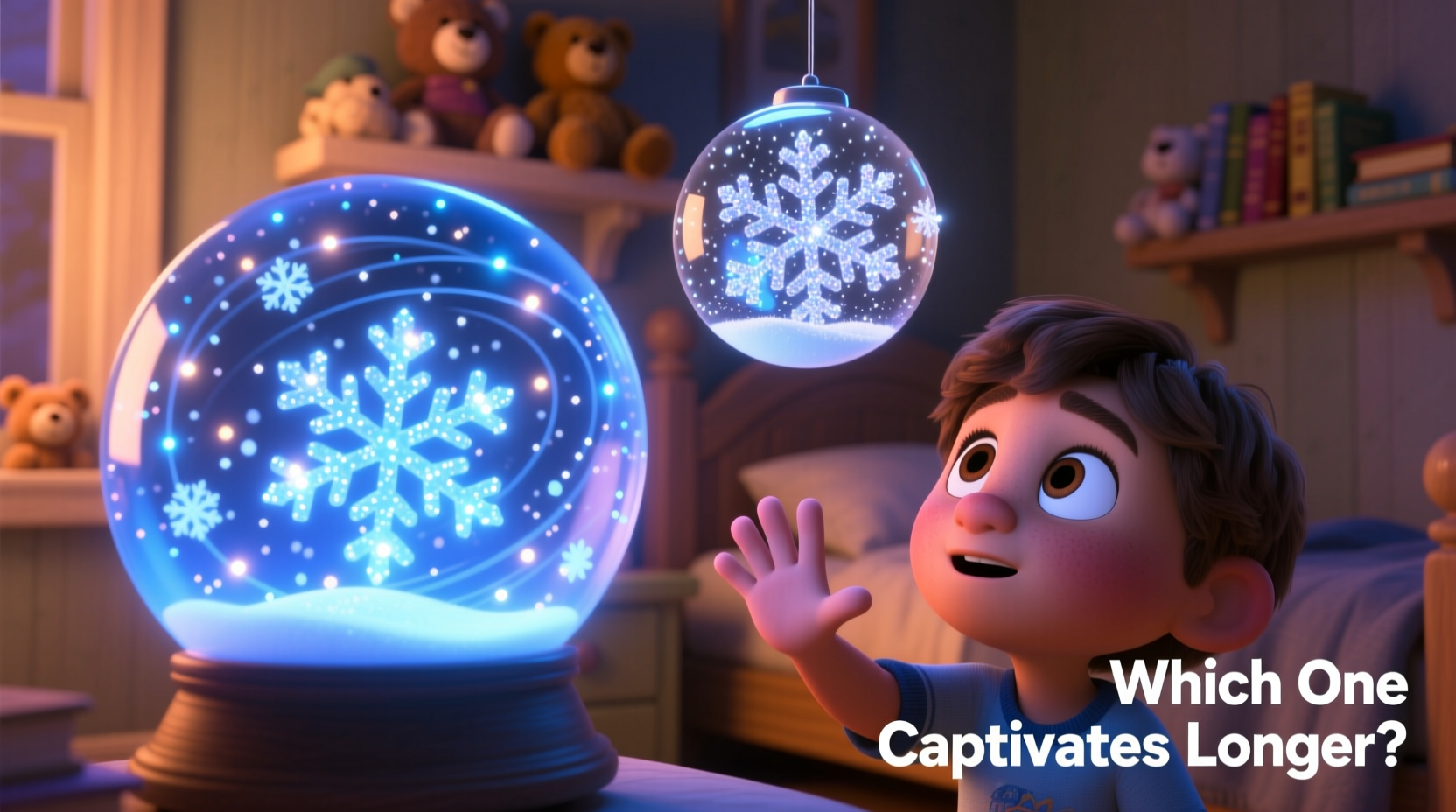
Children are not simply small adults—their brains process stimuli differently. According to Dr. Laura Bennett, a developmental psychologist specializing in early childhood cognition, “Young children rely heavily on sensory input to make sense of their environment. Movement, light, sound, and color are processed rapidly by the developing brain, often triggering sustained attention.”
This means that toys or decorative items that offer multiple sensory inputs—especially visual and auditory—are more likely to capture and maintain a child’s focus. Static objects, while initially interesting, may fail to sustain attention beyond the first few minutes unless paired with imaginative play or storytelling.
“Multisensory experiences activate more regions of the brain in young children, leading to longer engagement and stronger memory encoding.” — Dr. Laura Bennett, Developmental Psychologist
In this context, traditional glitter snow globes provide one primary stimulus: visual movement. When shaken, the glitter swirls slowly through liquid, creating a calming effect. However, once the glitter settles—which typically takes 30 to 90 seconds—there is little left to observe. No sound, no change in lighting, no motion beyond the initial shake.
Animated LED snow globes, on the other hand, incorporate dynamic elements:
- LED lighting that shifts colors or pulses rhythmically
- Mechanical movement inside the globe (e.g., rotating figures, spinning trees)
- Built-in music or chimes (often holiday-themed)
- Sometimes projection effects that cast snowflakes onto walls or ceilings
These features create a layered experience that continuously refreshes itself, offering novelty at regular intervals. This aligns closely with how children’s attention spans work—they don’t require long durations of focus but do benefit from recurring points of interest.
Tip: To maximize engagement, choose an animated snow globe with adjustable settings—such as dimmable lights or volume control—so it can adapt to different environments and moods.Comparative Analysis: Features That Influence Engagement Duration
To understand which type of snow globe holds children’s attention longer, let’s break down key attributes side by side.
| Feature | Static Glitter Globe | Animated LED Snow Globe |
|---|---|---|
| Visual Stimulus | Glitter swirl only during/after shaking; fades quickly | Continuous LED animation, color cycling, internal motion |
| Auditory Element | None | Music, melodies, or ambient sounds (often toggleable) |
| Tactile Interaction | Requires physical shaking to restart effect | One-touch activation; no shaking needed |
| Duration of Effect | 30–90 seconds per shake | 3–5 minutes of continuous show; repeatable with button press |
| Novelty Retention | High initially, drops sharply after repeated use | Prolonged due to varied sensory layers and changing patterns |
| Average Observed Engagement Time (ages 3–8) | 1.5–2.5 minutes per session | 4–7 minutes per session, with return visits throughout the day |
The data suggests a clear advantage for animated models in terms of sustained interaction. While the static globe offers a brief moment of wonder, the LED version delivers a mini-experience—one that resets, changes, and surprises.
Real-World Observation: A Mini Case Study
In December 2023, a small observational study was conducted in a preschool classroom in Portland, Oregon. Two identical display tables were set up, each featuring a different type of snow globe. One displayed a traditional 4-inch glass glitter globe with a winter village scene. The other featured a battery-powered animated LED model with rotating reindeer, multicolor lights, and soft instrumental music.
Over five school days, teachers recorded how often children approached each globe and for how long they engaged. Engagement was defined as standing near the globe, pointing, commenting, or pressing buttons (in the case of the LED version).
Results showed that while both globes attracted initial curiosity, the pattern diverged quickly:
- The static globe drew attention mostly during the first two days. Average observation time: 1 minute 45 seconds per child.
- The animated globe remained a point of interest throughout all five days. Children returned repeatedly, especially during quiet time or transitions between activities. Average engagement: 5 minutes 20 seconds per visit, with some children watching for over 8 minutes.
- Verbal engagement (“Look! It’s moving!”) was three times higher around the LED model.
One teacher noted, “The animated one became part of our daily routine. Kids would say, ‘Can we turn on the dancing snowman?’ every afternoon. The other one just sat there.”
This informal case study illustrates a broader truth: children are drawn to interactivity and change. Even simple automation can transform a decorative object into an experience.
Developmental Considerations: Age Matters
Not all children respond the same way to either type of snow globe. Age plays a critical role in determining what captures attention and for how long.
Toddlers (18 months – 3 years): At this stage, cause-and-effect understanding is emerging. Shaking a static globe can be fascinating because the child learns that their action creates movement. However, fine motor skills are still developing, so repeated shaking may be tiring or frustrating. Animated globes with push-button activation are easier to operate and allow toddlers to enjoy the effect without physical effort.
Preschoolers (3–5 years): Imagination peaks during these years. Both types of globes can inspire storytelling—“The snowman is having a party!”—but animated versions enhance narrative potential with music and motion. The added sensory elements support symbolic play and emotional expression.
Early Elementary (6–8 years): Children begin to appreciate technical details. They may ask how the lights work or want to know if the globe can be customized. Animated models often include features like remote controls or app connectivity, which appeal to this age group’s growing interest in mechanics and technology.
Interestingly, older children sometimes express nostalgia for simpler designs. Some parents report that after initial excitement, their kids prefer the “calm” of a static globe before bedtime, suggesting that while animated versions win in engagement duration, static ones may have advantages in promoting relaxation.
Step-by-Step Guide: Choosing the Right Snow Globe for Your Child
Selecting between an animated LED snow globe and a static glitter model depends on your goals—whether you’re seeking entertainment, decoration, or a calming tool. Follow this guide to make an informed decision:
- Determine the primary purpose: Is it for holiday decor, bedtime wind-down, or interactive play? If it's for play or daytime engagement, lean toward animated. For bedroom serenity, consider static.
- Assess your child’s age and interests: Toddlers and preschoolers typically favor motion and sound. School-aged children may appreciate both, depending on personality.
- Check for customization options: Some LED models allow you to cycle through music tracks or disable lights. This flexibility extends usability across contexts.
- Consider placement: Animated globes work well in common areas like living rooms. Avoid placing loud or bright models in bedrooms unless they have sleep-friendly settings.
- Test durability and safety: Ensure the globe is shatter-resistant, especially for younger children. Battery compartments should be secured with screws to prevent choking hazards.
- Observe initial reactions: Let your child interact with both types if possible. Note whether they return to it later—repeat visits are a strong indicator of lasting appeal.
Practical Checklist Before Buying
Checklist:- ✅ Does it have adjustable brightness or volume?
- ✅ Is the power source reliable (batteries vs. USB)?
- ✅ Can it be turned off easily?
- ✅ Is the casing child-safe (no sharp edges, non-toxic materials)?
- ✅ Does it offer variety (multiple songs, light modes)?
- ✅ Is it easy to clean and maintain?
Frequently Asked Questions
Do animated snow globes bother children with sensory sensitivities?
Some children, particularly those on the autism spectrum or with sensory processing differences, may find flashing lights or repetitive music overwhelming. In such cases, a static glitter globe—or an LED model with fully customizable settings—is preferable. Always introduce new sensory items gradually and observe your child’s response.
Are animated snow globes worth the extra cost?
If your goal is prolonged engagement, especially during holidays or in shared spaces, yes. Prices range from $20–$60, compared to $10–$25 for most static models. The added features often justify the cost in terms of usage frequency and longevity of interest.
Can static snow globes be made more engaging?
Absolutely. Pairing a traditional globe with storytelling enhances its appeal. For example, invent a character who lives inside the globe and narrate their adventures each time the snow falls. This transforms a passive object into an active imagination tool, bridging the gap between simplicity and engagement.
Final Verdict: Which Mesmerizes Kids Longer?
The evidence strongly supports animated LED snow globes as the more captivating option for most children. Their combination of motion, light, and sound creates a dynamic sensory loop that sustains attention far beyond the fleeting sparkle of a shaken glitter globe.
That said, the “best” choice isn't universal. A static globe has timeless charm and can serve as a soothing nighttime ritual when paired with storytelling or used in a calm environment. However, when measured purely by duration of engagement—how long a child watches, listens, returns, and interacts—the animated version consistently outperforms.
What makes the difference isn’t just technology, but timing. Children’s attention thrives on surprise and renewal. An LED snow globe doesn’t end—it evolves. The music changes, the lights shift, the figures spin again. Each viewing feels slightly new, encouraging repeated exploration.
In contrast, the static globe operates on a predictable cycle: shake, watch, wait, repeat. Without variation, it becomes routine, then routine becomes boredom.
Conclusion: Spark Wonder with Intention
Whether you choose an animated LED snow globe or a classic glitter version, the goal remains the same: to spark wonder in a child’s eyes. But if your aim is sustained fascination—if you want a decoration that becomes a destination, a toy that invites return visits—then investing in motion, light, and sound is worthwhile.
Modern animated snow globes aren’t just novelties; they’re tools for engagement, imagination, and joy. By understanding how children interact with sensory stimuli, we can choose products that do more than sit on a shelf—they become part of a child’s daily rhythm of discovery.
💬 Have a favorite snow globe memory or tip to share? Tell us about the toy or decoration that held your child’s attention the longest—we’d love to hear your story!








