For dog owners living in rural areas, losing a pet can be more than just distressing—it can be dangerous. With vast open land, limited cell coverage, and few neighbors to keep an eye out, traditional search methods often fall short. That’s where pet tracking devices come in. Two popular options dominate the conversation: Apple AirTags and dedicated GPS collars. But when it comes to real-world performance in remote locations, which one truly delivers?
This isn’t just about brand preference or convenience. It’s about whether your dog can be found quickly if they bolt into the woods or wander off during a hike. Rural environments present unique challenges—spotty internet, lack of Wi-Fi networks, and long distances between people and infrastructure. Understanding how each technology functions under these conditions is essential.
How AirTags Work—and Why They Struggle Off the Grid
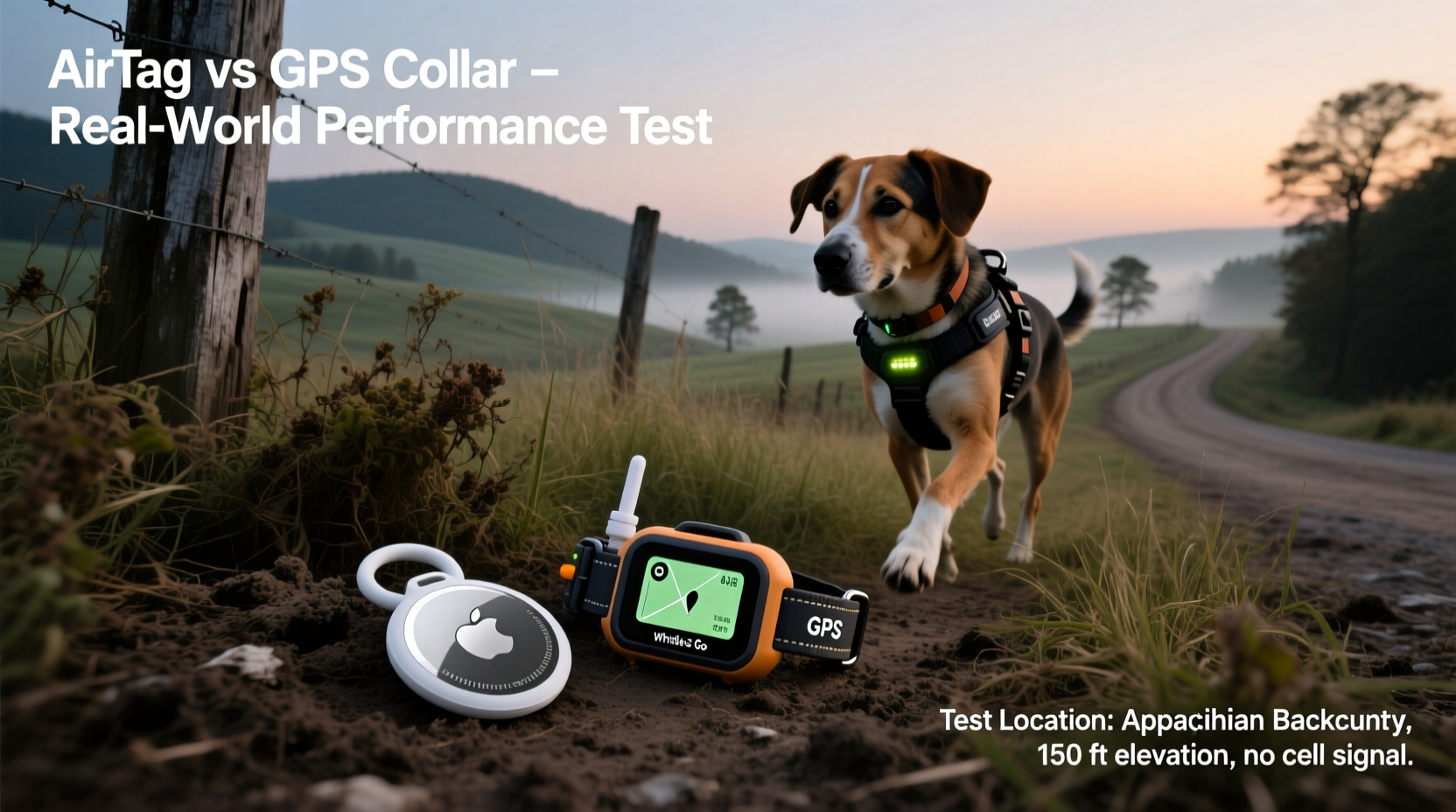
Apple AirTags use Bluetooth and leverage the Find My network—a global crowd-sourced system of iPhones and Apple devices that detect nearby tags. When an AirTag moves within range of any Apple device, its location is anonymously relayed to iCloud, allowing the owner to see its last known position via the Find My app.
This system is powerful in urban and suburban settings, where millions of iPhones are constantly online. However, in rural areas, the density of Apple devices drops dramatically. If no iPhone passes near your lost dog, the AirTag remains invisible in the network.
AirTags also lack real-time tracking. They don’t transmit continuous location data. Instead, they offer “last seen” updates, which may be hours—or even days—old in remote regions. Without cellular connectivity or GPS of their own, AirTags rely entirely on proximity to other devices.
Tip: AirTags work best as backup identifiers in areas with moderate population density—not as primary trackers in isolated zones.GPS Collars: Built for Real-Time Tracking Anywhere
Dedicated GPS collars, such as those from brands like Garmin, Whistle, and Tractive, operate differently. These devices embed actual GPS receivers and connect to cellular networks (like 4G LTE) to send live location data to your smartphone. This means they can report your dog’s exact coordinates every few seconds, regardless of whether other people are nearby.
In rural settings, this distinction is critical. Even with weak signals, many GPS collars are designed to maintain minimal connectivity over large distances. Some models include satellite messaging or offline geofencing features, making them resilient when standard networks fail.
Unlike AirTags, GPS collars provide active monitoring. You can view your dog’s movement history, set up virtual boundaries, and receive instant alerts if they leave a designated safe zone. For working dogs, hunting companions, or pets prone to roaming, this level of oversight is invaluable.
“GPS-based pet trackers are purpose-built for outdoor use. In low-population areas, they outperform Bluetooth-dependent solutions nine times out of ten.” — Dr. Lisa Nguyen, Veterinary Behaviorist & Pet Tech Consultant
Comparing Key Features: A Rural Reality Check
| Feature | AirTag | GPS Collar |
|---|---|---|
| Real-Time Tracking | No – only last known location | Yes – live updates every 5–30 sec |
| Signal Dependency | Requires nearby Apple devices | Relies on cellular/satellite networks |
| Battery Life | ~1 year (non-rechargeable) | 2–7 days (rechargeable) |
| Range Coverage | Limited by Find My network density | Global (with service plan) |
| Cost (Upfront + Ongoing) | $29 + no subscription | $50–$150 + $5–$15/month service fee |
| Suitable for Rural Use? | Rarely reliable | Highly effective |
The trade-offs are clear. AirTags win on price and simplicity but fail when connectivity is sparse. GPS collars demand a monthly investment and more frequent charging but deliver consistent performance where it matters most.
Real-World Example: Lost Dog in the Appalachian Foothills
In early spring 2023, a black Labrador named Duke escaped from his yard in rural West Virginia after chasing a deer. His owner, Mark, had attached an AirTag to his collar, hoping it would help locate him. For two days, the tag showed no movement. No nearby iPhones picked it up, and Duke was deep in forested terrain with no roads or homes nearby.
On the third day, a hiker with an iPhone passed within 30 feet of Duke, who had curled up near a stream. The AirTag finally registered a location—over 2.5 miles from home. By then, Duke had already moved again. It took another 18 hours before he was spotted by a neighbor and returned.
Mark later invested in a Tractive GPS collar. Three months later, when Duke slipped out again, the GPS alerted Mark within seconds. He followed the live trail through the woods and found Duke less than half a mile away, still moving. Recovery time: 12 minutes.
This case illustrates a common pattern: AirTags can eventually help—but often too late. GPS collars enable immediate action.
Choosing the Right Tracker: A Step-by-Step Decision Guide
Selecting the right device depends on your environment, lifestyle, and expectations. Follow this timeline to make an informed choice:
- Assess Your Location: Do you live in a sparsely populated area with limited smartphone traffic? If yes, skip AirTags as a primary solution.
- Evaluate Your Dog’s Behavior: Is your dog prone to bolting, hiking with you, or spending time off-leash? High-risk dogs need real-time GPS.
- Check Network Availability: Research cellular coverage maps for your region. Most GPS collar providers support major carriers; verify signal strength at your property.
- Consider Battery Management: Can you charge a device weekly? If not, factor in solar-assisted models or extended-life batteries.
- Set a Budget: While AirTags seem cheaper upfront, consider the value of timely recovery. A $120 GPS collar with a $10/month plan pays for itself the first time it prevents a multi-day search.
- Test Before Relying: Try the GPS collar on a walk. Confirm location updates are smooth and alerts trigger correctly.
Hybrid Approach: Using Both for Maximum Security
Some owners opt for a dual-system strategy: a GPS collar as the primary tracker and an AirTag as a secondary identifier. This approach combines strengths. If the GPS fails due to dead battery or poor signal, the AirTag might still be detected if someone with an iPhone finds the dog.
Additionally, AirTags can be scanned by anyone with an NFC-capable phone, even non-Apple users. This means a finder can read contact information directly from the tag without needing the Find My app.
Tip: Register your AirTag with your phone number and a message like “Lost Dog – Call for Reward” to increase return chances.Frequently Asked Questions
Can I use an AirTag instead of a GPS collar to save money?
You can, but not safely in rural areas. AirTags don’t provide real-time tracking and depend on chance encounters with Apple devices. In remote locations, this could mean waiting indefinitely for a signal. The small savings aren’t worth the risk of delayed recovery or permanent loss.
Do GPS collars work during storms or in dense forests?
Most modern GPS collars maintain functionality in adverse conditions, though thick canopy cover can temporarily reduce signal accuracy. Top-tier models use multiple satellite systems (GPS, GLONASS, Galileo) to improve lock speed and precision. Cellular backup ensures data transmission resumes once coverage returns.
Are there GPS collars without monthly fees?
True GPS collars require data transmission and therefore almost always involve a subscription. Some budget brands claim “no fee” tracking, but these typically rely on Bluetooth or local radio signals with very limited range (under 500 feet). They are not suitable for rural tracking.
Action Checklist: How to Equip Your Dog for Safety in Rural Areas
- ✅ Determine your average cellular signal strength using tools like OpenSignal or carrier maps.
- ✅ Choose a rugged GPS collar with water resistance and long battery life (e.g., Garmin T5, Tractive GPS XL).
- ✅ Subscribe to a reliable service plan with nationwide coverage.
- ✅ Attach the collar securely and check fit weekly.
- ✅ Test the tracker weekly with a short simulated “lost dog” scenario.
- ✅ Add an AirTag as a backup for human finders to scan.
- ✅ Keep emergency contacts and vet info in the app profile.
Final Verdict: What Actually Works in Rural Areas?
While AirTags are innovative and useful in certain contexts, they are not designed for standalone pet tracking—especially in rural environments. Their reliance on a dense network of Apple devices makes them unreliable when and where you need them most.
GPS collars, despite their ongoing cost, are engineered specifically for this challenge. They offer live location data, geofencing, activity monitoring, and peace of mind that a lost dog can be recovered quickly. For anyone living outside city limits, especially those with active or escape-prone dogs, a GPS collar isn’t just a luxury—it’s a necessity.
Technology should serve real needs, not just trends. In the quiet stretches of countryside, mountains, or farmland, the difference between an AirTag and a GPS collar isn’t just technical—it’s emotional. One offers hope. The other offers answers.
💬 Your dog’s safety starts with the right tools. If you’re still relying on an AirTag in a rural area, now is the time to upgrade. Share this article with fellow pet owners who might not realize the limitations of Bluetooth trackers—or comment below with your own tracking experience.








