
When setting up an aquarium, one of the most common questions new and even experienced fishkeepers ask is: should I prioritize an air pump or a filter? Both devices are often seen bubbling away in tanks, but they serve very different roles. Understanding their functions—and limitations—is essential to maintaining clean, safe water for your aquatic pets. While both contribute to water quality, only one directly removes pollutants. The other supports life-support systems that keep your fish thriving.
Understanding the Core Functions
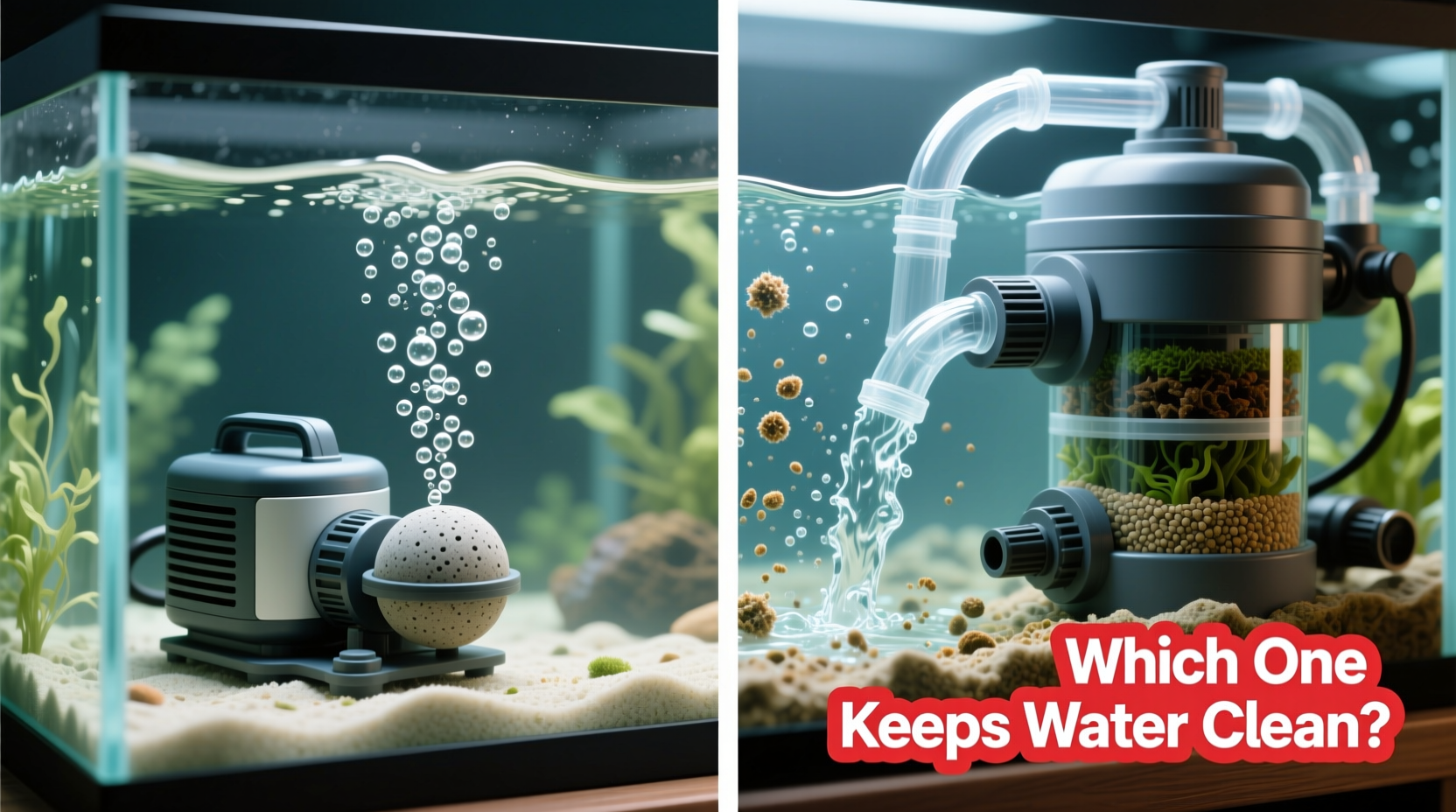
The confusion between air pumps and filters arises because both introduce movement and bubbles into the water. However, their mechanisms and purposes diverge significantly.
An **aquarium filter** is designed to physically, chemically, and biologically clean the water. It pulls water through various media—such as sponge, activated carbon, and bio-balls—to trap debris, absorb toxins, and host beneficial bacteria that break down harmful ammonia and nitrites.
An **air pump**, on the other hand, does not filter water at all. Instead, it pushes air through a tube into the aquarium, typically via an airstone or connected device like a sponge filter. Its primary function is to increase surface agitation, which enhances gas exchange—allowing more oxygen to dissolve into the water and excess carbon dioxide to escape.
“Filtration is non-negotiable for long-term water cleanliness. Air pumps support respiration but don’t replace mechanical cleaning.” — Dr. Lena Torres, Aquatic Biologist
What Actually Cleans the Water?
If your goal is clean, clear, and chemically balanced water, the answer is straightforward: the filter. Only a filtration system actively removes solid waste, dissolved organics, and toxic compounds from the water column.
Filters operate through three main processes:
- Mechanical filtration: Traps visible particles like uneaten food and fish waste.
- Chemical filtration: Uses substances like activated carbon to absorb odors, discoloration, and medications.
- Biological filtration: Cultivates colonies of nitrifying bacteria that convert deadly ammonia into less harmful nitrates.
Without these processes, even visually clear water can harbor invisible toxins that stress or kill fish over time. An air pump contributes nothing to this cleaning process.
Tip: Never rely solely on an air pump for water quality. Even in small tanks, a proper filter is essential for biological stability.Air Pumps: Why They’re Still Important
While air pumps don’t clean water, they play a vital supporting role in maintaining a healthy environment. Their key benefit lies in improving **oxygen exchange** at the water’s surface.
In tanks with low water movement—especially unfiltered bowls or emergency setups—an air pump can prevent oxygen depletion, particularly during warm weather when water holds less oxygen. It also helps circulate stagnant zones, reducing dead spots where debris accumulates and anaerobic bacteria thrive.
Air pumps are especially useful in:
- Tanks with high fish density
- Warm-water aquariums (e.g., tropical species)
- Setups using undergravel or sponge filters, which require airflow to function
- Emergency situations where power outages affect filtration
However, if your filter already creates sufficient surface agitation (as most hang-on-back or internal filters do), an additional air pump may be redundant.
Comparison: Filter vs Air Pump
| Feature | Aquarium Filter | Air Pump |
|---|---|---|
| Cleans debris? | Yes – mechanical removal | No |
| Removes toxins? | Yes – chemical & biological filtration | No |
| Increases oxygen? | Indirectly – via surface agitation | Yes – directly improves gas exchange |
| Essential for cycling? | Yes – hosts beneficial bacteria | No |
| Required for clean water? | Yes | No |
| Budget-friendly option? | Varies by type | Generally inexpensive |
Real Example: A Beginner’s Mistake
Jamie set up a 10-gallon tank for two goldfish, opting for a simple air pump with an airstone instead of a filter to keep things quiet and low-maintenance. For the first week, the water looked fine. But by day ten, the tank became cloudy, the fish were gasping at the surface, and ammonia levels spiked.
After consulting a local fish store, Jamie learned that while the air pump helped oxygen levels, it did nothing to remove waste. Goldfish are heavy eaters and produce significant ammonia. Without a filter to process these toxins, the ecosystem collapsed quickly. Installing a small internal filter resolved the cloudiness within days and stabilized water parameters.
This case illustrates a common misconception: that bubbles equal cleanliness. In reality, bubbles mean aeration—not purification.
Step-by-Step: Building a Clean, Stable Aquarium
To ensure your aquarium maintains clean water and a healthy environment, follow this sequence:
- Select the right filter for your tank size. Aim for a flow rate that cycles the entire tank volume 4–6 times per hour.
- Install filter media in layers: mechanical (sponge/floss), chemical (carbon), and biological (ceramic rings/bio-balls).
- Start the nitrogen cycle by adding an ammonia source (e.g., fish food) and testing water weekly until nitrates appear and ammonia/nitrite read zero.
- Add fish gradually, avoiding overstocking, which overwhelms filtration capacity.
- Use an air pump only if needed—for extra oxygen in warm tanks, densely stocked setups, or to drive sponge filters.
- Perform regular maintenance: rinse mechanical media in old tank water monthly, replace chemical media as directed, and never clean all components at once to preserve bacterial colonies.
Checklist: Do You Need an Air Pump?
- ✅ Is your tank poorly circulated?
- ✅ Are fish frequently near the surface breathing rapidly?
- ✅ Is the water temperature above 80°F (27°C)?
- ✅ Are you using a sponge or undergravel filter?
- ✅ Do you have high-oxygen-demand species (e.g., danios, hillstream loaches)?
If you answered yes to two or more, an air pump could be a helpful addition—but still not a substitute for filtration.
Frequently Asked Questions
Can I run an aquarium without an air pump?
Yes, absolutely—if your filter provides adequate surface agitation. Most modern filters create enough ripple to allow efficient gas exchange, making standalone air pumps optional in many setups.
Do filters provide enough oxygen?
In most cases, yes. Filters that discharge water at the surface (like HOB or canister filters) naturally promote oxygen absorption. However, heavily stocked tanks or warm environments may still benefit from supplemental aeration.
Is an air stone the same as a filter?
No. An air stone only releases bubbles to agitate the surface. It doesn’t remove particles or toxins. Some sponge filters use air stones to generate flow, but the sponge itself acts as the filter media.
Final Thoughts: Prioritize Filtration First
The truth is clear: if you must choose between an air pump and a filter, always choose the filter. It is the cornerstone of water cleanliness and long-term aquarium health. An air pump is a valuable tool in specific scenarios, but it should never be mistaken for a cleaning device.
Clean water isn’t about how many bubbles you see—it’s about what you can’t see: stable chemistry, invisible beneficial bacteria, and the absence of harmful compounds. That balance is achieved through proper filtration, routine maintenance, and informed care.
🚀 Take action today: Check your tank’s filtration efficiency, test your water, and ensure your setup supports both cleanliness and oxygen balance. Share your experience or questions below—your journey matters to the aquarium community.








