Plush dog toys are a favorite among pets and owners alike—soft, cuddly, and often designed to squeak or dispense treats. But behind their charming appearance lies a potential risk if not properly inspected for safety and durability. Dogs chew, tug, and sometimes ingest parts of their toys, making regular evaluation essential. This guide equips pet owners with the knowledge to assess plush toys effectively, prevent hazards, and extend playtime safely.
Why Toy Inspection Matters
Dogs interact with toys differently than humans anticipate. What looks harmless can become dangerous when subjected to powerful jaws and persistent chewing. According to the American Veterinary Medical Association (AVMA), foreign body ingestion is one of the most common causes of emergency vet visits in dogs, with toy fragments frequently implicated.
Plush toys, while comforting, often contain small components such as plastic eyes, squeakers, or ribbons that can detach. Once loose, these parts pose choking risks or may cause intestinal blockages. Moreover, low-quality materials can degrade quickly, leading to frayed edges and exposed stuffing that dogs may swallow.
Regular inspection isn’t just about spotting damage—it’s about anticipating failure before it happens.
Step-by-Step Guide to Inspecting Plush Dog Toys
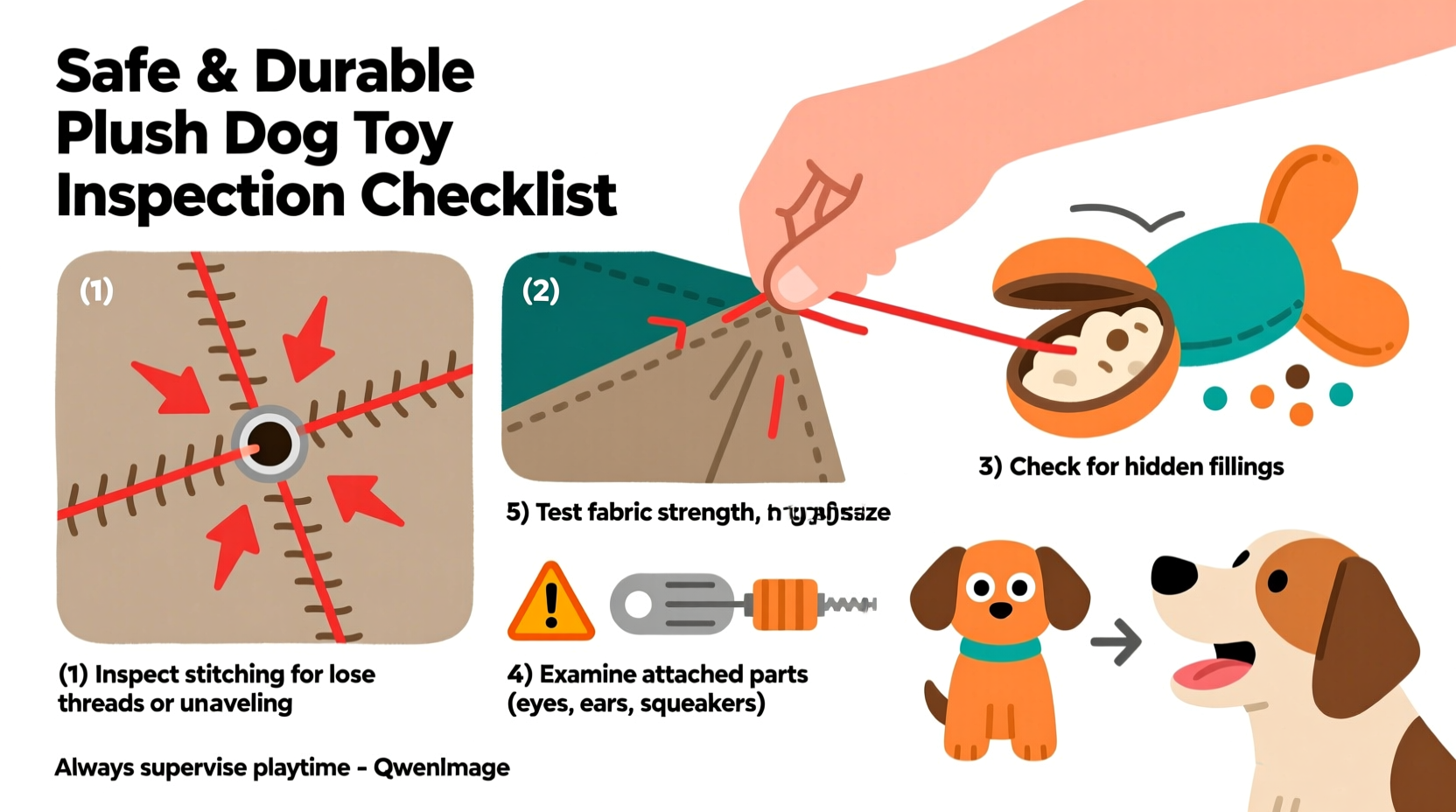
Conducting a thorough check should be part of your weekly pet care routine. Follow this five-step process to evaluate each plush toy:
- Visual Examination: Hold the toy under good lighting. Look for tears, thinning fabric, or stretched seams. Pay special attention to high-stress areas like ears, tails, and limbs.
- Stitching Integrity Check: Run your fingers along all seams. If threads are loose, unraveling, or missing, the toy is nearing failure. Double-stitched seams are preferable; single stitching wears faster.
- Component Security Test: Tug gently on buttons, ribbons, or plastic features. Any piece that moves independently or feels loose should be considered a hazard.
- Squeaker Functionality and Containment: Shake the toy near your ear. A muffled or absent squeak may indicate a broken squeaker. More importantly, ensure the squeaker is fully enclosed. If punctures are visible, the plastic could soon escape.
- Stuffing Condition: Squeeze the toy firmly. If clumps form or you feel hard lumps, the stuffing may be clumping or contaminated. Avoid toys where stuffing protrudes through fabric.
Key Features of Durable and Safe Plush Toys
Not all plush toys are created equal. When selecting or evaluating a toy, focus on construction quality over cuteness. The safest options combine resilient materials with smart design.
| Feature | Safe/Recommended | Risky/Avoid |
|---|---|---|
| Fabric Type | Double-layered polyester, canvas-backed fleece | Thin fleece, loosely woven fabrics |
| Seams | Double-stitched, reinforced with binding tape | Single stitching, visible thread gaps |
| Eyes/Noses | Embroidered (thread-based) | Plastic or rubber attachments |
| Internal Components | Encapsulated squeakers, no loose parts | Exposed squeakers, ribbons, bells |
| Stuffing | Polyester fiberfill, non-toxic, hypoallergenic | Recycled foam, unknown fillers |
Manufacturers like Kong and West Paw prioritize safety engineering, often using hidden squeakers and reinforced linings. These brands undergo third-party testing, providing an added layer of assurance.
“Durability in plush toys isn’t just about lasting longer—it’s about preventing emergencies. I’ve removed toy fragments from small intestines more times than I’d like to admit.” — Dr. Lena Reyes, DVM, Small Animal Surgeon
Real-World Example: Bella the Beagle’s Close Call
Bella, a three-year-old beagle, loved her duck-shaped plush toy. Her owner, Mark, noticed minor fraying near the tail but assumed it was normal wear. Two days later, Bella became lethargic and vomited repeatedly. An X-ray revealed a small plastic squeaker lodged in her small intestine. Surgery was required to remove it.
The toy had initially passed visual inspection, but the internal squeaker casing had weakened over time. Without routine pressure testing or internal checks, the danger went unnoticed. After recovery, Mark adopted a zero-tolerance policy: any sign of seam weakness or squeaker noise change results in immediate retirement of the toy.
This case illustrates how seemingly minor flaws can escalate rapidly. Proactive inspection could have prevented a traumatic and costly situation.
Checklist: Is Your Plush Toy Still Safe?
Use this printable-style checklist to evaluate each plush toy in your dog’s collection:
- ✅ No visible tears, holes, or thinning fabric
- ✅ All seams are tight and double-stitched
- ✅ Embroidered or securely molded facial features (no plastic pieces)
- ✅ Squeaker is intact and fully enclosed (no punctures nearby)
- ✅ Stuffing does not protrude or clump abnormally
- ✅ No dangling strings, ribbons, or removable accessories
- ✅ Toy maintains shape without excessive flattening
- ✅ No foul odors or signs of mold (especially if washed)
If any item fails, retire the toy immediately. Repurposing as a decorative item or donating is acceptable—but never allow further unsupervised play.
Tip: Rotate toys weekly to reduce wear on any single item and keep your dog mentally stimulated.FAQ: Common Questions About Plush Toy Safety
Can I wash plush dog toys to extend their life?
Yes, but with caution. Machine washing can weaken seams and damage squeakers over time. Use cold water, a gentle cycle, and air dry completely. Never use fabric softener, which can degrade fibers. Inspect thoroughly post-wash, as cleaning can expose hidden weaknesses.
Are “indestructible” plush toys really safe?
Terms like “indestructible” are marketing language, not guarantees. Some reinforced plush toys use mesh liners or rubberized coatings to resist tearing, but no plush toy is truly indestructible. Always supervise play, especially with strong chewers. Even durable toys fail under relentless pressure.
What should I do with retired plush toys?
Dispose of damaged toys in sealed trash bags to prevent scavenging. If the toy is only slightly worn and clean, consider repurposing it as a comfort item in a crate or donation to a shelter (call ahead—many require new items). Never attempt to repair plush toys with glue or stitching; repairs rarely withstand canine force.
Conclusion: Prioritize Prevention Over Crisis
Inspecting plush dog toys is a simple habit with profound implications for your pet’s health. These soft companions bring joy, but they also carry hidden risks if neglected. By understanding construction details, performing regular assessments, and retiring toys at the first sign of compromise, you create a safer play environment.
Dogs don’t read labels or recognize danger—they rely on us. Make inspection a non-negotiable part of pet ownership, just like feeding or grooming. Your vigilance today could prevent an emergency tomorrow.
💬 Your dog’s safety matters. Share this guide with fellow pet owners and start a conversation about responsible toy use. Have a story or tip to add? Leave a comment below.








