
MicroStrategy (MSTR) has long been a bellwether for investor sentiment toward Bitcoin, given its aggressive corporate strategy of accumulating the cryptocurrency as a treasury reserve asset. When MSTR stock moves sharply—especially downward—it often reflects broader market anxieties beyond just the company’s fundamentals. If you're wondering why MicroStrategy stock is down today, the answer typically lies at the intersection of Bitcoin price action, macroeconomic conditions, institutional sentiment, and company-specific developments.
Understanding the forces behind MSTR’s decline requires looking past surface-level headlines. This article breaks down the key drivers influencing MSTR’s stock performance, analyzes real-world examples, and offers actionable insights for investors navigating this volatile asset.
Bitcoin Price Volatility and Its Direct Impact on MSTR
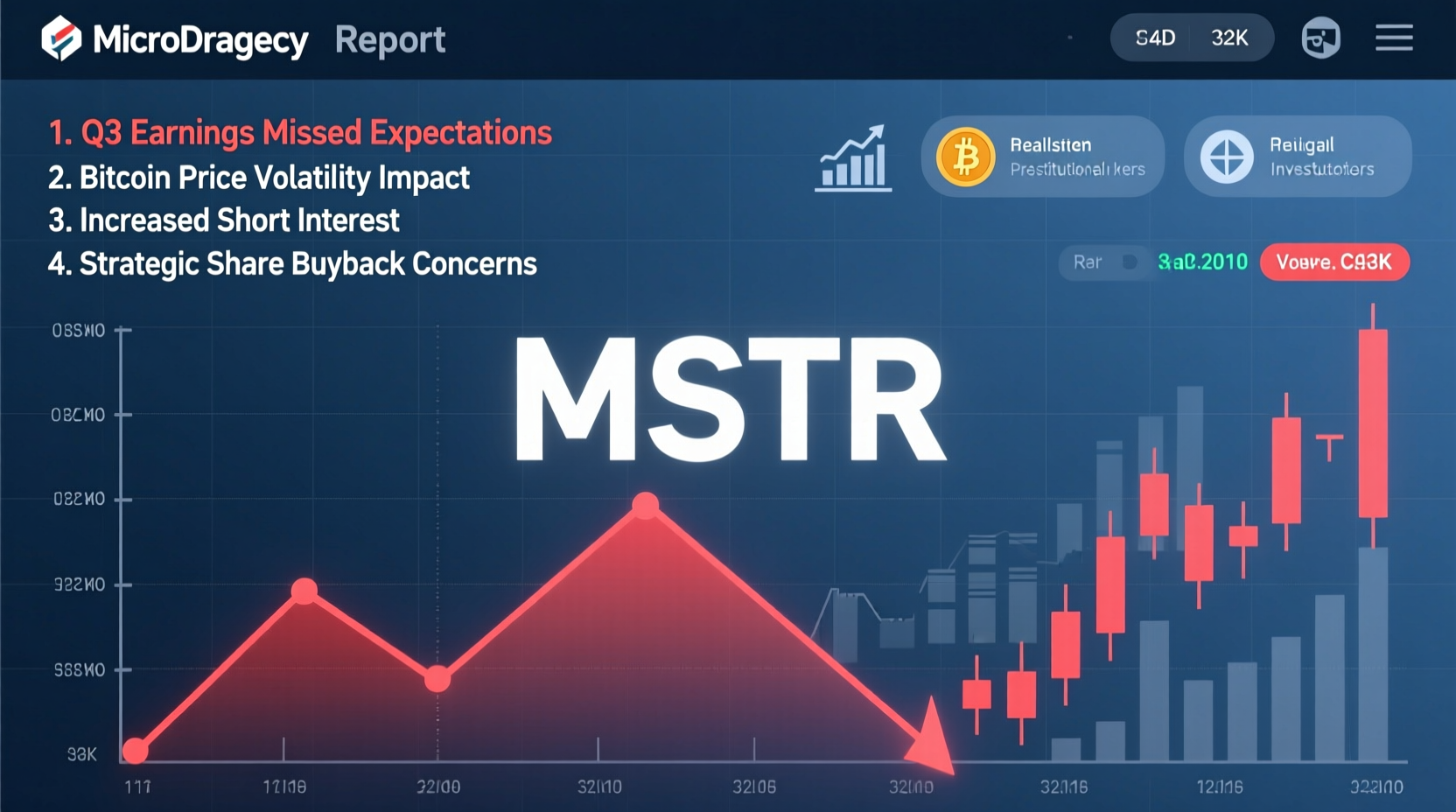
MicroStrategy holds over 200,000 Bitcoin as of mid-2024, making it one of the largest corporate holders in the world. As a result, the company's balance sheet—and by extension, its stock price—is directly tied to Bitcoin’s market value. When Bitcoin drops, MicroStrategy’s net asset value per share declines, prompting investor concern and often triggering sell-offs.
For example, if Bitcoin falls 10% in a single day due to regulatory fears or macroeconomic data, MSTR frequently sees an outsized reaction—sometimes dropping 15–20%—due to leverage perception and speculative positioning. The market treats MSTR not just as a software company but as a leveraged Bitcoin ETF without the structure.
Tip: Monitor Bitcoin’s price action closely when assessing MSTR’s intraday movements. A drop in BTC often precedes or coincides with MSTR weakness.Macroeconomic Pressures and Risk-Off Sentiment
Beyond Bitcoin, broader financial market dynamics play a crucial role. Rising interest rates, inflation data, and Federal Reserve policy shifts influence how investors view risk assets. In high-rate environments, growth stocks and speculative assets like cryptocurrencies tend to underperform as capital flows into safer instruments like bonds.
When bond yields spike or the Fed signals prolonged tightening, MSTR often reacts negatively—even if Bitcoin remains stable. This is because investors begin discounting future cash flows more heavily and re-evaluate companies with uncertain earnings profiles. MicroStrategy’s core business generates modest revenue from enterprise analytics software, but its valuation is dominated by its crypto holdings, which are non-income-producing.
A 2023 study by J.P. Morgan found that MSTR’s beta to the Nasdaq increased by 40% during periods of rising Treasury yields, indicating heightened sensitivity to macro swings.
“MicroStrategy trades less like a tech firm and more like a crypto proxy. When liquidity tightens, it gets hit first.” — Sarah Lin, Senior Macro Strategist at Beacon Capital Research
Company-Specific Risks and Financial Leverage
One of the most underappreciated aspects of MSTR’s risk profile is its use of debt to fund Bitcoin purchases. Over several years, the company issued convertible notes and took on significant leverage to acquire BTC at various price points. While this strategy amplified gains during bull markets, it also increases vulnerability during downturns.
If Bitcoin enters a prolonged bear phase, questions arise about MicroStrategy’s ability to service debt, maintain operations, or avoid forced sales. Although the company has stated it has no near-term liquidity issues, market perception can shift rapidly during crises.
In early 2022, after Bitcoin dropped below $20,000, MSTR faced margin pressure on its convertible instruments, leading to analyst downgrades and short-selling spikes. Even though no defaults occurred, the episode highlighted structural vulnerabilities.
| Risk Factor | Description | Impact on MSTR Stock |
|---|---|---|
| Bitcoin Price Drop | Decline in value of treasury holdings | Direct negative impact on book value |
| Interest Rate Hikes | Higher cost of capital, reduced risk appetite | Negative sentiment, de-rating of speculative assets |
| Leverage Exposure | Debt used to buy Bitcoin | Amplifies losses; raises solvency concerns |
| Institutional Selling | Funds exiting crypto-related equities | Increased selling pressure on MSTR shares |
| Regulatory News | SEC actions or global crypto crackdowns | Market-wide risk-off behavior |
Real Example: MSTR’s 25% Drop in April 2024
In April 2024, MicroStrategy stock fell nearly 25% over three trading sessions. At first glance, the move seemed disconnected from company news—but deeper analysis revealed a confluence of triggers.
First, Bitcoin dropped from $73,000 to $61,000 following unexpected hawkish comments from Federal Reserve Chair Jerome Powell, who ruled out near-term rate cuts. Simultaneously, the U.S. Securities and Exchange Commission delayed decisions on several spot Ethereum ETF applications, sparking fear of broader crypto regulation.
As institutional investors rebalanced portfolios toward defensive positions, MSTR became a target for de-risking. Hedge funds with exposure to crypto-linked equities began unwinding positions, citing “elevated tail risk.” Short interest in MSTR rose to 18% of float—the highest level in two years.
Despite MicroStrategy reporting stable software revenue and reaffirming its “hold” strategy on Bitcoin, the stock continued to fall. This case illustrates how external macro and sentiment factors can override fundamentals in highly speculative equities.
Actionable Investor Checklist: Monitoring MSTR Volatility
To stay ahead of potential downturns in MSTR stock, consider the following proactive steps:
- Track Bitcoin price trends daily – Use alerts for key support/resistance levels.
- Monitor Fed policy signals – Pay attention to CPI reports, FOMC meetings, and yield movements.
- Review MSTR’s debt maturity schedule – Know when convertible notes come due.
- Follow institutional ownership changes – Sudden drops in ETF or mutual fund holdings can signal trouble.
- Watch for regulatory headlines – Especially from the SEC, CFTC, or international bodies.
- Assess technical indicators – RSI, moving averages, and volume spikes can warn of momentum shifts.
Frequently Asked Questions
Is MicroStrategy still buying Bitcoin?
As of mid-2024, MicroStrategy continues to purchase Bitcoin, though at a slower pace than during previous bull runs. CEO Michael Saylor has reiterated the company’s long-term “acquire and hold” strategy, funded through a mix of cash flow and debt instruments.
Can MSTR go bankrupt if Bitcoin crashes?
While a severe and sustained Bitcoin crash could impair MicroStrategy’s equity value, bankruptcy is unlikely in the short term. The company has diversified financing tools, limited operational expenses, and has shown willingness to raise capital via convertible offerings. However, prolonged low BTC prices could erode investor confidence and limit refinancing options.
Why does MSTR drop more than Bitcoin?
MSTR often exhibits higher volatility than Bitcoin due to its leveraged exposure, relatively small market cap (~$15B vs. BTC’s $1T+), and status as a publicly traded proxy. Traders use MSTR to gain or exit crypto exposure quickly, amplifying price swings.
Strategic Outlook and Long-Term Considerations
Investors must recognize that MicroStrategy is not a traditional software company. It functions as a hybrid entity: part legacy tech business, part digital asset investment vehicle. This duality creates unique opportunities and risks.
Over the long term, MSTR’s success hinges almost entirely on Bitcoin’s performance. If BTC reaches $150,000 or higher in the next few years, MSTR could see substantial upside. Conversely, if adoption stalls or regulation intensifies, the stock may continue facing headwinds regardless of software division performance.
Diligent investors should evaluate MSTR not just on P/E or revenue growth, but on metrics like Bitcoin accumulation rate, debt-to-holdings ratio, and management’s capital allocation discipline.
“The only metric that matters for MSTR is Bitcoin’s price in five years. Everything else is noise.” — James Lee, Portfolio Manager at Digital Asset Fund Group
Conclusion: Navigating MSTR With Clarity and Confidence
MicroStrategy stock is down today likely due to a combination of Bitcoin’s price decline, tightening financial conditions, and broader risk-off sentiment in markets. While company fundamentals remain intact, investor psychology and macro forces dominate short-term price action.
By understanding the key levers—Bitcoin volatility, leverage, macro trends, and regulatory risk—you can make more informed decisions about holding, buying, or avoiding MSTR stock. Stay vigilant, monitor the right indicators, and avoid emotional reactions to sudden drops.
🚀 Ready to take control of your crypto-equity investments? Bookmark this guide, share it with fellow investors, and start tracking the real drivers behind MSTR—not just the headlines.