It’s a familiar scene: someone starts watching an anime series late at night, intending to watch just one episode. Hours later, they’re still glued to the screen, having devoured half the season. This phenomenon—binge-watching entire anime series in a single session—is increasingly common, especially among younger audiences. While entertainment value plays a role, the deeper explanation lies in cognitive psychology, particularly in a concept known as “flow.” Understanding this mental state reveals not only why anime binges happen but also how storytelling, pacing, and emotional investment converge to create immersive viewing experiences that are hard to escape.
The Concept of Flow: A Psychological Immersion
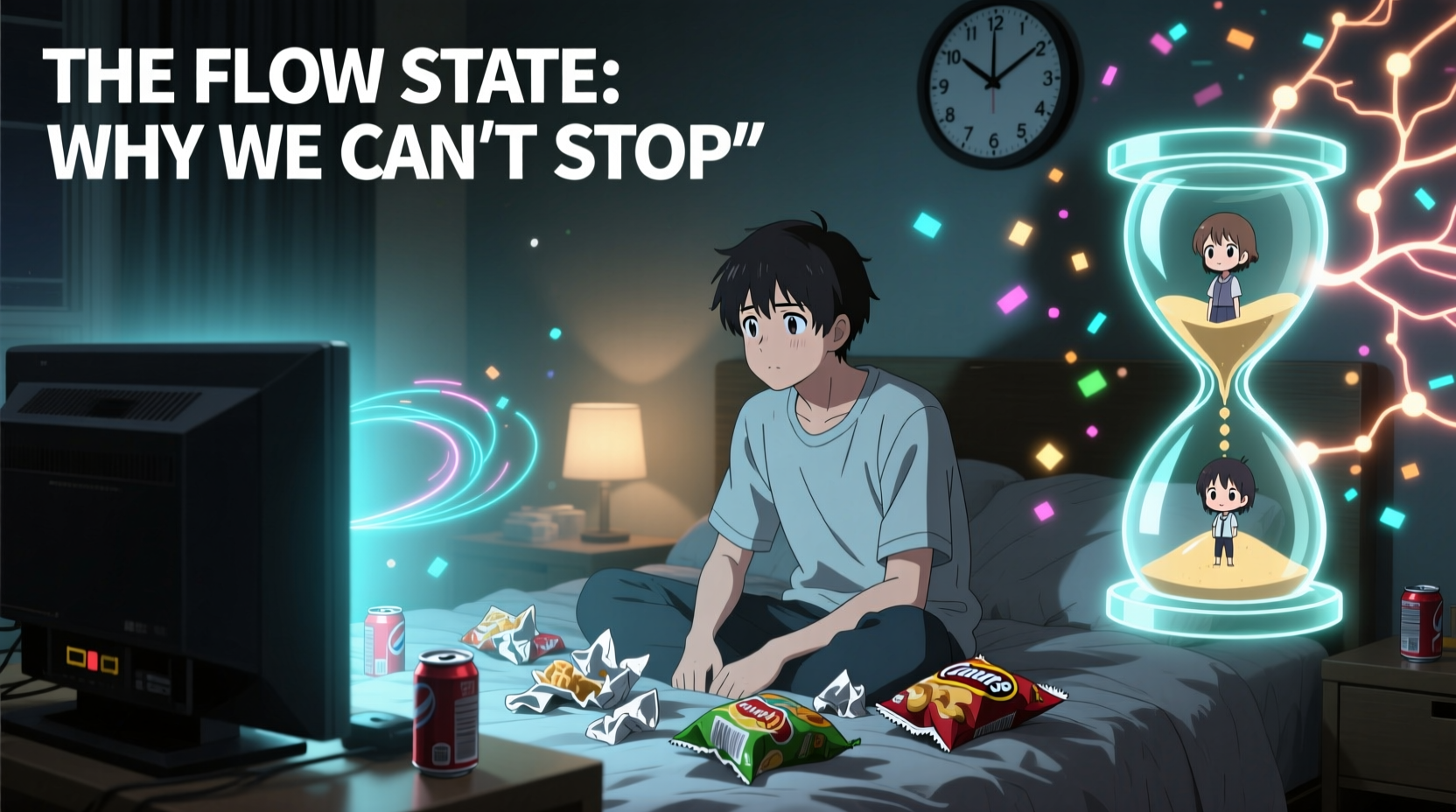
First introduced by psychologist Mihaly Csikszentmihalyi in the 1970s, “flow” describes a mental state in which a person becomes fully absorbed in an activity, experiencing energized focus, full involvement, and enjoyment in the process. During flow, self-consciousness fades, time seems to distort (often speeding up), and actions feel effortless. Originally studied in artists, athletes, and musicians, flow is now recognized in digital media consumption—especially in gaming and streaming.
Anime, with its serialized narratives, visual intensity, and emotional arcs, creates ideal conditions for flow. When viewers enter this state, they lose track of time and external responsibilities. The narrative momentum pulls them forward, episode after episode, driven not by passive distraction but by active psychological engagement. Unlike casual TV watching, where attention may wander, anime often demands sustained emotional and cognitive investment—precisely what sustains flow.
“Flow occurs when challenges are matched perfectly with skills. In storytelling, that balance keeps us hooked without overwhelming us.” — Dr. Sarah Lin, Cognitive Psychologist, University of California
Why Anime Triggers Flow More Than Other Media
While many forms of television can induce flow, anime possesses unique structural and cultural elements that amplify its potential. These include:
- Narrative pacing: Many anime series use a “slow burn” approach early on, gradually escalating tension and character development, which builds anticipation and deepens viewer attachment.
- Emotional resonance: Anime frequently explores complex themes—identity, sacrifice, growth, loss—with exaggerated expressions and symbolic visuals that heighten emotional impact.
- Visual and auditory immersion: High-quality animation, dynamic fight sequences, and memorable soundtracks engage multiple senses, reinforcing focus and reducing distractions.
- Episodic cliffhangers: Especially in shonen or thriller genres, episodes often end with unresolved conflicts or revelations, creating a psychological need for closure.
This combination makes anime particularly effective at triggering flow. Viewers aren’t just watching; they’re participating mentally and emotionally. The brain treats the experience like a meaningful challenge—solving mysteries, predicting outcomes, empathizing with characters—all of which sustain cognitive engagement.
Tip: If you want to avoid unintentional binges, set a timer before starting an anime session. Even 30 minutes of awareness can help break the autopilot effect of flow.The Role of Dopamine and Narrative Reward Systems
Beyond flow, neurochemical factors play a critical role in binge behavior. Each plot twist, character breakthrough, or climactic battle triggers dopamine release—the brain’s reward chemical. This neurotransmitter reinforces pleasurable activities and motivates repetition. When an anime delivers satisfying payoffs (e.g., a long-awaited reunion or victory), the brain registers it as a win, prompting the desire to continue seeking more rewards.
This mechanism mirrors other compulsive behaviors, such as gaming or social media scrolling. However, unlike random content feeds, anime offers structured progression—a clear sense of advancement through story arcs. This structure enhances satisfaction and strengthens the feedback loop: watch → feel reward → want more.
Moreover, platforms like Crunchyroll, Netflix, and Hulu optimize for continuation by auto-playing the next episode. This removes decision fatigue, allowing viewers to remain in flow without interruption. The absence of commercial breaks—common in Western TV—further reduces friction, making it easier to stay immersed.
How Streaming Platforms Amplify Binge Behavior
Digital platforms are designed to exploit psychological tendencies. Features such as:
- Auto-play functionality
- Personalized recommendations
- Progress tracking (“You’re 70% through the season!”)
- Offline downloads for uninterrupted viewing
…all contribute to extended viewing sessions. These tools don’t just facilitate access—they actively encourage immersion. When combined with the inherent flow-inducing qualities of anime, the result is a powerful behavioral loop that prioritizes immediate gratification over long-term planning.
A Closer Look: The Anatomy of a Binge Session
To understand how flow unfolds during an anime marathon, consider the typical progression of a binge-watching episode:
- Initiation: The viewer chooses a series based on recommendation, curiosity, or mood. Initial episodes serve as entry points, establishing characters and stakes.
- Engagement: Around episode 3–5, emotional investment deepens. Viewers begin forming attachments and predictions, entering a focused state.
- Immersion: By mid-season, flow takes hold. Time perception shifts; external distractions fade. The viewer feels “in sync” with the story.
- Escalation: Major plot developments (betrayals, battles, revelations) increase arousal and dopamine, fueling the urge to keep going.
- Completion or Crash: The session ends either with finishing the available content or physical/mental exhaustion—often past midnight.
This arc mirrors the classic flow cycle: from initial challenge to deep concentration, then mastery (understanding the story) and eventual resolution. The difference is that instead of completing a task, the viewer completes a narrative journey—one that feels personally significant despite being fictional.
Mini Case Study: The Attack on Titan Effect
Takashi, a 24-year-old graduate student, began watching *Attack on Titan* during exam week. He planned to watch one episode to relax. Three hours later, he had completed nine episodes. “I kept telling myself ‘just one more,’” he recalls. “After Eren’s transformation in episode 5, I couldn’t stop. Every episode answered one question but raised two more. It felt like solving a puzzle I didn’t want to put down.”
Takashi’s experience exemplifies flow in action. The show’s relentless pacing, moral ambiguity, and layered mysteries created continuous cognitive engagement. His academic stress initially prompted the viewing, but the psychological pull of the narrative took over. The next day, he felt mentally drained but emotionally fulfilled—a common aftermath of intense flow states.
Do’s and Don’ts of Managing Anime Binges
| Do’s | Don’ts |
|---|---|
| Set a viewing limit before starting (e.g., “two episodes max”) | Start a new series right before work or study sessions |
| Use physical cues like snacks or drinks to mark natural stopping points | Watch on a device used for sleep (e.g., bed phone) without blue light filters |
| Reflect on why you’re watching—entertainment, escapism, learning? | Ignore signs of fatigue or eye strain |
| Take short breaks between episodes to reset attention | Allow autoplay to run unchecked |
When Flow Becomes Problematic: Recognizing Overuse
While flow is generally positive—linked to creativity, learning, and well-being—it can become maladaptive when it disrupts daily functioning. Regular all-night anime binges may lead to:
- Sleep deprivation
- Reduced productivity
- Social withdrawal
- Eye strain and sedentary health risks
The key distinction lies in intentionality and control. Healthy flow enhances life; addictive consumption detracts from it. If someone consistently sacrifices responsibilities, relationships, or rest for anime, it may signal a need for behavioral adjustment—even if the experience feels rewarding in the moment.
One useful framework is the “Three-Question Check” to assess viewing habits:
- Did I start watching with a clear limit in mind?
- Did I exceed that limit without reconsidering my choice?
- Did the binge negatively affect my next-day functioning?
Answering “yes” to two or more suggests a pattern worth examining.
Tip: Pair anime watching with a secondary activity like sketching characters or journaling reactions. This adds reflective depth and slows automatic consumption.Strategies to Harness Flow Constructively
Instead of resisting binge tendencies outright, viewers can learn to channel flow into intentional, enriching experiences. Here’s a step-by-step guide:
- Choose purposefully: Select anime that align with your current interests or goals—e.g., learning about Japanese culture, exploring philosophical themes, or improving language skills.
- Plan viewing blocks: Schedule dedicated time (e.g., Saturday evenings) rather than watching reactively. Treat it like a ritual, not a reflex.
- Pause for reflection: After each episode, take two minutes to jot down thoughts: What surprised you? How did characters grow? This interrupts autopilot mode.
- Engage socially: Discuss episodes with friends or online communities. Shared interpretation deepens understanding and reduces isolation.
- Leverage completion: After finishing a series, create something inspired by it—a drawing, analysis, or playlist. This transforms passive consumption into active creation.
These practices preserve the joy of immersion while grounding it in mindfulness and intentionality.
Frequently Asked Questions
Is binge-watching anime harmful?
Occasional binges are not inherently harmful and can be deeply enjoyable. However, regular disruption of sleep, work, or social obligations indicates a need for moderation. Balance is key—flow should enhance life, not replace it.
Can flow be achieved with any anime?
Not equally. Series with strong narrative continuity, character development, and emotional stakes (e.g., *Fullmetal Alchemist: Brotherhood*, *Your Name*, *Monster*) are more likely to induce flow than episodic comedies or loosely connected stories. Personal interest also plays a major role.
How is anime bingeing different from other TV binges?
Anime often features higher emotional intensity, faster narrative escalation, and culturally distinct storytelling rhythms. Additionally, fans frequently engage in deep lore analysis and community discussions, which extend the psychological investment beyond viewing.
Conclusion: Embracing Flow with Awareness
The psychology of flow explains why so many people find themselves unable to stop watching anime once they start. It’s not laziness or lack of willpower—it’s the brain responding naturally to a well-crafted, emotionally rich experience. Flow is a testament to the power of storytelling and human engagement.
But with great immersion comes responsibility. By understanding the mechanisms behind binge behavior, viewers can make conscious choices about when to dive deep and when to surface. Anime offers worlds of meaning, growth, and beauty. The goal isn’t to stop enjoying them fully—but to do so with awareness, balance, and lasting fulfillment.
🚀 Ready to watch smarter? Next time you press play, ask yourself: Am I choosing this—or is autopilot taking over? Share your favorite flow-inducing anime and how you manage your viewing habits in the comments below.