
In recent years, consumers around the world have felt the pinch at grocery stores, gas stations, and when booking travel. Prices are rising faster than they have in decades, and central banks are responding with aggressive interest rate hikes. But what exactly is behind this surge in inflation? While inflation is a normal part of economic cycles, the current rise has been unusually broad and persistent. Understanding the forces at play—supply shocks, demand surges, wage pressures, and monetary policy—is essential for making informed financial decisions and anticipating future economic trends.
What Is Inflation and How Is It Measured?
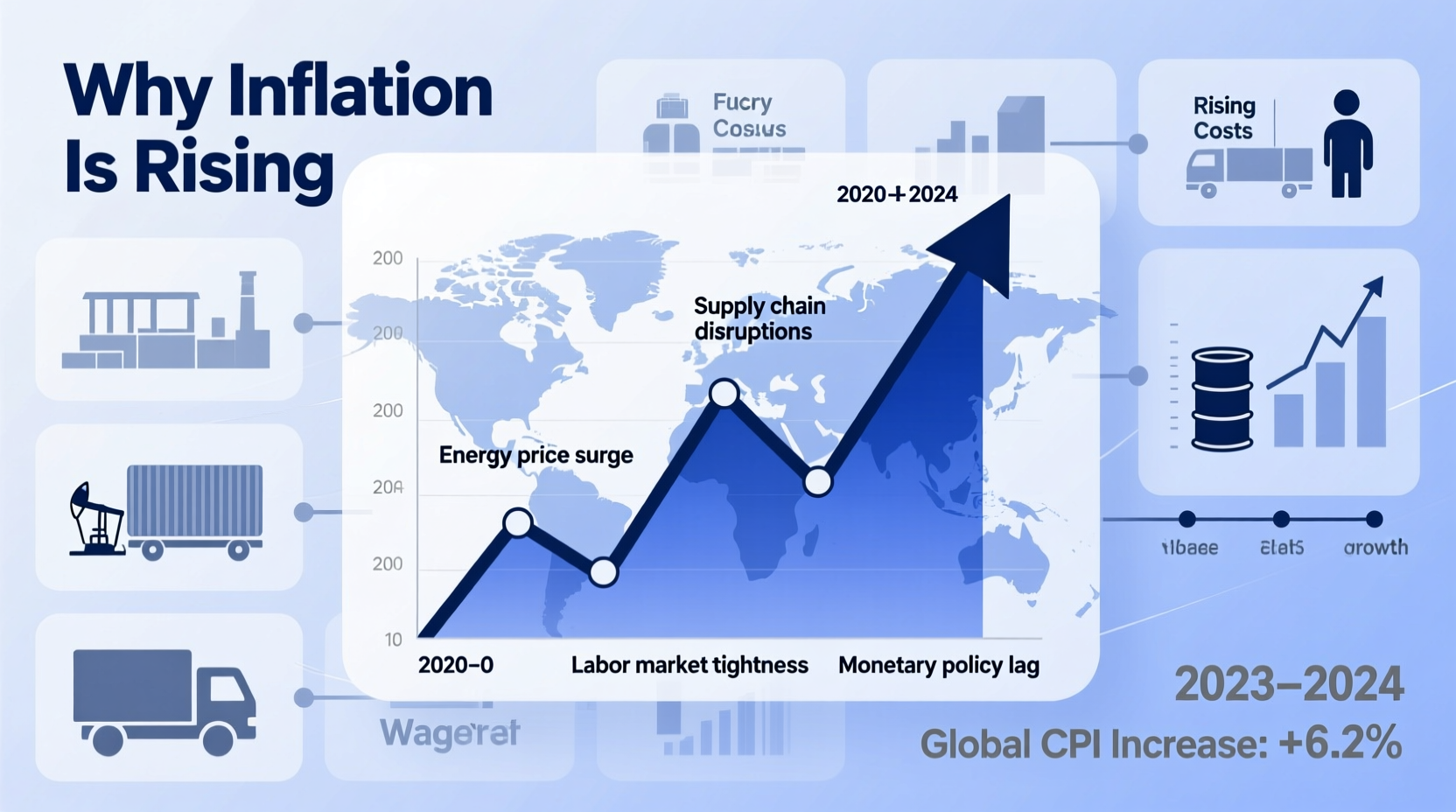
Inflation refers to the sustained increase in the general price level of goods and services over time. It reduces purchasing power—the amount of value each unit of currency can buy. Most countries measure inflation using indices like the Consumer Price Index (CPI) or the Personal Consumption Expenditures (PCE) index. These track changes in the cost of a representative basket of everyday items, including food, housing, transportation, and healthcare.
The ideal inflation rate for most developed economies is around 2%. This moderate growth supports investment and consumption without destabilizing the economy. However, when inflation exceeds this target significantly—as it has since 2021—it signals underlying imbalances that require attention.
Key Drivers Behind the Current Inflation Surge
The current wave of inflation is not due to a single cause but rather a confluence of interrelated factors. Below are the primary contributors:
1. Post-Pandemic Supply Chain Disruptions
The global pandemic severely disrupted manufacturing, shipping, and logistics. Factory shutdowns, port congestion, and labor shortages led to delays and bottlenecks. When demand returned faster than supply could recover, prices rose across sectors—from semiconductors to lumber to automobiles.
Tip: Monitor supply chain news for industries you depend on; early awareness can help anticipate price changes.2. Strong Consumer Demand Fueled by Stimulus
Governments worldwide responded to the pandemic with massive fiscal stimulus packages. Direct payments, expanded unemployment benefits, and business loans boosted household savings and spending power. Once lockdowns eased, pent-up demand surged—especially for goods like furniture, electronics, and vehicles—outpacing available inventory.
3. Energy and Commodity Price Shocks
The war in Ukraine dramatically impacted energy markets. Oil and natural gas prices spiked, increasing costs for transportation, heating, and electricity. Simultaneously, agricultural commodity prices rose due to disruptions in grain exports from Eastern Europe, pushing up food prices globally.
4. Labor Market Tightness and Wage Growth
As businesses reopened, many faced acute labor shortages. To attract workers, companies raised wages. While higher wages benefit employees, they also increase production costs, which businesses often pass on to consumers through higher prices—a phenomenon known as \"wage-price spiral.\"
5. Monetary Policy and Low Interest Rates
For over a decade, central banks kept interest rates near zero to stimulate growth. While effective during downturns, prolonged loose monetary policy can overheat the economy. The abundance of cheap credit encouraged borrowing and spending, amplifying demand-side pressures just as supply struggled to keep up.
“Today’s inflation is a perfect storm of demand strength, constrained supply, and geopolitical instability.” — Lael Brainard, Former Vice Chair of the Federal Reserve
A Timeline of Inflation’s Rise: 2020–2024
To better understand the pace and triggers of inflation, consider this timeline of key events:
- March 2020: Global pandemic leads to widespread lockdowns; demand collapses.
- April–December 2020: Governments roll out trillions in stimulus; savings rates soar.
- Mid-2021: Vaccination drives reopen economies; demand for goods spikes.
- Q4 2021: Supply chains remain strained; inflation exceeds 5% in the U.S. and EU.
- February 2022: Russia invades Ukraine; oil prices jump above $120/barrel.
- 2022–2023: Central banks raise interest rates aggressively to cool inflation.
- 2024: Inflation moderates but remains above target in many regions.
This sequence shows how short-term shocks evolved into longer-term inflationary momentum.
Global Inflation Comparison: Selected Countries (2023 Peak)
| Country | Peak Inflation Rate (2023) | Primary Contributing Factors |
|---|---|---|
| United States | 9.1% | Stimulus spending, housing costs, strong labor market |
| Germany | 10.4% | Energy dependency on Russia, import costs |
| United Kingdom | 11.1% | Energy crisis, weak pound, wage pressures |
| Canada | 8.1% | Housing, food, transportation |
| Japan | 4.3% | Yen depreciation, imported energy and food |
Note the variation in peak inflation levels, reflecting differences in policy responses, energy structures, and economic resilience.
Real-World Impact: A Case Study from Ohio
Consider Maria Thompson, a small business owner running a local bakery in Columbus, Ohio. In 2021, her flour costs increased by 35%, delivery fuel charges doubled, and she had to raise employee wages by 15% to retain staff. Despite increasing bread prices by 20%, profit margins shrank. “I used to order supplies every two weeks,” she said. “Now I plan three months ahead and stock up when prices dip—even if storage is tight.”
Maria’s experience reflects a broader trend: inflation doesn’t just affect consumers—it strains businesses, especially small ones with limited pricing power and thin margins.
How to Respond: Practical Strategies for Households and Businesses
Rising inflation demands proactive management. Here are actionable steps individuals and organizations can take:
Personal Finance Checklist
- Review and adjust your budget monthly to reflect new price realities.
- Prioritize needs over wants; delay non-essential purchases.
- Shop with price-comparison tools and consider generic brands.
- Refinance high-interest debt before rates climb further.
- Build an emergency fund covering 3–6 months of expenses.
- Invest in assets that historically outpace inflation, such as equities or real estate.
Business Adjustments
- Negotiate long-term contracts with suppliers to lock in prices.
- Improve inventory efficiency to reduce holding costs.
- Communicate transparently with customers about price changes.
- Explore automation to offset rising labor costs.
Frequently Asked Questions
Will inflation go back down to normal levels?
Yes, evidence suggests inflation is moderating. As supply chains stabilize, energy prices normalize, and central banks maintain restrictive policies, inflation is expected to return toward 2% in most advanced economies by 2025. However, structural shifts—like deglobalization or climate-related disruptions—could keep baseline inflation slightly higher than pre-2020 levels.
Are wages keeping up with inflation?
In some sectors, yes—particularly in skilled labor markets. But for many workers, wage growth has lagged behind inflation, eroding real income. According to the U.S. Bureau of Labor Statistics, average hourly earnings rose 4.1% in 2023, while inflation averaged 4.9%, meaning most workers experienced a net loss in purchasing power.
Can technology help reduce inflationary pressure?
Yes. Automation, AI-driven logistics, and digital marketplaces improve efficiency and reduce costs. For example, predictive analytics in supply chains can prevent overstocking and shortages. Over time, technological innovation may act as a deflationary force, counterbalancing other inflation drivers.
Conclusion: Staying Informed and Proactive
The current rise in inflation is complex, rooted in extraordinary global events and structural economic shifts. While policymakers work to restore stability, individuals and businesses must adapt. Awareness of inflation drivers, disciplined financial planning, and strategic decision-making can mitigate its impact.
Inflation isn't just a number on a chart—it affects daily life, savings goals, and long-term security. By understanding its causes and preparing accordingly, you gain control over your financial future in uncertain times.
💬 Have you adjusted your spending or business strategy due to inflation? Share your experience in the comments to help others navigate these challenges together.