In 2025, cottagecore isn’t just surviving—it’s thriving. What began as a niche online aesthetic centered around pastoral imagery, hand-knit sweaters, and sourdough baking has evolved into a full-fledged cultural movement. Despite shifting trends and the relentless pace of modern life, cottagecore continues to resonate across social media, fashion, interior design, and even urban planning. But why? Beyond its romantic visuals lies a deeper psychological undercurrent—a collective yearning for safety, meaning, and reconnection in an increasingly fragmented world.
The persistence of cottagecore reflects more than nostalgia. It signals a response to contemporary stressors: digital overload, climate anxiety, economic instability, and a growing sense of dislocation from nature and community. As society grapples with these challenges, the allure of slow living, homemade bread, and forest walks offers not just escapism, but emotional regulation and identity reconstruction.
The Emotional Pull of Simplicity
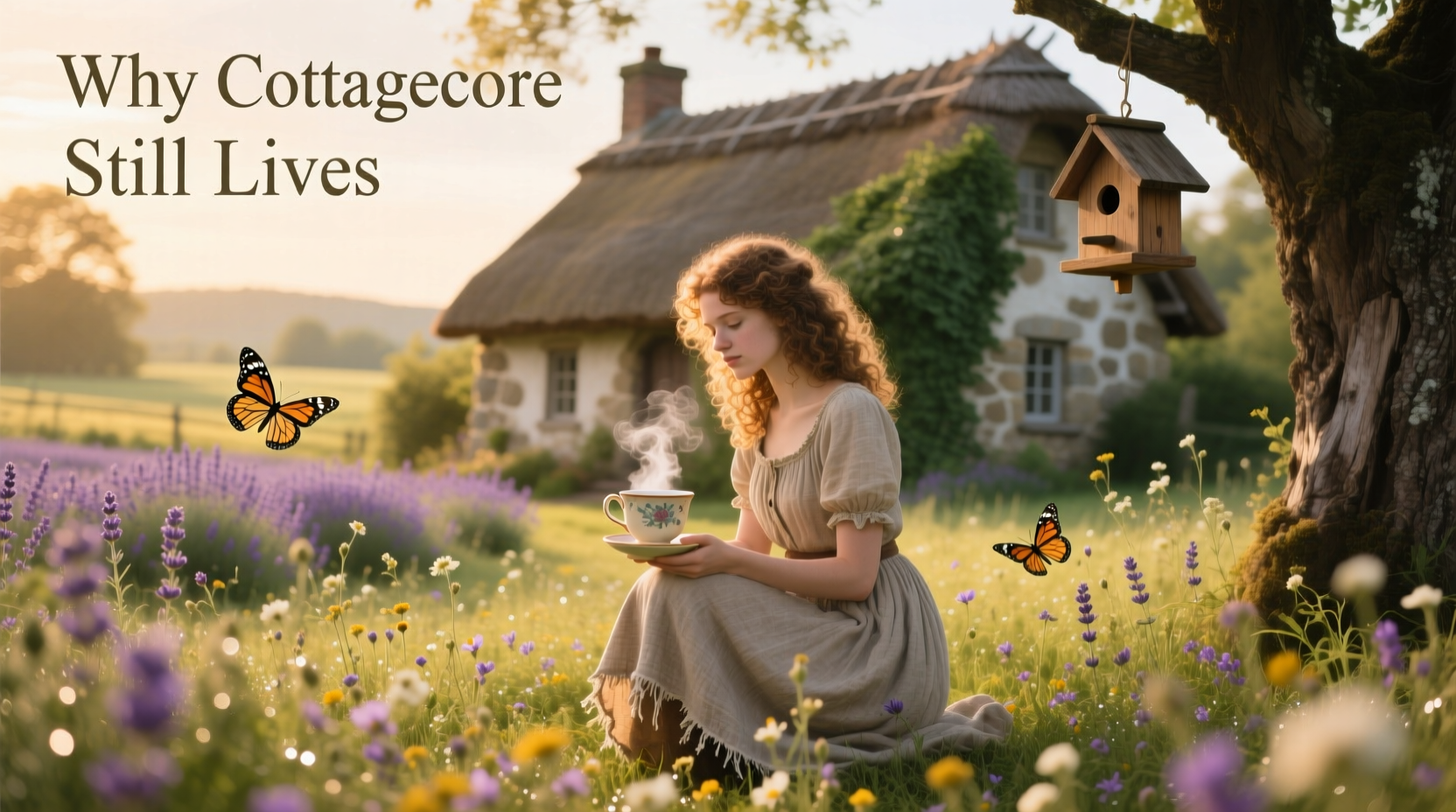
Cottagecore presents a vision of life stripped of complexity—no emails, no rush hour, no algorithmic surveillance. Instead, it offers mornings spent tending gardens, evenings by candlelight, and weekends preserving fruit or mending clothes. This simplicity is not passive; it's an active rejection of hyper-productivity and constant connectivity.
Psychologically, this resonates with the concept of “restorative environments.” According to attention restoration theory (ART), natural settings and low-stimulation activities allow the brain to recover from mental fatigue. Cottagecore mimics this environment—even when experienced virtually—by emphasizing rhythm, routine, and sensory engagement (the smell of rain on soil, the texture of linen, the sound of birdsong).
Tip: Even if you live in a city apartment, incorporate cottagecore principles by creating a small indoor herb garden or dedicating time each week to analog hobbies like sketching or journaling.The aesthetic also appeals to our innate biophilia—the human tendency to seek connections with nature. In an age where most people spend over 90% of their time indoors, cottagecore acts as a symbolic bridge to the natural world. It doesn’t require relocation to a countryside cottage; it invites reinterpretation of daily rituals through a lens of mindfulness and intentionality.
Digital Detox and the Rejection of Hypermodernity
One of the most powerful drivers behind cottagecore’s staying power is its role as a counter-narrative to digital saturation. The average person checks their phone 96 times a day, according to recent behavioral studies. Notifications, doomscrolling, and performative social media presence have created a crisis of attention and authenticity.
Cottagecore, in contrast, values silence, slowness, and self-sufficiency. Baking bread from scratch, for example, requires focus, patience, and physical engagement—qualities that are increasingly rare in a swipe-and-scroll culture. These activities serve as micro-resistances to what sociologist Hartmut Rosa calls “social acceleration,” the ever-increasing pace of technological and societal change that leaves individuals feeling alienated and powerless.
“Cottagecore is less about rural fantasy and more about reclaiming agency over one’s time and labor.” — Dr. Lena Moretti, Cultural Psychologist at Utrecht University
The movement allows participants to temporarily opt out of systems they feel trapped within—capitalist productivity, digital surveillance, consumerist cycles. By idealizing pre-industrial lifestyles, even symbolically, people create psychological space to imagine alternatives. This isn’t denial; it’s cognitive reframing.
The Role of Nostalgia and Intergenerational Healing
Nostalgia is often dismissed as sentimental indulgence, but research shows it plays a crucial role in emotional resilience. A 2023 study published in Emotion Review found that nostalgic reflection increases feelings of social connectedness and reduces loneliness, especially during periods of uncertainty.
Cottagecore taps into intergenerational nostalgia—not just for a personal past, but for imagined ancestral roots. Knitting, canning, foraging, and home-schooling evoke memories (real or constructed) of grandmothers’ kitchens, family farms, and seasonal rhythms. For many young adults raised in urban or suburban environments, these practices represent a lost continuity—one they now seek to reconstruct.
This is particularly true among Gen Z and younger millennials, who came of age during economic recessions, climate emergencies, and global pandemics. Their embrace of cottagecore isn’t naive romanticism; it’s a form of emotional self-preservation. By engaging in tactile, meaningful work, they rebuild a sense of control and purpose.
| Cottagecore Practice | Psychological Benefit | Modern Equivalent |
|---|---|---|
| Bread baking | Mindfulness, accomplishment | Meal kits, instant food |
| Gardening | Stress reduction, connection to nature | Virtual plant apps, plastic decor |
| Handwriting letters | Emotional expression, deeper connection | Emails, text messages |
| Mending clothes | Sustainability, frugality, skill-building | Fast fashion consumption |
Mini Case Study: From Burnout to Backyard Chickens
Alice Kim, a 29-year-old UX designer based in Portland, Oregon, found herself overwhelmed by remote work demands in 2023. Working 12-hour days across multiple time zones left her anxious and disconnected. After discovering cottagecore TikTok videos featuring flower pressing and herbal tea blending, she began experimenting with small changes.
She started by planting rosemary and thyme on her fire escape. Then, she replaced her morning scroll with 20 minutes of journaling by a salt lamp. Inspired by a video on backyard poultry, she applied for a city permit and built a coop. Within six months, she was collecting two eggs a day and had reduced her screen time by 40%.
“It wasn’t about becoming a farmer,” Alice said. “It was about proving to myself I could live differently. The chickens gave me a reason to wake up early without checking my phone. That small ritual changed everything.”
Her experience illustrates how cottagecore functions as behavioral scaffolding—simple, tangible actions that support broader psychological shifts. It’s not the chickens that healed her; it was the structure, responsibility, and sensory grounding they provided.
Why Cottagecore Isn’t Going Away: A Resilience Framework
The longevity of cottagecore in 2025 can be understood through four pillars of psychological resilience:
- Agency Restoration: Engaging in hands-on creation (e.g., sewing, cooking, gardening) restores a sense of control in lives dominated by external forces.
- Temporal Anchoring: Seasonal routines (planting in spring, harvesting in fall) provide rhythm in a world where time feels abstract and accelerated.
- Identity Reclamation: Choosing to live simply becomes an act of self-definition, resisting homogenized consumer identities.
- Community Building: Online and local cottagecore groups foster belonging through shared values, not just aesthetics.
These elements make cottagecore more than a trend—it’s a coping mechanism repackaged as lifestyle. And as long as modernity continues to erode predictability and connection, such mechanisms will remain in demand.
Tip: Start with one weekly ritual—baking, nature walks, or letter writing—and track how it affects your mood and energy levels over a month.Actionable Checklist: Embracing Cottagecore Mindset (Without Moving to the Countryside)
- Designate one screen-free evening per week for analog activities (reading, drawing, cooking).
- Grow one edible plant indoors or on a balcony (herbs, cherry tomatoes, or microgreens).
- Replace disposable items with reusable, handmade, or vintage alternatives (linen napkins, mason jars).
- Practice “slow consumption”—research before buying, repair instead of replacing.
- Join a local or online group focused on sustainable living or craft-based hobbies.
- Spend at least 30 minutes outdoors daily, focusing on sensory details (sounds, textures, scents).
- Keep a seasonal journal documenting weather, plants, meals, and emotions.
FAQ: Understanding the Deeper Appeal
Isn’t cottagecore just another form of escapism?
While it contains escapist elements, cottagecore goes beyond mere fantasy. When practiced mindfully, it encourages real-world behavioral change—reducing waste, increasing self-reliance, and fostering presence. The key is integrating its values into daily life, rather than using it solely as visual entertainment.
Can cottagecore coexist with urban living?
Absolutely. Urban cottagecore is a growing subculture that adapts the aesthetic to city constraints. Think rooftop gardens, thrifted clothing, ceramic mug collections, and neighborhood foraging walks. The essence lies in intentionality, not geography.
Is there a risk of romanticizing poverty or hard labor?
Yes—this is a valid critique. Historical rural life often involved grueling work, limited healthcare, and isolation. Cottagecore enthusiasts must acknowledge this duality: honoring the wisdom of traditional skills while recognizing that modern comforts (medicine, technology, equality rights) are invaluable. The goal isn’t to return to the past, but to integrate its mindful principles into a fairer, more sustainable present.
Conclusion: Cultivating Calm in a Chaotic World
Cottagecore endures in 2025 because it answers a fundamental human need: to belong, to create, and to breathe. It’s not about rejecting progress, but about rebalancing it. In a world where algorithms dictate attention and efficiency trumps empathy, the quiet act of kneading dough or watching bees pollinate lavender becomes revolutionary.
The psychology behind the aesthetic reveals a deeper truth—we are not designed for perpetual motion. We thrive on rhythm, touch, and meaning. Cottagecore offers a template for reclaiming those essentials, one mended sock, one sunlit kitchen, one handwritten recipe at a time.
💬 How has cottagecore influenced your daily life? Share your story, favorite ritual, or challenge in embracing simplicity. Your experience might inspire someone else to slow down and grow something beautiful.