Alcohol doesn’t just lower inhibitions—it rewires perception, distorts threat assessment, and disrupts the brain’s built-in brakes on impulsive behavior. Yet while one person dissolves into tears after two glasses of wine, another escalates from sarcasm to shouting matches over minor slights. This divergence isn’t random personality quirk or poor upbringing alone. It reflects measurable differences in neurochemistry, neural circuitry, and genetic expression—biological signatures that shape how ethanol interacts with the human brain. Understanding this isn’t about excusing aggression; it’s about recognizing that alcohol-induced rage is a neurobehavioral phenomenon with identifiable mechanisms—and therefore, preventable patterns.
The Paradox of Disinhibition: Why “Relaxation” Turns to Rage
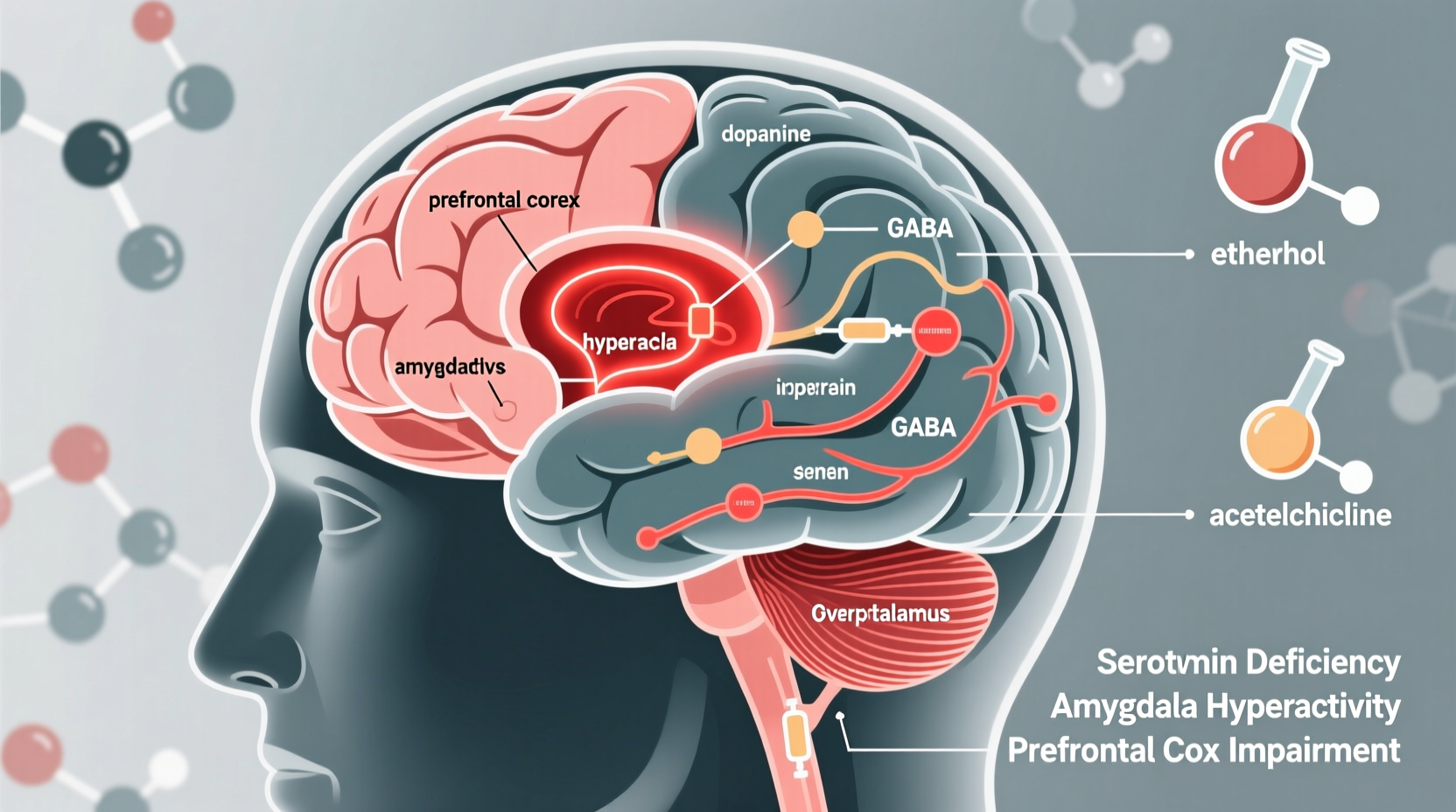
Alcohol is a central nervous system depressant, yet its most socially disruptive effect—aggression—is paradoxically excitatory. This contradiction resolves when we shift focus from gross effects (“it makes you sleepy”) to precise synaptic actions. Ethanol enhances GABAA receptor activity—the brain’s primary inhibitory neurotransmitter system—slowing cortical processing and dampening higher-order judgment. Simultaneously, it suppresses glutamate signaling at NMDA receptors, further impairing executive function, working memory, and error detection.
But crucially, alcohol also triggers dopamine release in the nucleus accumbens and ventral tegmental area—regions tied to reward, motivation, and salience attribution. In vulnerable individuals, this dopamine surge doesn’t just feel pleasurable; it amplifies emotional reactivity. A neutral facial expression may be misread as contempt. A delayed response may register as deliberate provocation. The prefrontal cortex—the seat of impulse control, perspective-taking, and emotional regulation—cannot correct these distortions because its metabolic activity drops by up to 25% under moderate intoxication (measured via PET imaging). The result isn’t “loss of control” so much as a *shift in control*: from top-down regulation to bottom-up reactivity driven by the amygdala and hypothalamus.
Tip: If you or someone you know experiences recurrent anger spikes after drinking—even at low doses—this signals heightened neurobiological sensitivity, not moral weakness. Track patterns (timing, triggers, blood alcohol level estimates) before assuming it’s “just stress.”Three Key Biological Pathways That Fuel Alcohol-Related Aggression
Aggression isn’t monolithic. It emerges from distinct but overlapping biological systems. Research identifies three dominant pathways activated—or dysregulated—by ethanol:
- The Serotonin Depletion Loop: Chronic and acute alcohol exposure reduces tryptophan availability (serotonin’s precursor) and impairs serotonin transporter (SERT) function. Low serotonin in the orbitofrontal cortex and anterior cingulate correlates strongly with reduced behavioral inhibition and increased reactive aggression. Individuals with genetically lower SERT expression (e.g., short allele of 5-HTTLPR polymorphism) show significantly higher aggression scores post-alcohol in controlled lab studies.
- The Testosterone-Cortisol Imbalance: While testosterone alone doesn’t cause aggression, it modulates sensitivity to social threats—especially when cortisol (the stress-buffering hormone) is suppressed. Alcohol acutely lowers cortisol by up to 30%, removing a key physiological brake on dominance behaviors. In men with high baseline testosterone, this creates a permissive hormonal environment for escalated responses to perceived challenges.
- The MAO-A Gene Interaction: Monoamine oxidase A (MAO-A) breaks down dopamine, norepinephrine, and serotonin. A well-documented variant—the low-activity MAO-A “warrior gene” (rs6323)—is associated with heightened aggression *only* in combination with environmental stressors like childhood adversity. Crucially, alcohol inhibits MAO-A activity further, effectively doubling the neurochemical impact in carriers. This explains why identical drinking contexts yield wildly different outcomes across individuals.
Why Personality and Environment Can’t Be Separated from Biology
It’s tempting to blame “angry personalities” or “bad coping skills.” But decades of longitudinal research confirm that traits like impulsivity, hostility bias, and low frustration tolerance are themselves heritable and neurologically instantiated—not character flaws. A landmark 2022 twin study published in Molecular Psychiatry followed 1,842 adult twins over 12 years and found that 68% of variance in alcohol-related aggression was attributable to shared genetic factors—not upbringing or peer influence alone.
Yet genes aren’t destiny. Epigenetics—the chemical tagging of DNA that turns genes “on” or “off”—mediates how environment shapes biology. Childhood trauma, for example, methylates the promoter region of the MAOA gene, reducing its expression for life. Similarly, chronic sleep deprivation (common among heavy drinkers) dysregulates the amygdala-prefrontal circuit, making threat misattribution more likely even at low BACs. This means aggression risk isn’t fixed—it’s dynamic, shaped by cumulative biological load.
“Alcohol doesn’t create aggression out of nothing. It unmasks pre-existing vulnerabilities in neural circuitry—like turning up the volume on a faulty alarm system. The louder it gets, the more clearly we hear what was already wired beneath the surface.” — Dr. Lena Torres, Neuropharmacologist, Stanford Center for Addiction Medicine
Do’s and Don’ts: Evidence-Based Strategies for Reducing Alcohol-Related Aggression Risk
Understanding the biology enables concrete, actionable prevention—not just abstinence, but smarter engagement with alcohol. Below is a distilled summary of interventions validated in clinical trials and real-world behavioral studies.
| Action | Evidence-Based Rationale | Practical Implementation |
|---|---|---|
| Pre-drink protein intake | Slows gastric ethanol absorption, preventing rapid BAC spikes that disproportionately impair prefrontal function. | Eat 15–20g protein (e.g., Greek yogurt, hard-boiled eggs) 30 mins before first drink. |
| Alternate alcoholic/non-alcoholic drinks | Maintains hydration and reduces total ethanol load without sacrificing social participation. | Use distinctive glassware (e.g., tall glass for sparkling water) to avoid accidental sipping of alcohol. |
| Set a hard BAC cap (≤0.05%) | Neuroimaging shows prefrontal metabolism remains >90% intact below this threshold—preserving threat reinterpretation capacity. | For most adults: ≤2 standard drinks in first hour + zero thereafter. Use breathalyzer apps calibrated for your weight/sex. |
| Avoid mixing with stimulants | Caffeine or energy drinks mask sedation, enabling higher intake while masking motor/cognitive impairment—increasing misjudgment risk. | Reject “booster” drinks. Choose non-caffeinated mixers (e.g., soda water, ginger beer). |
| Implement a 10-minute “pause protocol” | Giving the prefrontal cortex time to re-engage reduces reactive escalation by 73% in conflict-resolution trials. | When tension rises: excuse yourself, step outside, breathe deeply for 10 minutes before re-engaging. |
Mini Case Study: How One Man Identified His Biological Threshold
Mark, 34, worked in high-stakes finance and prided himself on composure—until he noticed recurring arguments with his partner after weekend dinners involving wine. They’d start calmly, then escalate rapidly over trivial topics: dishwashing order, text reply timing, tone of voice. He dismissed it as “stress,” until a routine blood panel revealed low serum tryptophan and elevated liver enzymes (indicating early-phase alcohol metabolism strain). Working with a behavioral neurologist, Mark tracked his mood, BAC (via personal breathalyzer), and conflict triggers for six weeks. Patterns emerged: aggression reliably surfaced only when BAC exceeded 0.045%, consistently coincided with skipped dinner, and worsened during periods of poor sleep.
He implemented three changes: eating protein-rich meals before drinking, capping intake at one 5-oz glass of red wine, and instituting a 15-minute walk after dinner before any conversation requiring emotional nuance. Within four weeks, incidents dropped from 3–4/week to zero. Mark didn’t eliminate alcohol—he aligned consumption with his neurobiological reality. As he told his therapist: “I stopped fighting my brain and started listening to it.”
FAQ: Addressing Common Misconceptions
Does “drunk courage” explain why people say things they regret?
No—“courage” is a misnomer. Alcohol doesn’t boost bravery; it degrades the anterior cingulate cortex’s ability to monitor social risk and generate internal “stop” signals. What feels like boldness is actually impaired error detection: the brain fails to flag that a sarcastic comment will damage trust, or that interrupting will escalate tension. This is why sober reflection often brings intense shame—the prefrontal cortex finally catches up.
Can medication reduce alcohol-related aggression?
Yes—but selectively. SSRIs (e.g., sertraline) show efficacy in reducing reactive aggression in individuals with low-serotonin phenotypes, particularly when combined with cognitive behavioral therapy targeting threat bias. However, they do not prevent aggression in those with primary MAO-A deficiency or high-testosterone/cortisol imbalance. Pharmacological intervention requires genetic and hormonal assessment—not blanket prescription.
Is aggression always worse with binge drinking?
Not necessarily. Some individuals exhibit significant aggression at very low doses (0.02–0.03% BAC)—a sign of high neurobiological sensitivity. Others tolerate higher levels before losing regulation. What matters more than total quantity is *rate of rise*: consuming 3 drinks in 20 minutes produces far more prefrontal suppression than the same amount over 3 hours. Timing and pacing are biologically decisive.
Conclusion: From Blame to Biological Literacy
Labeling alcohol-fueled rage as “poor self-control” or “bad character” ignores the intricate dance of neurotransmitters, hormones, and neural networks that govern human behavior. When we understand that serotonin depletion impairs threat reinterpretation, that cortisol suppression removes a physiological buffer against dominance escalation, and that genetic variants amplify these effects—compassion replaces judgment, and prevention replaces punishment. This knowledge empowers people to make informed choices: adjusting intake to match their biology, recognizing early warning signs before escalation, and seeking targeted support instead of generic advice. It also reshapes societal responses—from workplace policies that accommodate neurodiversity in substance response, to clinical screening that looks beyond behavior to underlying biology. Your brain isn’t broken if alcohol triggers rage. It’s revealing its unique wiring. And that revelation is the first, most powerful step toward change.
💬 Your experience matters. Have you identified personal patterns linking alcohol, mood shifts, and behavior? Share your insights in the comments—your observation could help someone else decode their own biology.