It’s a familiar pattern: one glass of wine loosens your guard, two bring unexpected laughter, three trigger sudden tears or sharp irritability—and by the fourth, you’re sobbing over a text message sent three years ago. You’re not “overreacting.” You’re experiencing a predictable, biologically grounded shift in how your brain processes emotion. Alcohol doesn’t create feelings out of nothing—it unmasks, amplifies, suppresses, and distorts existing neural pathways. Understanding *why* requires moving beyond “it lowers inhibitions” into the precise neurochemical mechanics of emotion regulation, prefrontal control, and limbic reactivity. This isn’t about moral judgment or labeling reactions as “weak.” It’s about recognizing alcohol as a potent neuromodulator—one that temporarily rewires your emotional operating system.
How Alcohol Hijacks Your Brain’s Emotional Circuitry
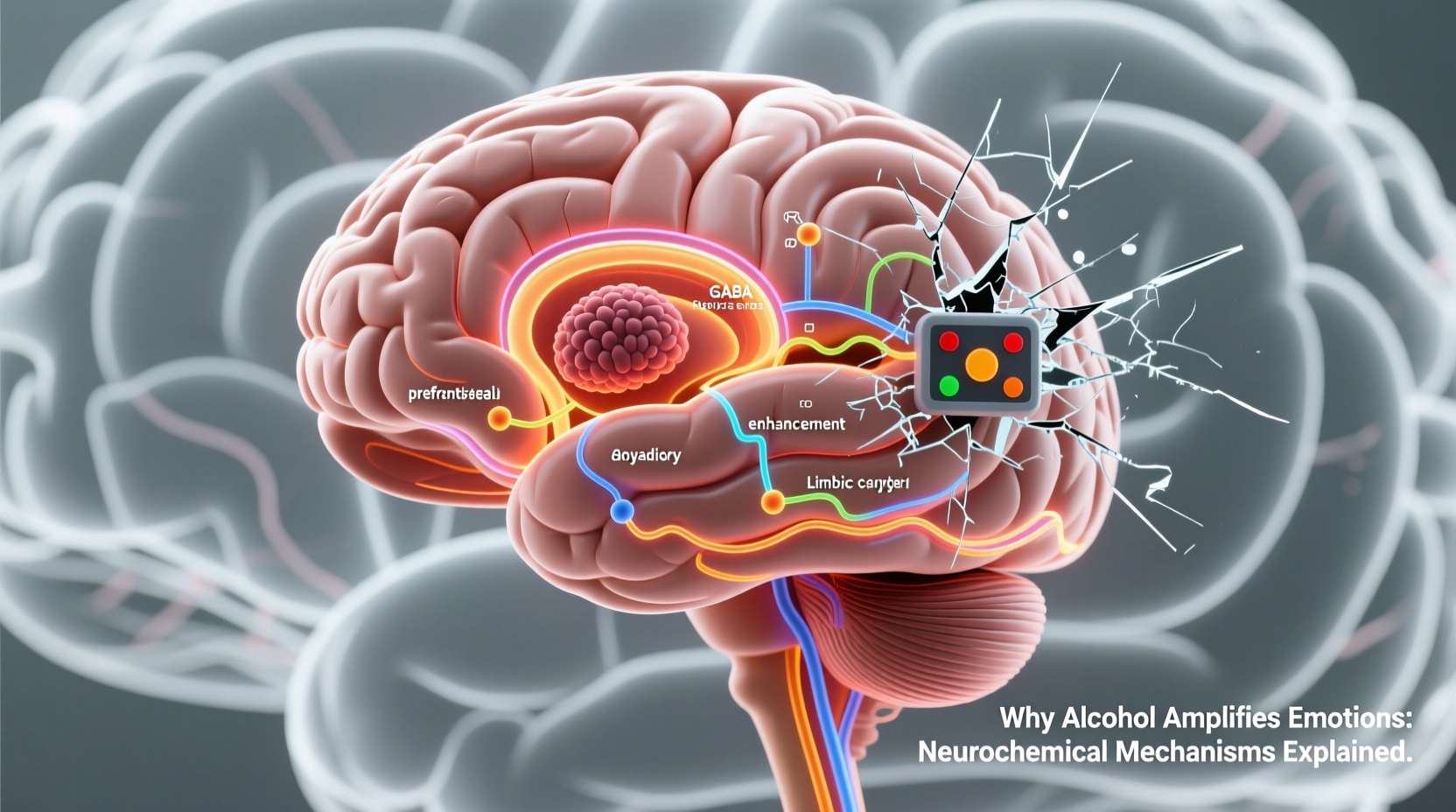
Alcohol is a central nervous system depressant, but its effect on emotion is paradoxically complex—not uniformly calming. It acts primarily on gamma-aminobutyric acid (GABA) and glutamate systems, with secondary impacts on dopamine, serotonin, and norepinephrine. GABA is the brain’s chief inhibitory neurotransmitter; alcohol enhances GABA-A receptor activity, slowing neural firing. That’s why speech slurs and reaction times lag. But crucially, this GABA boost hits hardest in the prefrontal cortex (PFC)—the region responsible for executive function, impulse control, and emotional regulation. When PFC activity dips, the amygdala—the brain’s threat-detection and emotional alarm center—operates with less oversight. The result? Raw, unfiltered emotional responses surface faster and linger longer.
Simultaneously, alcohol suppresses glutamate, the brain’s main excitatory neurotransmitter. Reduced glutamate signaling further dampens PFC function while leaving subcortical structures like the amygdala and nucleus accumbens relatively more active. This imbalance creates what neuroscientists call “limbic dominance”: emotion-generating regions run hotter while regulatory brakes weaken. Dopamine surges in early consumption reinforce pleasure and sociability—but as blood alcohol concentration rises, dopamine release flattens, and serotonin availability drops. Serotonin depletion is strongly linked to mood lability, sadness, and irritability, especially during the “come-down” phase.
Tip: If you consistently feel emotionally raw or tearful after just 1–2 drinks, your prefrontal cortex may be particularly sensitive to alcohol-induced GABA enhancement—or your baseline serotonin tone may be lower than average. This isn’t pathology—it’s neurobiological individuality.The Three-Phase Emotional Arc of Alcohol Consumption
Emotional shifts don’t happen all at once. They follow a time- and dose-dependent arc tied directly to pharmacokinetics—how quickly alcohol enters and leaves your bloodstream and brain tissue.
- The Uplift (0–30 min, BAC 0.02–0.05%): Mild euphoria, lowered social anxiety, increased talkativeness. GABA enhancement begins in cortical areas, while dopamine spikes in reward pathways. Emotional filtering is relaxed—but not yet disabled.
- The Unraveling (30–90 min, BAC 0.06–0.10%): Judgment declines sharply. The PFC’s ability to contextualize emotions weakens. A minor frustration may escalate into anger; nostalgia may flood in as overwhelming grief. Amygdala reactivity increases, while top-down modulation falters. This is when “I don’t know why I’m crying” becomes common.
- The Crash (90+ min, falling BAC or >0.10%): As alcohol metabolizes, GABA effects wane but glutamate rebounds—often excessively. This neurochemical rebound contributes to anxiety, restlessness, and emotional exhaustion. Serotonin and dopamine levels dip below baseline, intensifying sadness, regret, or agitation. Sleep architecture also fragments, depriving the brain of overnight emotional recalibration.
This arc explains why someone might laugh uproariously at a party, then weep silently in a taxi, and wake up with a low-grade sense of dread—even without memory gaps. It’s not “mood swings.” It’s the brain navigating successive waves of neurotransmitter disruption and recovery.
Why Some People Are More Emotionally Reactive Than Others
Not everyone cries after two glasses of pinot noir. Individual differences in emotional response to alcohol stem from genetics, biology, psychology, and environment—not willpower or character.
- Genetic variation in ADH and ALDH enzymes affects how quickly alcohol is broken down. Slow metabolizers (common in East Asian populations) experience higher acetaldehyde buildup—a toxic compound that induces flushing, nausea, and heightened autonomic arousal, which can amplify emotional intensity.
- Baseline serotonin transporter (5-HTTLPR) genotype influences serotonin reuptake efficiency. Short-allele carriers often show greater amygdala reactivity to negative stimuli—and greater emotional sensitivity to alcohol’s serotonergic effects.
- Prefrontal cortex development and resilience matters. Adolescents and young adults (whose PFC isn’t fully myelinated until ~age 25) experience disproportionately strong disinhibition. Chronic stress or trauma can also impair PFC-amygdala connectivity, making regulatory capacity more fragile under alcohol’s influence.
- Hydration, nutrition, and sleep status modulate neurotransmitter synthesis and receptor sensitivity. Dehydration thickens blood, concentrates alcohol in the brain, and impairs metabolic clearance. Low magnesium or B-vitamin stores hinder GABA production and neuronal stability.
| Factor | Effect on Emotional Reactivity to Alcohol | Practical Implication |
|---|---|---|
| Low baseline serotonin | Greater risk of sadness, tearfulness, or irritability post-drink | Consider morning sunlight exposure, regular aerobic exercise, and dietary tryptophan (turkey, lentils, seeds) |
| High trait anxiety | More pronounced “rebound anxiety” during crash phase | Avoid drinking late in the evening; prioritize sleep hygiene the following night |
| History of emotional suppression | Alcohol may act as a pressure-release valve—leading to disproportionate emotional discharge | Explore non-alcoholic outlets for emotional processing (journaling, therapy, movement) |
| Female physiology | Higher BAC per drink due to lower body water % and less gastric ADH enzyme | One standard drink affects women more strongly than men—adjust expectations accordingly |
A Real Example: Maya’s Shift From “Just Letting Go” to Neurological Awareness
Maya, 32, worked in high-stakes marketing. For years, she described her Friday ritual as “unwinding with two glasses of wine and finally feeling human again.” But over time, the “unwinding” became unpredictable: sometimes joyful connection, other times sudden rage at her partner over trivial miscommunications, or inconsolable grief about her grandmother’s death—despite having processed the loss years earlier. She assumed it was stress or hormonal fluctuations. Then, after a particularly intense episode following a single glass of rosé, she tracked her reactions for three weeks. She noticed patterns: emotional volatility spiked only when she drank on an empty stomach or after poor sleep, and always peaked 45–75 minutes in. She consulted a neuropsychologist who explained the PFC-amygdala imbalance and serotonin dip. Maya didn’t stop drinking—but she changed her context. She now eats protein before drinking, caps intake at one drink, and schedules “emotional buffer time” afterward—no important conversations, no driving, no decision-making. Within a month, her emotional crashes vanished. “It wasn’t about drinking less,” she told her therapist. “It was about understanding *when* and *how* my brain stops regulating itself—and honoring that boundary.”
Expert Insight: What Neuroscience Says About Emotional Vulnerability
“Alcohol doesn’t reveal your ‘true self’—it reveals your brain’s default emotional state *without its usual regulatory scaffolding*. That’s why people report feeling ‘more authentic’ when intoxicated: they’re experiencing raw limbic output, stripped of the prefrontal filters we use to navigate social reality. But authenticity without integration isn’t liberation—it’s exposure. The goal isn’t to eliminate vulnerability, but to build regulatory capacity that persists *with or without* alcohol.” — Dr. Lena Torres, Clinical Neuropsychologist and author of The Regulated Mind
Practical Strategies to Reduce Alcohol-Induced Emotional Volatility
Understanding the mechanism is only useful if it informs action. These evidence-informed strategies target specific points in alcohol’s neurochemical cascade:
Before Drinking
- Eat a balanced meal with protein and healthy fats 60–90 minutes prior—slows gastric emptying and blunts BAC spike.
- Hydrate with 16 oz of water; electrolytes (sodium, potassium, magnesium) support neuronal membrane stability.
- Ask yourself: “What emotional need am I hoping alcohol will meet right now?” (Connection? Relief? Numbness?) Name it—then consider one non-alcoholic alternative (calling a friend, stepping outside, listening to music).
During Drinking
- Use the “Sip-Switch-Sip” method: alternate each alcoholic drink with a full glass of water or sparkling water with lemon.
- Set a hard stop *before* you begin—e.g., “I’ll have one drink, then switch to herbal tea.” Willpower depletes as BAC rises; decisions made sober hold more weight.
- Pause for 90 seconds before responding emotionally. Count breaths. This brief delay allows residual PFC function to re-engage.
After Drinking
- Consume magnesium glycinate (200–400 mg) and vitamin B6 before bed—supports GABA synthesis and neurotransmitter balance during recovery.
- Avoid screens for 60 minutes before sleep; blue light suppresses melatonin and worsens alcohol-related sleep fragmentation.
- If emotional residue lingers past 24 hours, treat it as physiological—not psychological. Prioritize sleep, hydration, and gentle movement. Avoid self-criticism; your brain is literally recovering from a chemical intervention.
FAQ
Can alcohol cause long-term changes in emotional regulation?
Yes—with chronic, heavy use. Repeated alcohol exposure downregulates GABA receptors and upregulates glutamate NMDA receptors, leading to hyperexcitability during withdrawal and persistent anxiety or emotional blunting. However, moderate, infrequent use does not cause structural damage. The brain’s plasticity allows for full functional recovery between episodes—provided adequate rest and nutrition are prioritized.
Why do I feel fine the next day after heavy drinking—but emotionally wrecked two days later?
This reflects delayed neurotransmitter rebound. While acute hangover symptoms (headache, nausea) peak at 8–24 hours, serotonin and dopamine systems take 48–72 hours to normalize after significant depletion. This “second-day low” is biochemically real—not “just in your head.” It’s a sign your brain needs time and nutrient support to rebuild equilibrium.
Does mixing alcohol with caffeine or energy drinks make emotional instability worse?
Significantly. Caffeine blocks adenosine receptors, masking alcohol’s sedative effects and creating a false sense of alertness. This leads people to drink more than intended—pushing deeper into the “Unraveling” and “Crash” phases. Simultaneously, caffeine stimulates norepinephrine, amplifying anxiety and heart-racing sensations that compound emotional dysregulation. The combination is neurologically destabilizing—not synergistic.
Conclusion
Your emotional response to alcohol isn’t random, nor is it a character flaw. It’s a measurable, predictable interaction between a psychoactive substance and the intricate circuitry that governs how you feel, interpret, and respond to the world. When tears rise unbidden after a single glass, or anger flares without warning, your brain isn’t failing you—it’s revealing its current state of regulation, resilience, and resource availability. That knowledge is power. It transforms confusion into clarity, shame into strategy, and reactivity into choice. You don’t need to abstain to respect your neurobiology—but you do deserve to understand it. Start small: track one drink this week—not the calories or the calories, but the emotional temperature before, during, and 90 minutes after. Notice the patterns. Honor the signals. Your brain speaks in chemistry; learning its language is the first step toward genuine emotional sovereignty.
💬 Have you recognized your own emotional arc with alcohol? Share your observation—not as confession, but as contribution—in the comments. Your insight could help someone else feel seen, understood, and empowered.