Bullet journaling has evolved from a niche productivity method into a global phenomenon, embraced by planners, creatives, and mindfulness enthusiasts alike. At the heart of this system lies the notebook — not just a container for lists, but a personal archive of goals, reflections, and artistic expression. When choosing the ideal notebook, two binding styles consistently rise to the top: spiral bound and stitched (also known as sewn or perfect-bound). Each offers distinct advantages and trade-offs that directly impact usability, longevity, and creative freedom. Understanding these differences is essential for anyone building a sustainable, enjoyable journaling practice.
Durability and Longevity: How Well Do They Hold Up?
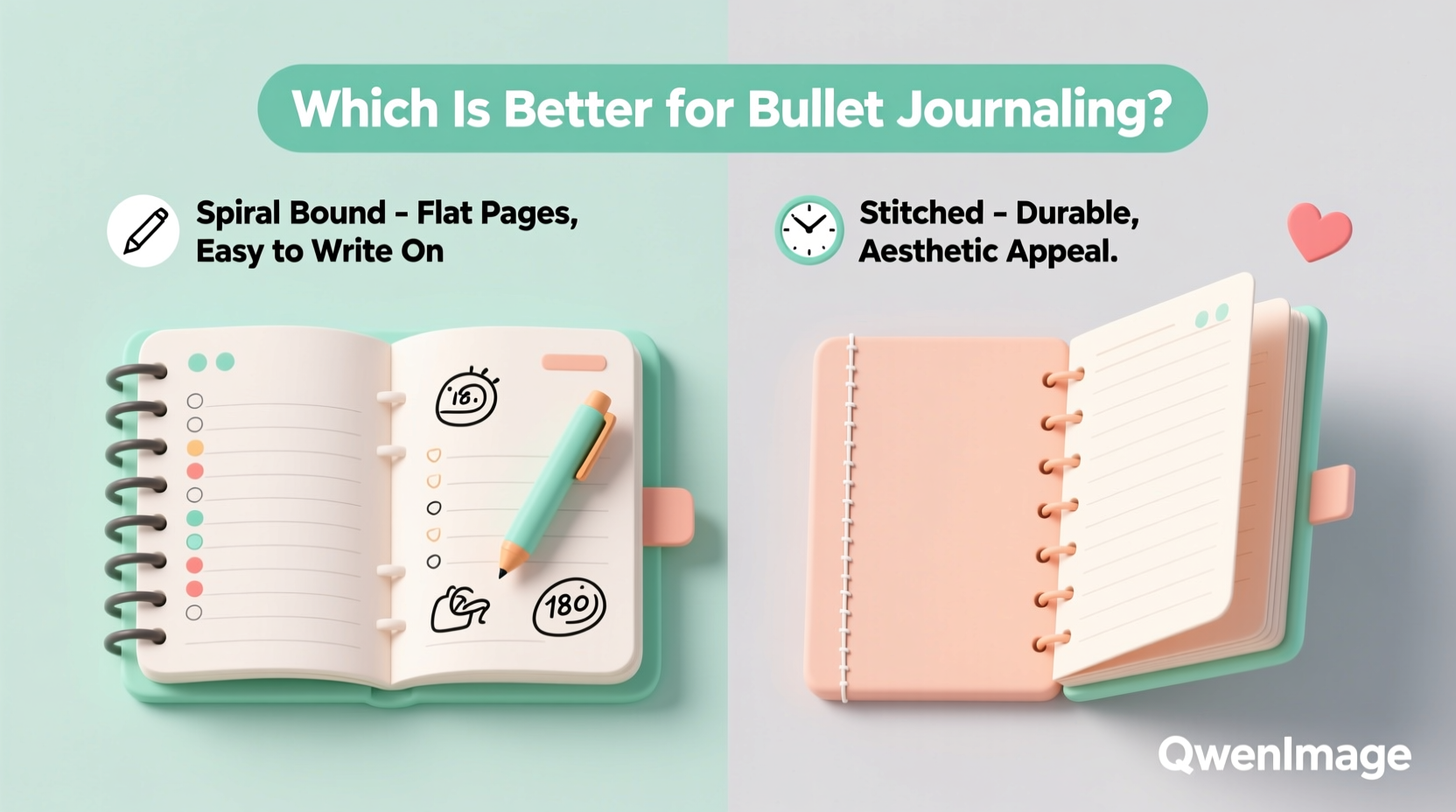
The lifespan of a bullet journal depends heavily on how it's used and the quality of its construction. Spiral bound notebooks are typically assembled with a metal or plastic coil threaded through punched holes along the spine. This design allows full 360-degree rotation of pages, making it easy to write on any spread without resistance. However, the mechanical nature of the binding introduces potential failure points. Over time, especially with frequent use or rough handling, coils can loosen, bend, or even detach entirely. Pages may also tear at the perforated edge if the paper is thin or low-quality.
In contrast, stitched notebooks use actual thread to bind signatures (groups of folded pages) together before attaching them to a rigid cover. This traditional bookbinding method creates a far more resilient structure. A well-made stitched notebook can endure years of daily writing, sketching, and flipping without compromising integrity. The pages remain securely attached even under heavy use, and there’s no risk of losing sheets due to coil damage. Archival-grade paper paired with sewn binding can result in a journal that lasts decades.
Tip: If you travel frequently or carry your journal in a bag with other items, opt for a stitched notebook to avoid accidental coil deformation.Lay-Flat Performance and Writing Comfort
One of the most critical factors in bullet journaling is how easily the notebook lies flat when open. Spiral bound notebooks excel here. Because the coil allows complete spine flexibility, the pages rest flush against each other, enabling smooth writing across both left and right sides without pressure or awkward angling. This feature is particularly beneficial for users who create intricate spreads like monthly calendars, habit trackers, or mind maps that span both pages.
Stitched notebooks, while durable, often struggle with lay-flat functionality unless specifically engineered for it. Traditional perfect-bound books tend to resist opening fully, causing the pages to spring shut or requiring external weight to keep them open. However, high-end journals like those from Leuchtturm1917 or Moleskine use rounded spines and flexible glue to improve lay-flat behavior. True sewn bindings — where signatures are individually stitched — perform significantly better than glued ones, maintaining structural integrity while offering improved openness.
For left-handed writers, spiral binding provides an added advantage: the coil sits on the left side, eliminating hand drag and smudging as fingers move across the page. Stitched notebooks, with their central spine, place no physical barrier between hand and paper, but the raised seam can still interfere with comfort during extended writing sessions.
Portability and Design Flexibility
When it comes to portability, spiral bound notebooks have a mixed reputation. Their lightweight design and ability to fold back completely make them convenient for on-the-go note-taking. Some models allow the cover to be removed or replaced, adding customization options. However, the exposed coil makes them more vulnerable to snagging in bags or pockets. Metal coils can dent, and plastic ones may crack in cold temperatures, compromising both aesthetics and function.
Stitched notebooks generally feature sturdier covers made from cloth, leather, or thick cardstock, enhancing protection during transport. Many come with elastic closures, ribbon bookmarks, and expandable pockets — features prized by serious bullet journalers. While slightly heavier, their robust build ensures contents stay secure and organized. Additionally, because they resemble traditional books, stitched journals often feel more professional and polished, suitable for meetings or public use.
Design-wise, spiral bound notebooks offer greater versatility. Users can easily remove individual pages without damaging the rest of the journal — useful for sharing layouts, archiving completed tasks, or transferring artwork. On the downside, this ease of removal increases the risk of losing important spreads. Stitched notebooks discourage page tearing, promoting continuity and long-term narrative cohesion within the journal.
“Binding choice isn’t just about function — it reflects your relationship with your journal. Is it a tool to be modified and adapted, or a record meant to endure?” — Sarah Kim, Journaling Educator and Author of *Mindful Planning*
Comparison Table: Spiral Bound vs Stitched Notebooks
| Feature | Spiral Bound | Stitched |
|---|---|---|
| Lay-Flat Ability | Excellent — fully opens 360° | Varies — good in premium models, poor in basic glued versions |
| Durability | Moderate — coils can bend or break | High — resists wear and tear over years |
| Portability | Lightweight but prone to snagging | Heavier but better protected |
| Page Removal | Easy — perforated edges or loose sheets | Difficult — designed for permanence |
| Aesthetic Appeal | Functional, utilitarian look | Elegant, book-like appearance |
| Best For | Frequent redesigns, travelers, artists needing flexibility | Long-term logging, professionals, minimalists seeking permanence |
Real-World Example: Two Journalers, Two Choices
Consider Mia and David, both dedicated bullet journalers with different lifestyles and priorities. Mia is a freelance designer who uses her journal for client project tracking, mood boards, and weekly creative prompts. She values flexibility and frequently removes pages to share with collaborators or frame as finished art pieces. After trying several formats, she settled on a large-format spiral bound notebook with heavyweight paper. The ability to lay the book completely flat helps her draw symmetrical layouts, and the removable pages integrate seamlessly into her workflow.
David, a university professor, maintains a personal bullet journal focused on academic planning, gratitude entries, and long-term goal mapping. He writes every evening and intends to keep his journals as lifelong records. Durability and archival quality matter most to him. He switched from a spiral bound model — which lost its coil after eight months — to a stitched leather-bound journal with acid-free paper. Though it doesn’t open quite as flat, he finds the slight resistance comforting, almost ritualistic. The permanence of the binding reinforces his commitment to consistency.
Their experiences illustrate a key truth: the “better” option depends entirely on purpose, usage pattern, and emotional connection to the journal.
Actionable Checklist: Choosing Your Ideal Notebook
- ✅ Assess how often you plan to carry your journal — rugged stitched covers protect better in transit.
- ✅ Determine whether you need full lay-flat access for double-page spreads.
- ✅ Consider if you’ll ever want to remove or rearrange pages — spiral binding supports this.
- ✅ Evaluate paper quality — thicker paper reduces bleed-through, especially with fountain pens.
- ✅ Decide on size: A5 is standard, but pocket-sized suits portability; larger formats suit creative layouts.
- ✅ Test the binding: Open the book and press down gently — does it stay open or snap shut?
- ✅ Check for extras: Numbered pages, index sections, and pen loops enhance usability.
Expert Insight: Why Binding Matters Beyond Function
According to Dr. Elena Torres, a cognitive psychologist specializing in habit formation, the physicality of tools influences behavioral outcomes. “The tactile feedback of turning a sturdy page, the sound of a well-bound spine cracking open — these sensory cues reinforce routine,” she explains. “A fragile notebook that falls apart midway sends subconscious signals of impermanence, potentially undermining motivation.”
This insight underscores why many experienced bullet journalers eventually migrate toward stitched bindings. It’s not merely about durability; it’s about psychological alignment with intention. A journal built to last encourages deeper investment, fostering a sense of ownership and continuity.
FAQ: Common Questions About Notebook Bindings
Can I convert a spiral bound notebook into a stitched one?
No — rebinding requires specialized equipment and skills. However, you can transfer pages to a new journal manually, though this disrupts chronological flow and defeats the purpose of a continuous log.
Are spiral bound notebooks bad for fountain pen users?
Not inherently, but coil placement can cause ink smearing if the binding digs into the paper. Look for offset coils or center-wire designs that minimize contact. Pair with fast-drying inks and smooth paper to reduce issues.
Do stitched notebooks always lie flat?
No. Only high-quality sewn bindings with proper spine rounding achieve true lay-flat performance. Glued perfect-bound books often resist staying open. Always check product specifications or reviews before purchasing.
Final Recommendation: Match Form to Function
There is no universal answer to whether spiral bound or stitched notebooks are better for bullet journaling. Instead, the decision should align with your habits, environment, and vision for your journal. If you prioritize adaptability, ease of editing, and maximum writing surface access, a well-constructed spiral bound notebook — ideally with a center wire and durable cover — will serve you well. These are ideal for students, creatives, and anyone experimenting with layout design.
If you value permanence, elegance, and long-term preservation, a stitched notebook offers unmatched resilience and aesthetic appeal. These are best suited for professionals, lifelong learners, and individuals treating their journal as a legacy document. Brands like Rhodia, Clairefontaine, and Midori produce excellent sewn options with thoughtful details that elevate everyday use.
Ultimately, the best notebook is the one you’ll actually use consistently. Try both styles with short-term projects before committing to a long-form journal. Pay attention to how each feels after a week of daily entries. Notice the small frustrations — a bent coil, a stubborn spine, a missing page — and let those observations guide your choice.
🚀 Your next journal could shape your productivity for months to come. Test a spiral and a stitched notebook side by side this week — then share what you discover in your community or comment below to help others decide!