A U.S. government shutdown is not a routine event, but it has occurred frequently enough to become a recognizable feature of American politics. When headlines announce that federal agencies are closing or delaying operations, many people wonder: Why does this happen? Who decides it? And what actually stops working? Understanding government shutdowns requires knowledge of budgeting procedures, political dynamics, and constitutional design. This article breaks down the mechanics behind shutdowns, their historical context, and their real-world impact—so you can grasp not just what happens during one, but why.
What Triggers a Government Shutdown?
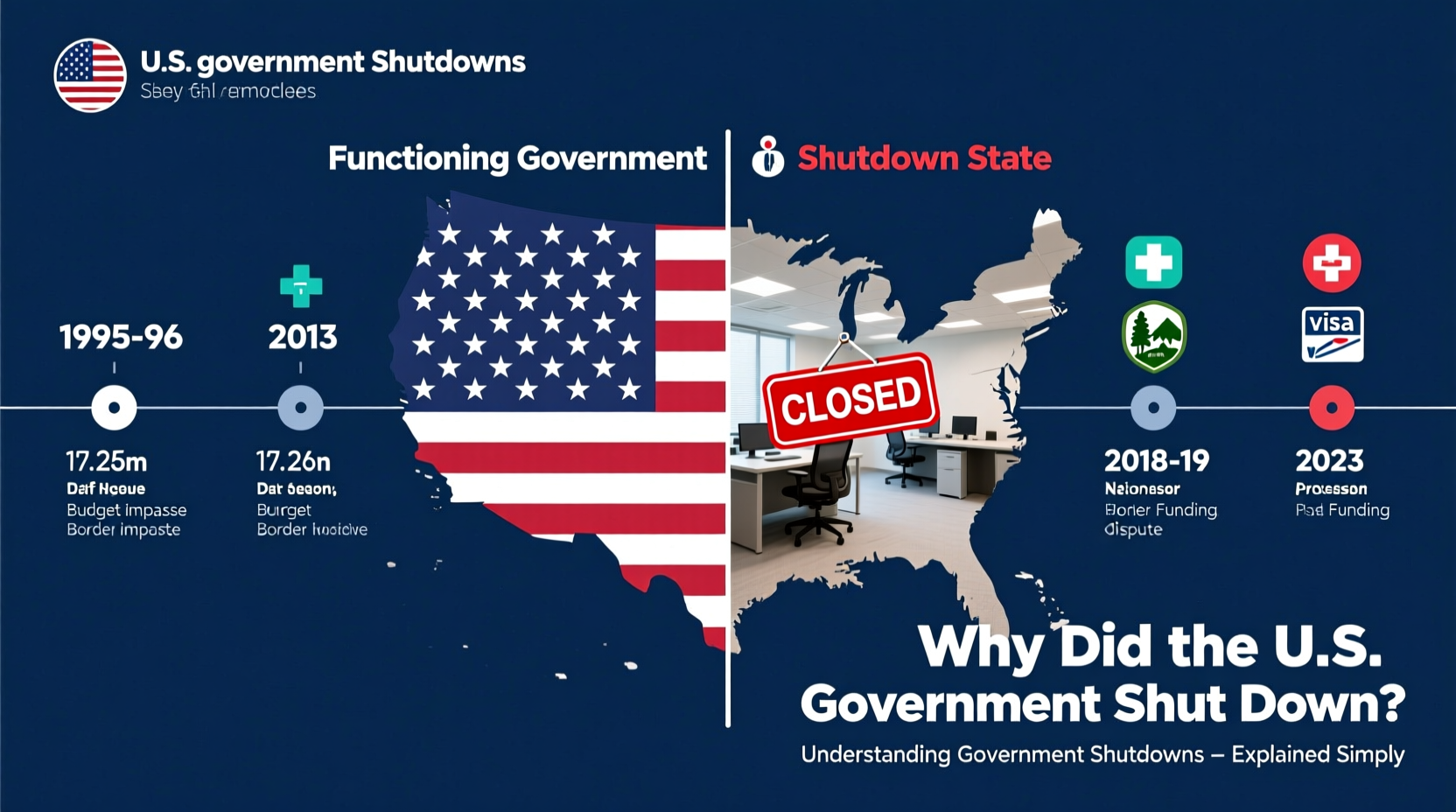
The U.S. Constitution gives Congress the power of the purse—meaning only Congress can authorize spending. Each fiscal year, Congress is supposed to pass 12 appropriations bills that fund various parts of the federal government, from national parks to border security to scientific research. If these bills aren’t passed by October 1 (the start of the fiscal year), and no temporary funding measure (called a continuing resolution) is enacted, non-essential federal operations must halt.
This halt is not due to a lack of money in a bank account, but because of legal restrictions. The Antideficiency Act prohibits federal agencies from spending money without congressional approval. So even if funds exist, they cannot be used lawfully until an appropriation is signed into law by the President.
Tip: A shutdown does not mean all government functions stop—only those deemed \"non-essential\" under contingency plans.How Political Gridlock Leads to Shutdowns
Shutdowns typically occur when there is a disagreement between the House of Representatives, the Senate, and the President over budget priorities. These disputes often go beyond numbers—they involve ideological battles over immigration, healthcare, climate policy, or defense spending.
For example, in 2018–2019, a 35-day shutdown—the longest in U.S. history—was triggered by President Donald Trump’s demand for $5.7 billion to build a wall along the U.S.-Mexico border. Congressional Democrats refused to approve funding for the wall, leading to a stalemate. Neither side would compromise, and with no temporary funding deal in place, agencies began furloughing workers and suspending services.
“Shutdowns are less about fiscal responsibility and more about leverage. They’re a tool—sometimes the only tool—used to force negotiation on contentious issues.” — Dr. Lena Torres, Public Administration Scholar, Georgetown University
Key Differences: Shutdown vs. Debt Ceiling Crisis
It's important to distinguish a government shutdown from a debt ceiling crisis. While both involve government financing, they are fundamentally different:
| Aspect | Government Shutdown | Debt Ceiling Crisis |
|---|---|---|
| Cause | No enacted appropriations or continuing resolution | Congress hasn't raised the legal borrowing limit |
| Effect | Agencies stop non-essential operations | U.S. may default on its financial obligations |
| Risk Level | Operational disruption | Economic catastrophe, global market shock |
| Duration | Hours to months | Resolved before or at deadline (historically) |
Mixing up these two events can lead to confusion. A shutdown means the government can’t spend new money on certain programs. A debt ceiling breach would mean the U.S. fails to pay existing debts—potentially triggering a recession.
Real Impact: A Case Study from the 2018–2019 Shutdown
During the 35-day partial shutdown under President Trump, approximately 800,000 federal employees were affected. About 380,000 were furloughed (sent home without pay), while 420,000 were required to work without immediate compensation.
Consider Maria Lopez, a USDA food safety inspector in California. Though her job was critical to public health, she was classified as “essential” and expected to report to work—without knowing when she’d receive her paycheck. Meanwhile, her husband, a contractor for the Department of Interior, lost his job entirely when park operations ceased. Their family income dropped by 60% overnight.
National parks remained open in some areas but became littered with trash and human waste due to lack of staffing. Air traffic controllers began calling in sick at higher rates due to stress over unpaid wages. Small businesses reliant on federal contracts or permits saw revenue dry up.
This case illustrates that shutdowns don’t just affect government efficiency—they ripple through households, local economies, and public trust.
What Services Continue During a Shutdown?
Not all government functions cease. Federal agencies operate under pre-established contingency plans that classify roles as essential or non-essential. Generally, services tied to public safety, national security, and core constitutional duties continue.
- Military personnel remain on duty
- Social Security and Medicare benefits continue (though new applications may be delayed)
- Postal Service operates (it’s self-funded)
- Emergency medical services and hospitals funded through mandatory spending
- Federal law enforcement (FBI, Border Patrol, TSA agents)
In contrast, non-essential services such as museum operations, passport processing, EPA inspections, and grant disbursements are typically suspended.
Step-by-Step: How a Shutdown Unfolds
Understanding the timeline helps clarify how quickly things can deteriorate when Congress fails to act:
- Sep 30 – Deadline Day: Fiscal year ends. If no appropriations or continuing resolution is passed, agencies prepare to shut down.
- Oct 1 – Midnight: Funding lapses. Agency heads activate shutdown plans.
- Day 1: Non-essential employees receive furlough notices. Websites go offline. National parks begin closing.
- Day 3–7: Economic effects emerge. Contractors lose work. Delays in tax refunds or visa processing begin.
- Week 2+: Morale drops among essential workers. Some begin to seek second jobs or file for unemployment.
- Resolution: Congress passes a funding bill, President signs it. Agencies restart operations, often with backlogs.
Even after funding resumes, recovery takes time. Backlogged inspections, delayed research, and strained employee relations have long-term consequences.
Checklist: How Citizens Can Prepare for a Shutdown
While individuals can’t prevent a shutdown, being prepared reduces personal risk:
- ✅ Check if you rely on federal services (e.g., housing assistance, student loans, VA benefits)
- ✅ Confirm your employer’s status—if federal or contractor-based
- ✅ Delay non-urgent passport or visa applications if a shutdown looms
- ✅ Build a short-term emergency fund (3–4 weeks of expenses)
- ✅ Monitor official agency websites and news sources for updates
- ✅ Understand your rights—furloughed workers usually receive back pay eventually
Frequently Asked Questions
Do federal employees get paid after a shutdown?
Yes, in most cases. Congress has historically passed retroactive pay legislation for furloughed workers. For example, the Government Employee Fair Treatment Act of 2019 guaranteed back pay for employees affected by the 2018–2019 shutdown. However, contractors are not always guaranteed payment, leaving them more vulnerable.
Can a president unilaterally avoid a shutdown?
No. Only Congress can appropriate funds. While the President can propose budgets and lobby lawmakers, he cannot bypass Congress to keep the government open. Executive orders cannot create legal authority to spend money without appropriation.
Have shutdowns become more common?
Since the modern budget process was established in 1976, there have been 22 funding gaps, 10 of which resulted in significant operational shutdowns. They were more frequent in the 1980s and 1990s (notably during Clinton-Gingrich clashes), then decreased, but resurged in the 2010s. Increased political polarization has made consensus on spending bills harder to achieve.
Conclusion: Moving Beyond the Cycle
Government shutdowns are a symptom of deeper dysfunction—a system where short-term political brinkmanship overrides long-term governance. While they serve as dramatic pressure valves in legislative disputes, their costs are borne by ordinary workers, small businesses, and public confidence.
Reforms like biennial budgeting, automatic continuing resolutions, or binding arbitration have been proposed to reduce the frequency of shutdowns. But ultimately, prevention depends on compromise—a commodity in short supply in today’s political climate.
🚀 Stay informed, engage civically, and hold elected officials accountable. The next shutdown might be avoided not by a last-minute deal—but by sustained public demand for responsible governance. Share this guide to help others understand what’s really at stake.