The assassination of President John F. Kennedy on November 22, 1963, remains one of the most scrutinized events in American history. While the official narrative from the Warren Commission concluded that Lee Harvey Oswald acted alone, persistent doubts have fueled decades of speculation. Among the most controversial theories is the idea that the Central Intelligence Agency (CIA) had motive, opportunity, and possibly involvement in the president’s death. Though no conclusive proof has emerged, a confluence of Cold War tensions, covert operations, and strained executive-agency relations has kept this theory alive. This article examines the historical context, alleged motives, key figures, and enduring questions surrounding the claim that the CIA wanted JFK dead.
The Fractured Relationship Between JFK and the CIA
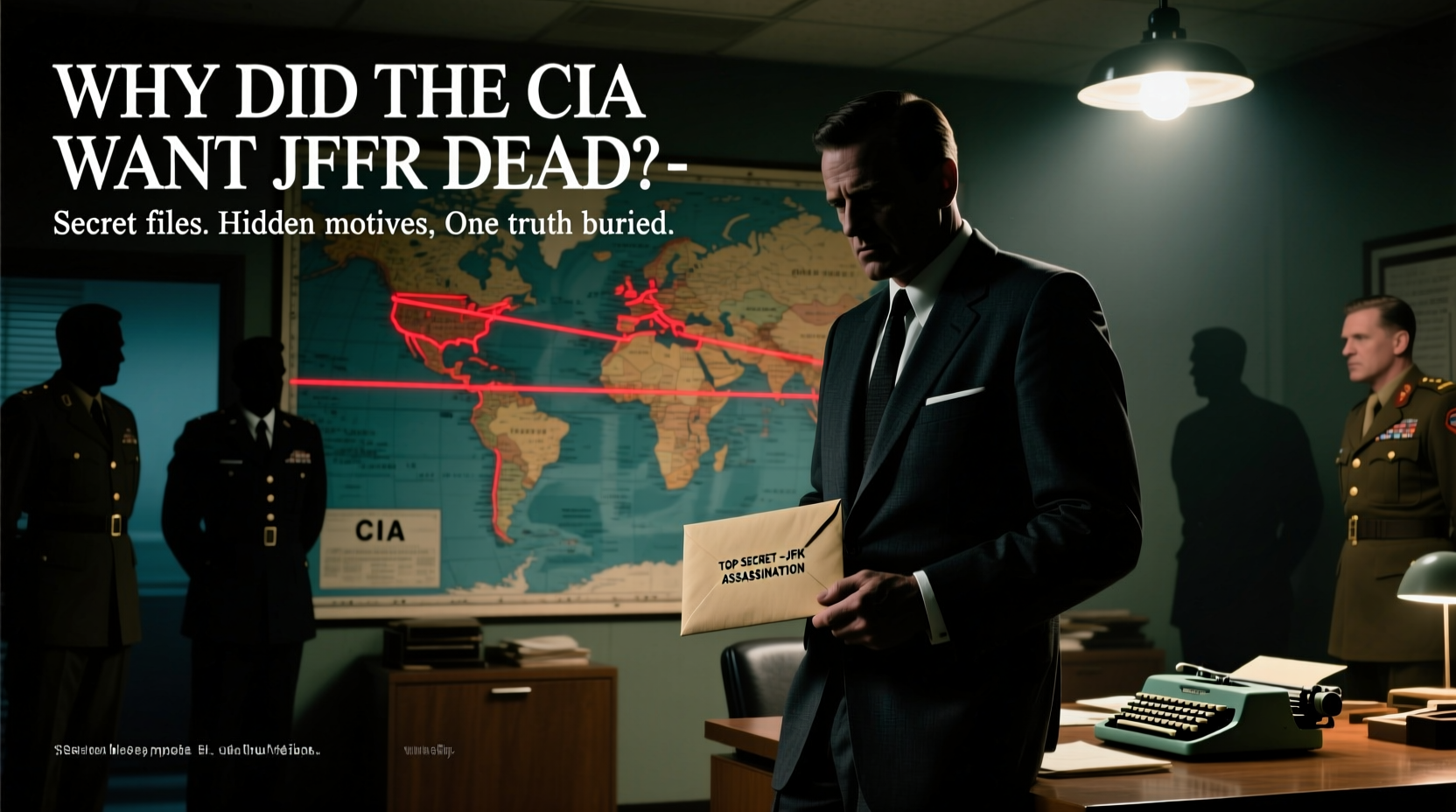
President Kennedy inherited a powerful and increasingly autonomous intelligence apparatus when he took office in 1961. The CIA, under Director Allen Dulles, had operated with significant independence during the Eisenhower administration, conducting covert actions such as the 1953 Iranian coup and the 1954 Guatemalan coup without public scrutiny.
JFK’s relationship with the agency quickly soured after the disastrous Bay of Pigs invasion in April 1961. The failed attempt to overthrow Fidel Castro was a CIA-led operation approved by Kennedy but poorly executed. The president publicly accepted responsibility but privately blamed the CIA for misleading him about the likelihood of success. In the aftermath, he fired Dulles and two other top officials, signaling a clear shift in control.
“Kennedy felt betrayed by the CIA. He believed they had overreached and endangered national stability.” — Tim Weiner, Pulitzer Prize-winning author of *Legacy of Ashes: The History of the CIA*
This growing distrust set the tone for future conflicts. Kennedy began limiting the CIA’s influence on foreign policy decisions, particularly regarding Cuba and Vietnam. His push for nuclear disarmament with the Soviet Union during the Cuban Missile Crisis further alienated hardline anti-communist elements within the agency.
Alleged Motives: Why Would the CIA Target JFK?
While there is no direct evidence linking the CIA to the assassination, several plausible motives have been cited by researchers and investigative journalists:
- Retaliation for leadership purges: After the Bay of Pigs, Kennedy dismissed key CIA figures, including Allen Dulles, Richard Bissell, and Charles Cabell. Some believe these ousted leaders held grudges that could have inspired internal resistance.
- Opposition to JFK’s Cuba policy: Kennedy pursued backchannel diplomacy with Castro and considered normalizing relations, which conflicted with the CIA’s ongoing efforts to destabilize the Cuban regime.
- Vietnam escalation disagreements: Although JFK increased military advisors in Vietnam, declassified tapes suggest he intended to withdraw after the 1964 election. The CIA, heavily invested in Southeast Asia, may have feared losing influence if U.S. involvement decreased.
- Nuclear disarmament initiatives: JFK’s negotiation of the Partial Nuclear Test Ban Treaty in 1763 worried intelligence hawks who believed it weakened U.S. strategic advantage.
Key Figures and Suspicious Connections
Certain individuals associated with both the CIA and the events of November 22, 193, have drawn suspicion:
- David Sanchez Morales: A senior CIA operative involved in anti-Castro operations, Morales reportedly said years later, “We took care of that son of a bitch,” referring to JFK. His credibility is debated, but his access to covert networks raises questions.
- Lyndon B. Johnson: Though not a CIA agent, Vice President Johnson had strong ties to defense contractors and intelligence circles. Some theorists argue he benefited politically and may have colluded with intelligence factions.
- William Harvey: Head of the CIA’s anti-Castro operations, Harvey was known for his aggressive tactics and disdain for Kennedy’s diplomatic approach. He was transferred shortly before the assassination.
In addition, the presence of multiple CIA assets in Dallas that day—including agents monitoring Cuban exiles—has led to speculation about operational overlap or possible complicity.
A Timeline of Escalating Tensions (1961–1963)
To understand the context, consider this chronological breakdown of deteriorating relations:
| Year | Event | Impact on CIA-JFK Relations |
|---|---|---|
| 1961 | Bay of Pigs Invasion | Failure leads to Kennedy firing top CIA officials; trust erodes. |
| 1962 | Cuban Missile Crisis | JFK bypasses military and CIA by negotiating directly with Khrushchev. |
| 1963 (Spring) | Backchannel talks with Castro | CIA sees diplomacy as undermining anti-communist efforts. |
| June 1963 | American University Peace Speech | JFK calls for coexistence with USSR, alarming intelligence hardliners. |
| August 1963 | Partial Nuclear Test Ban Treaty signed | Perceived by some as weakening U.S. strategic posture. |
| November 1963 | Assassination in Dallas | Immediate speculation about intelligence community involvement begins. |
Evidence and Investigations: What Do the Records Show?
The release of thousands of previously classified JFK assassination documents—particularly through the JFK Records Act of 1992—has provided insight, though no smoking gun. Key findings include:
- The CIA withheld information from the Warren Commission, including details about plots to assassinate Fidel Castro.
- Internal memos reveal frustration among operatives over Kennedy’s foreign policy reversals.
- No document directly links the CIA to planning or executing JFK’s assassination.
The House Select Committee on Assassinations (HSCA), which reinvestigated the case in the late 1970s, concluded in 1979 that Kennedy “was probably assassinated as a result of a conspiracy.” While it did not name the CIA as a participant, it acknowledged the possibility of undisclosed groups being involved.
“We must always question power, especially when it operates in secret. The CIA’s lack of transparency around JFK’s death fuels legitimate skepticism.” — James Douglass, author of *JFK and the Unspeakable*
Common Misconceptions and Logical Pitfalls
While the idea of CIA involvement is compelling, it’s important to separate speculation from substantiated claims. Below are common misconceptions:
| Misconception | Reality Check |
|---|---|
| The CIA had a formal assassination program targeting U.S. officials. | No evidence supports this. MKUltra and Castro plots existed, but domestic targets were off-limits. |
| All CIA agents opposed JFK. | Views were divided. Many respected his leadership despite policy disagreements. |
| Declassified files prove CIA guilt. | Files show tension and secrecy, but not criminal conspiracy. |
Frequently Asked Questions
Is there any credible evidence that the CIA killed JFK?
No direct evidence has been found linking the CIA to the planning or execution of JFK’s assassination. While internal hostility existed, no document or testimony conclusively proves involvement.
Why do people still believe the CIA was involved?
Persistent belief stems from the agency’s history of covert operations, its clashes with Kennedy, and the concealment of certain activities from investigators. Secrecy breeds suspicion, especially in high-profile cases.
Could rogue agents have acted without official approval?
This is a central argument in many conspiracy models. Some theorists suggest disaffected operatives—possibly working with anti-Castro Cubans or organized crime—could have orchestrated the killing independently. However, no verifiable chain of command or communication has been uncovered.
How to Critically Evaluate Conspiracy Theories
Understanding complex historical events requires a disciplined approach. Use this checklist to assess claims about JFK and the CIA:
- Check the source: Is it a reputable historian, journalist, or government document?
- Look for corroboration: Does more than one independent source support the claim?
- Assess motive vs. evidence: Just because the CIA had reasons to be angry doesn’t mean they acted.
- Consider feasibility: Could a large organization like the CIA orchestrate a presidential assassination without leaks?
- Watch for confirmation bias: Are you accepting information because it fits your worldview?
Conclusion
The question of whether the CIA wanted JFK dead cannot be answered definitively—but it can be contextualized. There is ample evidence of friction, resentment, and institutional resistance to Kennedy’s policies. The agency lost power, personnel, and operational freedom under his administration. Yet, despite decades of investigation, no proof has emerged that the CIA planned or carried out the assassination.
What remains is a cautionary tale about the dangers of unchecked intelligence power, the fragility of democratic oversight, and the lasting impact of secrecy on public trust. Whether or not the CIA was involved, the mere persistence of the theory reflects deep-seated concerns about accountability in the shadows of government.
🚀 Stay informed. Question narratives. Demand transparency. Explore declassified documents at the National Archives and join the conversation about truth, power, and legacy in American history.