For many outside the Catholic Church, the practice of confessing sins to a priest may seem unusual or unnecessary. Why not go directly to God? Yet for over two millennia, the sacrament of Reconciliation—commonly known as Confession—has remained a cornerstone of Catholic spiritual life. It is not merely a ritual, but a profound encounter with divine mercy. This article explores the historical, scriptural, and pastoral reasons behind this sacred practice, offering clarity on why Catholics confess their sins to a priest.
Biblical Foundation of Priestly Absolution
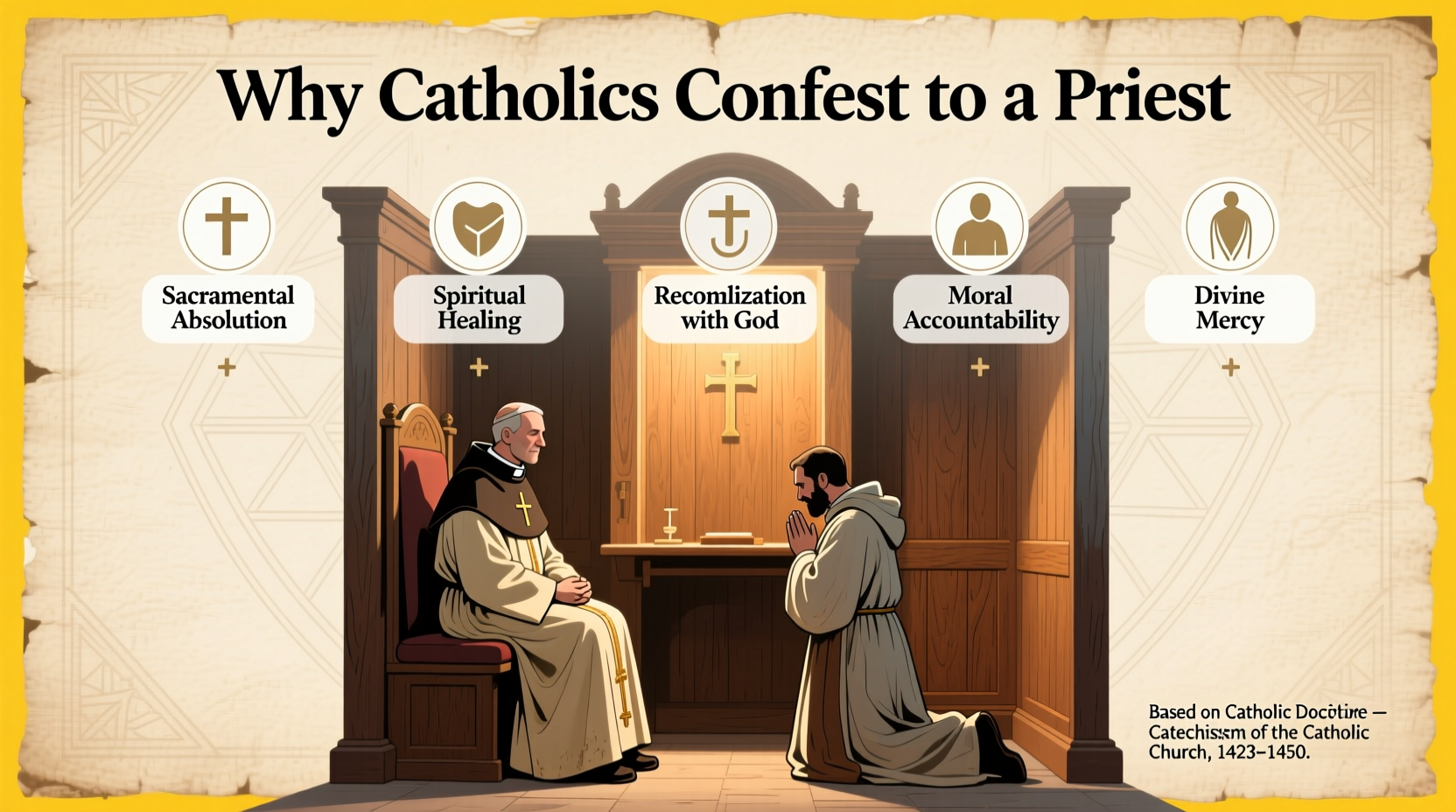
The roots of confession to a priest are deeply embedded in Scripture. A key passage is found in the Gospel of John, where the resurrected Jesus appears to His disciples and says: “Receive the Holy Spirit. If you forgive the sins of any, they are forgiven; if you retain the sins of any, they are retained” (John 20:22–23). This moment marks the institution of the sacramental power to forgive sins through ordained ministers.
Jesus does not say, “Everyone can now forgive sins.” Instead, He bestows this authority specifically upon the Apostles—men whom He had chosen and trained. This act establishes a visible, tangible channel of God’s grace. The early Church understood this commission as ongoing, passed down through apostolic succession to bishops and priests today.
Another significant passage is James 5:16: “Confess your sins to one another and pray for one another, that you may be healed.” While some interpret this as mutual confession among believers, the Catholic understanding sees it fulfilled in the context of sacramental confession, where the priest acts *in persona Christi*—in the person of Christ—to offer absolution.
“Whose sins you forgive are forgiven them, and whose sins you retain are retained.” — John 20:23
Theological Understanding: Grace, Healing, and Reconciliation
Confession is more than moral accounting. It is a means of receiving sanctifying grace—the very life of God within the soul. When a person commits a mortal sin (a grave offense against God involving full knowledge and consent), that relationship with God is ruptured. The sacrament repairs this breach.
The priest does not forgive sins by his own power. Rather, he serves as an instrument of Christ’s mercy. Through ordination, he receives the grace to act as a spiritual physician. Just as one visits a doctor for physical healing, Catholics visit a priest for spiritual healing.
This sacrament also emphasizes the communal nature of sin. Sin harms not only the individual but also the Body of Christ—the Church. By confessing within the community, even privately, the penitent acknowledges the broader impact of wrongdoing and seeks reconciliation both with God and the Church.
Tip: Approach Confession not as a burden, but as a gift—an opportunity to unburden your soul and receive peace.Historical Development of the Sacrament
In the early Church, public sins (such as apostasy during persecution) required public penance, often lasting years. As time progressed, especially in monastic communities in Ireland and Britain, private confession became common by the 7th century. This form allowed for regular, personal reconciliation without prolonged public penance.
The Fourth Lateran Council in 1215 made annual confession obligatory for all Catholics, affirming its necessity for salvation for those who have committed mortal sins. This formalized what had already become widespread practice.
Over centuries, the structure evolved into the form familiar today: examination of conscience, confession of sins, expression of contrition, performance of penance, and reception of absolution. The confidentiality of the confessional—known as the \"seal of confession\"—is absolute. A priest cannot disclose anything heard under any circumstances, even under threat of death.
Step-by-Step Guide to Making a Good Confession
To fully benefit from the sacrament, preparation and sincerity matter. Here is a practical guide:
- Examination of Conscience: Reflect prayerfully on your actions since your last confession, using the Ten Commandments or the Beatitudes as a guide.
- Sorrow for Sins: Cultivate genuine contrition—not just regret for being caught, but sorrow for having offended God.
- Resolve to Amend: Make a firm purpose of amendment, intending to avoid sin and near occasions of sin.
- Confess Honestly: In the confessional, clearly state your sins, including types and approximate frequency.
- Accept Penance: Perform the prayer or act assigned by the priest as a step toward healing and reparation.
- Receive Absolution: Listen to the words of forgiveness, which effect real spiritual transformation.
After leaving the confessional, take time to thank God for His mercy and fulfill your penance promptly.
Common Misconceptions About Confession
Several myths persist about the sacrament. One is that priests judge penitents. In reality, priests are bound by strict rules of compassion and confidentiality. They see themselves not as judges, but as fellow sinners offering God’s forgiveness.
Another misconception is that confession is outdated or psychologically harmful. On the contrary, many find it liberating. Naming one’s faults aloud to a compassionate listener—even a priest—can bring emotional and spiritual relief.
| Misconception | Reality |
|---|---|
| Only weak people need confession. | It takes courage to admit fault and seek healing. |
| God forgives me directly anyway. | God chooses to work through sacraments; confession is His preferred channel. |
| Priests will remember and gossip. | The seal of confession is inviolable; violations are extremely rare and gravely punished. |
| Confession is just psychological therapy. | While therapeutic, it imparts actual grace and removes sin. |
Real-Life Impact: A Story of Transformation
Consider the story of Maria, a woman who avoided confession for 20 years after a painful divorce. She believed she was unworthy and assumed the Church would condemn her. After attending a retreat, she finally entered a confessional trembling with fear. She confessed her anger, guilt, and estrangement from faith.
The priest listened quietly, then said, “God has been waiting for you. Your sins are forgiven. Welcome home.” Tears flowed as Maria felt a weight lift. She later said, “I walked out lighter, like I could breathe again.” Today, she volunteers at her parish and encourages others to return to the sacrament.
Maria’s experience reflects a common reality: Confession is not about shame, but about restoration.
“The sacrament of Reconciliation is the ordinary way for the faithful to reconcile themselves with God and the Church.” — Catechism of the Catholic Church, 1497
Frequently Asked Questions
Do I have to confess every single sin?
Yes, all mortal sins must be confessed by kind and number if possible. Venial sins may also be confessed, and doing so is encouraged for spiritual growth.
What if I forget a sin during confession?
If it was forgotten unintentionally, the confession is still valid, and the forgotten sin is forgiven. However, it should be mentioned in the next confession if it comes to mind.
Can a priest refuse to give absolution?
Yes, if there is no sign of true repentance or a refusal to amend one’s life. The purpose is not punishment, but to call the person back to sincere conversion.
Practical Checklist Before Going to Confession
- Review the Ten Commandments or a guided examination of conscience.
- Pray for the grace of true contrition.
- List specific sins and how often they occurred.
- Prepare an Act of Contrition prayer.
- Dress modestly and arrive early to quiet your mind.
- Bring a rosary or small notebook if helpful.
Conclusion: Embracing Mercy Over Fear
Confession is not a relic of the past, but a living encounter with divine love. It invites Catholics to move beyond guilt and isolation into freedom and peace. The priest is not a gatekeeper of judgment, but a messenger of mercy. Through him, Christ speaks words that heal, restore, and renew.
In a world that often avoids accountability, the sacrament offers a safe space for honesty and grace. It reminds us that no sin is too great for God’s forgiveness—and that we don’t have to carry our burdens alone.
💬 Have you experienced the peace of Confession? Share your thoughts or encourage someone else to take this step toward healing. The Lord is waiting—with mercy ready to pour out.