Cellulose is one of the most abundant organic compounds on Earth, forming the primary structural component of plant cell walls. It’s found in fruits, vegetables, whole grains, and legumes—foods that are staples in a healthy human diet. Yet, despite consuming large amounts of cellulose daily, humans cannot digest it. Unlike cows, termites, or certain fungi, we lack the biochemical machinery to extract energy from this complex carbohydrate. The reason lies deep within our evolutionary biology and digestive physiology.
This inability isn’t a flaw—it’s a feature of our species’ development. Understanding why humans can’t digest cellulose reveals critical insights into how our digestive system works, the role of gut microbiota, and the importance of dietary fiber for long-term health.
The Chemistry of Cellulose: A Structural Powerhouse
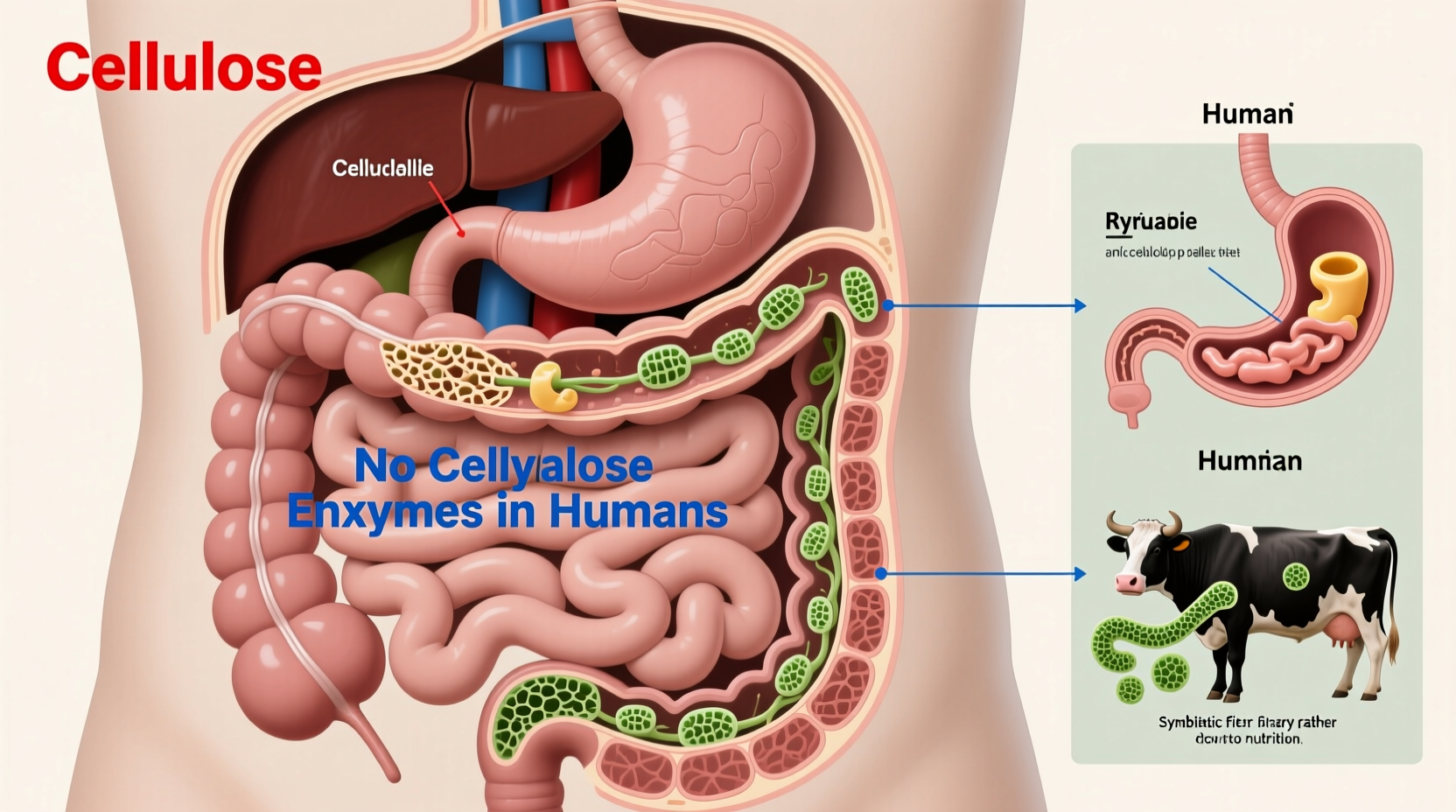
Cellulose is a polysaccharide made up of long chains of glucose molecules linked by beta-1,4-glycosidic bonds. These bonds create a rigid, linear structure that provides strength and stability to plant cells. While starch—a common energy storage molecule in plants—also consists of glucose units, its linkages are alpha-1,4-glycosidic bonds, which human enzymes can easily recognize and break down.
The key difference lies in the orientation of the glucose molecules. In cellulose, each glucose unit is flipped 180 degrees relative to its neighbor, resulting in a configuration that human digestive enzymes simply cannot process. Our body produces amylase and other carbohydrases designed to cleave alpha linkages, but no enzyme exists in humans capable of hydrolyzing beta-1,4 bonds at physiological conditions.
Tip: Even though we can't digest cellulose, consuming it supports bowel regularity and feeds beneficial gut bacteria.Animals That Can Digest Cellulose: Nature’s Solution
In contrast to humans, many herbivores thrive on cellulose-rich diets. Cows, sheep, and other ruminants host symbiotic microorganisms in their multi-chambered stomachs. These microbes—including bacteria, protozoa, and fungi—produce an enzyme called cellulase, which breaks down cellulose into simpler sugars like glucose and short-chain fatty acids (SCFAs) that the host animal can absorb and use for energy.
Termites rely on similar partnerships with gut microbes, including flagellates that ferment wood particles. Some marine invertebrates and insects even possess endogenous cellulase genes acquired through horizontal gene transfer, allowing limited self-digestion of cellulose.
Humans, however, have neither evolved such specialized digestive chambers nor developed the genetic capacity to produce cellulase. Our gastrointestinal tract lacks the prolonged fermentation environment necessary for microbial breakdown of cellulose at scale.
“While humans don’t produce cellulase, our gut microbiome partially compensates by fermenting soluble fibers—though not pure cellulose—to produce beneficial metabolites.” — Dr. Lena Patel, Gastrointestinal Microbiologist, University of California
The Role of Dietary Fiber: When Indigestible Becomes Essential
Though cellulose passes through the human digestive system largely intact, it plays a vital role as insoluble dietary fiber. Unlike nutrients such as proteins, fats, and simple carbohydrates, fiber isn’t absorbed—but its physical presence influences digestion profoundly.
- Promotes regular bowel movements by adding bulk to stool
- Reduces constipation and lowers risk of diverticular disease
- Helps regulate appetite by increasing satiety
- Supports colon health by reducing transit time of waste
- Acts as a prebiotic substrate for select gut bacteria (especially when combined with soluble fibers)
It’s important to note that while pure cellulose (like that in raw wood or cotton) is minimally fermented, foods containing cellulose—such as leafy greens, celery, and whole grains—also contain hemicellulose, pectin, and other fermentable fibers that contribute to microbial activity in the colon.
Differences Between Soluble and Insoluble Fiber
| Fiber Type | Sources | Digestibility | Health Benefits |
|---|---|---|---|
| Soluble Fiber | Oats, beans, apples, citrus fruits | Fermented by gut bacteria | Lowers cholesterol, stabilizes blood sugar |
| Insoluble Fiber (e.g., cellulose) | Bran, vegetables, whole wheat | Not digested; adds bulk | Improves bowel regularity, prevents constipation |
How the Human Digestive System Handles Cellulose
When you eat a salad or a slice of whole-grain bread, cellulose enters the digestive tract unchanged. In the mouth, mechanical chewing breaks down plant material, but salivary amylase only targets starches. In the stomach, acidic conditions do not affect cellulose structure. By the time food reaches the small intestine, enzymes continue breaking down proteins, fats, and available carbohydrates—but cellulose remains untouched.
Only upon reaching the large intestine does cellulose interact meaningfully with the body. Here, some bacterial species may slowly degrade fragments of cellulose, particularly if they’re exposed due to processing or cooking. However, compared to ruminants, the extent of fermentation is minimal. Most cellulose is excreted in feces, contributing to stool volume and consistency.
Mini Case Study: High-Fiber Diets and Digestive Health
A 45-year-old office worker struggled with chronic constipation despite drinking plenty of water. After consulting a nutritionist, she increased her intake of high-cellulose foods like broccoli, carrots, and brown rice. Within two weeks, her bowel movements became more regular. Though her body didn’t “digest” the cellulose, the added bulk stimulated peristalsis—the muscular contractions that move food through the intestines—demonstrating how indigestible fiber supports functional digestion.
Common Misconceptions About Cellulose and Digestion
Many people assume that because something isn’t digested, it serves no purpose. This misunderstanding leads to undervaluing fiber-rich foods. Others believe raw vegetables are “hard to digest” solely because of cellulose, overlooking factors like chewing efficiency and overall gut motility.
Another myth is that cooking destroys all nutritional value in vegetables. In reality, light cooking can weaken cellulose matrices, making other nutrients like carotenoids more bioavailable—even if the fiber itself remains indigestible.
Tip: Chewing fibrous foods thoroughly helps break down cellulose physically, improving nutrient access and easing digestion.FAQ
Can humans ever digest cellulose?
No, humans do not produce cellulase and cannot chemically break down cellulose into absorbable sugars. However, gut bacteria may ferment small portions of associated plant fibers, producing beneficial compounds like butyrate.
Is cellulose harmful since we can’t digest it?
No. Cellulose is safe and classified as dietary fiber. It supports digestive health, helps maintain healthy cholesterol levels, and contributes to feelings of fullness. Food-grade cellulose is also used as an additive in processed foods to boost fiber content.
Do supplements help us digest cellulose?
No over-the-counter enzyme supplements contain active cellulase effective in the human gut. While some products claim to aid fiber digestion, they typically target other carbohydrates, not cellulose.
Step-by-Step: Maximizing Benefits from Cellulose-Rich Foods
- Chew thoroughly: Mechanical breakdown increases surface area for potential microbial action.
- Cook vegetables lightly: Steaming or sautéing softens cellulose walls without destroying nutrients.
- Combine with soluble fiber: Pair cellulose-rich veggies with foods like oats or legumes to enhance fermentation.
- Stay hydrated: Water helps insoluble fiber move smoothly through the digestive tract.
- Gradually increase intake: Sudden spikes in fiber can cause bloating; allow your gut microbiome time to adapt.
Conclusion
The inability to digest cellulose is not a deficiency but a reflection of human evolutionary adaptation. We’ve optimized for diverse nutrient extraction rather than maximal fiber fermentation. Yet, by embracing cellulose as a crucial part of our diet—not in spite of its indigestibility, but because of the benefits it brings—we support long-term digestive wellness and metabolic balance.
💬 What changes will you make to harness the power of fiber? Share your favorite high-cellulose meals or tips in the comments below!