In recent years, a noticeable shift has emerged in political demographics: young men are increasingly aligning with conservative ideologies. This trend defies earlier assumptions that younger generations universally lean progressive. While women of the same age group often trend leftward, young men are showing stronger support for traditional values, free-market economics, and skepticism toward certain social justice narratives. Understanding this divergence requires examining economic pressures, cultural shifts, online discourse, and evolving gender dynamics.
The Gender Gap in Political Attitudes
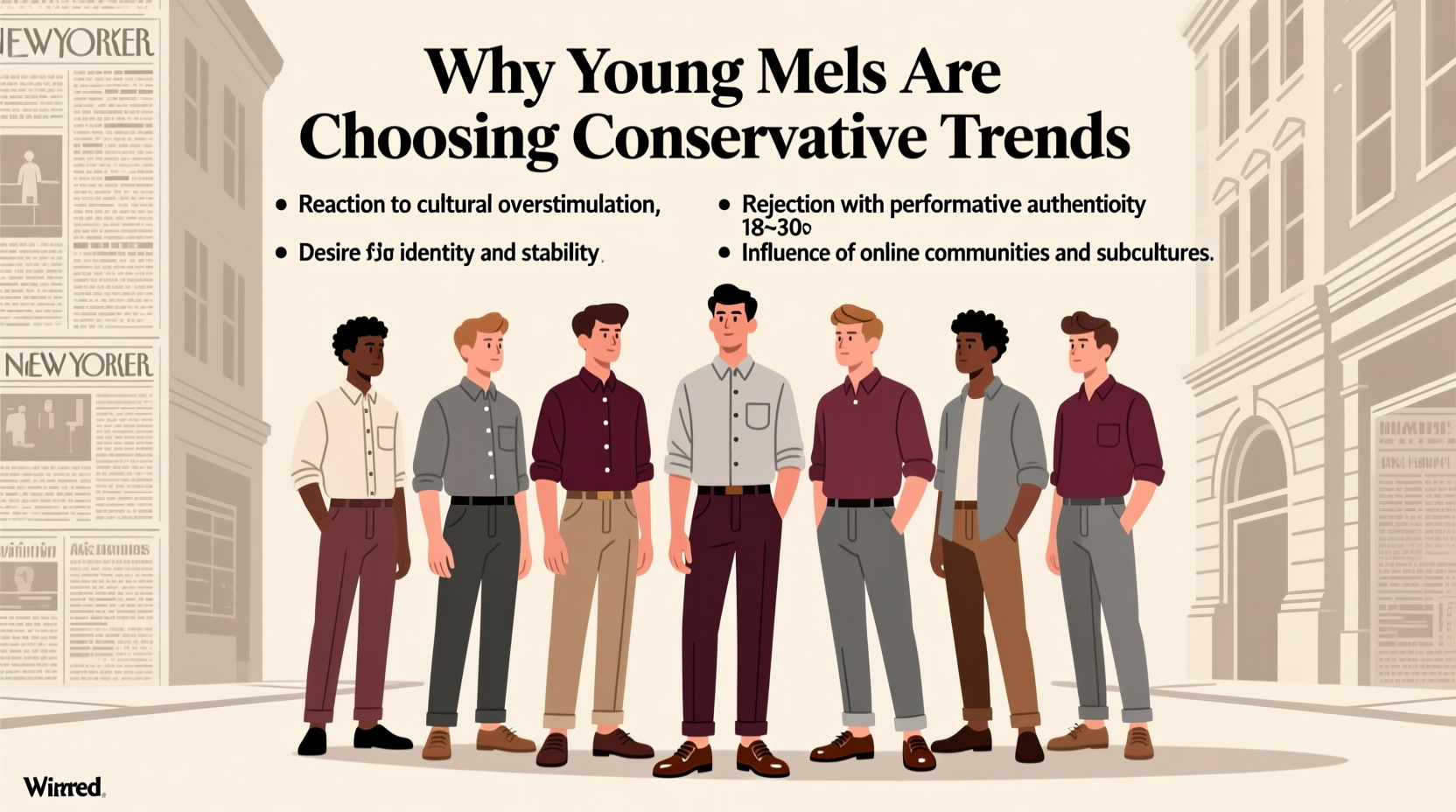
A growing ideological divide separates young men and women in Western democracies. According to Pew Research Center data from 2023, men aged 18–29 are significantly more likely than their female peers to identify as conservative or Republican. In the U.S., the gap has widened by nearly 15 percentage points over the past decade. Similar patterns appear in the UK, Canada, and parts of Europe.
This divergence isn't just about party affiliation—it reflects deeper differences in worldview. Young men express higher levels of skepticism toward institutional authority when it comes to identity politics, while also showing greater concern about personal autonomy, economic self-reliance, and national security.
“Men and women are experiencing youth differently—economically, socially, and psychologically. These lived experiences shape political identity more than abstract ideology.” — Dr. Lena Patel, Sociologist at the University of Edinburgh
Economic Anxiety and Perceived Decline in Opportunity
One of the most compelling drivers behind young men’s conservative turn is economic uncertainty. Despite rising education levels, many young men face stagnant wages, unaffordable housing, and limited pathways to stable careers. Traditional markers of adulthood—homeownership, marriage, financial independence—are increasingly out of reach.
Conservative messaging emphasizing self-reliance, meritocracy, and skepticism of government intervention resonates with those who feel left behind by systemic changes. Rather than attributing their struggles to structural inequality, many young men interpret their challenges as personal failures in a rigged system—one they believe rewards identity over effort.
Tip: When analyzing youth political trends, consider material conditions—not just ideology. Economic precarity often precedes ideological realignment.The Role of Digital Culture and Online Communities
The internet has become a primary space for political socialization, especially among young men. Platforms like YouTube, Reddit, and niche forums host communities where libertarian, anti-establishment, and right-leaning ideas gain traction. Influencers promoting “red pill” philosophies, masculinity coaching, or critiques of cancel culture attract millions of followers.
These digital spaces offer belonging, clear narratives, and simplified explanations for complex social issues. For young men feeling alienated from mainstream institutions—education, media, corporate workplaces—online conservatism provides both identity and community.
Moreover, perceived censorship or deplatforming of controversial figures reinforces a sense of grievance. This fuels distrust in mainstream narratives and strengthens alignment with movements that champion free speech and anti-wokeness.
Key Factors Driving Online Conservative Engagement
- Lack of offline mentorship or male role models
- Exposure to algorithm-driven content promoting ideological extremes
- Desire for clear moral frameworks in a morally ambiguous world
- Reactive backlash to perceived attacks on traditional masculinity
Cultural Backlash and Masculinity in Crisis
As feminist and LGBTQ+ rights have advanced, some young men interpret these gains as zero-sum losses. They perceive shifting gender norms as diminishing male status, particularly in education, employment, and relationships. This perception—accurate or not—fuels a defensive posture.
Conservatism offers a framework that reaffirms traditional gender roles, celebrates individual responsibility, and resists what is seen as the pathologizing of masculinity. Figures like Jordan Peterson, Andrew Tate (despite controversy), and Joe Rogan have amplified messages that blend personal accountability with cultural criticism, appealing to disaffected young men.
This isn’t necessarily about opposing equality—it’s often about seeking recognition in a changing world. Many young men aren’t rejecting progress outright but are reacting to how it’s been communicated: as an indictment of their identity rather than an invitation to evolve.
| Factor | Impact on Young Men | Political Outcome |
|---|---|---|
| Declining marriage rates | Reduced social stability and emotional support | Support for traditional family values |
| Underrepresentation in higher education | Fewer credentials, lower earning potential | Skepticism toward academic institutions |
| Rise of corporate DEI initiatives | Perception of unfair advantage for others | Distrust in workplace fairness |
| Online radicalization loops | Exposure to extremist or reactionary views | Increased polarization and tribalism |
Real-World Example: The Case of Alex, 24
Alex grew up in a working-class neighborhood in northern England. He attended college briefly but dropped out due to anxiety and lack of direction. He worked part-time jobs while consuming hours of political commentary online. Initially drawn to progressive causes, he began to feel alienated by campus activism that labeled all young men as privileged or problematic.
After watching several debates on free speech and masculinity, Alex started following commentators who emphasized personal growth, discipline, and critique of institutional overreach. Over time, his views shifted rightward—not because he opposed equality, but because he felt that progressive discourse offered no place for someone like him: struggling, trying to improve, but without privilege or connections.
Today, Alex votes conservative, supports law-and-order policies, and advocates for vocational training over university mandates. His story mirrors thousands of young men navigating identity in a rapidly changing cultural landscape.
Step-by-Step: How Young Men Navigate Political Identity Formation
- Experience Disconnection: Feel alienated from school, work, or social institutions.
- Seek Community Online: Turn to digital platforms for answers and belonging.
- Encounter Ideological Narratives: Engage with content that explains their struggles through cultural or economic lenses.
- Adopt Simplified Frameworks: Embrace ideologies that offer clarity and agency.
- Align Politically: Begin identifying with parties or movements that reflect their new worldview.
FAQ
Are young men becoming more conservative across all issues?
No. The shift is most pronounced on cultural and social issues—such as gender, free speech, and law enforcement. On economic policy, many young men still support government assistance programs, indicating a nuanced, issue-specific conservatism rather than blanket right-wing alignment.
Is this trend global or limited to certain countries?
The trend is strongest in English-speaking democracies (U.S., UK, Canada, Australia) and parts of Western Europe. It correlates with high internet penetration, visible cultural debates around identity, and declining economic mobility. In contrast, authoritarian regimes may suppress such expressions, masking underlying sentiment.
Can this trend reverse?
Possibly. If economic opportunities improve, if inclusive narratives emerge that validate male struggles without rejecting progress, and if institutions rebuild trust, young men may re-engage with centrist or progressive politics. Demographics are not destiny—context shapes ideology.
Actionable Checklist: Understanding and Addressing the Trend
- Recognize that economic insecurity drives ideological change as much as belief.
- Avoid dismissive labels like “toxic masculinity” when discussing male alienation.
- Promote inclusive dialogues that acknowledge struggle without assigning blame.
- Support vocational training and mental health access for young men.
- Encourage positive male mentorship in schools and communities.
- Engage—not silence—contrary viewpoints to reduce radicalization risks.
Conclusion: Toward a More Inclusive Political Future
The rise of conservative sentiment among young men is not a sign of inevitable polarization but a symptom of deeper societal imbalances. Ignoring their concerns risks fueling further division. Addressing them—with empathy, evidence, and opportunity—can foster a more cohesive public discourse.
Progress doesn’t require uniformity of thought. It requires listening to those who feel unheard, even when their conclusions differ. By creating spaces where young men can grow without fear of condemnation, and where conservatism evolves beyond reaction, society can move toward a future that values both equity and dignity for all.
💬 What do you think drives young men’s political choices today? Share your thoughts in the comments and help build a more nuanced conversation.