In recent decades, air travel has become more accessible than ever—but not without cost to passenger comfort. One of the most noticeable changes for travelers is the shrinking size of airplane seats. Legroom has decreased, seat widths have narrowed, and personal space feels increasingly scarce. While many passengers wonder if this trend is driven by indifference or greed, the reality lies in a complex interplay of economics, competition, and operational necessity. Airlines aren’t reducing seat size simply to annoy passengers; they’re responding to powerful financial incentives in an industry with razor-thin profit margins.
Understanding why airlines make these choices requires looking beyond comfort into the core mechanics of airline profitability. Every inch of cabin space represents potential revenue, and in a business where fuel, labor, and maintenance costs are fixed or rising, maximizing yield per flight is critical. This article explores the economic forces behind shrinking seats, how carriers balance passenger satisfaction with profitability, and what travelers can do to navigate the new reality of air travel.
The Economics of Seat Density and Revenue Optimization
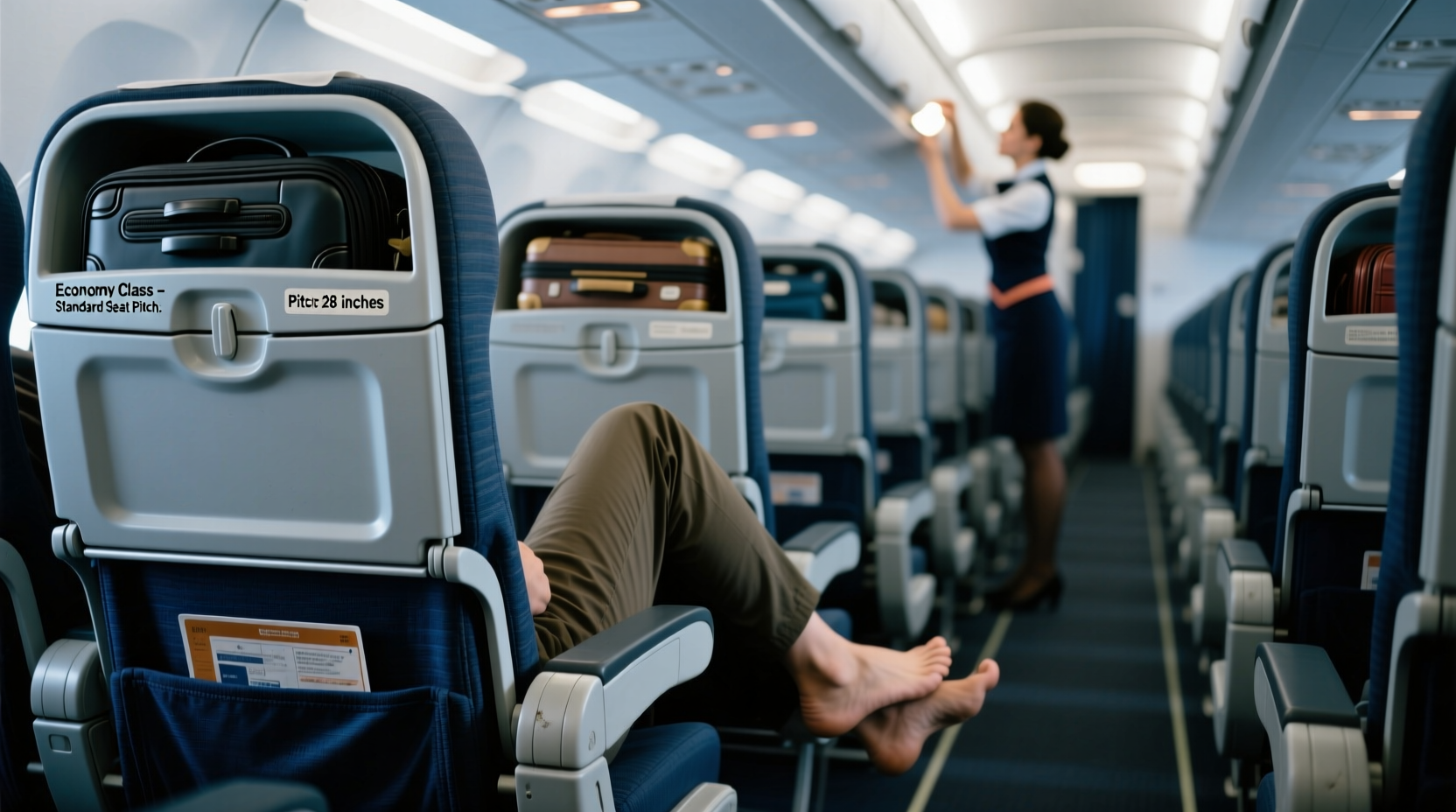
Airlines operate on one of the thinnest average net profit margins of any major industry—typically between 1% and 5%. With such narrow returns, even small efficiency gains can mean the difference between profit and loss. One of the most effective ways to increase revenue per flight is by adding more seats, which increases ticket sales without significantly raising operating costs.
Consider this: the cost of flying a Boeing 737 from New York to Los Angeles remains largely the same whether it carries 140 or 160 passengers. The fuel, crew salaries, landing fees, and maintenance don’t scale linearly with passenger count. By reconfiguring cabins to fit more seats—even by just a few inches per row—an airline can boost revenue by tens of thousands of dollars annually per aircraft.
This practice, known as increasing \"seat density,\" is achieved through two main methods:
- Reducing pitch (legroom): Seat pitch—the distance from one point on a seat to the same point on the seat in front—has declined from an average of 34 inches in the 1980s to as little as 28 inches today on many economy configurations.
- Narrowing seat width: Some carriers have reduced seat widths from 18 inches to 16.5 or even 16 inches, particularly on regional jets and budget carriers.
These incremental changes allow airlines to add rows, sometimes squeezing in five to ten additional seats per plane. On a high-frequency route, that could translate to over 300,000 extra tickets sold per year per aircraft.
Tip: If legroom is a priority, avoid middle seats in the back rows—they often have the least recline and may be near lavatories or galleys.How Carriers Segment the Market: Economy vs. Premium Options
Airline seating isn’t just about cramming people in—it’s also a sophisticated strategy of market segmentation. By reducing standard seat size, carriers create a contrast that makes premium options like extra-legroom economy, premium economy, and business class appear more attractive.
This tiered approach allows airlines to charge price-sensitive customers less while extracting higher yields from those willing to pay for comfort. For example, a passenger might choose a $399 basic economy fare with minimal legroom, while another pays $599 for the same flight but gets 34 inches of pitch and early boarding. Both contribute to revenue, but the latter helps offset the lower fares of the former.
As Dr. Susan Shaheen, transportation researcher at UC Berkeley, explains:
“In a competitive market with low margins, airlines must monetize every aspect of the experience. Reducing standard seat size is a way to create perceived value in upgraded offerings.” — Dr. Susan Shaheen, Transportation Economist
This model mirrors trends in other industries—such as stadium seating or cruise ships—where baseline experiences are made leaner to promote upgrades. The result is a dual benefit: increased capacity and enhanced upsell opportunities.
Regulatory Environment and Safety Standards
Despite widespread passenger complaints, there are no federal regulations in the United States—or most countries—that mandate minimum seat size or legroom. The Federal Aviation Administration (FAA) regulates seat design only in terms of safety: crashworthiness, evacuation time, and flammability standards. As long as a cabin configuration allows for emergency evacuation within 90 seconds with full occupancy, it meets regulatory requirements.
In 2017, the FAA Reauthorization Act included a provision requiring the agency to study seat dimensions and passenger safety, but no binding rules emerged. Advocacy groups like FlyersRights.org have petitioned for minimum seat standards, arguing that cramped conditions pose health risks, including deep vein thrombosis (DVT) and mobility issues. However, airlines counter that consumers ultimately vote with their wallets and continue to book low-cost flights despite discomfort.
This lack of regulation gives airlines wide discretion in cabin layout decisions. Manufacturers like Airbus and Boeing design flexible interiors specifically to allow carriers to customize configurations based on market demand.
Passenger Behavior and the Price Sensitivity Paradox
If passengers dislike tight seating so much, why do airlines keep doing it? The answer lies in consumer behavior. While surveys consistently show that travelers rank legroom among their top concerns, actual booking patterns tell a different story. Most passengers prioritize price over comfort when choosing flights.
A 2022 J.D. Power study found that fare cost was the primary factor in airline selection for 68% of travelers, compared to just 12% who cited seat comfort as decisive. This creates a paradox: people say they want more space, but they buy the cheapest available option.
Airlines respond rationally to this data. When low-cost carriers like Spirit or Frontier introduced ultra-high-density seating with minimal legroom, they did so because they identified a segment of travelers willing to sacrifice comfort for savings. These airlines achieve some of the highest load factors in the industry—often above 90%—proving the model works.
Even legacy carriers have followed suit. Delta, American, and United have all reduced seat pitch in economy over the past decade while expanding premium economy sections. This reflects a broader shift: the standard economy seat is becoming a stripped-down product, while comfort is reserved for those who pay extra.
Case Study: JetBlue’s Mint vs. Spirit’s Bare-Bones Model
To illustrate the spectrum of airline strategies, consider two U.S. carriers: JetBlue and Spirit Airlines.
JetBlue built its brand on superior comfort, offering 32–34 inches of pitch in economy—above the industry average—and free seat selection. It later launched “Mint,” its premium service featuring lie-flat beds and spacious cabins. While successful, Mint required significant investment and targeted only high-yield routes.
In contrast, Spirit Airlines operates on a “no-frills” model. Its economy seats have a pitch of just 28 inches and a width of 17.75 inches. There are no free seat assignments, no overhead bin access for base fares, and limited recline. But Spirit’s average ticket price is nearly 40% lower than major carriers’.
Despite frequent customer complaints, Spirit maintains strong profitability and high customer volume. In 2023, it reported a net income margin of 7.2%, outperforming many legacy airlines. This demonstrates that, for a certain market segment, low price outweighs discomfort.
The contrast shows that seat size isn’t a universal standard—it’s a strategic choice shaped by brand positioning, target demographics, and revenue goals.
What Travelers Can Do: A Practical Checklist
While you can’t change airline policies overnight, you can make smarter choices to improve your comfort. Here’s a checklist to help you navigate tighter cabins:
- Compare seat maps before booking: Use tools like SeatGuru or Aerolopa to check pitch, width, and proximity to restrooms or galleys.
- Choose exit or bulkhead rows: These often offer extra legroom, though they may come with restrictions (e.g., no under-seat storage during takeoff).
- Pay for preferred seating: Even a $10–$20 upgrade can gain you 2–4 extra inches of legroom.
- Fly off-peak: Less crowded flights mean more space and a better chance of empty adjacent seats.
- Consider premium economy: On long-haul flights, the added cost is often justified by significantly improved comfort.
- Support advocacy efforts: Groups like FlyersRights.org lobby for better standards—sign petitions or donate to support reform.
Seat Size Comparison Across Major U.S. Airlines
| Airline | Typical Seat Width (inches) | Seat Pitch (inches) | Notes |
|---|---|---|---|
| Southwest | 17.8 – 18.0 | 32 | No assigned seating; first-come boarding affects legroom access. |
| Delta | 17.2 – 18.0 | 29–30 | Some aircraft have slimline seats to save space. |
| American Airlines | 17.2 – 18.0 | 28–30 | Basic Economy has last boarding and restricted seat selection. |
| United | 17.2 – 17.8 | 28–30 | “Economy Plus” offers 34–36 inches of pitch for a fee. |
| Spirit | 17.75 | 28 | Highest seat density; extra legroom seats available for purchase. |
| Alaska | 17.8 – 18.0 | 31–32 | Larger average pitch due to focus on West Coast and Alaska routes. |
Frequently Asked Questions
Can airlines keep shrinking seats indefinitely?
There are physical and practical limits. Seats below 16 inches wide or 28 inches of pitch risk alienating too many passengers, especially on longer flights. Additionally, extremely high densities can slow boarding and deplaning, hurting turnaround times. While incremental reductions may continue, radical downsizing is unlikely without pushback from regulators or consumers.
Are smaller seats less safe?
From a crash-safety perspective, modern seats are rigorously tested and meet FAA standards regardless of size. However, prolonged immobility in cramped conditions can increase the risk of blood clots, particularly on long flights. Passengers with medical conditions should consult doctors and consider aisle seats for easier movement.
Will premium economy replace traditional economy?
Not entirely, but premium economy is growing rapidly. On international routes, it now accounts for up to 20% of seats on some aircraft. As airlines seek higher yields, expect more investment in mid-tier cabins, while standard economy becomes more utilitarian.
Conclusion: Navigating the Future of Air Travel Comfort
The trend toward smaller seats isn’t arbitrary—it’s a calculated response to economic realities. Airlines must maximize revenue in a fiercely competitive environment, and cabin space is one of their most valuable assets. While this shift has eroded passenger comfort, it has also enabled lower fares and greater accessibility to air travel.
As a traveler, the power lies in informed choices. By understanding the economics behind seat size, comparing configurations, and prioritizing comfort when it matters, you can reclaim control over your flying experience. Support airlines that invest in passenger well-being, advocate for reasonable standards, and remember: every dollar spent is a vote for the kind of travel you want to see.
🚀 Ready to fly smarter? Share this guide with fellow travelers and start demanding better comfort—one informed booking at a time.