
In an age dominated by mobile phones, many still rely on a landline for emergencies, medical alerts, or internet-based calling services. For low-income households, seniors, or individuals with disabilities, maintaining a reliable home phone can be essential—but not always affordable. Fortunately, several government-backed programs and nonprofit initiatives offer free home phone service to qualifying individuals. This guide breaks down everything you need to know: eligibility rules, top providers, application steps, and smart strategies to maintain your connection at no cost.
Understanding Free Home Phone Programs
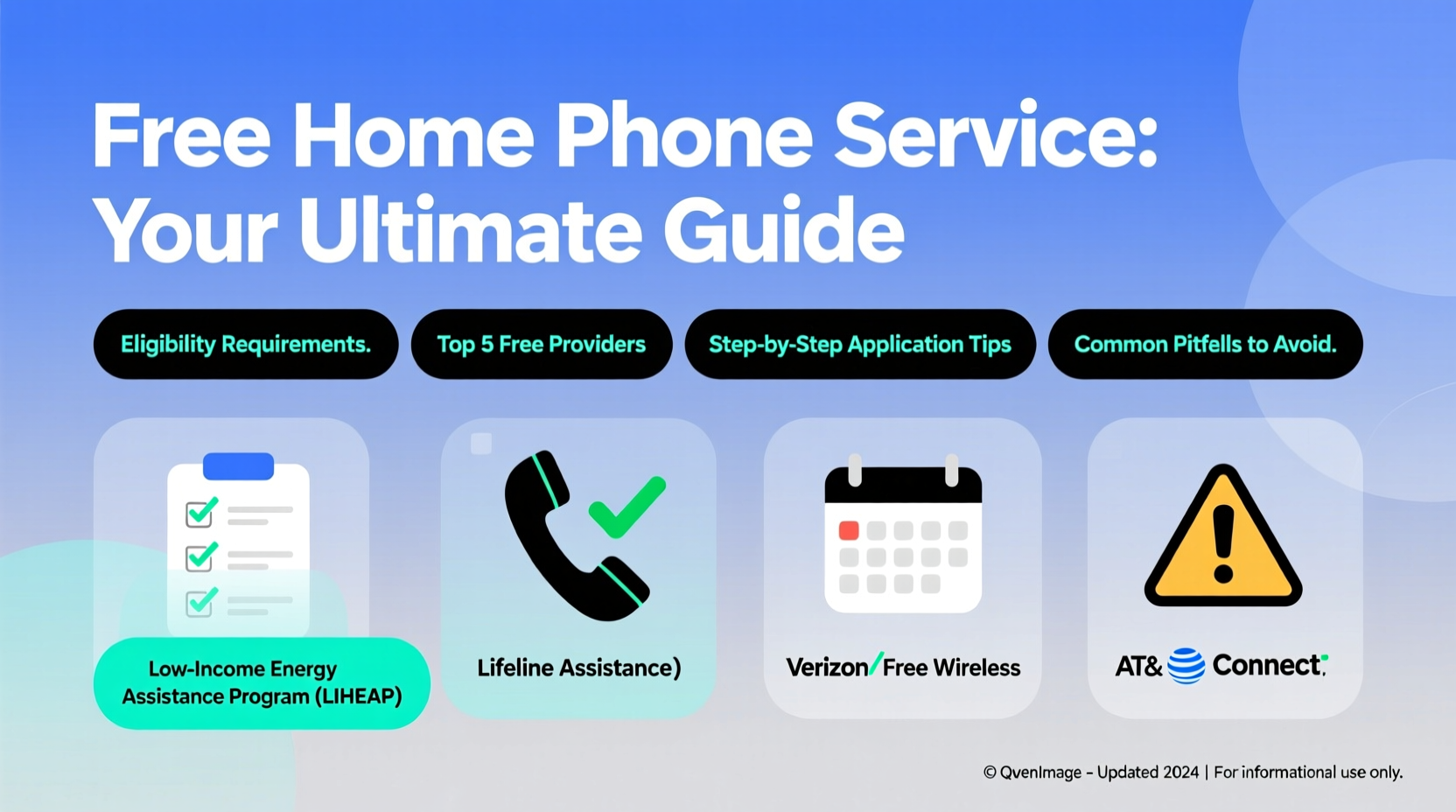
Free home phone services are primarily offered through federal and state assistance programs designed to ensure that all Americans have access to basic communication tools. The most prominent of these is the Federal Communications Commission’s (FCC) Lifeline program. Established in 1985, Lifeline originally provided discounted landlines and has since expanded to include broadband and VoIP (Voice over Internet Protocol) services.
Lifeline supports one free phone line per household, either as a traditional landline, wireless service, or VoIP connection. Many states also run companion programs under the same umbrella, often referred to as \"Link Up\" or \"Lifeline Assistance,\" which may offer additional benefits like waived installation fees or free equipment.
“Universal service is a cornerstone of modern connectivity. No American should be cut off from emergency services due to cost.” — Jessica Rosenworcel, FCC Chairwoman
Eligibility Requirements for Free Service
To qualify for a free home phone service, applicants must meet specific income or program participation criteria. The Lifeline program uses two main pathways for eligibility:
- Income-based: Your household income must be at or below 135% of the Federal Poverty Guidelines.
- Program-based: You or someone in your household must participate in a qualifying assistance program such as Medicaid, SNAP, SSI, Federal Public Housing Assistance (FPHA), Veterans Pension, or others.
For example, in 2024, a single-person household earning $20,280 or less annually qualifies based on income. Larger households have higher thresholds—up to $68,940 for a family of eight.
Tip: Even if you already receive Lifeline benefits for a mobile phone, you cannot receive both a free cell and a free landline simultaneously—one benefit per household.Top Providers Offering Free Home Phone Service
Several telecommunications companies partner with the Lifeline program to deliver free or heavily subsidized home phone services. These providers vary by state, but some operate nationwide. Below is a comparison of leading options:
| Provider | Service Type | Monthly Value | Key Features | Availability |
|---|---|---|---|---|
| Telikin (formerly GreatCall) | VoIP + Touchscreen Device | $29.99 value | Emergency response, large-button interface, senior-friendly | National |
| Access Wireless | Traditional Landline or VoIP | $9.25 subsidy applied | Free basic calling, customer support | 17+ states |
| SafeLink Home Phone | VoIP | $30 monthly credit | Unlimited local & long-distance calls, caller ID | Selected states |
| Assurance Wireless | VoIP (via partnership) | $9.25 discount | Reliable network, easy setup | 22 states |
| TruConnect Home Phone | VoIP | Free service | Unlimited calling, free directory assistance | National (where internet available) |
Most of these providers offer VoIP services, which require a stable internet connection. If you don’t have broadband, some states allow you to combine Lifeline phone benefits with the Affordable Connectivity Program (ACP), which provides up to $30/month toward internet service ($75 on tribal lands).
Step-by-Step Guide to Enroll in a Free Home Phone Plan
Signing up for a free home phone service is straightforward if you follow the right process. Here’s how to do it in six clear steps:
- Determine eligibility: Confirm that you or a household member qualify via income level or participation in a federal assistance program.
- Gather documentation: Prepare proof such as tax returns, benefit award letters, or government-issued ID.
- Choose a provider: Visit the official Lifeline Support site (lifelinesupport.org) and use the provider lookup tool to find options in your area.
- Apply online or by mail: Submit your application directly through the provider’s website or download a paper form. Some accept applications over the phone.
- Verify your identity: You’ll typically need to provide your Social Security number, address, and proof of eligibility.
- Set up your service: Once approved, the provider will ship equipment (if needed) and guide you through activation, usually within 7–10 business days.
Mini Case Study: How Maria Kept Her Connection After Disability Retirement
Maria, a 67-year-old widow from rural Kentucky, lost her job due to a chronic health condition. Without income, she considered disconnecting her home phone—the only way she could contact her doctor and emergency services. After learning about Lifeline from a community health worker, she applied through Access Wireless using her Supplemental Security Income (SSI) award letter as proof.
Within two weeks, Maria received a new VoIP adapter and connected it to her existing internet service, which was partially subsidized through the ACP program. She now enjoys unlimited calling at no cost and uses her phone daily for telehealth appointments and staying in touch with her grandchildren.
“I felt invisible before,” Maria said. “Now I know help is just a call away.”
Checklist: Getting Started with Free Home Phone Service
- ✅ Confirm household eligibility (income or program-based)
- ✅ Collect necessary documents (benefit letters, ID, tax forms)
- ✅ Research available providers in your state
- ✅ Choose between landline, VoIP, or bundled internet options
- ✅ Complete and submit your application
- ✅ Respond promptly to verification requests
- ✅ Renew your enrollment annually to maintain service
Frequently Asked Questions
Can I get a free home phone if I already have a mobile Lifeline plan?
No. The Lifeline program allows only one benefit per household—either a free mobile phone or a free home phone, not both. You can switch between services annually if your needs change.
Do I need internet for a free home phone?
It depends on the service type. Traditional landlines do not require internet, but most modern free home phone plans use VoIP technology, which needs a broadband connection. If you lack internet, consider combining Lifeline with the Affordable Connectivity Program (ACP) for full support.
How long does approval take?
Processing times vary by provider and state, but most applicants receive confirmation within 7 to 14 days. Delays occur if documentation is incomplete or requires manual review.
Maximizing Long-Term Benefits
Once enrolled, maintaining your free home phone service requires annual re-certification. Providers send renewal notices, but it’s wise to mark your calendar. Failure to recertify results in automatic disconnection.
Additionally, avoid duplicating benefits. If multiple members of your household apply for Lifeline with different providers, the FCC may flag the account for fraud. Only one Lifeline benefit is permitted per household, regardless of how many people live there.
Some providers offer enhanced features for a small fee—like voicemail-to-email or international calling—but the core service remains free. Evaluate whether upgrades are worth the cost based on your actual usage.
Conclusion
A free home phone isn’t a luxury—it’s a lifeline for millions of Americans who depend on reliable communication for safety, healthcare, and social connection. With clear eligibility rules, trusted providers, and structured support, accessing this service is easier than ever. Whether you’re on a fixed income, managing a disability, or supporting an aging parent, taking advantage of Lifeline or state-specific programs can remove a significant financial burden while keeping you connected.
🚀 Ready to get connected? Visit lifelinesupport.org today, check your eligibility, and apply for free home phone service. Share this guide with someone who might benefit—it could make all the difference.