
For many casual travelers—those who take one or two trips a year, often domestically or to nearby international destinations—the idea of paying an annual fee for a travel credit card can feel like overkill. After all, if you're not racking up miles every month or staying in luxury hotels, do the perks really add up? The answer isn’t a simple yes or no. It depends on how you travel, what benefits you actually use, and whether the card’s rewards outweigh its cost.
This article cuts through the marketing hype to give you a realistic look at whether an annual-fee travel credit card makes financial sense for someone who travels occasionally, not constantly. We’ll examine common fees, evaluate top-tier benefits, compare real-world usage scenarios, and provide actionable guidance to help you make an informed decision.
Understanding the Cost-Benefit Equation
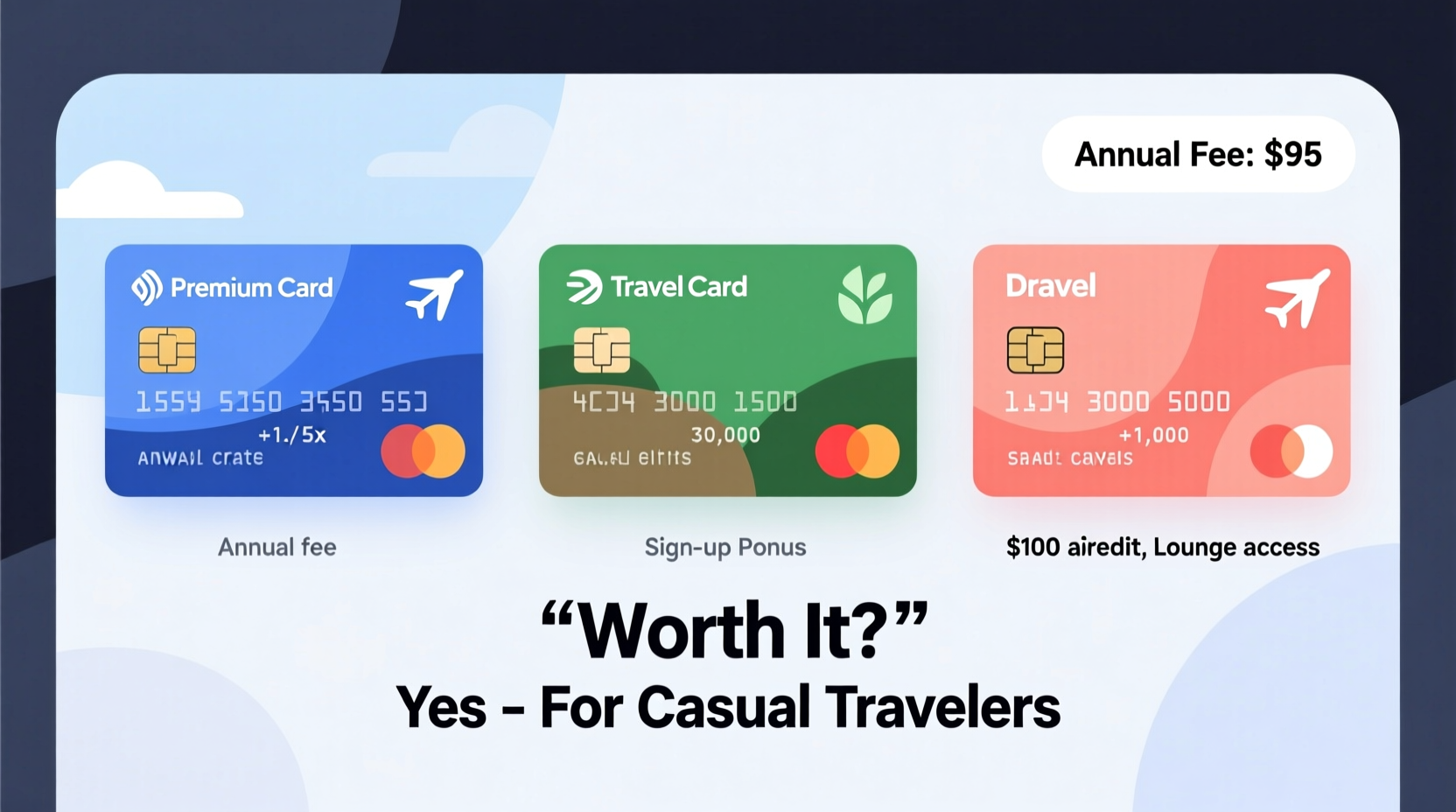
Travel credit cards with annual fees typically range from $95 to over $600. In return, they offer perks like airline credits, airport lounge access, elite status with hotel chains, and accelerated point earning on travel purchases. But for a casual traveler, these benefits may go underused—or worse, completely ignored.
The key is to assess the tangible value you’re likely to extract from the card each year. Ask: Will I use enough of the included benefits to offset the fee? If the card offers a $200 airline fee credit but you only fly once a year and don’t pay baggage fees, that credit might not be useful. On the other hand, if the same card includes a free companion ticket after meeting a spending requirement, that could cover your next vacation round-trip.
Value isn't just about dollar amounts—it's about relevance. A card that offers high value on international airfare won’t help much if you mostly drive to weekend getaways. Similarly, hotel elite status means little if you stay with friends or book budget motels.
Tip: Calculate the expected value of a card’s benefits based on your actual travel habits—not aspirational ones.Top Benefits That Matter for Occasional Travelers
Not all travel card perks are created equal. For casual travelers, some benefits deliver real utility while others are essentially wasted. Here are the most valuable features to consider:
- Travel statement credits: Many premium cards offer annual credits for airline fees, TSA PreCheck/Global Entry, or general travel spending. These directly reduce your out-of-pocket costs.
- No foreign transaction fees: Essential if you travel internationally, even occasionally. Without this feature, you could pay 3% extra on every purchase abroad.
- Bonus points on travel and dining: Accelerated earning helps you accumulate rewards faster, even with limited spending.
- Free checked bags: One free bag per person on certain airlines adds up quickly on family trips.
- Primary rental car insurance: Can eliminate the need to buy coverage at the counter, saving $10–$30 per day.
Less relevant perks for infrequent travelers include unlimited airport lounge access (if you rarely fly), hotel upgrade guarantees (if you don’t stay at chain hotels), or concierge services you never use.
Real Example: Sarah’s Family Vacation Strategy
Sarah takes one family trip per year—usually a seven-day beach vacation in Mexico. She flies round-trip with two kids, checks two bags, rents a car, and spends about $3,000 total. She used to use a no-fee cash-back card but switched to a card with a $95 annual fee that offers:
- $200 annual travel credit
- Two free checked bags for her and her spouse
- Primary rental car insurance
- No foreign transaction fees
- 3x points on travel and dining
Last year, she saved $60 on baggage fees, avoided $90 in foreign transaction fees, didn’t pay for rental insurance ($25/day x 7 = $175), and used her $200 travel credit toward her flight. Even without redeeming points yet, she gained $500 in direct savings and avoided costs—more than covering the annual fee fivefold.
In this case, the annual fee was clearly worth it—even for a single trip.
“Many people assume premium cards are only for frequent flyers, but occasional travelers often benefit the most because they’re less likely to have work-sponsored perks or loyalty status.” — Marcus Reed, Financial Advisor & Travel Credit Specialist
Comparing Popular Cards: Value vs. Fee
Below is a comparison of four widely used travel credit cards, evaluated based on their suitability for casual travelers.
| Card Name | Annual Fee | Key Perks | Estimated Annual Value (Casual Traveler) |
|---|---|---|---|
| Chase Sapphire Preferred® | $95 | 5x on travel via Chase Travel, 3x on dining, $50 hotel credit (via portal), no foreign fees | $250–$400 |
| Capital One Venture X | $395 | $300 travel credit, Priority Pass lounge access, 10,000 bonus miles/year | $100–$200 (underused by casual travelers) |
| Amex Gold | $250 | $240 dining credit ($20/month), 4x on dining/groceries, 3x on airfare booked directly | $300+ (if you spend heavily on groceries/dining) |
| Bank of America® Premium Rewards® Elite | $450 | 75k bonus points, $300 travel credit, airport lounges, 3x on travel/airlines | $200–$350 (moderate value for infrequent flyers) |
As shown, lower-fee cards like the Chase Sapphire Preferred often offer the best bang for buck for those who travel once or twice a year. Higher-fee cards require more active usage to justify their cost—something casual travelers may struggle to achieve.
When the Annual Fee Makes Sense: A Step-by-Step Evaluation
Before committing to a card with an annual fee, follow this evaluation process:
- Map Your Travel Habits: List your typical trips—how often, where, how you pay, what expenses you incur (flights, hotels, rental cars, baggage).
- Identify Potential Savings: Match your spending to card benefits. Do you pay baggage fees? Would a travel credit apply?
- Estimate Realistic Benefit Usage: Be honest. If a card offers $200 in airline credits but you book flights through third-party sites, that credit may not apply.
- Compare Net Value: Subtract the annual fee from the total estimated benefit value. A positive number suggests it’s worth considering.
- Review Spending Requirements: Some perks require minimum spending (e.g., $3,000 in first 3 months). Ensure you can meet them without overspending.
- Check for Waived Fees in First Year: Many cards waive the first-year fee. Use this trial period to test the card risk-free.
This method prevents emotional decisions based on flashy sign-up bonuses and focuses on practical value.
Common Pitfalls to Avoid
Casual travelers often fall into traps when selecting premium cards. Watch out for these mistakes:
- Overestimating usage: Assuming you’ll use lounge access or fine dining credits regularly when you rarely do.
- Ignoring renewal terms: Forgetting to cancel before the second-year fee hits. Set a calendar reminder six weeks before renewal.
- Misunderstanding credit types: Some travel credits only apply to specific purchases (e.g., “eligible airline fees” not general travel).
- Carrying a balance: Interest charges will erase any reward value. Always pay in full.
- Chasing points over practicality: Accumulating points for a dream trip that never happens wastes time and money.
FAQ: Common Questions About Annual Fees for Casual Travelers
Do I need a travel credit card with an annual fee if I only travel once a year?
Not necessarily—but it can still be worth it. If the card offers targeted benefits like a travel credit, free baggage fees, or no foreign transaction fees, and you use them, the fee can easily pay for itself. Evaluate based on your specific trip profile, not frequency alone.
Can I cancel the card after the first year to avoid the fee?
Yes, and many smart travelers do exactly that. If the first-year waiver helped you earn a big sign-up bonus or test the benefits, canceling before the renewal date is a valid strategy. Just ensure you’ve redeemed any expiring points first.
Are no-annual-fee travel cards a better option?
They can be, especially if you want simplicity. Cards like the Capital One Quicksilver or Bank of America Customized Cash Rewards offer 1.5–2% cash back on all purchases with no fee. However, they lack premium perks like travel credits or insurance. Compare total value: sometimes a $95 fee card delivers far more than a free one.
Action Plan: How to Decide What’s Right for You
Follow this checklist to determine if a travel credit card with an annual fee fits your lifestyle:
- ✅ Track your last 1–2 trips: total cost, payment methods, fees paid.
- ✅ Identify which perks would have saved you money (e.g., baggage, foreign fees, rental insurance).
- ✅ Research 2–3 cards that align with your spending and travel patterns.
- ✅ Calculate net annual value: (estimated benefits) – (annual fee).
- ✅ Apply for a card with a first-year fee waiver to test it risk-free.
- ✅ Set a renewal reminder to reassess before the second year.
If your net value is consistently positive—and you use the card responsibly—the annual fee is likely justified, even as a casual traveler.
Final Thoughts: Maximizing Value Without Overcomplicating
The decision to pay an annual fee shouldn’t be based on status or perceived prestige. It should come down to math and usability. For casual travelers, the sweet spot is often a mid-tier card with a modest fee and practical, accessible benefits. The Chase Sapphire Preferred, for example, continues to be a favorite because it balances cost, rewards, and flexibility.
Remember: the best travel card isn’t the one with the most perks—it’s the one whose benefits you actually use. By focusing on real savings, avoiding common pitfalls, and testing cards strategically, you can turn an annual fee from a burden into a tool for smarter, more affordable travel.
🚀 Ready to optimize your travel spending? Review your last trip, calculate potential savings, and consider applying for a no-first-year-fee card to test the value—risk-free. Share your experience or questions in the comments below.