
Understanding your paycheck is more than just checking the final number deposited into your bank account. Behind that figure lies a detailed calculation involving federal and state taxes, Social Security, Medicare, and other withholdings. Many employees see deductions but don’t fully grasp how they’re determined. This guide breaks down each component of payroll taxation in clear, practical terms so you can confidently interpret your pay stub and make informed financial decisions.
How Gross Pay Becomes Take-Home Pay
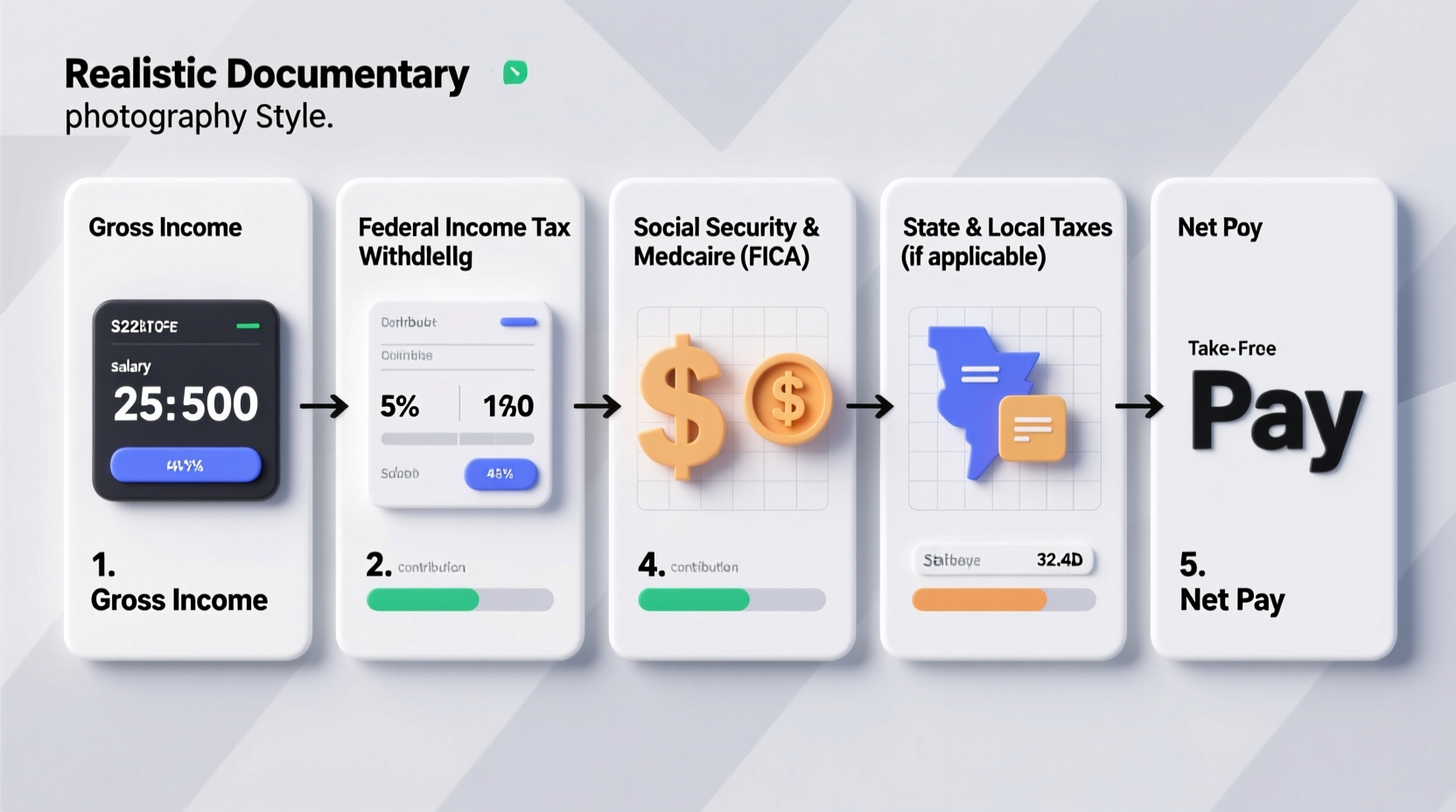
Your gross pay is the total amount you earn before any deductions. However, what actually lands in your bank—the net or take-home pay—is significantly lower due to mandatory and optional withholdings. The process follows a structured sequence:
- Determine gross wages (hourly rate × hours worked, or annual salary ÷ pay periods)
- Subtract pre-tax deductions (e.g., 401(k), health insurance)
- Calculate and withhold federal income tax
- Withhold Social Security and Medicare taxes (FICA)
- Deduct state and local income taxes (if applicable)
- Subtract post-tax deductions (e.g., wage garnishments, union dues)
- Arrive at net pay
This progression ensures compliance with tax laws while funding essential programs like retirement benefits and healthcare.
Tip: Review your W-4 form annually—especially after major life changes—to ensure accurate tax withholding and avoid large refunds or unexpected balances owed.Federal Income Tax Withholding Explained
Federal income tax isn't a flat percentage; it’s based on progressive tax brackets and your filing status. Employers use IRS Publication 15-T and the information from your Form W-4 to estimate how much to withhold.
The key inputs include:
- Your filing status (Single, Married Filing Jointly, etc.)
- Number of dependents or other credits claimed
- Additional withholding requests
For example, if you're single and claim one allowance, your employer applies a specific formula using either the wage bracket method or percentage method to calculate federal tax liability per pay period.
It's important to note that being paid weekly, biweekly, or monthly affects the per-paycheck calculation—but not your annual obligation. The system annualizes your income to apply the correct marginal rates across brackets.
“Accurate W-4 completion is crucial. Over-withholding means an interest-free loan to the government; under-withholding could lead to penalties.” — Lisa Nguyen, CPA and Payroll Compliance Specialist
Social Security and Medicare (FICA Taxes)
FICA (Federal Insurance Contributions Act) taxes fund Social Security and Medicare. These are flat-rate deductions applied directly to your gross income, up to certain limits:
| Tax Type | Employee Rate | Employer Match | Wage Base Limit (2024) |
|---|---|---|---|
| Social Security | 6.2% | 6.2% | $168,600 |
| Medicare | 1.45% | 1.45% | No limit |
| Additional Medicare Tax | 0.9% (on earnings over $200k for single filers) | None | Applies only to employee |
Once your year-to-date earnings exceed $168,600, Social Security tax stops being withheld. However, Medicare continues on all wages. For high earners, the extra 0.9% Medicare tax kicks in automatically when cumulative wages surpass $200,000—even if married filing jointly where the threshold is higher ($250,000).
Real Example: Biweekly Paycheck Breakdown
Meet Jordan, a single software developer earning $75,000 annually, paid every two weeks (26 pay periods). Jordan contributes 6% to a 401(k) and has no other pre-tax adjustments.
- Gross Pay: $75,000 ÷ 26 = $2,884.62
- 401(k) Contribution: 6% × $2,884.62 = $173.08
- Taxable Income: $2,884.62 – $173.08 = $2,711.54
Using the 2024 IRS wage tables for biweekly pay and Single status with one allowance:
- Federal Withholding: ~$278.00
- Social Security: 6.2% × $2,711.54 = $168.12
- Medicare: 1.45% × $2,711.54 = $39.32
- State Tax (CA - approx): ~$135.00*
*Varies based on allowances and state brackets.
Total Deductions: ~$793.52 → Net Pay ≈ $2,091.10
This example shows how even a moderate income can result in nearly 28% withheld before considering health premiums or other costs.
State and Local Income Taxes
Not all states impose income taxes—Alaska, Florida, Nevada, South Dakota, Tennessee, Texas, Washington, and Wyoming collect none. Others, like California and New York, have progressive structures similar to the federal model.
Local taxes also exist in cities like New York City, Yonkers, and Philadelphia, further reducing take-home pay. Your employer withholds these based on residency and work location, if different.
You’ll report this information on your W-4 (state version) and should update it if you move or begin remote work across state lines. Misclassification can trigger audits or back-tax liabilities.
Tip: If you work remotely across state lines, consult a tax advisor to ensure proper withholding and compliance with both states’ rules.Action Plan: Mastering Your Paycheck
To gain full control over your payroll deductions, follow this checklist:
- ✅ Obtain and review your latest pay stub
- ✅ Confirm your filing status and allowances on Form W-4
- ✅ Verify pre-tax contributions (retirement, HSA, transit, etc.)
- ✅ Check accuracy of FICA withholdings against current rates
- ✅ Compare state/local tax amounts to official guidelines
- ✅ Use an online paycheck calculator (like ADP or PaycheckCity) to validate totals
- ✅ Adjust withholdings if needed via updated W-4 submission
Regular reviews—especially after promotions, marriage, or having a child—help align your payroll setup with your actual tax situation.
Frequently Asked Questions
Why do I pay Social Security tax only up to a certain income level?
The Social Security wage base limit exists because benefits are capped. Since maximum retirement benefits are tied to earnings up to that limit, taxing beyond it doesn’t increase future payouts. Medicare, which has no cap, supports open-ended healthcare costs in retirement.
Can I stop federal tax withholding if I expect a refund?
No. Federal law requires employers to withhold income tax unless you qualify for exemption—which is rare and must be renewed yearly. Claiming exemption without eligibility may result in penalties and interest when you file.
What happens if too little tax is withheld?
You may owe money at tax time and face underpayment penalties if the shortfall exceeds 10% of your total tax liability or $1,000. To avoid this, adjust your W-4 or make estimated quarterly payments if you have multiple income sources.
Take Control of Your Financial Picture
Your paycheck is more than compensation—it’s a financial document revealing how tax policy, personal choices, and employment benefits intersect. By understanding each line item, you empower yourself to optimize withholdings, plan for tax season, and maximize your true earnings. Don’t treat your pay stub as routine paperwork. Read it, question discrepancies, and act when adjustments are needed. A few minutes now can save hundreds—or thousands—later.
💬 Ready to analyze your next paycheck? Download a free pay stub worksheet or share your experience below—how surprised were you by your actual tax breakdown?