As of mid-2024, South Korea’s consumer price inflation has stabilized at just 1.3%, one of the lowest rates among advanced economies. This figure stands in stark contrast to global trends seen during the post-pandemic recovery period, where many nations battled double-digit inflation. While low inflation may seem like a positive sign—indicating stable prices and controlled monetary policy—it raises deeper questions about underlying economic dynamics. Is this level sustainable? What factors are holding inflation down, and what could change in the near future?
Understanding the current state of inflation in South Korea requires examining not only recent data but also structural shifts in consumption, energy markets, labor dynamics, and central bank strategy. The Bank of Korea (BOK) has maintained a cautious stance, balancing growth concerns with inflation control. With inflation persistently below its 2% target, policymakers face growing pressure to reassess interest rate settings and long-term economic planning.
What Does 1.3% Inflation Mean for South Korea?
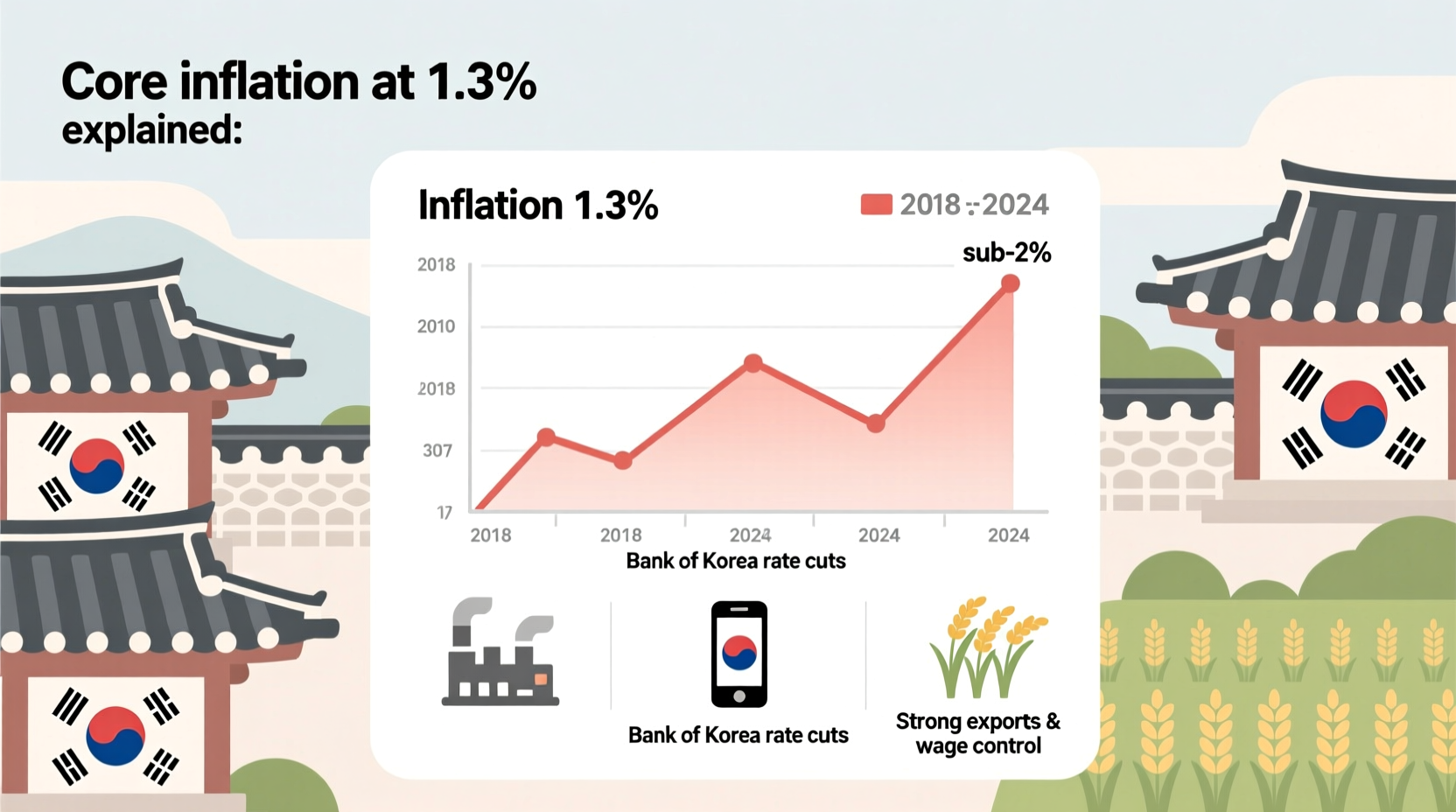
Inflation at 1.3% reflects minimal upward pressure on prices across essential goods and services. For consumers, this means purchasing power remains relatively stable. A cup of coffee, monthly transportation costs, or utility bills are not rising sharply month-over-month. However, such subdued inflation can also signal weak domestic demand, cautious consumer spending, or overcapacity in key industries.
The Consumer Price Index (CPI), which tracks a basket of commonly purchased items, shows particularly slow increases in food, housing, and transport categories. Core inflation, which excludes volatile items like fresh food and energy, sits at 1.6%, still modest by historical standards. This suggests that even when smoothing out temporary shocks, underlying price momentum remains sluggish.
Tip: Low inflation benefits borrowers and fixed-income earners in the short term, but prolonged stagnation can discourage investment and wage growth.Key Drivers Behind the 1.3% Inflation Rate
Several interrelated factors explain why inflation has settled at 1.3% rather than trending higher.
1. Stable Energy Prices
Global oil prices have remained moderate due to increased supply from OPEC+ and reduced demand from major economies slowing down. South Korea, which imports nearly all its crude oil, benefits directly from lower fuel costs. Transportation and heating expenses—which heavily influence CPI—have seen little increase.
2. Strong Won and Import Competition
The Korean won has appreciated moderately against the U.S. dollar, making imported goods cheaper. Electronics, raw materials, and food products from abroad cost less, helping keep retail prices flat. Additionally, fierce competition among retailers, especially in e-commerce, suppresses pricing power across sectors.
3. Weak Domestic Consumption
Household spending remains tepid despite government stimulus efforts. High household debt levels—over 100% of GDP—make consumers hesitant to spend freely. Younger demographics are delaying major purchases like homes and cars, dampening demand-driven inflation.
4. Technological Efficiency and Productivity Gains
South Korea’s advanced manufacturing and tech sectors continue to innovate, reducing production costs. Automation in electronics and automotive industries lowers input costs, which translates into slower price increases for finished goods.
“Persistently low inflation in Korea isn’t just about external calm—it reflects structural caution in both households and firms.” — Dr. Lee Jung-ho, Senior Economist at LG Economic Research Institute
Comparison of Inflation Trends: South Korea vs. Peer Economies (2023–2024)
| Country | 2023 Avg Inflation (%) | 2024 YTD Inflation (%) | Central Bank Policy Rate | Primary Inflation Driver |
|---|---|---|---|---|
| South Korea | 3.3 | 1.3 | 3.50% | Imported goods, tech efficiency |
| Japan | 3.2 | 2.8 | -0.1% | Weak yen, service sector demand |
| United States | 4.1 | 3.2 | 5.50% | Labor market tightness |
| Germany | 6.2 | 4.5 | 3.75% | Energy dependency |
| Singapore | 5.8 | 2.9 | 3.25% | Imported inflation |
What’s Next? Scenarios for Future Inflation
The trajectory of inflation in South Korea hinges on several upcoming variables. The Bank of Korea is closely monitoring these indicators to determine whether to maintain, cut, or eventually raise interest rates.
Potential Upward Pressures
- Wage Growth Acceleration: If minimum wage hikes and union negotiations lead to broad-based salary increases, businesses may pass costs to consumers.
- Geopolitical Tensions: Escalation in the Middle East or Taiwan Strait could disrupt shipping lanes and spike oil prices.
- Monetary Easing: If BOK cuts rates to stimulate growth, increased credit availability could boost demand and inflation.
Risks of Deflationary Momentum
- Aging Population: Older consumers tend to spend less, reducing aggregate demand.
- Export Dependency: A global slowdown in semiconductors or electronics could hurt corporate revenues and wage-setting capacity.
- Debt Overhang: With household debt high and youth unemployment rising, spending may remain constrained.
Mini Case Study: The Semiconductor Sector’s Influence
Consider Samsung Electronics, a bellwether for the Korean economy. In 2023, declining global demand for memory chips led to factory slowdowns and hiring freezes. This ripple effect reduced income growth in supplier regions like Gyeonggi Province. As workers faced stagnant wages, local restaurants, retail shops, and service providers saw weaker sales—contributing to nationwide price inertia. Only in early 2024 did AI-driven chip demand begin reviving exports, offering a potential catalyst for renewed economic momentum—and possibly higher inflation later in the year.
Action Plan: How Businesses and Households Can Prepare
Whether inflation stays low or begins to climb, proactive planning helps mitigate uncertainty. Below is a checklist for different stakeholders.
Checklist for Households
- Lock in fixed-rate loans while interest rates remain favorable.
- Review insurance and utility plans for better deals amid stable pricing.
- Invest in skill development to improve earning potential if wage growth lags.
- Build emergency savings to buffer against sudden economic shifts.
- Monitor currency exchange rates if planning overseas travel or purchases.
Checklist for Small Businesses
- Use low inflation to renegotiate supplier contracts and lock in prices.
- Invest in automation or digital marketing to gain competitive edge without raising prices.
- Track wage trends in your sector to anticipate labor cost changes.
- Diversify revenue streams to reduce dependence on domestic demand alone.
- Stay informed on BOK policy announcements and fiscal stimulus measures.
Frequently Asked Questions
Is 1.3% inflation good or bad for the economy?
It depends on context. Moderate inflation around 2% is generally healthy, encouraging spending and investment. At 1.3%, inflation is below target, which may indicate underutilized economic capacity. Prolonged low inflation risks slipping into deflation, where consumers delay purchases expecting lower prices—a damaging cycle.
Could South Korea see deflation like Japan?
Possible, but not imminent. Japan’s “lost decades” stemmed from asset bubbles, aging demographics, and delayed reforms. South Korea shares some risks—especially demographic decline—but maintains stronger export engines and innovation capacity. Vigilant monetary policy can help avoid a similar path.
Will interest rates go down if inflation stays low?
Very likely. The Bank of Korea has signaled readiness to cut rates if growth remains sluggish. Market expectations point to at least one 25-basis-point cut by Q3 2024, potentially more if inflation fails to rebound toward 2%.
Conclusion: Navigating the New Normal
South Korea’s 1.3% inflation rate is more than a number—it’s a signal of a maturing economy navigating global headwinds, technological transformation, and demographic change. While stability benefits consumers today, complacency could undermine long-term growth. Policymakers must balance support for households with incentives for business investment. For individuals and entrepreneurs, this moment offers an opportunity: to strengthen finances, adapt strategies, and prepare for the next phase of economic evolution.
💬 What do you think about Korea’s economic outlook? Share your thoughts or experiences with inflation in the comments below.